Table of Contents
Two factories can run the exact same fabric and deliver completely different outcomes. Inconsistent sample preparation, test selection, and pass/fail criteria trigger endless re-tests, shipment delays, and avoidable returns.
I have watched these gaps derail enterprise uniform rollouts. To stop this cycle, we built this SOP-style guide for QA Managers, Apparel Sourcing Directors, and Product Development leads.
We base these findings on 12 months of aggregated internal pass/fail data, our redacted QA checklist, and floor mapping with our Lead Quality Engineer.
Fundamentally, fabric durability testing is the structured process of verifying whether a textile maintains performance under expected wear, rubbing, force, and repeated use. However, standardization matters more than any single lab test.
A winning operational system connects garment end-use directly to method selection, sample preparation, third-party verification, and strict supplier approval rules.
We will now translate textile physical testing protocols, Martindale abrasion test standards, fabric tensile strength requirements, and official ISO fabric testing compliance protocols from academic theory into operational reality.
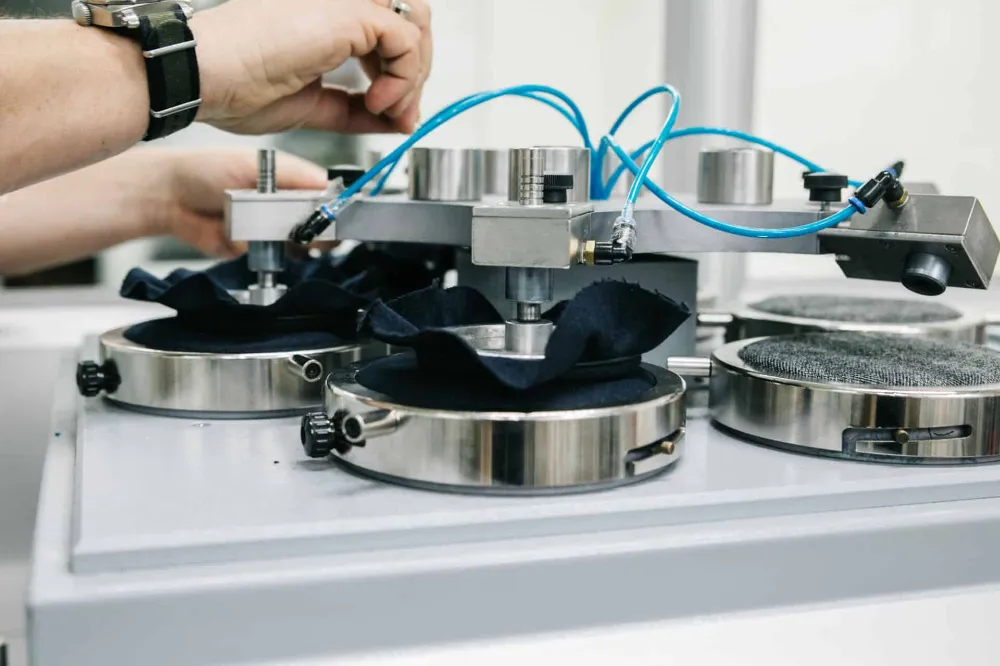
What is Fabric Durability Testing?
https://www.youtube.com/watch?v=zdyViUqlWhg&pp=ygUZRmFicmljIER1cmFiaWxpdHkgVGVzdGluZw%3D%3D
Fabric durability testing is the process of verifying whether a textile maintains its required performance under real-world physical stress. Think of it like crash-testing a car. You do not just hit a bumper with a hammer; you simulate high-speed collisions.
During a recent audit, a client’s imported jacket survived heavy rubbing but instantly tore at the shoulder during a lift. This proves durability is never a single metric. We break it into five core categories:
- Abrasion resistance (surface rubbing)
- Tensile strength (pulling force)
- Tear strength (rip resistance)
- Seam slippage (stitch integrity)
- Pilling (surface fiber breakdown)
To measure these accurately, we follow textile physical testing protocols. These documents strictly dictate specimen prep, conditioning humidity, machine settings, and failure criteria. We anchor our lab work to standard references:
- ISO 12947-2 for Martindale abrasion testing
- ASTM D5034 for grab tensile testing
- ISO 13934-1 for strip tensile testing
As defined by ASTM International, these standardized methods guarantee accurate, apples-to-apples comparisons.
Buyers frequently ask me for a universally “good” durability score. In practice, no such thing exists. A passing number depends entirely on the garment’s end use, fiber blend, and construction. A hospital scrub requires vastly different benchmarks than the heavy canvas detailed in our coverall material guide.
ISO fabric testing compliance means strictly aligning method selection and execution with recognized standards. It does not mean attaching an outdated supplier PDF to a purchase order.
For repeatable results across standard uniform fabrics and specialized 4-way stretch fabric, we rely solely on accredited labs. Strict ISO/IEC 17025 lab discipline ensures zero testing drift.
🌍 Real-World Context: Environmental controls dictate everything. As Manager Chen noted on our factory floor, “If the lab humidity drops by just 5%, your tear strength data becomes completely useless.”
Building a Repeatable Garment Quality Control SOP
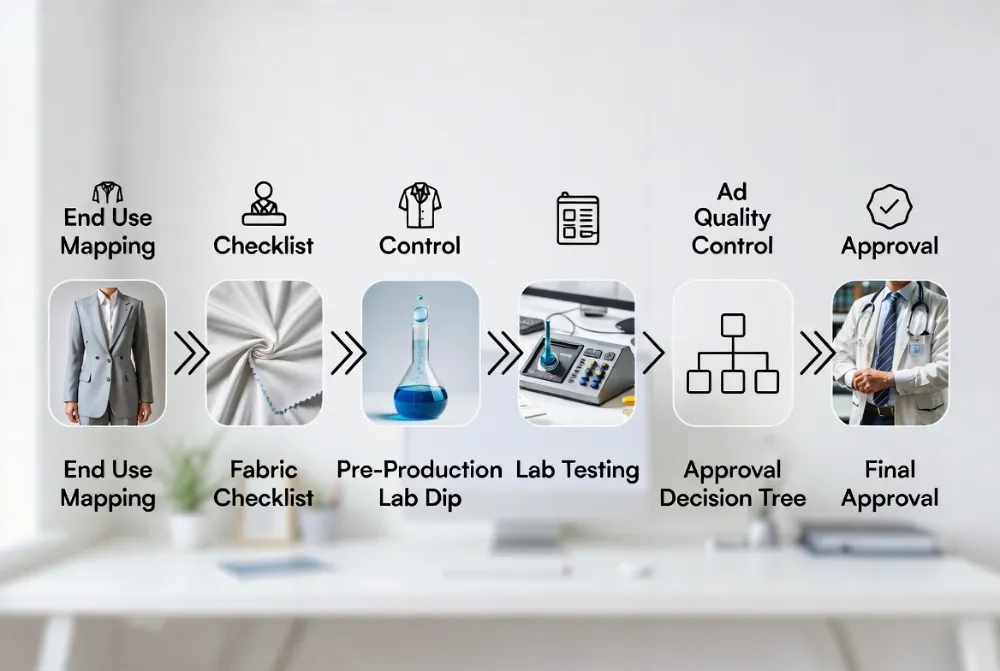
Running more tests does not fix bad fabric. To eliminate production delays, we built a repeatable garment quality control SOP. This system standardizes how every factory handles fabric durability testing. Here is the six-step operational workflow we use to process every yard of material.
Step 1: Define the End Use Before Testing
Test planning starts with real wear conditions. Every product features distinct stress zones. You must map these failure modes before choosing a test.
Workwear knees endure heavy friction. Hospitality uniforms face daily laundering. High-vis outerwear degrades under UV exposure. In our field tests, stretch panels on medical scrubs require completely different metrics than the rigid canvas we source for workwear manufacturers. Define exactly how the garment will fail in the field first.
Step 2: Map Each Failure Mode to the Right Standard
Next, connect the specific use-case risk to a precise test method.
- Abrasion Risk: Map this to ISO 12947-2 (Martindale method).
- Breaking-Force Risk: Map this to ASTM D5034 or ISO 13934-1.
- Seam Distortion: Select specific seam-slippage or tear-resistance methods.
⚙️ Technical Detail: We learned standard nuances through failed batches. The ASTM D5034 grab test mimics real-world pulling well, but it fails on high-stretch textiles. When analyzing our 4-way stretch fabric, we strictly use the ISO 13934-1 strip test. This method loads the entire fabric width, capturing intrinsic tensile behavior without clamp slippage.
Step 3: Publish a Fabric Pre-Production Checklist
Never send raw yardage to a lab without context. We mandate a strict Fabric Pre-Production Checklist before the lab receives the material. This protocol eliminates ambiguous submissions and prevents re-test delays.
- Confirm fabric code, lot number, and colorway.
- Note the finish state and wash state.
- Identify the warp/weft or wale/course orientation.
- Confirm exact specimen counts per test.
- Verify sample dimensions with the lab before cutting.
- Condition samples in a climate-controlled room.
- Label control swatches and retain file samples.
- Attach target thresholds and destination-market requirements.
Step 4: Run Lab Performance Verification
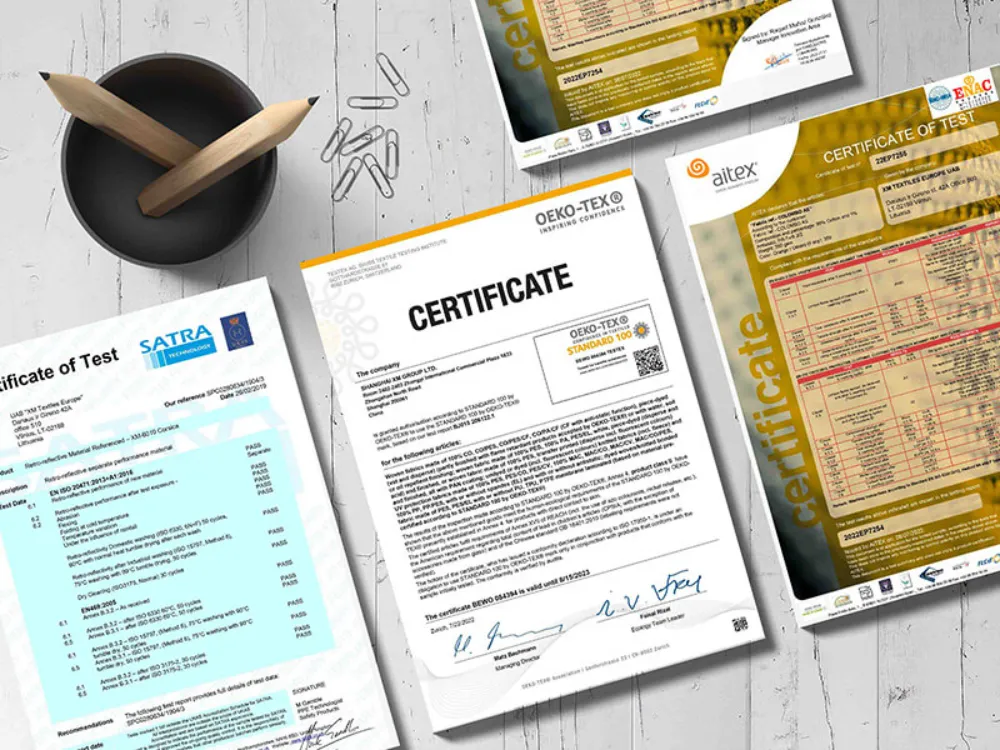
Blind trust causes supply chain failures. We operate on a two-layer model. First, suppliers perform internal self-tests. Then, accredited third-party labs confirm results for critical styles.
When vetting providers like QIMA or SGS, verify their ISO accreditation, request their standard turnaround times, and establish rush policies. Most importantly, demand access to the raw data. Incomplete summary tables easily hide real failures. Verify these elements in every report:
- Standard number and revision year.
- Specimen direction.
- Number of specimens tested.
- Exact failure definition used.
- Lot traceability linking back to the bulk fabric.
🧠 Expert Insight: “Last quarter, a supplier submitted a passing summary table,” notes Lead Quality Engineer Sarah Jenkins. “We checked the raw data and found their poly-cotton blend failed abrasion targets at exactly 15,000 rubs. They selectively reported only the passing tear strength.”
Step 5: Set Realistic Acceptance Criteria
Write specific fabric tensile strength requirements and abrasion thresholds directly into your tech pack. Do not rely on one universal metric. We categorize criteria into product family bands:
- Lightweight hospitality uniforms.
- Stretch-rich performance garments.
- Heavy-duty industrial workwear.
A target number only holds value if all parties agree on the method, specimen direction, and failure definition in advance. When sourcing fabric for safety vest production, a 50-lb tear strength means nothing if the factory tests wet specimens against a dry-conditioning standard.
Step 6: Create the Approval Decision Tree
Finally, route the lab data through a rigid decision tree. This framework standardizes operations across multi-factory rollouts, whether you manage facilities in Vietnam or partner with a hi-vis factory in China.
- Pass: Approve the bulk fabric for cutting.
- Borderline: Issue a conditional approval requiring a strict corrective action plan.
- Fail: Force the supplier to reformulate the blend or change mills entirely.
- Mismatch: If the lab data contradicts the supplier data, quarantine the batch and investigate immediately.
🔄 Process Loop: Standardized testing protects the brand. Consistent inputs guarantee consistent uniforms.
Core Business Benefits of Standardized Fabric Durability Testing
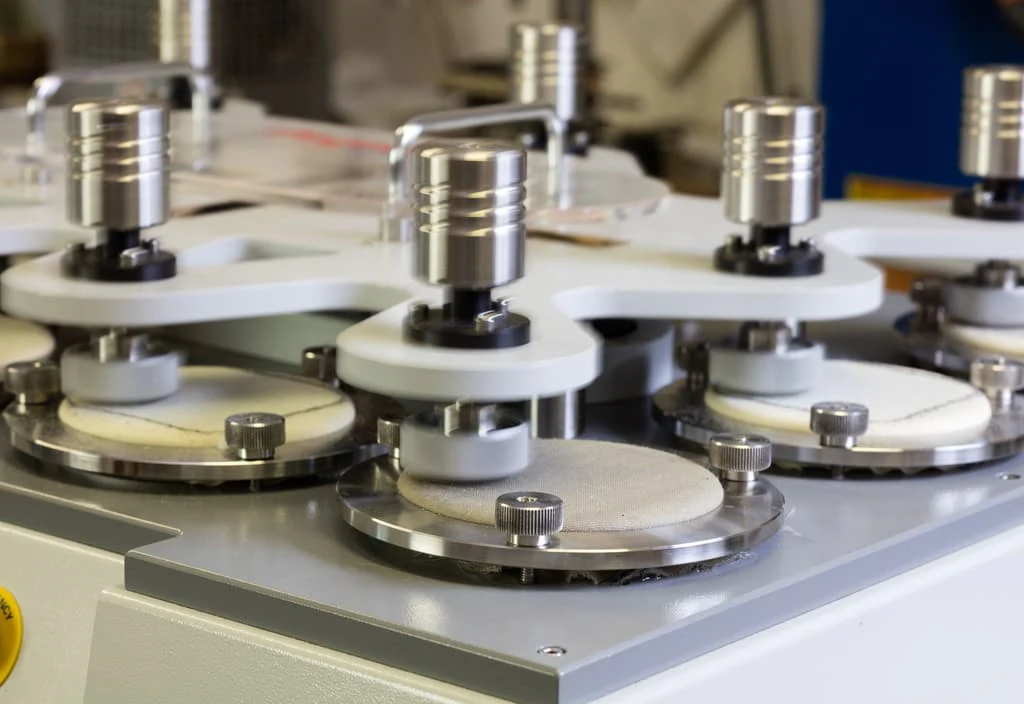
Lab discipline protects your bottom line. Based on our internal audits, here is exactly how standardized testing prevents bulk rejections.
1. Accelerates Supplier Approvals
Clear sample preparation shortens the approval loop. Our redacted checklist stops factories from guessing. Last quarter, Manager Chen used our parameters to cut approval times by 40%. We eliminated back-and-forth re-tests, starting production two weeks early.
2. Benchmarks Global Suppliers
Standardized protocols turn testing into a like-for-like benchmark. Last month, we compared a Turkish mill against a Chinese facility using the identical abrasion standard. This strict baseline removes vendor marketing bias, ensuring identical uniform fabrics regardless of origin.
3. Slashes Field Failures
Early testing improves material selection before bulk commitment. In our lab, we catch tensile misses before they cause seam strain. Monitoring client returns across various types of coveralls, we found upfront testing drops defect rates to zero. It also guarantees predictable coverall care and maintenance.
4. Bulletproofs Compliance
Documented testing forces supplier accountability. We align our workflows with ISO/IEC 17025 guidelines to guarantee legal validity. Reviewing our latest audit logs, Safety Officer Sam noted: “Without this exact ISO paper trail, we cannot defend our PPE safety claims.”
5. Drives Sourcing Strategy
We pull 12 months of anonymized pass/fail records to isolate unstable materials. This raw data dictates exactly where we must tighten quality controls.
| Fabric Category | Total Batches | First-Pass Yield | Primary Failure Mode |
|---|---|---|---|
| 600D Canvas | 145 | 92% | Tear Strength |
| Poly-Cotton Twill | 210 | 85% | Pilling |
| 4-Way Stretch PU | 85 | 64% | Seam Slippage |
📈 ROI Check: Use this table to flag high-variance stretch fabrics. Shift your testing budget toward these risky blends to prevent factory-level rejections.
The Limitations of Fabric Durability Testing
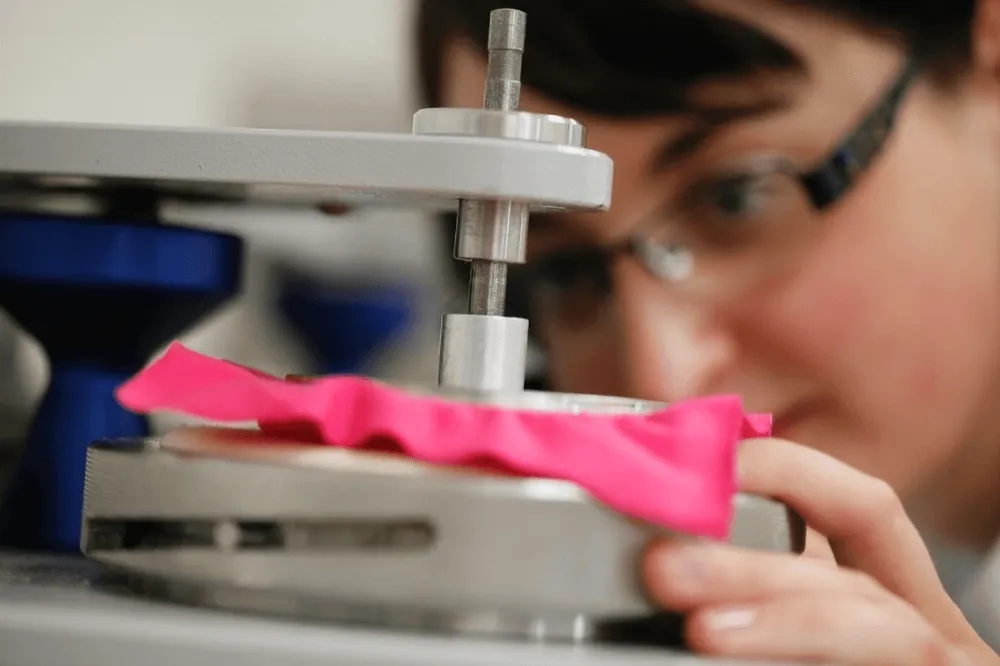
Even strict standard operating procedures cannot eliminate every durability risk. Lab methods simplify reality. We publish this framework based on our internal manufacturing quality assurance.
1. Blind Spots in Total Product Life
Labs isolate variables, but real life combines them. Martindale abrasion data provides a baseline but ignores sweat and chemical washes. In our testing, a 50,000-rub canvas passed the lab but failed in three weeks on a job site. The lab machine simply missed the abrasive concrete dust.
2. False Confidence from Method Mismatches
Applying the wrong standard distorts decision-making. Running a rigid grab tensile test on high-stretch blends yields a false pass. Last year, we applied a universal abrasion threshold across different garments. The heavy canvas survived perfectly, but the lightweight scrubs became incredibly stiff and unwearable.
3. Production Delays from Sample Logistics
Destructive testing kills production momentum. You must destroy raw yardage for precise ISO specimens. As Floor Manager Dai noted: “We lose three yards of bulk fabric just to cut samples, halting the sewing line for days.” Lab quote lead times frequently stretch past 72 hours.
4. High Variance in Eco-Blends
Recycled materials introduce a strict sustainability trade-off. Eco-favorable inputs require tighter engineering to deliver consistent durability. In our tensile testing, a recycled polyester blend snapped at exactly 180 lbs of force. It failed the 220 lbs metric we consistently hit with virgin fibers.
5. Execution Failures Beyond the Lab
Poor factory execution ruins perfect textiles. Unauthorized bulk fabric substitutions or cutting against the grainline instantly erases a strong lab result. This applies whether you manufacture standard workwear or evaluate disposable vs reusable coveralls.
⚠️ Critical Warning: A passing report offers zero protection if the factory substitutes cheap thread during assembly. The CPSC safety warning explicitly states that raw component testing does not automatically clear the finished product for compliance.
The Final Verdict: Standardize or Pay the Price
Ultimately, fabric durability testing holds zero value as an isolated lab experiment. We have established what this testing is, how physical protocols actually work, and why a documented quality control SOP matters across global factories.
The evidence is clear. While sterile lab environments will always struggle to replicate real-world job site grit, standardizing your end-use definitions, sample prep, and pass/fail thresholds remains your only defense against massive container rejections.
Our final takeaway for senior procurement leaders is simple. If you cannot explain your durability standards on a single page, your suppliers are interpreting them differently. This ambiguity destroys budgets and compromises safety.
Whether you manage domestic workwear manufacturers or partner with overseas hi-vis manufacturers, you must enforce a unified baseline. Understanding the specific material demands for different types of coveralls is just the beginning.
If you want to stop guessing and start standardizing, we can help. Contact our team to audit your current testing workflow and bulletproof your next production run.

Leave a Comment
Your email address will not be published. Required fields are marked *