Custom Coverall Manufacturer — Built to Your Spec, Shipped With the Lab Reports
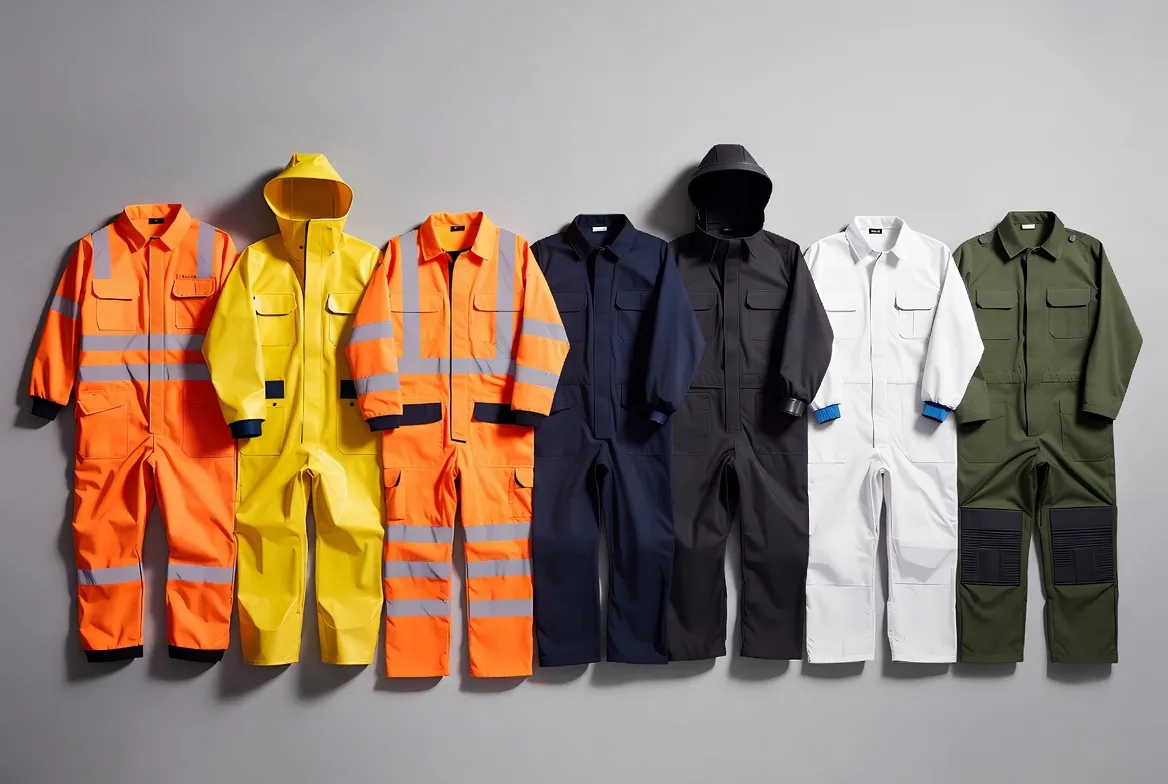
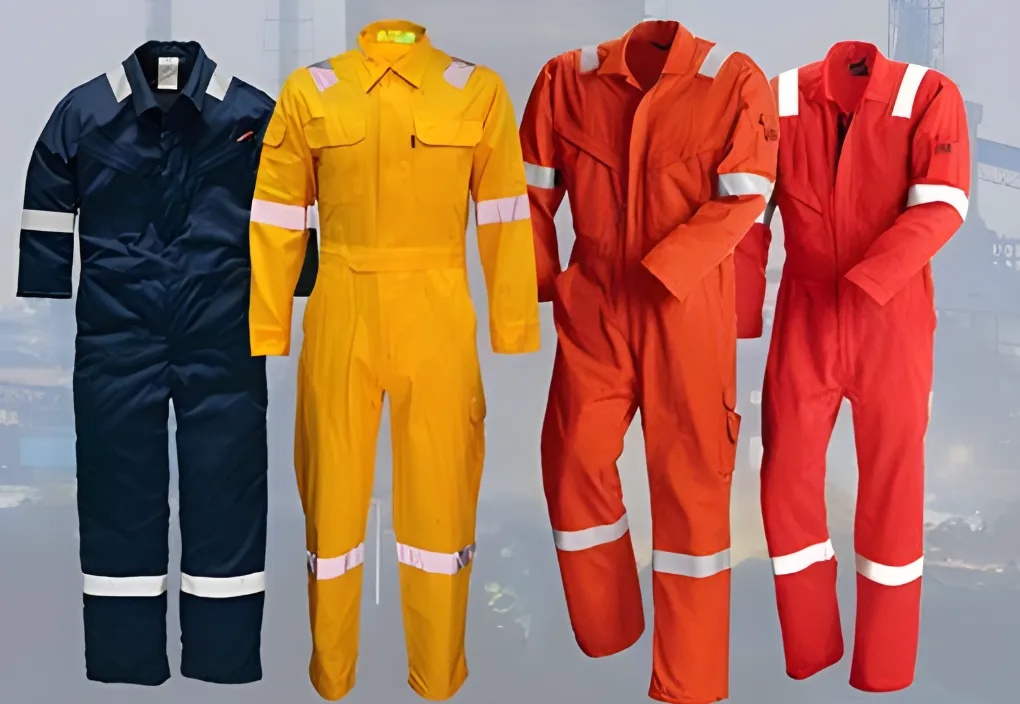
Seven coverall types — industrial, FR, hi-vis, mechanic, chemical, corporate, waterproof — all built to the standard the audit runs against. Each shipment carries test reports tied to its own production lot, so the compliance file closes before the goods leave the factory.
Build a Coverall Program →- MOQ
- 100 per style
- Fit sample
- 7–10 days
- Bulk lead time
- 25–35 days
- Capacity
- 50,000+ units / month
- Facility
- 10,000+ SQM, Wuhan
- Standards
- NFPA 2112 · ASTM F1506 · ANSI/ISEA 107
OUR CUSTOM COVERALL COLLECTION
Each card carries its production note: the failure point that decides whether the next run matches this one.
 01
Industrial & Work Coveralls
- Triple-stitched stress points at all seams
- Configurable multi-pocket layout with tool loops
- Action-back pleats for unrestricted movement
- Knee pad compartments with reinforced panels
Ask a line supervisor where a coverall dies and the answer is the stress points. Ours are triple-stitched, and pocket corners are bar-tacked.
 02
Flame-Resistant (FR) Coveralls
- FR and arc-flash lot-certified
- Aramid/Nomex blend or treated FR cotton
- Non-conductive brass hardware throughout
- Storm flap over two-way zipper closure
One wrong thread voids the whole certificate. Trims on an FR coverall are specified down to brand and model before cutting starts.
 03
Hi-Vis & Reflective Coveralls
- ANSI-compliant Class 1–3 with retroreflectivity testing
- Segmented or continuous reflective tape — 360° coverage
- Fluorescent orange or yellow-green base fabric
- Waterproof panel options for all-weather use
Tape looks bright in the sample room and fails on a night shift. Each lot goes to retroreflectivity testing against the ANSI class it is sold as.
 04
Mechanic Coveralls
- Grease and oil-resistant fabric finish
- Concealed snap closures — won't scratch paint
- Reinforced seat and knee panels for heavy wear
- Elasticated back waist for all-day comfort
Seat and knee panels take the reinforcement. Snaps stay concealed, because an exposed snap drags across a fender and takes the paint with it.
 05
Chemical & Hazmat Coveralls
- Sealed seam construction with anti-static properties
- Covered zipper with splash flap for chemical protection
- Compatible with respiratory PPE and eye protection
- Made as limited-use spunbond polyolefin or durable reusable builds
Sew a hazmat seam and you have punched a hole through the barrier. Critical seams are sealed or taped over, never left as plain stitching.
 06
Corporate & Service Coveralls
- Structured stand-up collar with professional finish
- Pantone-matched fabric and thread for brand consistency
- Full private label packaging — hang tags, care labels, polybags
- Clean lines designed for customer-facing service teams
Fabric and thread are matched to the same Pantone reference. Match one and eyeball the other, and the uniform ends up with two shades of navy.
 07
Waterproof & Weatherproof Coveralls
- Sealed or taped seams at all joins
- Attached or detachable hood with drawcord face opening
- Storm placket and storm cuffs
- ANSI/ISEA 107 tape applied over the seal, not through it
The reflective tape is laid over the seal rather than stitched through it. One needle hole through a taped seam is enough to turn a waterproof coverall back into a showerproof one.
Any fabric weight 6–12 oz, any hood, closure, or tape layout. Send the techpack and we build the type around it.
Build a Custom Type
WHICH COVERALL
FITS YOUR CREW?
Compare all seven coverall types side-by-side. Find the right spec for the hazard profile in under 30 seconds.
| Industrial | FR | Hi-Vis | Mechanic | Chemical | Corporate | Waterproof | |
|---|---|---|---|---|---|---|---|
| Fabric Weight | 8–9 oz | 10–12 oz | 9–10 oz | 8–10 oz | 6–12 oz | 7–9 oz | 6–12 oz |
| Built For | Factory floor, warehouse | Oil & gas, electrical | Road crews, construction | Auto service, fleet | Chemical plant, lab | Facilities, utilities | Outdoor, rain, cold |
| Standard Tested To | OEKO-TEX | NFPA 2112 | ANSI/ISEA 107 | OEKO-TEX | EN 1149 (anti-static) | OEKO-TEX | EN 343 |
| Not Built For | Flash fire, molten metal | Chemical splash | Molten metal, arc flash | Flash fire, chemical splash | Arc flash, hot work | Hazard exposure | Arc flash, chemical permeation |
| Closure | Two-Way Zip | Storm Flap Zip | Two-Way Zip | Concealed Snaps | Sealed Zip | Two-Way Zip | Storm Placket |
| Knee Reinforcement | — | — | — | ||||
| Reflective Tape | — | — | — | — | — |
Fewer than 100 pieces per style.
Stock on hand this week. Everything is cut after the sample is approved.
A fixed chemical-penetration rating before ordering; that is tested against the lot and ships with it.
COVERALL FABRIC BY HAZARD
LIGHTWEIGHT & COTTON
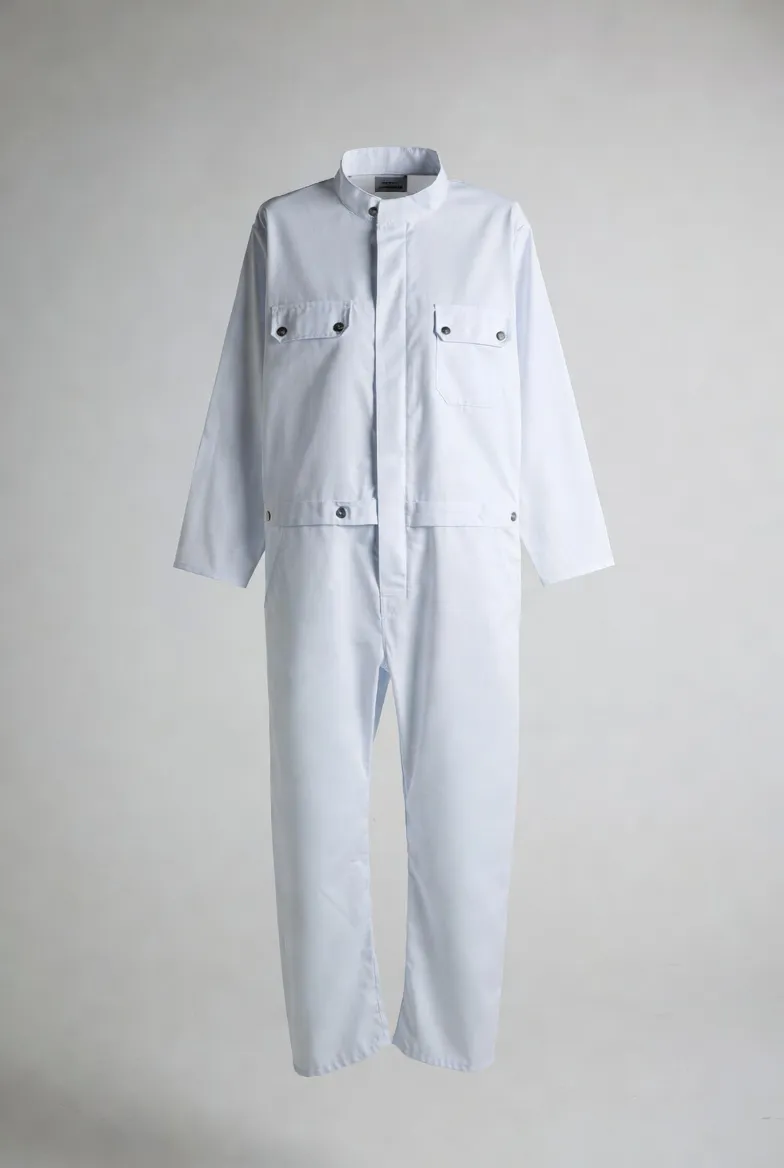
Weight follows the hazard: heat, abrasion, molten metal, or wash cycles. A 6oz food-plant build and a 12oz FR coverall for a foundry share a pattern block and little else.
 6–7 oz
Indoor facilities, warm climates, food processing, cleanrooms
Light and breathable, but it will not take abrasion, sparks or molten metal.
100% Cotton Poplin · Poly-Cotton Twill (65/35) · Moisture-Wicking Polyester
 8–9 oz
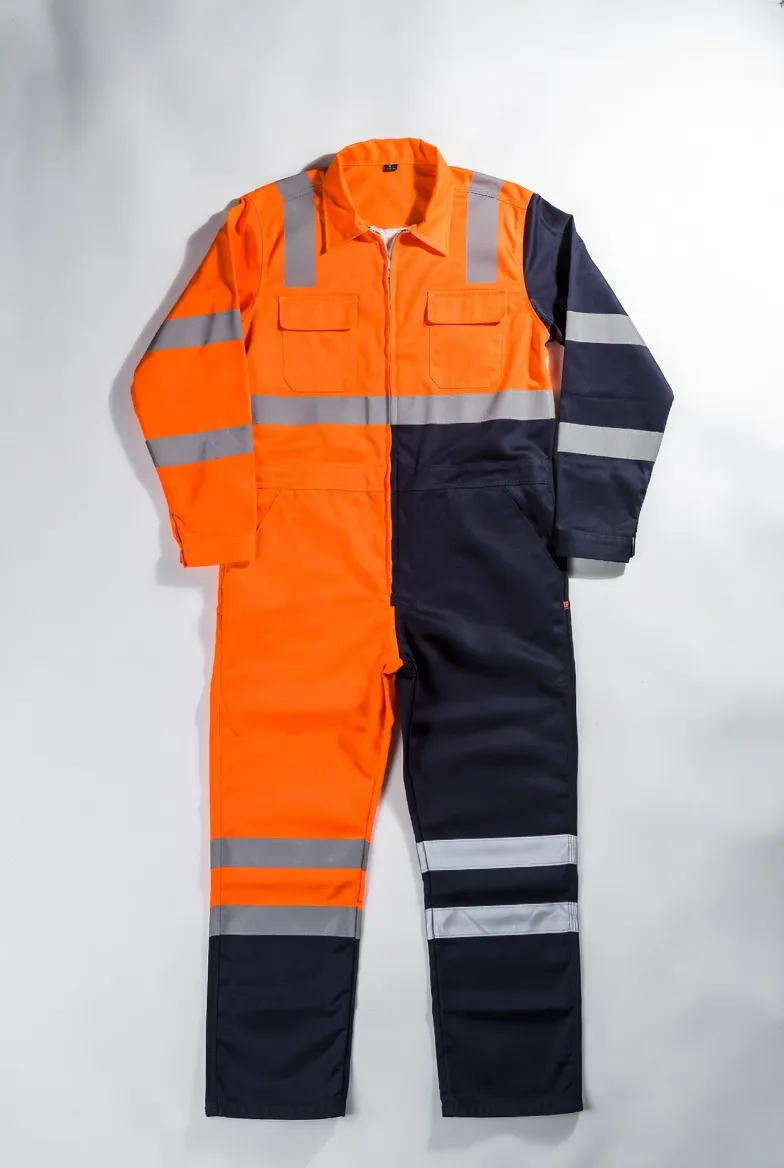
General industrial, manufacturing, auto service, corporate/service crews
The general-purpose tier — durable without the break-in of heavier cotton.
Cotton Twill · Cotton Duck · Poly-Cotton Canvas · Cotton-Rich Stretch Twill
 10–11 oz
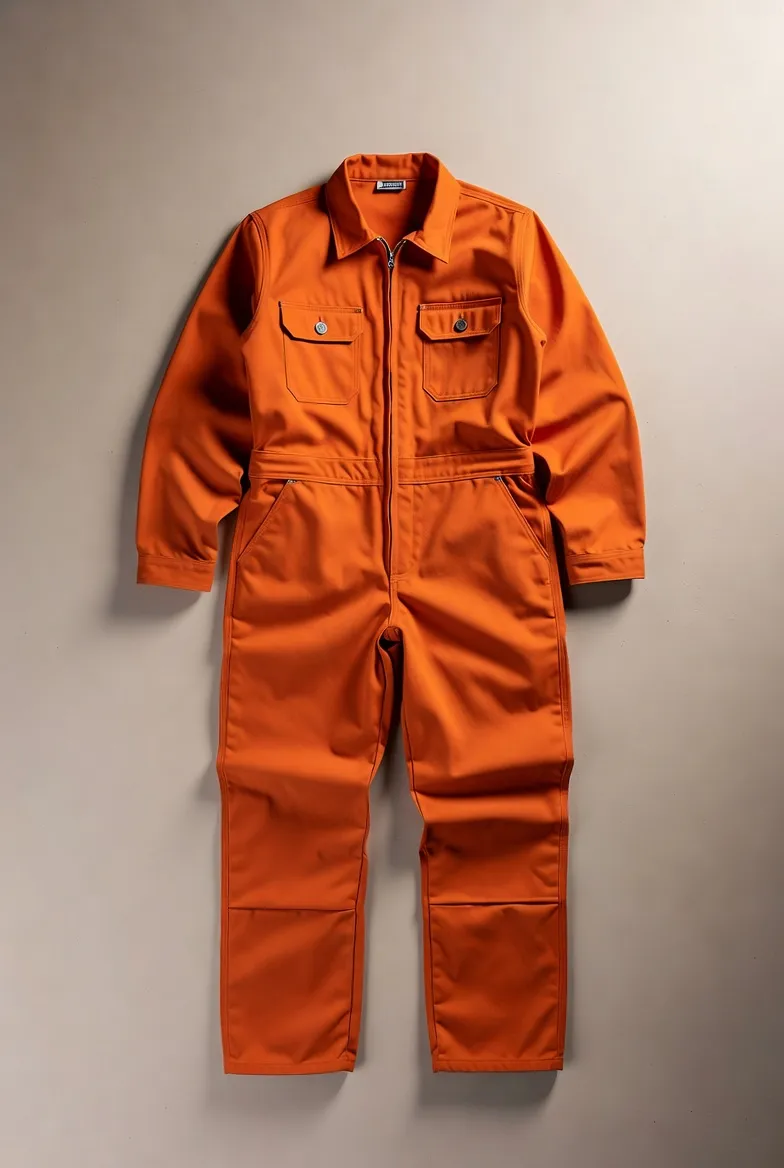
Construction, oil and gas, utilities, cold-weather outdoor work
Where knee reinforcement and bar-tacks start earning their place.
Heavy Cotton Drill · Denim · FR-Treated Cotton · Poly-Cotton Ripstop · Aramid Blends
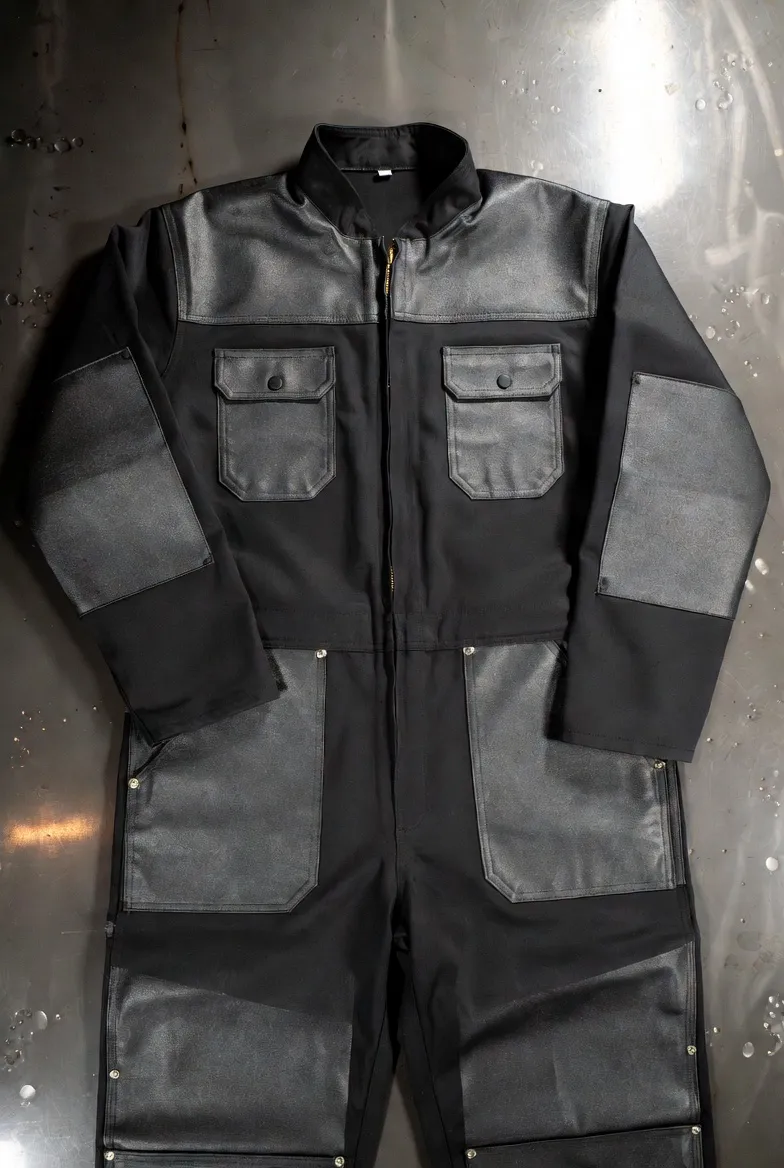 12 oz+
Foundries, welding, heavy abrasion, molten metal environments
Past this point the fibre decides protection, not the weight.
Heavy Aramid/Nomex Blend · Aluminized Backing · Double-Layer Construction · Leather-Reinforced Panels
WHAT EACH COVERALL CERTIFICATE COVERS
Each certification is lot-specific and tested by an independent ISO 17025 lab. Reports carry your PO number and ship with the order — the paperwork auditors, insurers, and regulators ask for.
NFPA 2112
Flash Fire Protection
FR Coveralls ·National Fire Protection Association ·ASTM F1930 Instrumented Manikin
ASTM F1506
Arc Flash PPE
FR / Arc-Rated Coveralls ·ASTM International ·ASTM F1959 Arc Rating (ATPV/EBT)
IEC 61482
Arc Thermal Performance
Arc-Rated Coveralls ·International Electrotechnical Commission ·IEC 61482-2 / Box Test (IEC 61482-1-2)
High-Visibility Safety Apparel
Hi-Vis Coveralls (Class 1–3) ·American National Standards Institute ·Retroreflectivity + Background Luminance
EN 1149
Electrostatic Properties
Anti-Static Coveralls ·European Committee for Standardization ·EN 1149-1 Surface Resistivity / EN 1149-3 Charge Decay
OEKO-TEX 100
Harmful Substance Free
All Coverall Fabrics ·OEKO-TEX Association ·Class I (Infant-Safe) Substance Screen
Quality Management System
Entire Production Facility ·International Organization for Standardization ·Full QMS Audit & Surveillance
"Inherent FR vs. treated FR isn't a quality question — it's a lifecycle math question. Treated cotton is softer and cheaper up front, but the chemical finish washes out over industrial laundering. Inherent FR keeps its protection past 50 washes and costs 20–35% more. What usually decides it is the wash cycle nobody modeled when the PO was signed.
Components are the same problem — one wrong zipper tape or a non-FR thread and the certification is void, because fabric certification means little if the trim melts.
That's why the techpack specifies each component: Nomex thread throughout, Nomex tape with brass teeth under a fully covering storm flap, and ANSI/ISEA 107 reflective trim. And why the bulk order is cross-checked against the lab-tested sample before production starts."
Need the test reports for your standard before you commit?
Tell us the standard and we confirm what your lot is tested to, before the PO is signed.
Quote reply in 24 hours
COVERALL CUTS & COMPONENTS
Category sets the hazard protection; the cut is separate. Sleeve, hood, closure and legs all come off the same pattern block, so a summer build and a winter build fit identically.
Short Sleeve, Long Sleeve & Bib Coveralls
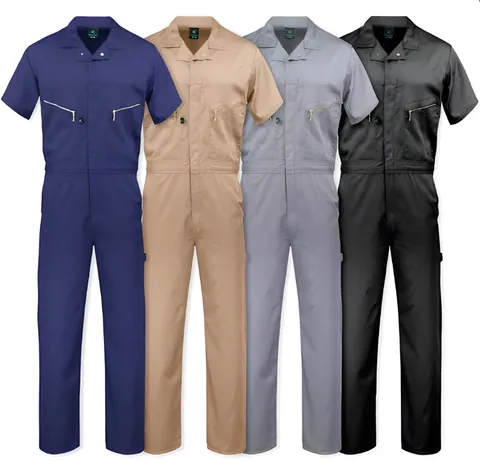
Short Sleeve Coveralls
Hot plants, summer shifts, food processing
- Sleeve length
- Cuff type
- Underarm vent
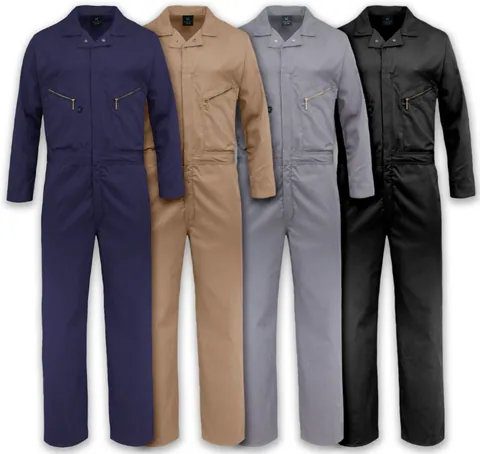
Long Sleeve Coveralls
Welding, spark exposure, outdoor crews
- Sleeve length
- Storm cuff
- Thumb loop

Hooded Coveralls
Overhead work, dust, rain, cold storage
- Attached or detachable hood
- Drawcord
- Face opening
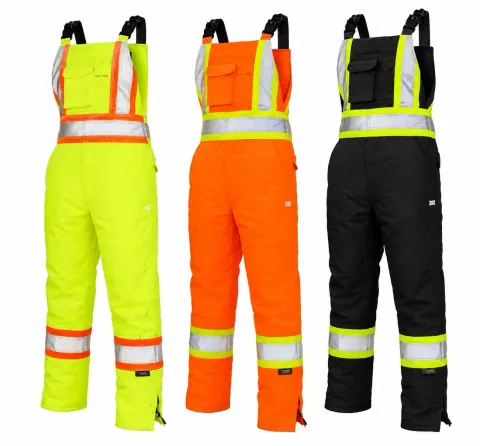
Bib & Zipper-Leg Coveralls
Layering, quick change, confined access
- Bib front
- Suspender style
- Zipper legs
- Snap closure
Hooded Coveralls, Closures & Pockets
Lock all four and reorders stay consistent. Leave one open — cuff type is the usual culprit — and the second run will not match the first. Decoration and labelling run in-house under the private-label programme.
Cuff
- Elasticated
- Velcro adjustable
- Snap adjust
- Storm cuff
Collar & Front Closure
- Structured stand-up collar
- High collar under hood
- Two-way brass zip
- Two-way nylon zip
- Concealed snap front
- Storm flap
- Velcro storm flap overlay
Pockets
- Multi-pocket layout
- Tool loops
- Cargo
- Zippered
- Flap type
- Knee pad compartments
Decoration & Labeling
- Embroidery
- Screen print
- Heat transfer
- Chest / back / sleeve logo placement
- Woven & printed labels
- Hang tag & polybag
WHAT CHANGED FOR TWO COVERALL CREWS
Metrics come from QC records and client procurement documents. Cost per wear is programme spend divided by wear days logged by the client; a replacement counts any garment withdrawn before its stated service life. The Mewbourne program has a full write-up; the second client asked to stay unnamed.
 01
Four-SKU NFPA 2112 FR Coverall Program
- Four regional suppliers, four different fabric specs
- No batch record showed which garment protected which worker
- Field crews worked near pipe racks and condensate lines
- Maintenance crews moved through hot-work zones
- One spec could not serve both
- Two-tier build: 7 oz 88/12 cotton-nylon for field crews, higher TPP for maintenance
- Nomex thread throughout, brass zip teeth under a full storm flap
- Lot codes traced from roll to finished garment
- Finished-garment NFPA 2112 certification and ASTM F1930 data on every SKU
 02
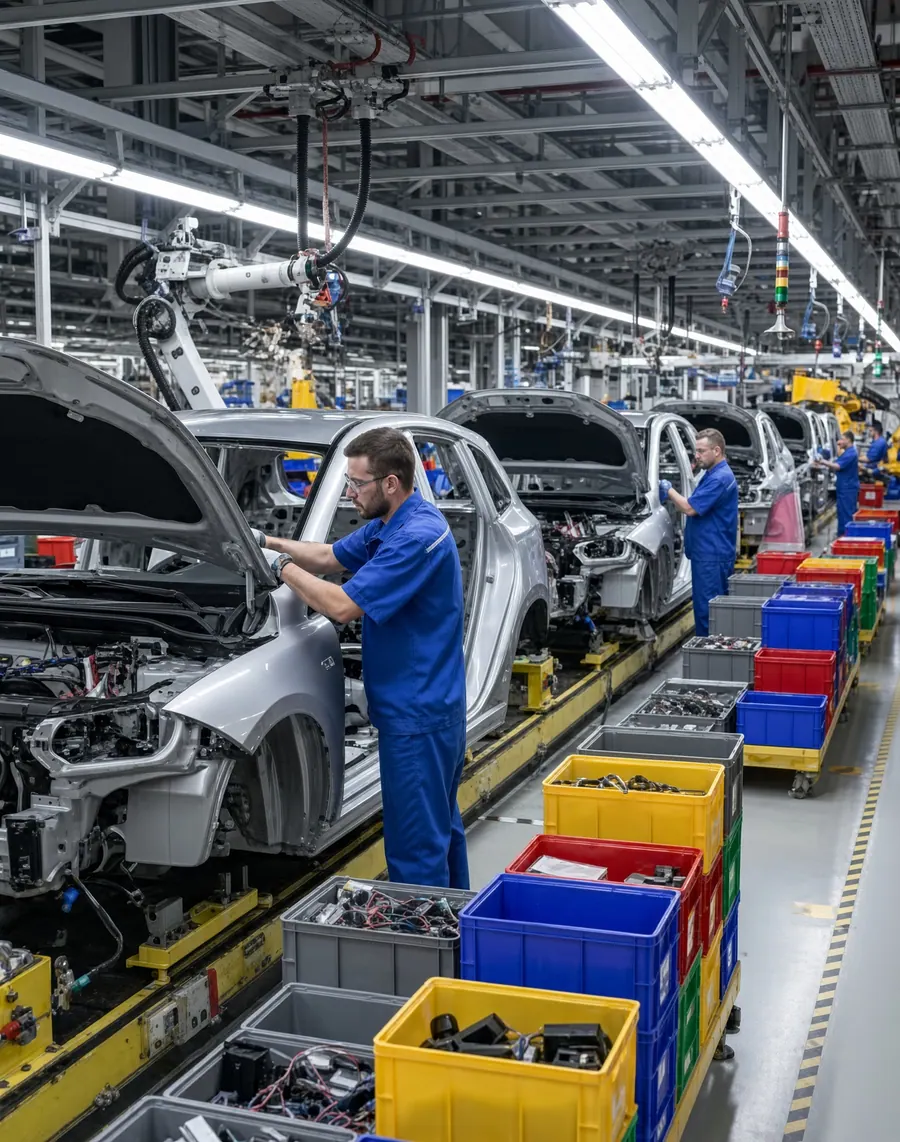
3,000 Industrial Coveralls for Automotive Assembly Plant
- Three-shift, 24/6 plant running 12 department-specific specs
- Previous program ran on 12-week lead times
- Shift supervisors kept emergency inventory between deliveries
- Critical requirement: zero tolerance for zipper failure
- Six of the plant's 12 lines dedicated to the order
- Colour-coded pocket linings by department
- Continuous-filament aramid thread at all stress points
- Zippers tested to 10,000+ cycles
- AQL 2.5 inspection, AQL 0.1 on critical defects, zero major defects
The previous program ran 12 weeks per cycle. LantaoWork: one production run, zero major defects. Eliminated the emergency inventory pool and freed $40K in working capital. Now the sole coverall source across all three U.S. plants.
HOW YOUR COVERALL
GOES FROM SPEC TO SHIPMENT
Four stages, from spec to packed container. The floor work behind stage four — pattern making, cutting, stitching, QC — is covered in how coveralls are manufactured.
Submit Your Spec
Send a techpack, crew roster, or a napkin sketch. It gets digitized into a production-ready specification, with a tolerance on each measurement, placement, and trim reference.
Supported formats: PDF techpack, Excel size roster, photo reference, physical sample
Review Digital Mockup & Swatches
Within 48 hours: 3D renderings of the coverall with all branding, tape, and hardware in place. Fabric swatches, thread color cards, and trim samples shipped to the desk.
48-hour turnaround · Fabric & trim swatches included · Unlimited revision rounds
Approve Fit Samples
Functional fit samples in the production fabric. Wear-test them on the crew. Adjust pocket placement, taper, or collar height until the fit is right. No muslin, no substitutes.
Production-grade samples · Full size set available · Unlimited revision rounds
How pilot sampling worksProduction, QC & Delivery
The approved sample becomes the gold standard. Bulk production with QC checkpoints at cutting, stitching, and finishing, with each garment checked against the signed-off sample before it leaves the station. Final inspection before packing.
Compliance docs shipped with order · DDP available
FREQUENTLY ASKED QUESTIONS
ABOUT COVERALL MANUFACTURER
Are you a factory or a trading company? + −
A factory. 10,000+ SQM in Wuhan with 12 production lines and 150+ operators under one roof, certified to ISO 9001:2015. Quotes come back from the production team that will actually run the order, so there is no trading layer between your PO and the sewing floor.
How is the minimum order quantity calculated if I order several styles at once? + −
Per style, not per purchase order. Three styles in one PO means three minimum order quantities of 100, run on separate lines and shipped as one consolidated delivery. The quote is itemized by style and comes back within 24 hours.
What actually moves the unit price? + −
Fabric weight and fibre, trim spec, certification scope, decoration, and order size. A heavier aramid shell, FR-rated thread and tape, lot-specific lab testing, and embroidery each carry their own cost. That is why the quote is itemized instead of one number, and can be issued FOB or DDP so landed cost is visible before you commit. How a bulk quote is built breaks the same lines down.
What are the payment terms for a first order? + −
30% deposit to start production, 70% before shipment. After three completed orders, net-30 becomes available. We accept T/T, L/C, and trade assurance.
How long until the first shipment? + −
Quote in 24 hours, digital proof in 48, physical prototype in 7–10 days in the production fabric, bulk in 25–35 days. The production timeline breaks down each stage. Production starts only after the sample is signed off.
How often do orders ship on time? + −
98.7% on-time delivery across 2025 orders, measured against the confirmed ship date on the PO rather than the original quote, on 12 lines running 50,000+ units a month. Volume spikes get absorbed by the line count rather than by moving the ship date.
How do you keep the second order identical to the first? + −
The approved sample becomes the archived standard. Reorders are cut on the same pattern block and checked against that sample, with no re-sampling or re-negotiated tolerances.
How do we size a mixed crew without a re-cut? + −
XS–6XL, with men's and women's blocks graded separately. The charts do not convert, so both blocks go in the RFQ. Send the crew roster and it is mapped into the grading matrix before the sample is cut; the coverall size chart has the full grid, and the measurement guide shows how to measure a crew without a tailor.
What's the difference between water-resistant, waterproof, and windproof coveralls? + −
Match the build to the exposure. Light rain and splash call for a water-resistant shell. Sustained rain, or a crew working under overhead spray, needs the sealed waterproof build. Wind is a separate problem: it comes through openings, so the spec is a storm placket and storm cuffs rather than a heavier fabric. The fabrics behind both builds are compared in the waterproof fabric guide.
Who owns the design, and will you sign an NDA? + −
You own it. A mutual NDA is signed before we open your artwork, patterns or tech pack, and your design runs in its own production lane — never shown to, or made for, another buyer. Exclusivity agreements are available if you want that written into the contract.
Have more questions about a custom coverall program?
Talk Compliance With Our Team →COVERALL PROCUREMENT GUIDES & RESOURCES
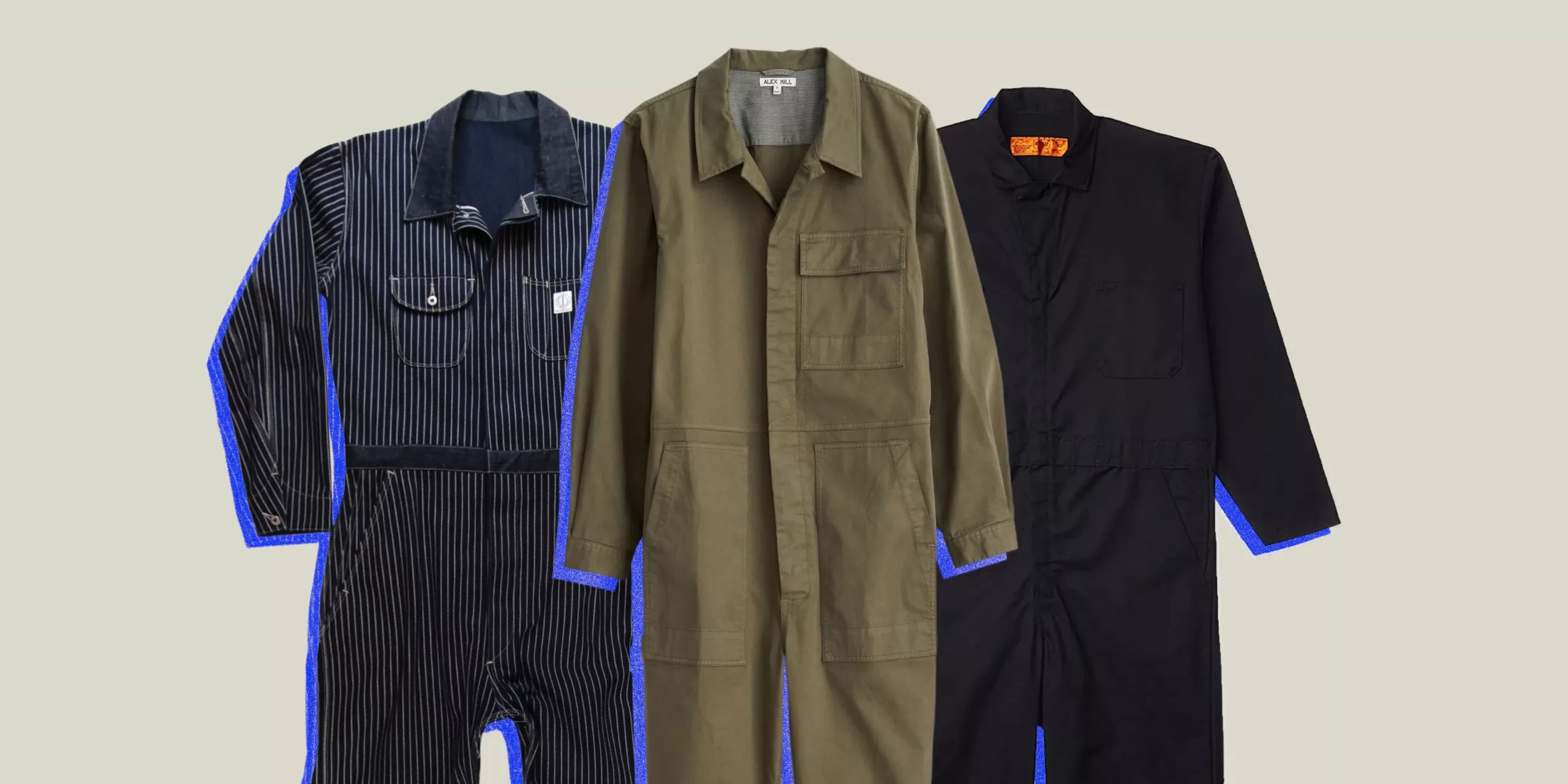
Top 7 Types of Coveralls: Expert Guide to Safe Work Apparel
7 types of coveralls for FR, chemical, arc flash, hi-vis and shop work — match the hazard, seams and certs before you issue an RFQ.
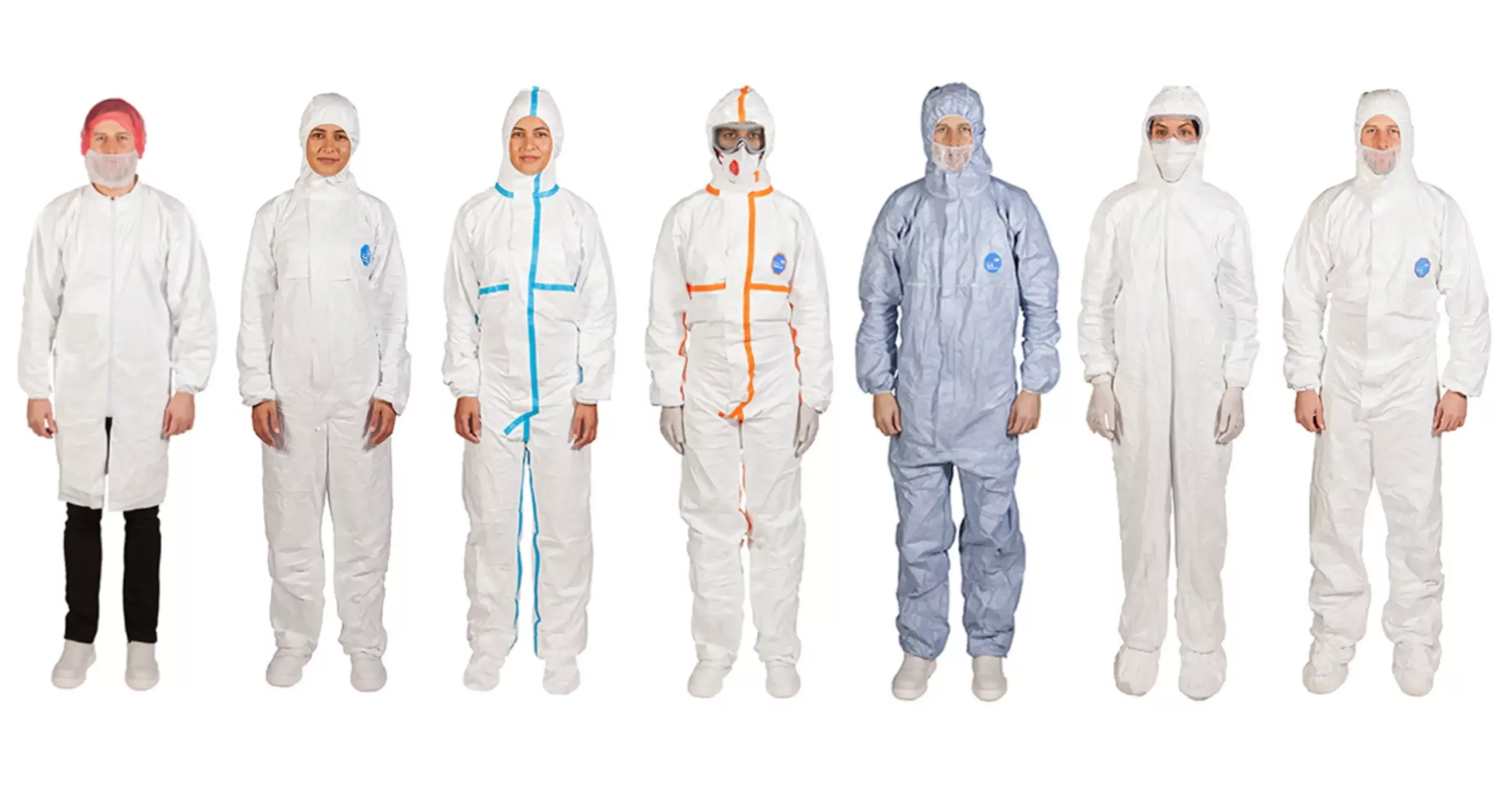
Must-Know Coverall Material Guide: Pro Guide & Reviews
Coverall material guide: match fabric to site hazards to avoid catastrophic failures — a 10-year supply-chain audit perspective.

Coverall Safety Standards: Avoid Risks & Cut Procurement Costs
Coverall safety standards: buy on standards, not weight or price — protect workers and cut procurement risk and liability.
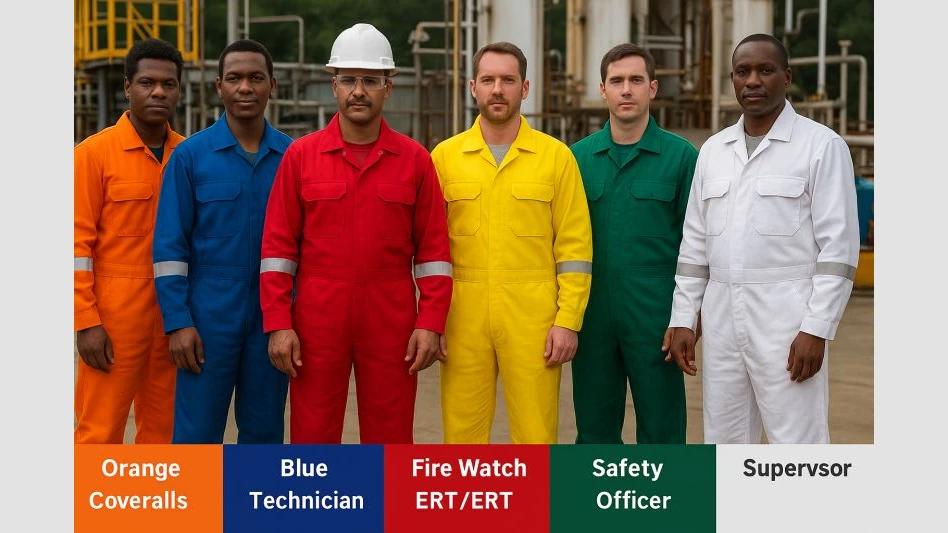
Coverall Color Code Meaning: 10 Colors, Not 10 Protections
Coverall color code meaning: OSHA assigns no color. Codes mark role and zone, not protection. Compare 10 colors and adapt two ready schemes.
10 Best Coverall Manufacturers in USA for Enterprise Buyers
Ten coverall manufacturers and brands for U.S. buyers, checked on FR documents and SKU-level origin — seven own American cut-and-sew floors.
YOUR FIRST ORDER:
100 PAIRS IN 35 DAYS.
100 pieces per style is the floor, not a trial run. Fit sample in 7–10 days, then 25–35 days of bulk from the day you sign it — on the same lines that will run your reorders.