
Heavy Industry FR & Safety Workwear — One Factory-Direct Program, Zero Compliance Gaps
FR coveralls, hi-vis vests, anti-static workwear, firefighter gear, and custom coveralls for Oil & Gas, Mining, Chemical, Electric Power, and Metallurgy. Every shipment lands with a single compliance file — exactly matching your spec. MOQ 100 per style, consolidated across your sites.
The Five Scenarios That Keep HSE Managers Awake

"The NFPA 2112 Certificates Don't Match the Batch."
The test report says ASTM D6413 passed — but for a different fabric lot, different dye lot, different weight. The auditor checks UL Product iQ: the certificate number isn't listed. Gear's on the dock. Audit's Monday.
A cert that can't be verified in a public directory isn't certification — it's a test report with an expiry date.
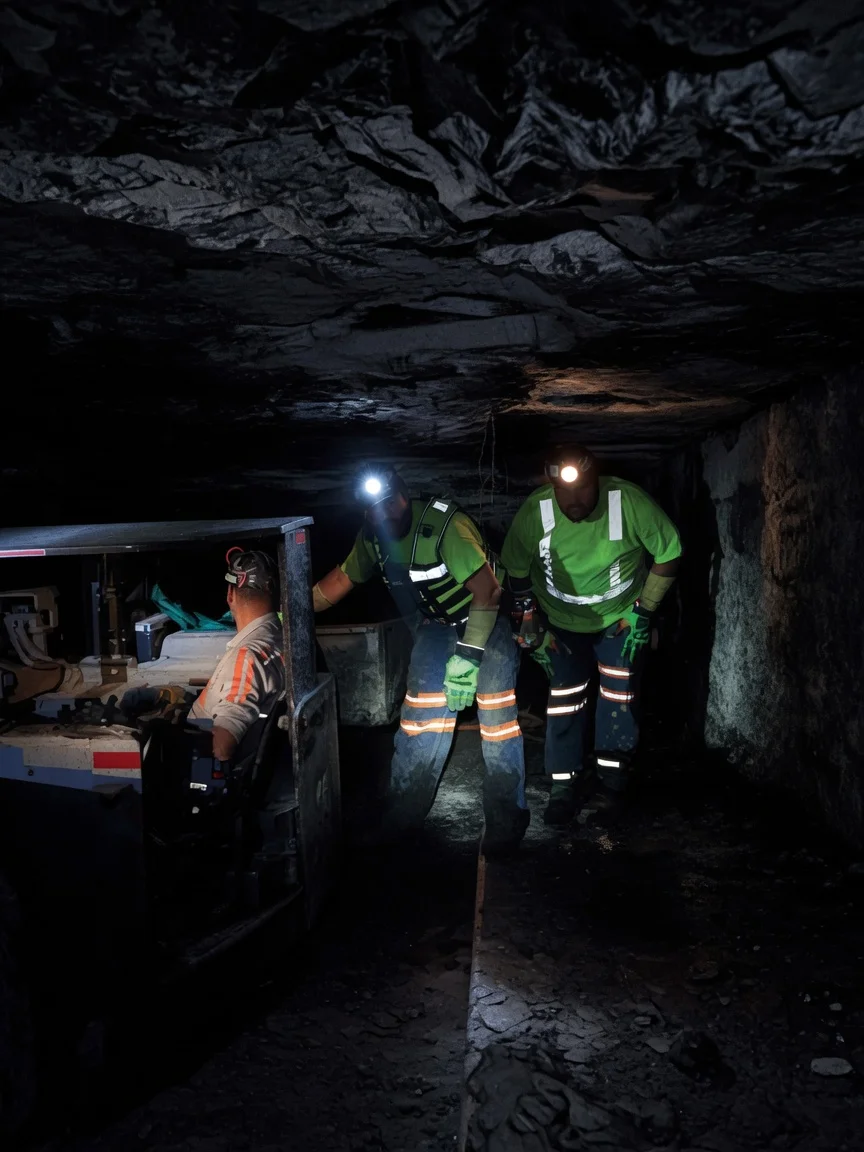
"The Reflective Tape Peels Off After 3 Washes."
Underground, zero retroreflectivity after 3 washes. The tape delaminated because the supplier used generic tape, not 3M Scotchlite. Nobody verified the tape certificate. Now someone's writing an incident report.
Generic tape delaminates. 3M Scotchlite with batch traceability doesn't. One requires a cert check at incoming QC.
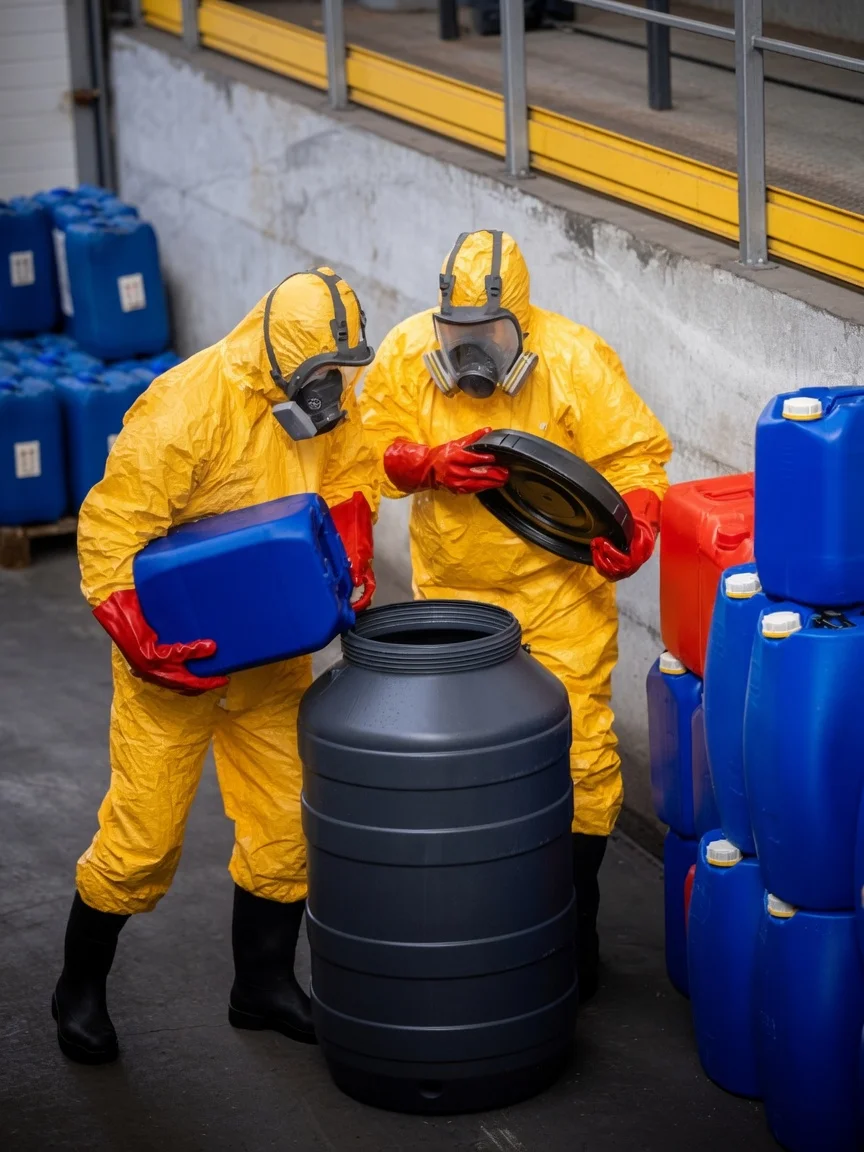
"You're Juggling 4 Suppliers for One Workforce."
FR coveralls from Vendor A. Chemical splash suits from Vendor B. Anti-static from Vendor C. Different lead times, varying quality, incompatible paperwork. One late shipment — the turnaround crew can't enter the zone.
Every additional supplier multiplies your compliance burden. Four vendors = four sets of paperwork to defend in an audit.

"The FR Rating Was on Paper Only."
ASTM F1506 cert looks valid. But the fabric was tested 3 years ago and the mill changed the blend since. The crew wears gear rated for a fabric no longer in production. When the arc flash happens, that old test report won't hold up.
Certifications age. Fabric blends change. If no one's checking whether the cert still matches the current production lot, you're exposed.
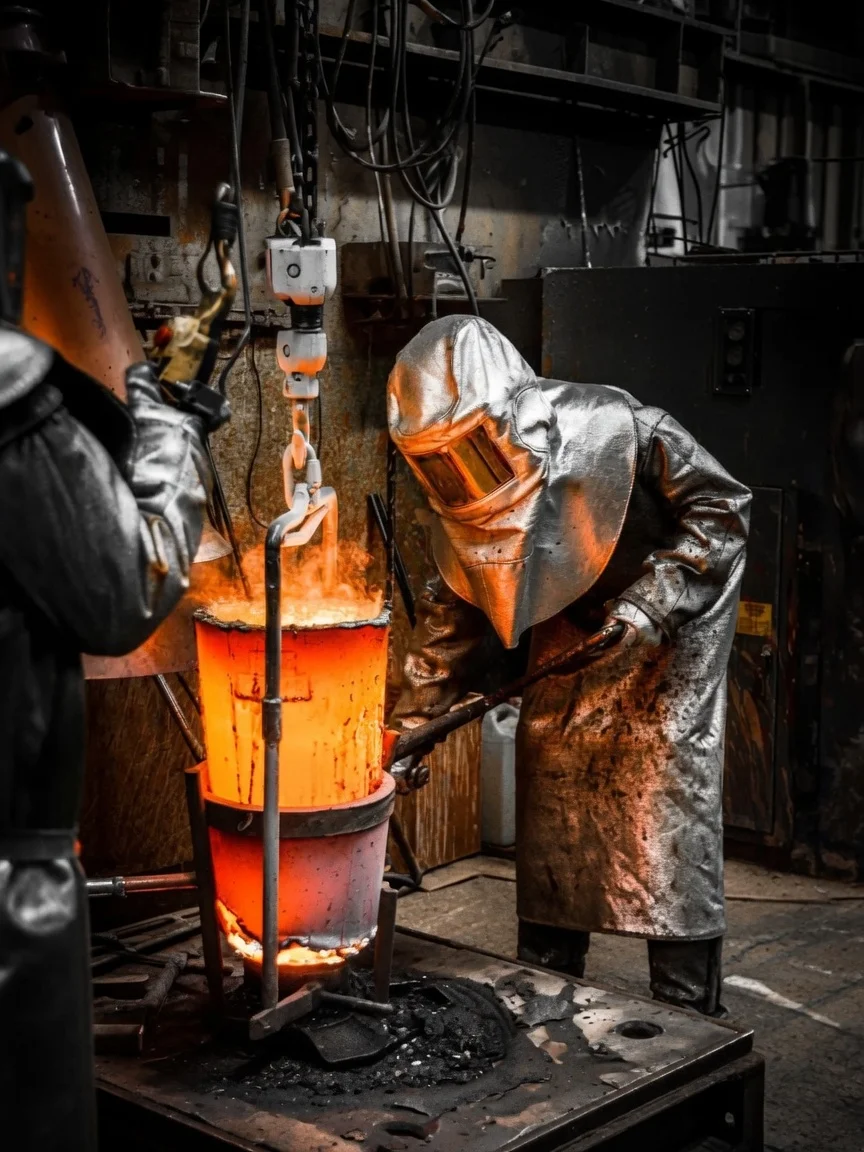
"The PPE Stays in the Locker."
3 kg aluminized foundry suits. Sleeves rolled up, jackets on railings. $200K in PPE parked in lockers while workers take the heat risk. Heat stress complaints up 40%. An auditor sees unprotected workers — that's a citation. The crew needs FR that protects without punishing.
Heavy PPE that workers refuse to wear protects no one. Lighter, breathable FR changes behavior on the floor.
One Supplier vs Four.
One Compliance File vs Four Sets of Paperwork.
3+ suppliers, test reports that don't match batches, expired certs, no certifier directory verification
One compliance file per shipment. Every fabric cert traceable to UL Product iQ / certifier directory. Batch-level test reports with lab accreditation. Proactive cert expiry alerts 90 days ahead.
One FR fabric shortage = entire order delayed. No backup mill, no substitution protocol.
200+ certified fabric library across 6 pre-qualified mills. Fabric substitution protocol: if Mill A has shortage, Mill B activates within 48 hours — equivalent spec, your approval required.
Prototype perfect, 2,000-unit order: wrong shade, stray threads, seams failing after 3 industrial washes
QC at every production stage — incoming fabric, in-line, pre-shipment. Seal sample locked for 24 months as the quality benchmark. 100+ cycle industrial wash testing validates durability. If a batch doesn't match the seal sample, it doesn't ship.
Heavy treated FR that doesn't breathe. Aluminized suits weighing 3+ kg. Workers roll up sleeves, unbutton collars, leave jackets on railings — PPE in place but not in use. Incident rate climbs. Auditor citations for non-compliance.
Breathable FR cotton-nylon and modacrylic blends — 30% lighter than traditional treated FR, same flash fire certification. Mesh-lined vented panel options, moisture-wicking liners, climate-adaptive structures.
One severe burn incident: $200K–$2M+ in direct costs (medical, legal, regulatory fines). Add indirect costs (downtime, reputational damage, insurance premium hikes) — total financial exposure can exceed $5M per incident.
A compliant FR program for 500 workers: typically $50K–$150K/year. Properly certified FR clothing significantly reduces burn severity — transforming what would be a life-altering injury into a survivable outcome.
*Data sourced from LantaoWork internal QC audits (2024–2025) and client-reported HSE audit results (2023–2025). Incident cost estimates: NFPA / OSHA industry guidance.
FR Workwear Programs — Who This Fits, and Who It Doesn’t
Most of the cost of a failed PPE program arrives long after the invoice — an audit finding, a wear-compliance problem, or a batch that should never have shipped. This is the short version of who we do this work for, and how to score any supplier before you commit.
- ✓ You run a multi-site industrial program where one failed batch stalls more than one site.
- ✓ Your hazard profile maps to a named standard — NFPA 2112, EN ISO 11612, ASTM F1506, or ANSI/ISEA 107.
- ✓ You need batch-level compliance documentation with each shipment, not a wall certificate and a lab report.
- ✓ You can commit to a 100-piece pilot and a signed-off size matrix before full volume.
- ✕ You need garments this week. FR fabric is tested before cutting, and that sequence cannot be compressed.
- ✕ You are buying on unit price alone. Certified FR fabric has a cost floor no trading company can go below.
- ✕ The hazard assessment is not written yet. We cannot specify a standard you have not defined.
- ✕ You need a single made-to-measure piece. Production is built around a graded size matrix.
These are scope and timing mismatches, not quality judgements. Say so on the first call and we will tell you plainly whether your program fits how this line runs — a mismatch caught early costs one conversation instead of one production run.
How to Evaluate Any FR Supplier — Six Rows
Bring this to your next procurement review. None of the questions name a vendor — they work on any supplier you are shortlisting, including us.
Proven Results — Real Heavy Industry Programs, Real Impact
Offshore Oil & Gas Platform Operations
Gulf of Mexico offshore operator — 6 platforms, 800 crew, 14/14 rotation. Name withheld under NDA.
"We went from juggling 3 suppliers with mismatched paperwork to a single shipment that self-documents. Our auditor now clears the entire compliance review in under an hour."
- ✕800 offshore crew across 6 platforms — 8-week lead times on FR coveralls
- ✕Certs expired 18 months earlier — flagged during site audit
- ✕One mill, one fabric source — a single shortage would leave crew unprotected
- ✓Flash fire certification per batch, every fabric lot traceable in UL Product iQ
- ✓Secondary mill activated — fabric redundancy kicks in within 48 hours if needed
- ✓3-week standard lead time. One compliance package per platform, per delivery


Integrated Steel & Chemical Complex
Southeast Asian integrated steel mill & chemical processing plant — 2,200 workers across two adjacent sites. Molten metal hazard + acid splash + anti-static requirements.
"The biggest win wasn't the cost — it was the 60% drop in heat complaints. When gear is light enough that workers actually keep it on, your safety numbers transform. Consolidating vendors freed up 15 hours a week for my team."
- ✕Separate vendors for mill FR garments, chemical splash suits, and anti-static kit — incompatible sizing between suppliers
- ✕3 kg aluminized suits — 40% heat stress complaint rate, workers routinely shed PPE mid-shift
- ✕Actual PPE compliance: 55%. Multiple lead times cascading across the program
- ✓FR cotton-nylon for the mill + anti-static coveralls for the chemical plant — same vendor, same quality bar
- ✓30% lighter breathable FR blends dropped heat complaints from 40% to under 15%
- ✓Shared sizing grid across both sites. One set of compliance files. One point of contact
Results from actual client programs conducted 2022–2024. Cost savings verified by client invoice comparison (before/after factory-direct transition). Individual results vary by current supplier mix, order volume, product complexity, and shipping terms.
The 7-Step FR Compliance Verification Playbook
Most PPE suppliers hand you a test report and call it certified. We teach you how to verify it — because the first person an investigator asks after an incident is you, not your supplier. Every step in this playbook aligns with NFPA and ASTM standards for protective garment programs.
Spec Freeze & Standard Mapping
We map your hazard profile to exact standards with edition/year: NFPA 2112-2023, ANSI/ISEA 107-2020, ASTM F1506. The standard edition is locked in your PO — no ambiguity.
Confirm the standard edition in your PO matches your site requirements. Different editions have different test criteria.
Fabric Certification & Directory Verification
Every fabric certification is verified against the issuing body's public directory (UL Product iQ, SEI/CSA). We verify: certificate number, mill name, fabric style number, cert expiry date.
Critical: Ask for the Certificate Number and Certifying Body name. Look it up yourself in the certifier's online directory. If it's not listed, it's not certified. A lab test report alone is not certification.
Pre-Production Seal Sample
Physical sample with full compliance documentation. You approve it — it becomes the quality standard, locked in our QC archive for 24 months. Every subsequent batch is measured against this benchmark.
Verify the seal sample's fabric weight, dye lot, and label match the certificate. Keep your own copy of the approved sample.
Triple-Stage QC Production
Statistical sampling at 3 gates: incoming fabric (ASTM D6413 flame, thermal shrinkage, tensile) → in-line (seam strength, stitch count, tape adhesion) → pre-shipment (200+ garments). Time-stamped QC photos at every gate.
Ask for the AQL level and sampling plan in your contract. AQL 2.5 for major defects is industry standard for safety PPE. Require digital QC photos with timestamps — not just a summary report.
Pre-Shipment Inspection (PSI)
ANSI/ISEA 107 checklist for HV garments: labeling verification (ANSI 107-2020, Class/Type, pictogram), 360° tape placement, fluorescent background shade, retroreflectivity quick-check, seam integrity. NFPA checklist for FR garments: permanent label, certifier mark, fabric batch traceability.
Require a PSI report before shipment release. Missing or incorrect labeling = immediate compliance failure. Match paperwork to physical sample AND golden sample. If any major non-compliance, hold shipment for rework.
Batch Documentation Compilation
Single compliance file per shipment: mill certs, batch test reports, certifier directory listings, 3M Scotchlite certificates, time-stamped QC photos, packing lists. Digital archive 24/7 plus printed copies in every box.
You should receive one file — not chase 4 suppliers for 4 sets of docs. Check that cert expiry dates remain valid through your expected usage period.
Post-Delivery Audit Support
Proactive cert expiry tracking with renewal alerts 90 days before expiration. Fabric batch traceability from mill to garment maintained for 24 months. If you get audited, we provide documentation within 24 hours.
Build the compliance file into your EHS management system. Schedule cert renewal checks 90 days before expiry. We'll remind you — but maintain your own tracking too.
Testing ≠ Certification.
A lab test report (ASTM D6413) shows a fabric sample passed. Only an ISO 17065-accredited certification body (UL Solutions, SEI/CSA) can issue a component certificate with a listing in the certifier directory. See FAQ #1 for step-by-step verification instructions. We provide both the test data AND the certification — with every shipment.
100-Piece Pilot — What Counts as a Pass
A pilot is only worth running if both sides agree in advance what a pass looks like. These are the five gates a pilot batch has to clear before it can scale — agreed before the first cut, not negotiated after.
Measured against the approved reference sample under D65 lighting.
Triple-stage QC — incoming fabric, in-line, and pre-shipment gates. The 1.5% figure is the internal ceiling; AQL 2.5 allows no more than 2.5% major defects in the inspected sample.
A parallel lab cycle on the pilot fabric — not something the 30-day field trial completes. Still matches the seal sample after the full industrial wash count.
A single garment that fails a protective requirement blocks the release.
Judged on the wear-trial log, not on a defect sample: complaints are counted against the cap agreed in the quote, and any size measuring outside the graded spec is reworked before release.
One gate fails — the batch stops.
The approved seal sample is locked in our QC archive for 24 months and stays the benchmark for every reorder. If any gate above is unmet, the batch does not ship — we rework and re-sample before it reaches your first production run.
Don't Wait for an Incident to Reveal the Gaps in Your PPE Program.
Request a hazard-matched sample pack with full compliance documentation. Same-day response, no obligation.
Get a Compliance Doc Sample →Two Roles, One Solution
Same factory. Same compliance file. Same on-time delivery. But what you get depends on what keeps you up at night.
"When the investigator asks for the flash fire certificate, I need to hand them one file — not start searching through emails from 3 suppliers."
- ✓ Multi-standard compliance management across all heavy industry certifications
- ✓ Batch-level documentation with certifier directory verification (UL Product iQ, SEI/CSA)
- ✓ Proactive cert expiry tracking — alerts 90 days before renewal
- ✓ Fabric traceability from mill cert to finished garment
- ✓ Audit-ready compliance files — digital 24/7 + printed in every box
Every shipment self-documents. Mill certs → batch test reports → QC photos — all time-stamped, all archived. When the auditor asks for traceability, you open one folder. We also track cert expiry dates and alert you 90 days before renewal.
"I need one supplier who can handle FR coveralls, hi-vis vests, and anti-static workwear — without supply chain fragility or quality roulette."
- ✓ Single-supplier consolidation — 5 product lines, one factory floor
- ✓ 15-40% cost reduction through factory-direct pricing by eliminating trading company, importer, and distributor markups
- ✓ Supply chain resilience — multi-mill fabric library with backup activation within 48 hours
- ✓ Unified sizing and quality standards across all sites
- ✓ Vendor reduction from 3-4 suppliers to 1
One invoice. One lead time. One quality standard. One compliance file. Your ops team stops managing vendors and starts managing programs. And with 6 pre-qualified fabric mills, one shortage doesn't derail your entire order.
200+ Fabrics. Six Mills.
Zero Single Points of Failure.
When your current supplier runs out of FR fabric, your order stops. We built redundancy into every layer so your PPE program keeps moving.
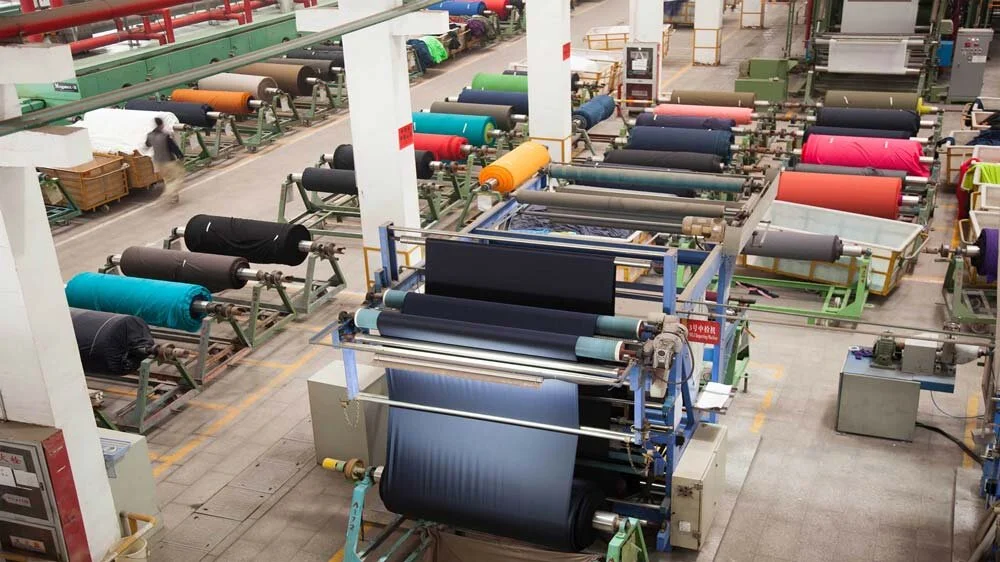
Multi-Mill Fabric Redundancy
6 pre-qualified mills with audited quality systems and active certifications. If Mill A has a fabric shortage, Mill B activates within 48 hours — equivalent spec, your approval required. 200+ certified fabric library means no single-source dependency.
Multi-Site Program Management
Each site gets its own size matrix, logo embroidery, and role-based badging — managed through a unified production file. All sites share the same fabric lot and compliance documentation. Each site receives individually packed and labeled shipments. One account manager, one invoice, one audit trail.
Factory-direct pricing. Eliminating trading company, importer, and distributor layers typically saves 15-40% on landed cost. But the bigger advantage: one factory floor means one quality standard, one compliance file, one person to call.
Heavy Industry Procurement Toolkit
Compliance matrices, FR care guides, RFP templates, and TCO comparison tools — built from real heavy industry PPE programs. Download and use directly in your next procurement cycle. The garment side — nine industrial uniform categories with their production notes — sits on the industrial uniform line.

Heavy Industry PPE Compliance Matrix
Download Heavy Industry PPE Compliance Matrix (PDF)NFPA 2112 / EN 11612 / ANSI/ISEA 107 / ASTM F1506 / NFPA 70E cross-reference. Which standard applies to which hazard, required documentation, how to verify certificates in certifier directories.

FR Garment Care & Lifecycle Guide
Download FR Garment Care & Lifecycle Guide (PDF)Washing protocols by fabric type (inherent vs treated FR), inspection frequency, 50-wash tracking log, retroreflectivity benchmarks (3M Scotchlite vs generic), retirement criteria.

Heavy Industry Workwear RFP Template
Download Heavy Industry Workwear RFP Template (PDF)Technical specification sections, compliance verification requirements, scoring matrix with certifier directory verification criteria, delivery terms, quality clauses.

PPE Total Cost of Ownership Comparison Tool
Download PPE Total Cost of Ownership Comparison Tool (PDF)3-year TCO comparison: multi-supplier vs single-supplier. Factors in purchase price, rush fees, quality rejects, admin overhead, compliance gap penalties, wash-cycle replacement frequency.
Want all four toolkits in one email? We'll send the complete bundle — no spam, unsubscribe anytime.
Or click any card above to download individually — no email required.
Frequently Asked Questions
About Heavy Industry FR & Safety Programs
One Factory. One Compliance File. Zero Gaps.
Request a hazard-matched sample pack with full compliance documentation — same-day response. Or get a multi-site quote for your entire heavy industry PPE program.