Table of Contents
Every helmet supplier looks identical until you demand raw test reports, labeling proof, or clear MOQs. Finding reliable safety helmet manufacturers in China is tough.
This list started with 50 candidate manufacturers, screened against four filters: end-to-end production capability, customization scope, established export history, and documented OSHA regulatory compliance for the construction and mining industries. Nine made the final cut.
9 Safety Helmet Manufacturers in China
This curated list ranks the top suppliers, tailored for every sourcing need: budget bulk construction orders, full PPE & uniform bundles, large industrial procurement, custom OEM, and one-stop sourcing. Quickly find the ideal PPE production partner today.
| Brand Name | Best For | Core Advantage | Ideal Client | Unique Edge |
|---|---|---|---|---|
| JSP Safety | Premium Benchmark | International brand recognition | Spec-driven & high-risk buyers | Proven impact absorption |
| BAYMRO Safety | Budget Bulk Orders | Cost-effective volume production | Construction firms | High-volume helmet output |
| Anbu Safety | One-Stop PPE Sourcing | Multi-category protective equipment | Distributors | Bundled procurement efficiency |
| AURORA SPORTS | Custom OEM & ODM | Rapid mold-making & prototyping | Private-label brands | Custom shell development |
| DurSafety | Mid-Market Bulk PPE | Competitive volume pricing | SME & construction | Mixed-container value |
| Safetoe | Foot + Head Bundling | Footwear-led PPE consolidation | Footwear buyers | Integrated head-to-toe supply |
| Yulong Safety Tools | Project Procurement | Tools + safety gear, one source | Engineering contractors | Multi-category convenience |
| CGpro Sports | ODM Helmet Design | Sports & lightweight customization | Design-led brands | 12-day prototyping |
| Mokasafety | Flexible Mid-Market | Low-MOQ entry point | Small-to-medium buyers | 300-unit pilot acceptance |
1. JSP Safety: Best for Buyers Who Prioritize Brand Credibility and Recognizable Head-Protection Specs
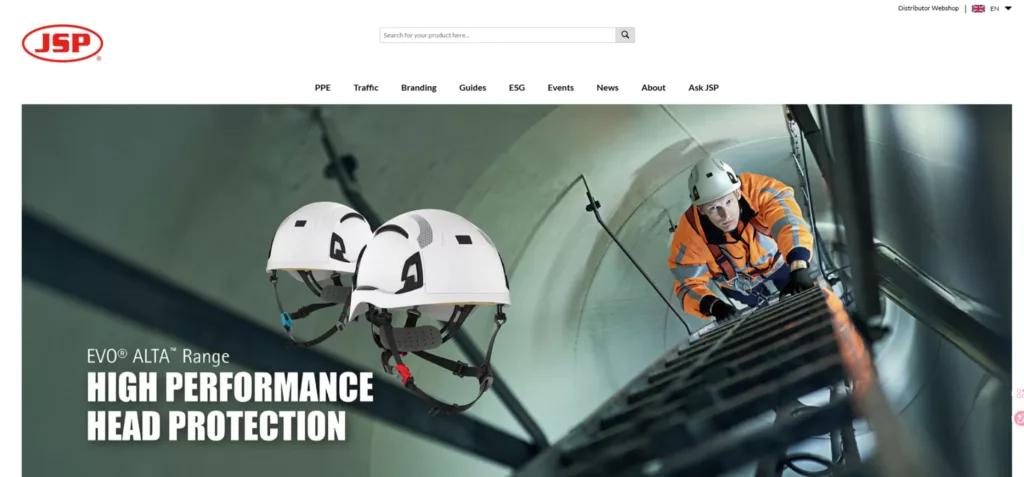
Unknown imports create massive compliance risk. UK-headquartered with major China operations based in Shanghai, JSP Safety holds strong international brand recognition. As a recognized PPE benchmark, the brand offers a reliable baseline when evaluating safety helmet manufacturers in China.
JSP’s EVO range uses a six-point suspension system, which spreads impact load across more contact points than a standard four-point harness.
Helmets sold into the US have to satisfy OSHA’s head protection rules through the ANSI/ISEA Z89.1 test protocol, so the figure that matters is the transmitted force on the test report for the exact model being supplied — not the brochure claim.
Brand trust demands a premium budget. Since JSP operates globally, weigh their China-based fulfillment speed against direct local factories. Expect higher unit costs than unbranded direct sourcing.
Also watch for different market versions of the same model — confirm that the exact supplied version matches the test report provided.
🛡️ Our Verdict: JSP provides absolute confidence for spec-driven procurement. Prioritize reviewing the latest full lab test reports and confirm that China-produced batches fully align with claimed international specifications. Always verify proprietary accessory compatibility before signing a contract.
2. BAYMRO Safety: Best for Large Industrial Catalogs
BAYMRO Safety is a broad-catalog supply hub rather than a helmet specialist. Its range spans six-point suspension helmets, replacement sweatbands, and site maintenance gear — the SKU breadth that suits repeat replenishment programs covering several line items per container.
Vast catalogs carry risks. Suppliers often private-label items instead of producing them. Confirm whether the helmets are built in-house or through partner factories. Cross-reference the claims using official ISO 9001 certification records.
🛡️ Our Verdict: BAYMRO excels at consolidated fulfillment. Expect 15-day shipping delays on outsourced hard hats. Begin with a medium-sized trial order and clearly define AQL standards and non-conforming product handling in the contract.
⚠️ Experience Warning: Request factory audit reports to verify exactly which models they manufacture on-site.
3. Anbu Safety: Best for One-Stop PPE Sourcing
Anbu Safety puts multiple protective categories under a single account — workwear, safety eyewear, gloves, and hard hats — which is what makes the range attractive to distributors managing complex export logistics.
Broad manufacturing requires strict buyer caution. Because the Anbu catalog spans footwear to eyewear, its head protection claims need independent validation. Generalist suppliers are the ones most likely to miss strict labeling requirements.
🛡️ Our Verdict: Evaluate Anbu’s safety helmet category independently — don’t be swayed by their overall PPE catalog strength. Demand valid ANSI Z89.1 or EN 397 test reports. Physically inspect the six-point suspension system quality and strap tension before you approve bulk shipments.
4. AURORA SPORTS: Best for Custom Shells and OEM Design
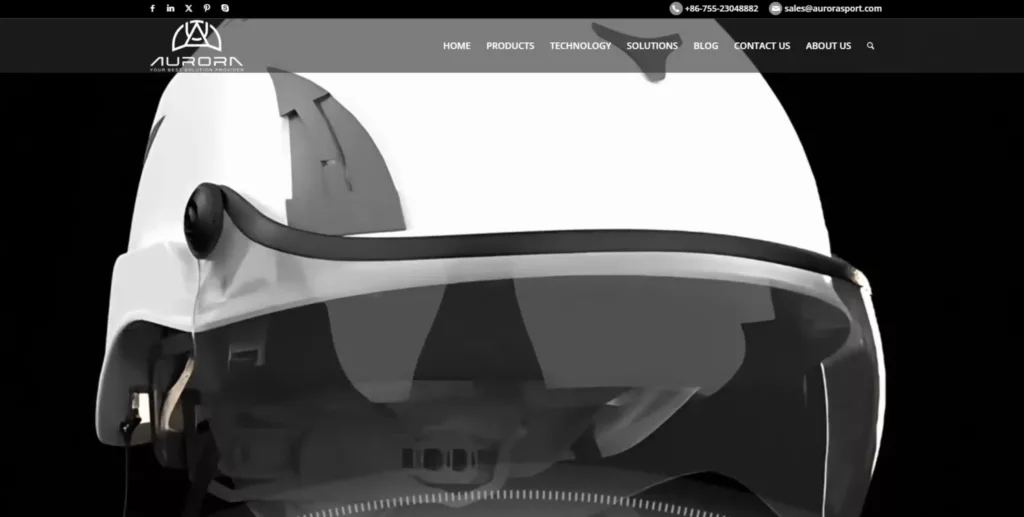
Aurora Sports keeps custom shell development and mold-making in-house, which is where most commodity suppliers stop. Rapid prototyping is the differentiator — 14 days from a 3D tech pack to a milled prototype is the figure to benchmark. Confirm the tooling timeline for the specific shell before planning a launch date around it.
Sports-helmet engineering does not automatically translate to industrial safety. For heavy construction, strictly verify that specific models meet the exact jobsite requirements, such as the ANSI Z89.1 standard for head protection.
🛡️ Our Verdict: Aurora dominates rapid prototyping. Use them for custom aesthetics, but demand raw lab impact data before deploying their shells in active hazard zones. Confirm whether customized products undergo re-testing after mold changes, and include final sample matching in the contract.
5. DurSafety: Best for Cost-Conscious Mid-Market Bulk PPE and Construction Programs
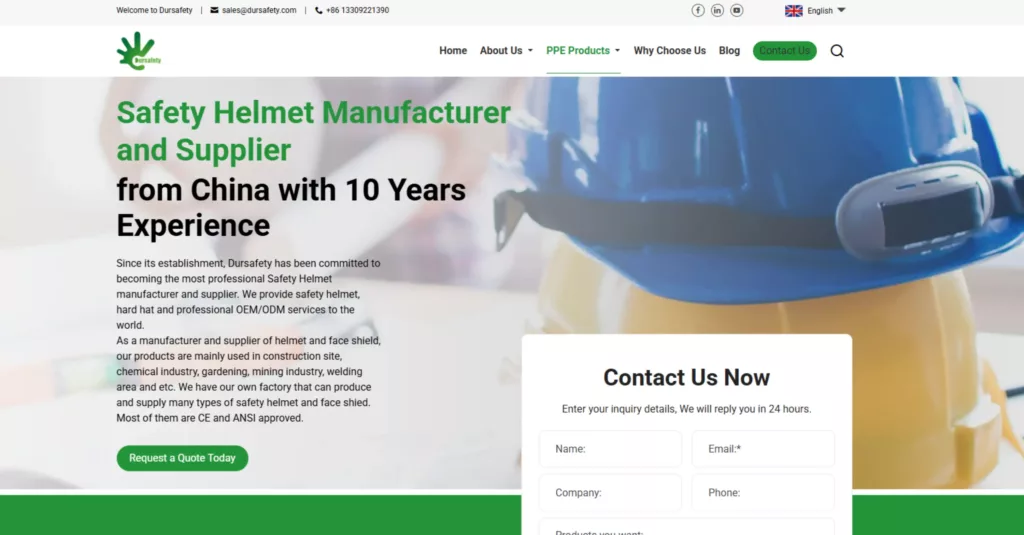
DurSafety sells hard hats alongside broad industrial PPE to construction and mining programs buying in volume, and presents customization for volume rollouts as its strength. Ask for a sample export document set before committing — mixed-category containers are where paperwork problems start.
Bulk buyers unlock massive savings here, but their exact manufacturing status still has to be verified. Because they handle a wide catalog, demand helmet-specific compliance documents like ANSI/ISEA Z89.1 impact test results before signing.
Always confirm the shell material in writing. A named polymer is not compliance evidence on its own — the test report for that exact shell is.
🛡️ Our Verdict: DurSafety’s strongest card is bulk pricing on mixed PPE containers — that is where they undercut the premium names. It suits mid-market programs where cost efficiency matters more than branding. Their broad catalog suggests trader status for some items, so audit their factory certifications.
6. Safetoe: Best for Buyers Bundling Head Protection with Footwear-Led PPE Orders
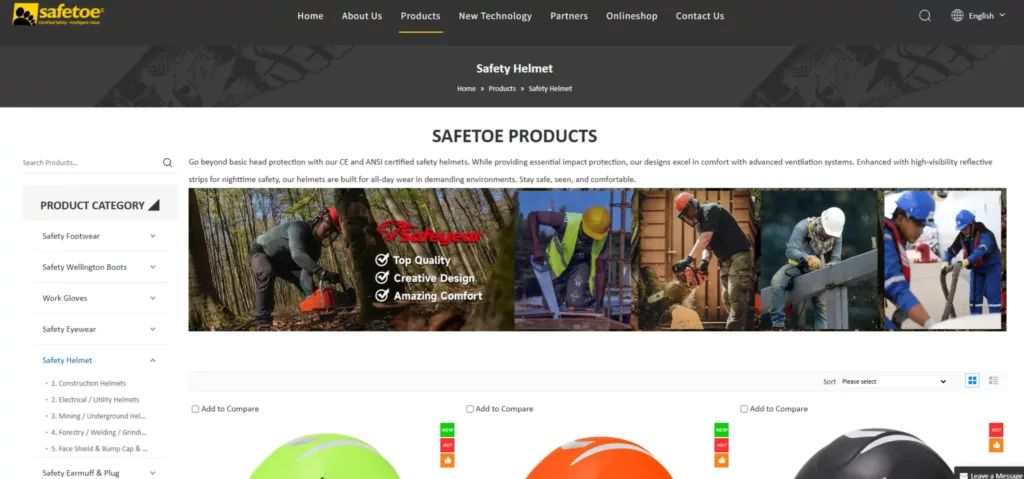
Safetoe’s manufacturing roots lie in footwear, and head protection is the add-on category rather than the anchor.
Adding standard hard hats to a footwear order lets a distributor fill one container instead of two, which is the logistical advantage of buying both through the same supplier.
Tread carefully before ordering. Because boots are the anchor product, the helmet catalog lacks deep customization, and footwear-led suppliers are often sourcing integrators for head protection rather than direct manufacturers.
🛡️ Our Verdict: Safetoe saves time when combining gear. Always demand impact test reports matching ANSI Z89.1 standards. Confirm which factory molds the shells before signing a bulk order.
7. Yulong Safety Tools: Best for Project Buyers Needing Tools and Safety Gear
Yulong Safety Tools sells hand tools and basic safety gear through one commercial contact, aimed at project procurement rather than at PPE specialists.
Consolidating hard hats and power tool accessories under one commercial contact cuts import paperwork, which is the appeal for project buyers already sourcing tools through them. Yulong sells replenishment convenience first and helmet engineering second.
Their actual manufacturing capability still has to be verified. Broad hardware suppliers typically treat head protection as a secondary business, so demand strict certification traceability and proof that the helmets meet the impact codes before buying.
🛡️ Our Verdict: Yulong offers excellent site consolidation. Ask for factory audit reports to confirm exactly who molds their hard hats. Require clear disclosure of the production model — own factory versus partner factory — and full certification documents for each helmet SKU.
8. CGpro Sports: Best for Private-Label Buyers That Want ODM Helmet Experience
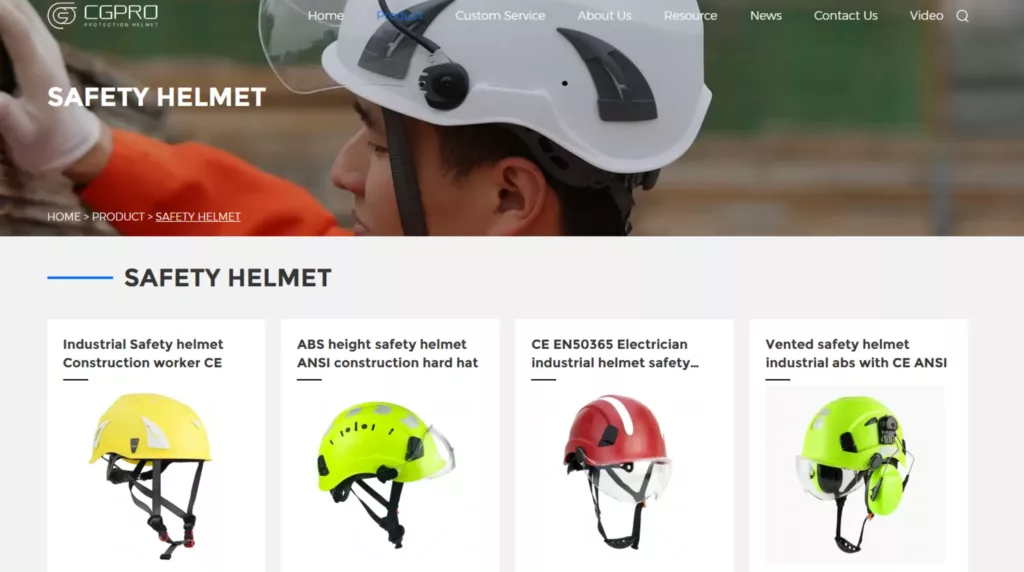
CGpro Sports positions itself on ODM helmet design rather than commodity supply, with a 12-day route from a digital tech pack to a physical ABS sample as the headline figure. Test that timeline on the actual design before building a launch date on it.
Sports-helmet engineering is not industrial safety engineering, so the specific shell materials have to be verified. Raw impact data is the only way to confirm a sports-derived shell meets worksite head protection rules. Never treat them as pure construction specialists.
🛡️ Our Verdict: CGpro dominates custom private-label projects. Because the catalog includes sports gear, demand physical proof of ANSI Z89.1 certification before deploying these hard hats to construction sites, and lock the approved sample’s key values into the technical agreement.
9. Mokasafety: The Flexible Mid-Market PPE Sourcing Option
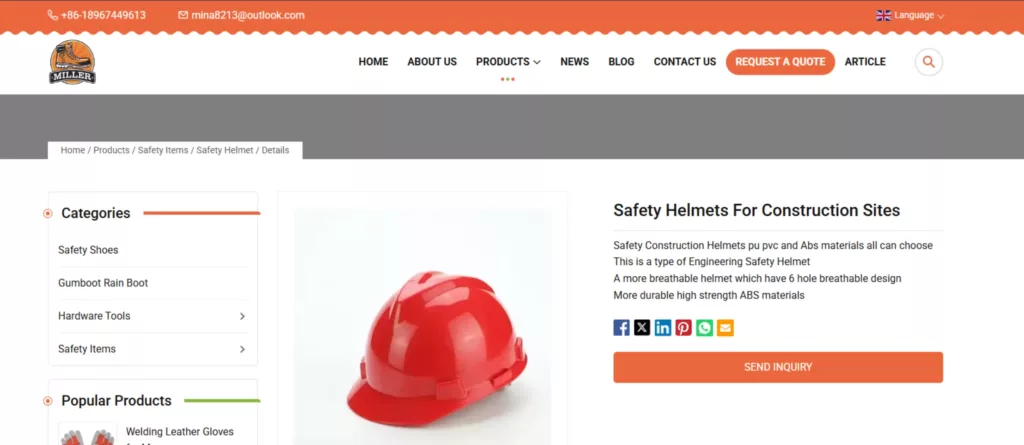
Mokasafety targets mid-market buyers with a stated 300-unit pilot entry point for ABS construction helmets. Public information on their production scale and factory ownership is relatively limited, so build confidence primarily through direct evidence.
That flexibility suits distributor expansion, but emerging suppliers require strict validation. To avoid compliance failures, vet their actual capacity before scaling: ask for recent CE EN397 test reports and live production photos, and never skip physical sample approvals.
🛡️ Our Verdict: Mokasafety offers an excellent entry point for smaller buyers. Start with a smaller trial order to evaluate delivery, quality, and communication before scaling up. Request their BSCI audit records and verify the safety certificates independently before placing a bulk order.
When Helmets Ship With Uniforms and Full PPE
Combining safety helmets with custom workwear, high-visibility vests and jackets, and other PPE in one supply chain calls for a vertically integrated supplier that can simplify coordination and quality control.
LantaoWork specializes in this scenario — kitting ANSI Type I/II or AS/NZS Type 1/2 helmets together with uniforms under unified inspection (including AQL 2.5) and transparent costing. This option suits companies rolling out complete employee PPE programs.
Note: This recommendation sits outside the ranked list above. Always follow the verification steps in the audit section (test reports, labeling checks, and sample evaluation) before placing orders.
Safety Helmet Specifications: Shell Materials, Standards, and Service Life
Shell material, standard class, and replacement interval decide more of a helmet’s real performance than the brand name on the front. The three tables below cover the specifications worth writing into a purchase order.
Which Shell Material Fits Your Jobsite?
| Shell material | Density (g/cm³) | Helmet weight (g) | Heat deflection (°C at 1.82 MPa) | UV / chemical resistance | Cost index (HDPE = 100) |
|---|---|---|---|---|---|
| HDPE | 0.94–0.96 | 330–400 | 45–60 | Excellent / Excellent | 100 |
| ABS | 1.04–1.06 | 360–430 | 80–100 | Moderate / Moderate | 110–130 |
| PC (polycarbonate) | 1.19–1.22 | 400–480 | 128–138 | Moderate / Poor (solvents) | 180–250 |
| FR-ABS | 1.10–1.25 | 380–450 | 80–100 | Moderate / Moderate | 130–160 |
| Aluminum | 2.70 | 480–600 | n/a (metal) | Excellent / Good | 400–600 |
HDPE is the default for general construction: lightest, lowest cost, and the strongest resistance to UV and chemicals. ABS trades some of that for greater rigidity and a higher heat deflection temperature under load, which is why it holds its shape better on hot sites and in premium industrial shells.
PC has the highest heat deflection temperature and the highest impact energy, at a cost premium — but it is the one shell that reacts badly to solvents. FR-ABS adds flame retardancy for welding and molten-metal exposure.
Aluminum handles radiant heat and molten-metal splash, but it conducts electricity — it must never be issued for electrical work. Heat deflection is a polymer test, which is why the aluminum row carries no value in that column.
Which Safety Helmet Standard Applies to Your Market?
| Standard | Market | Impact coverage | Electrical protection | Impact / penetration test |
|---|---|---|---|---|
| ANSI/ISEA Z89.1 Type I Class C | US / Canada | Crown | None (conductive) | 3.6 kg · 1.5 m · ≤4,450 N |
| ANSI/ISEA Z89.1 Type I Class G | US / Canada | Crown | 2,200 V | 3.6 kg · 1.5 m · ≤4,450 N |
| ANSI/ISEA Z89.1 Type I Class E | US / Canada | Crown | 20,000 V | 3.6 kg · 1.5 m · ≤4,450 N |
| ANSI/ISEA Z89.1 Type II Class C | US / Canada | Crown + lateral | None (conductive) | 3.6 kg · 1.5 m · ≤4,450 N + lateral deformation |
| ANSI/ISEA Z89.1 Type II Class G | US / Canada | Crown + lateral | 2,200 V | 3.6 kg · 1.5 m · ≤4,450 N + lateral deformation |
| ANSI/ISEA Z89.1 Type II Class E | US / Canada | Crown + lateral | 20,000 V | 3.6 kg · 1.5 m · ≤4,450 N + lateral deformation |
| EN 397 | EU / UK | Crown (+ LD optional) | 440 V AC (optional) | 5 kg · 1 m · ≤5 kN; penetration 3 kg · 1 m |
| EN 12492 | EU / UK (climbing) | Crown + lateral | None | Chin strap must hold ≥500 N |
| EN 50365 | EU / UK (insulating) | Crown | 1,000 V AC | Insulation test |
| GB 2811-2019 | China | Crown + lateral | Optional | 5 kg · 1 m; penetration 3 kg · 1 m |
| AS/NZS 1801 | Australia / NZ | Crown (+ lateral, Type 2) | — | Impact and penetration |
ANSI/ISEA Z89.1 governs the US and Canada. Type I covers crown impact only, while Type II adds lateral impact tested with the same striker. The class sets electrical protection: Class C is conductive with no voltage rating, Class G is tested at 2,200 V, and Class E at 20,000 V.
EN 397 is the European industrial standard, and its optional add-ons belong in the specification rather than in the fine print: LD for lateral deformation, MM for molten metal, −20 °C or −30 °C for low temperature, +150 °C for very high temperature, and 440 V AC for electrical contact.
The chin strap requirement is the single most confused point in head protection tenders. EN 397 requires a fitted chin strap to release between 150 N and 250 N, so it cannot strangle a falling wearer.
EN 12492 requires the opposite — the harness must hold at least 500 N. One standard is designed to let go under load and the other is designed not to, so a climbing helmet is not a substitute for an industrial one.
How Long Do Safety Helmets Last Before Replacement?
| Exposure condition or trigger | Typical replacement interval | Reason |
|---|---|---|
| Any impact, visible damage or not | Immediately | Micro-cracks in the shell are not visible |
| Chemical or solvent exposure | 1–2 years | Solvents attack ABS and PC shells |
| High UV / continuous outdoor sun | 2–3 years | UV embrittles the shell and fades color |
| High heat (above 50 °C ambient) | 2–3 years | Heat ageing reduces impact strength |
| General construction, mixed indoor / outdoor | 3–5 years | Manufacturer guidance |
| Suspension and sweatband | Every 6–12 months | Sweat and salt degrade the harness (replaceable part) |
| Pre-use inspection | Every shift | Check for cracks, dents, chalky surface, faded color |
ANSI/ISEA Z89.1 leaves the replacement decision to the manufacturer’s instructions for use, which is why the date-of-manufacture marking is the reference point for ageing a shell. EN 397 requires that date to be marked permanently on the helmet, so an inspector can establish its age without the original paperwork.
Helmets are consumables: a five-year-old shell that still looks intact may no longer deliver the impact performance it was tested for.
How to Audit Safety Helmet Manufacturers in China?
Buyers most often hit customs delays because they skip basic verification. The workflow below is the sequence to run before any bulk order.
Step 1: Verify ANSI and EN 397 Claims
Never trust a simple website logo. Demand raw proof. Mismatched mold marks between the shell and the test report are one of the most common reasons a PPE shipment is stopped at customs.
- Request the full paperwork. Ask for the official certificate, the Declaration of Conformity, the full lab test report, and the raw material data sheet.
- Check the notified body. Verify the exact model number against the EU NANDO database or the relevant certification registry.
- Understand the regulation. CE marking for PPE is governed by the EU PPE Regulation (EU) 2016/425. Familiarize yourself with the three risk categories and their conformity assessment procedures before accepting any certificate.
- Cross-reference the shell. Online directories do not act as product databases. Inspect the physical shell labeling. Ensure the date stamps, mold marks, and shell markings match the paperwork exactly. The date dial inside the mold is the marking buyers overlook most often — and the one an inspector checks first.
Step 2: Pick Your Material and Order Samples
Set the shell material from the comparison table above — ABS where the shell must hold its shape under load in heat, HDPE for weight, cost, and chemical resistance. Then verify the sample physically, against the test report rather than against appearance: “no cracks” is not the pass criterion. Check these features:
- Measure the shell thickness consistency with digital calipers.
- Test the suspension quality and chin-strap reliability.
- Check the shell for universal accessory slots.
- Sign off a golden sample. Get the approved physical sample signed and dated by both sides before production starts — it locks the suspension spec and protects the deposit.
- Optimize the packaging method. Instruct the factory to use nested packing to improve freight efficiency and lower landed costs.
Step 3: Consolidate Your PPE Procurement
Smart buyers bundle gear to cut freight costs. Pair hard hats with durable safety vest fabrics and the right safety footwear, then standardize the eyewear to match.
If you need a trusted partner to manage a complete PPE rollout, contact LantaoWork before the first bulk order.
Frequently Asked Questions about Safety Helmet Manufacturers in China
1. How do I verify a supplier’s CE EN397 claim?
Ask for the Declaration of Conformity and the full lab test report, then check the certifying body against the official EU NANDO database. If the physical shell mold marks do not match the report, the certificate does not cover the goods being shipped. Random samples pulled off the injection machines are the final check.
2. ABS vs HDPE safety helmets: which is better for my site?
Match the material to the hazard. ABS holds its shape better under load in heat; HDPE is the general-construction default — lighter, cheaper, and more resistant to chemicals and UV. Crews generally prefer HDPE for long shifts because the lighter shell reduces neck fatigue.
3. Can I source helmets together with uniforms, vests, footwear, jackets, and coveralls?
Yes. Consolidating protective equipment saves freight cost, cuts import paperwork, and keeps one inspection standard across every item. We kit hard hats, safety uniform compliance gear, jackets, vests, and coveralls into single shipping containers on our factory floor.
4. What is the MOQ for custom safety helmets from China?
The quoted floor is 100 units per style. On a fully customized program — a new shell color or a new logo plate — the effective minimum often lands at 200–300 units once masterbatch and tooling minimums are added.
A pilot of a few hundred pieces is normally enough to validate shell fit, suspension quality, and packing before you commit to a full container.
5. How long does custom safety helmet production take?
Sampling runs 5–7 days for a stock shell carrying a custom logo. After sample approval, plan 45–60 days from approval to warehouse loading.
The freight window sits on top of that: 5–9 days by air, or 28–42 days by sea, both measured port to door. A quote that gives you a single number without naming the start point and the shipping mode is incomplete — those two variables move the total by weeks.
6. Can safety helmets be branded with a company logo?
Yes. Pad printing is cheapest and wears first on a shell handled daily; screen printing and heat transfer last longer; a logo molded into the shell is permanent but needs a new mold, so it only pays off at volume.
Two constraints: a one-time plate charge, and the logo must not cover the certification and date markings that EN 397 and ANSI/ISEA Z89.1 require — a logo running across the shell markings fails a factory audit.
7. What is the difference between ANSI Z89.1 Type I and Type II helmets?
Type I protects the crown only; Type II adds lateral impact against the side of the shell. The class letter sets electrical protection separately: C has no rating, G is 2,200 V, E is 20,000 V.
Type I suits sites where the risk is falling objects overhead. Type II belongs in confined spaces, low-clearance plant rooms, and utility work, where workers strike their heads on structures, pipes, or machinery.
Editorial Integrity Statement
LantaoWork is a uniform and workwear manufacturer. We write this page from a first-party factory position rather than claiming third-party neutrality, and we accept no payment or kickbacks for placement in the list above.
The nine profiles are built on public information — we have not audited these companies in person, so treat them as leads for your own audit. Every performance figure comes from the published standard cited beside it; we ran no tests of our own.

Leave a Comment
Your email address will not be published. Required fields are marked *