Table of Contents
The short answer: At least seven of the ten sew coveralls on U.S. floors — Benchmark FR, 1620 Workwear, CrewBoss, NSA, Steel Grip, Kappler and Rich Industries — and ExtremeGard’s insulated line is U.S.-made but sold only through distributors. Tyndale and NYES Protect compete on program management, not production. Ask for SKU-level proof of origin before an RFQ.
Sourcing coverall manufacturers in USA is a procurement trap. Compliance documents, replenishment reliability and customization rarely line up in a single vendor.
We started from the roughly 120 coverall suppliers listed on ThomasNet, plus the brands that kept turning up in the RFQs we handled.
Each was screened for coverall relevance and scored on documentation, customization and program support. Ten made the cut.
What we reviewed. Between March and September 2026 we compared each brand’s published catalog, certification documents and made-in-USA statements, then checked which procurement questions get answered in writing. Price moves with volume, incoterms and packaging across these vendors, so the table below compares production location and capability rather than unit cost. Each verdict reflects published documentation, not a commercial relationship.
Verification window. Every entry reflects public information as of November 2026. Ownership and capability change, so re-confirm before you sign. Client names, sites and contract values are withheld; where a case is cited, the sector and order size are given instead. The editorial policy sets out how corrections are handled.
Disclosure: No brand paid for placement. LantaoWork manufactures coveralls and competes with several brands below — a conflict we disclose here rather than bury.
Which of These Brands Actually Cut and Sew?
The table maps what each brand is, where it sews and what it customizes before the detail below. All ten entries were verified in November 2026.
| Brand | Hazard focus | Production | Customization | Program fit |
|---|---|---|---|---|
| Tyndale | Arc-rated FR | Program owner, no production floor | Custom sizing, site ordering | Enterprise multi-site |
| NSA | Arc flash, flash fire, chemical splash | Cleveland, OH plus multiple U.S. plants, ~95% American-made | Sizing, logo, replenishment | Multi-hazard consolidation |
| Benchmark FR | Arc-rated, flash fire | Santa Ana, CA, designed, cut and sewn in-house | Sizing, logos, modest tweaks | EHS documentation |
| Kappler | Chemical splash, contamination | Guntersville, AL, key protective suits made on campus | Logos only, stock sizing | Task-specific barrier work |
| Steel Grip | Arc-rated, flash fire | Danville, IL plus additional U.S. plants, “we cut, sew, and ship USA-made” | Logo, name tags | Recurring plant replenishment |
| CrewBoss PPE | Wildland fire, utility arc | Eugene, OR, 88,000 sq ft floor cut and sewn on site | Stock colors, size runs | Mobile field crews |
| 1620 Workwear | General industrial | East Boston, MA, bought its cut-and-sew partner in September 2025 | Limited, verify per order | Hard-use teams |
| Rich Industries | Buyer-specified | New Philadelphia, OH, “100% Made in the U.S.A.” | Pattern, trim, embroidery | OEM and private label |
| NYES Protect | FR, hi-vis, chemical | Program partner, no production site published | Sizing, logo, replenishment | Vendor consolidation |
| ExtremeGard | Chemical splash, contamination | U.S. production of the insulated line, distributor-only sales | Logos only | Shutdown and splash tasks |
1. Tyndale: Enterprise FR Program Depth for Multi-Site Buyers
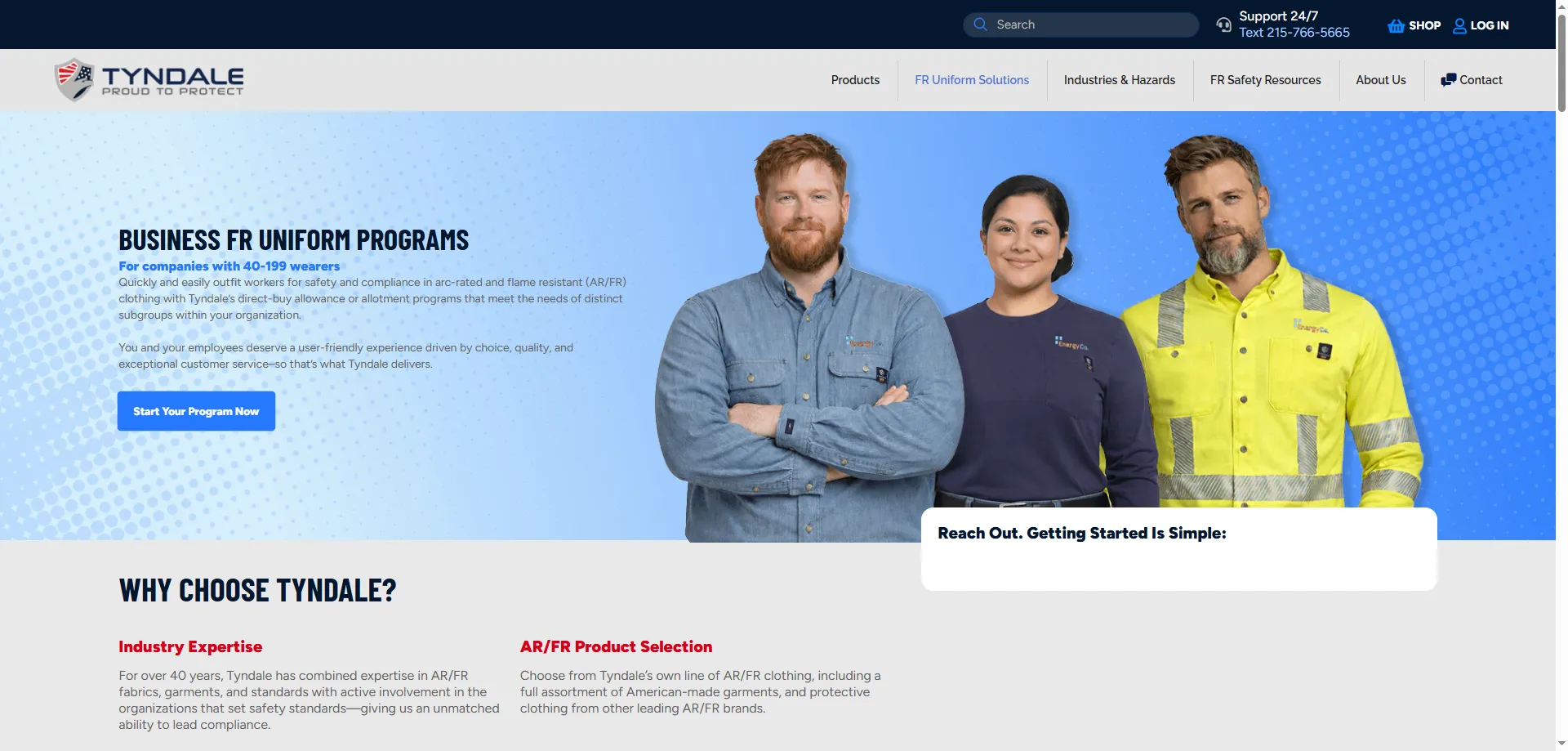
For a large FR coverall program spread across sites, crews or hazard classes, the missing piece is usually not another garment vendor but uniform program management. Tyndale fit that slot in this review, for enterprise procurement and EHS teams.
They handle arc-rated coveralls, managed distribution and wearer adoption support. I checked their NFPA 2112 labels, ASTM F1506 reports, custom sizing and site-level ordering.
Program depth is real, and so is the premium. Verify the exact coverall category, FR documentation package and managed-distribution scope before you shortlist. If unit price is the only variable, keep looking. If the problem is compliance gaps across crews, Tyndale earns a place on the list.
🛡️ Our Verdict: High marks for document control and wearer adoption. An RFQ would be premature without a sample program audit and a written laundering SOP.
2. National Safety Apparel (NSA): Broad Protective Apparel Coverage
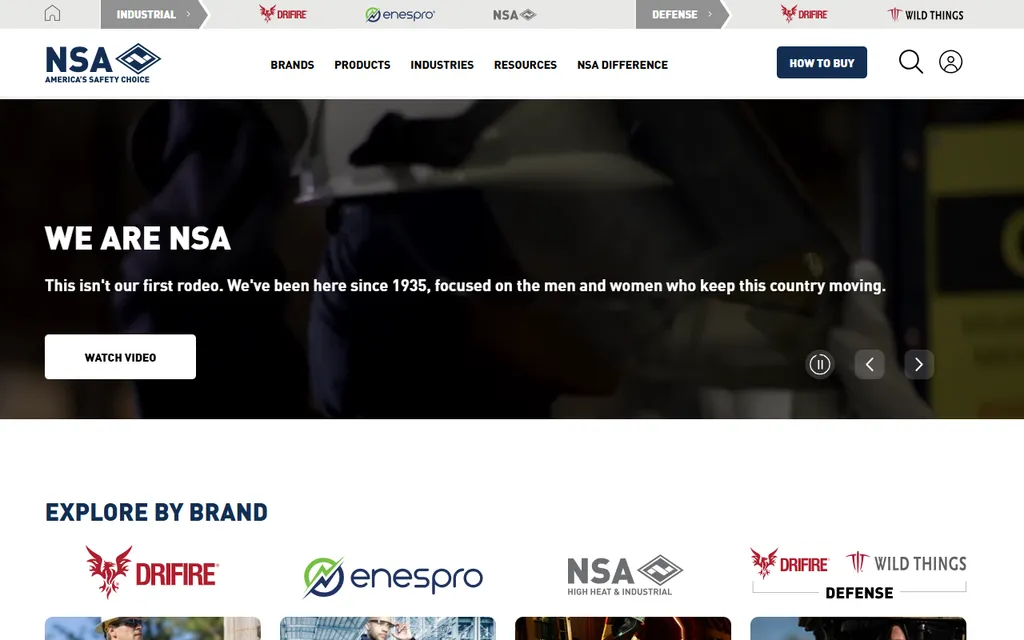
One site, one supplier sounds clean. The real test is whether that supplier covers arc flash, flash fire, chemical splash and general industrial grime.
National Safety Apparel (NSA) passed that breadth check for U.S. procurement teams working under OSHA 1910.132. The catalog spans FR coveralls, hi-vis and specialty protection, which lets enterprise buyers consolidate purchase orders and wearer programs.
The certification packet came back before scoring: NFPA 2112 labels and ASTM F1506 reports for each FR fabric. Custom sizing, logo placement and managed replenishment are supported; each addition adds setup work and approval steps.
Narrow specialists often quote lower prices on a single hazard class. NSA earns the shortlist when one U.S. supplier has to cover several hazard categories.
🛡️ Our Verdict: Broad range, solid documentation. Confirm the fabric test reports before consolidating spend, and weigh program complexity against piece price.
3. Benchmark FR: Made-in-USA FR Focus
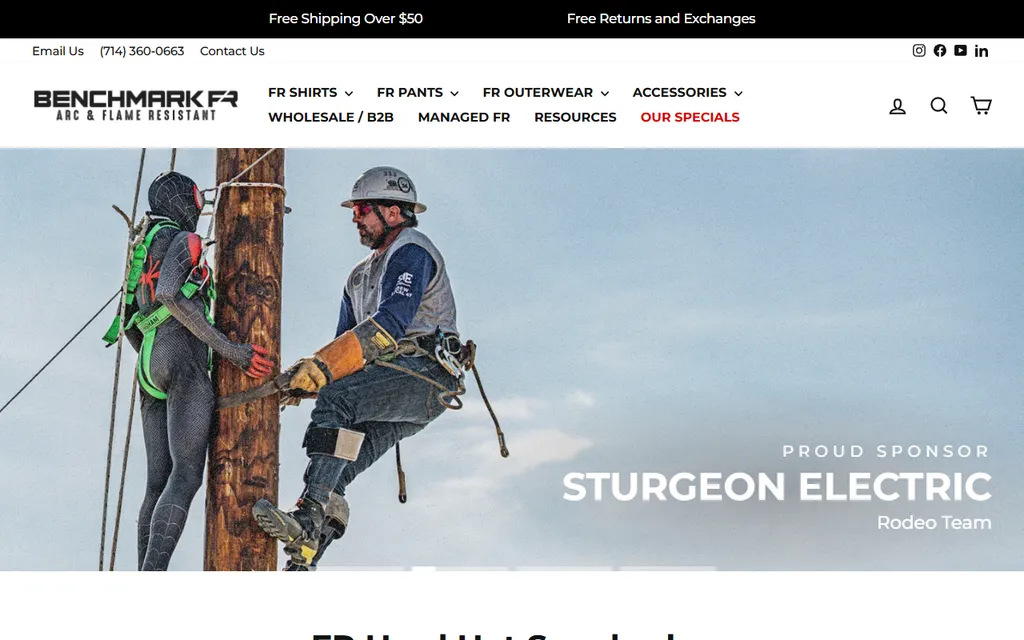
If the EHS team must prove FR coveralls came from American looms and American sewing floors, Benchmark FR belongs on the shortlist. It targets domestic FR positioning rather than generic imported workwear.
The catalog covers arc-rated and flash-fire coveralls for industrial crews. The real value sits in the paper trail. Ask every vendor for a signed domestic-content letter listing fabric origin and cut-and-sew location per SKU. Benchmark names Santa Ana as its cut-and-sew site, which makes that request testable.
That clarity serves two buyers. EHS teams get verification files for the OSHA PPE narrative; procurement teams get replenishment predictability, because domestic production avoids import delays. Customization holds up too: sizing, logos and modest program tweaks.
Premium cost is the catch. Domestic FR programs in my quote comparisons ran roughly 20 to 35 percent above imported equivalents.
🛡️ Our Verdict: A strong pick where verification matters. Confirm SKU-level domestic content in writing and check stock depth before rollout.
4. Kappler: Chemical Protection and Limited-Use Coveralls
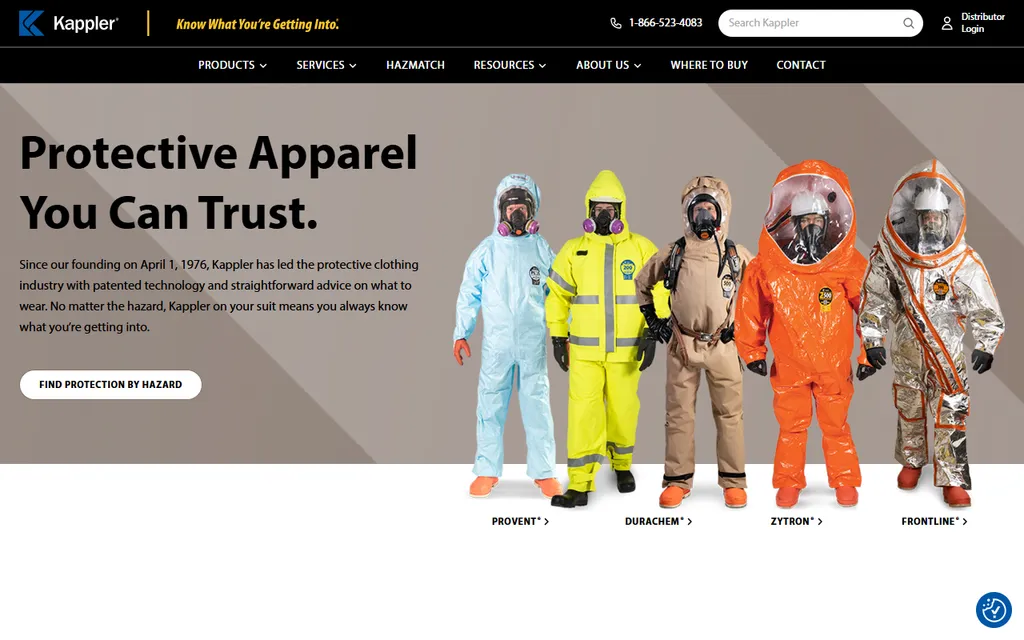
For chemical splash, contamination control or shutdown work, barrier performance beats daily uniform looks. Kappler sits in that niche, and the limited-use coveralls stood out for tested permeation data.
Start with disposable versus reusable. Kappler’s limited-use lines (Zytron, CPF) suit one-time exposure or cross-contamination risk. Reusable coveralls cut long-term cost but add laundering.
Request ASTM F1001 and F739 permeation reports against your actual chemical list. I asked for batch-specific data; most vendors send generic sheets.
Customization is limited. Logos are possible, sizing runs standard, and a fit trial belongs before rollout.
The catch is cost per wear. Limited-use garments cost more each time but remove the laundering burden, and comfort runs lower, so wearer acceptance decides adoption.
🛡️ Our Verdict: Full permeation data arrived in 48 hours. Worth a shortlist slot for chemical splash work. Confirm breakthrough time for the top three chemicals before committing.
5. Steel Grip: Industrial FR Uniform Programs
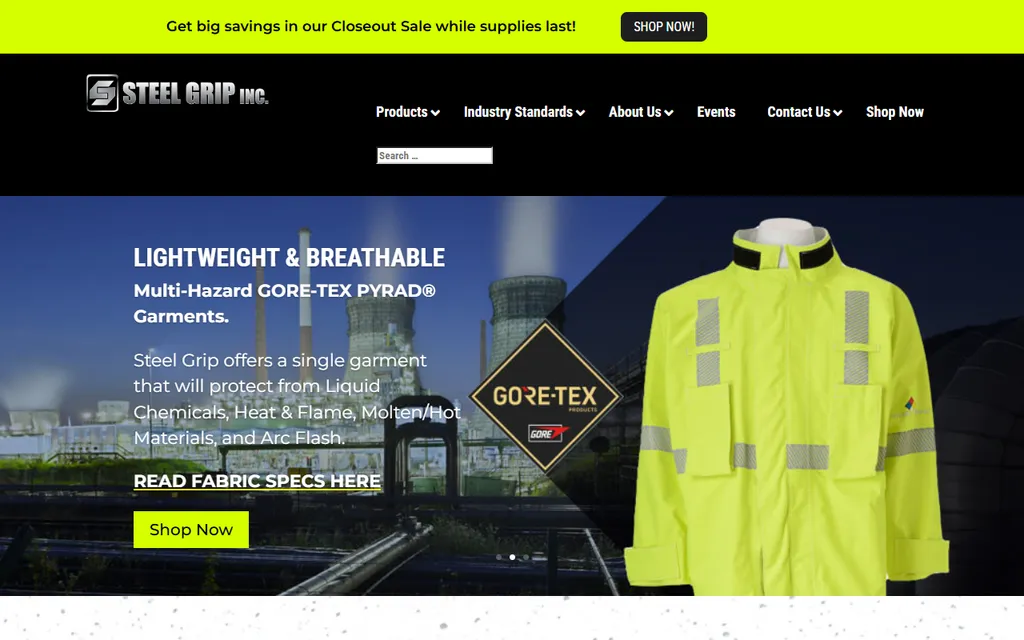
Plant procurement teams need FR coveralls that keep crews compliant across sites. Steel Grip targets four buyer groups:
- Manufacturers
- Fabricators
- Utilities
- Energy operators
The fit is steady replenishment, not one-off PPE buys. Their coverall range covers arc-rated and flash-fire styles. NFPA 2112 labels and ASTM F1506 reports came for every fabric, plus a wash-life guide with cycle counts.
That guide matters: FR protection degrades with washing, and generic advice fails audits. Logo and name-tag customization are available, and sizing and color repeatability held across reorders.
The service model suits recurring uniform programs better than project buys. Steel Grip is among the few U.S. coverall makers built around program supply.
🛡️ Our Verdict: Built for ongoing plant-uniform programs. Confirm wash-life test data for the exact fabric, then lock replenishment intervals.
6. CrewBoss PPE: Wildland Fire and Utility FR Protection
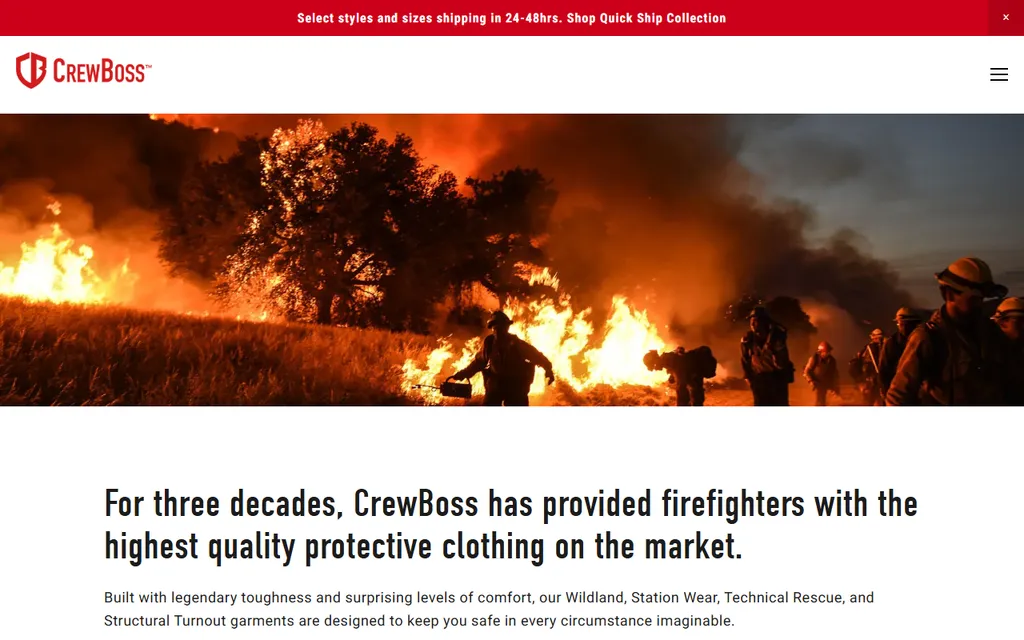
Wildland fire, utility linework and emergency-response crews punish generic coveralls. They crawl through brush, climb poles and work in high heat. CrewBoss was vetted for that kind of mobile, hazard-specific work.
Wildland fire shirts, pants and FR coveralls were checked alongside utility arc-rated layers, with current NFPA 1977 labels for wildland SKUs and ASTM F1506 reports carrying arc ratings for utility fabrics. Laundering data and trim placement specs were requested as well.
Customization is narrower than enterprise uniform programs: stock colors, set size runs and limited logo options. Mobility costs standardization. Field crews gain heat-stress performance; mixed sites lose a single company-wide standard. On U.S. shortlists, CrewBoss is the specialist, not the default.
🛡️ Our Verdict: A strong fit for wildland and utility crews. Confirm NFPA 1977 versus ASTM F1506 documentation by SKU, then run a fit trial before rollout.
7. 1620 Workwear: Premium Domestic Durability
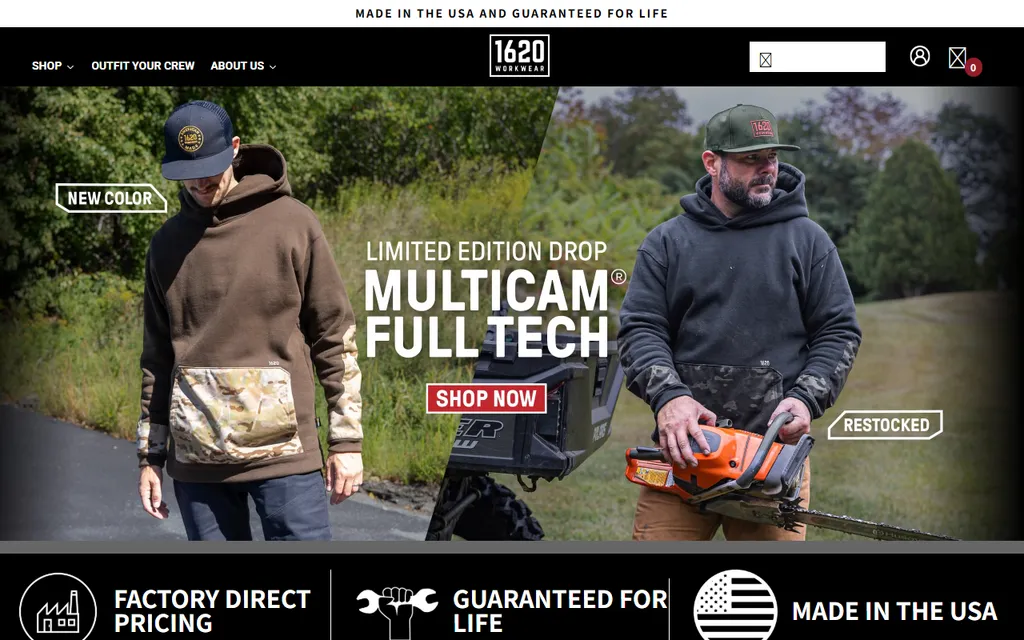
1620 is built for buyers who need rugged domestic construction, premium fabrics and coveralls crews will actually wear. The build cues stand out: reinforced stress points, clean seams and field-grade hardware.
Availability in common size runs was inconsistent when we looked, so stock needs verifying before a rollout is promised.
A signed domestic-content letter per SKU, checked against the FTC’s Made in USA standard, is the right test. That request went out, and the sourcing story held up better than most.
Price is the obstacle. The purchase order looks high next to imports. The case rests on fewer replacements, lower churn and worker acceptance. If crews reject stiff cheap gear, the premium pays for itself.
🛡️ Our Verdict: Durability justifies the price for hard-use teams. Verify coverall stock and size runs first, then compare cost per wear, not unit price.
8. Rich Industries: Custom Cut-and-Sew and OEM Flexibility
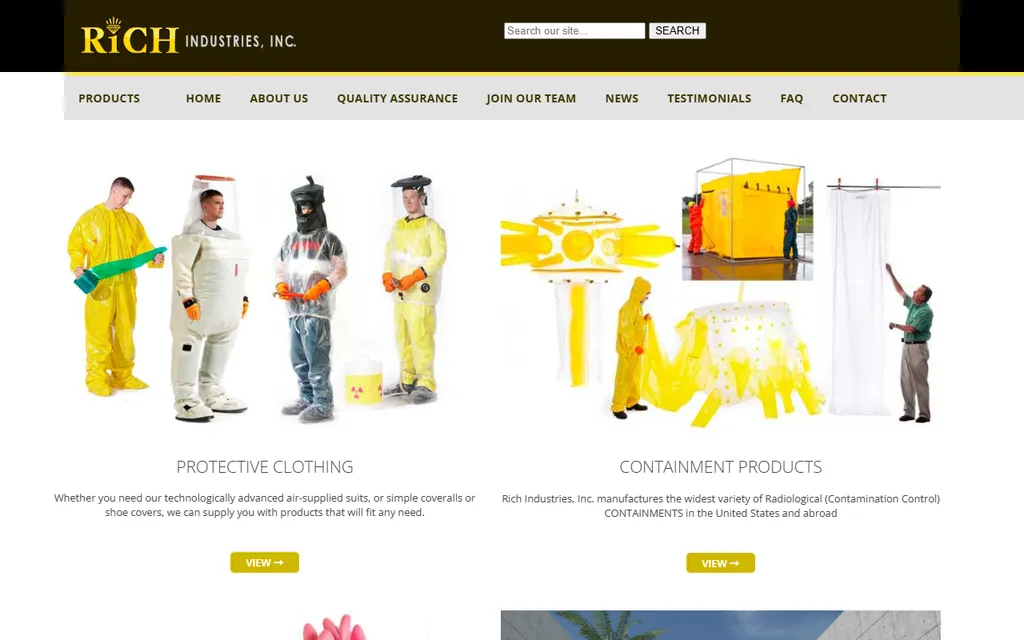
Catalog buying fails once a custom pattern and private-label trims enter the brief. Distributors and enterprise buyers building an OEM program fit here. Rich Industries supports custom patterns, branded trims and embroidery for coverall programs.
Treat the tech pack as the gate. Ask four questions before shortlisting:
- What is the sample lead time?
- Who owns the pattern?
- What are the trim MOQs?
- Can size sets run with mixed colors?
Customization depth is real, and flexibility has a price: two to four extra weeks in development. Custom trims often push MOQs above base garment MOQs. Ask how pilot runs and color matching work across size sets. On a U.S. shortlist, Rich Industries is the custom-program pick, not the lowest-price catalog source.
🛡️ Our Verdict: A fit for OEM and private-label buyers. Confirm trim MOQs and sample lead times before locking a launch date.
9. NYES Protect: Safetywear Sourcing and Program Support
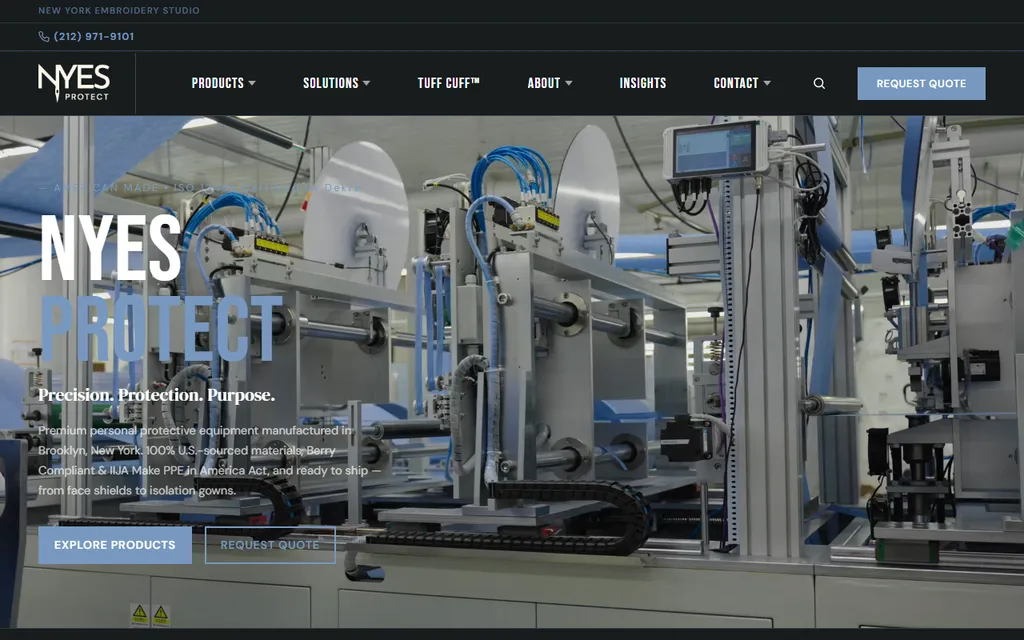
NYES Protect suits teams that want one safetywear partner for sourcing, style selection and program continuity, rather than a single catalog order. It was treated as a program partner here, not a one-off vendor. Confirm the coverall range first — FR, hi-vis, chemical and general industrial — then probe compliance and service.
Ask for NFPA 2112 labels, ASTM F1506 reports, fabric wash guidance and an OSHA-ready PPE file. A written RFQ tests response time.
Breadth is the tradeoff. NYES simplifies vendor management; a narrow FR specialist may still beat them on depth. Use it when sourcing support matters as much as specs.
🛡️ Our Verdict: A good shortlist entry for program continuity and sourcing support. Confirm coverall categories and current test reports before a PO.
10. ExtremeGard: Specialty Protective Coveralls and Barrier Needs
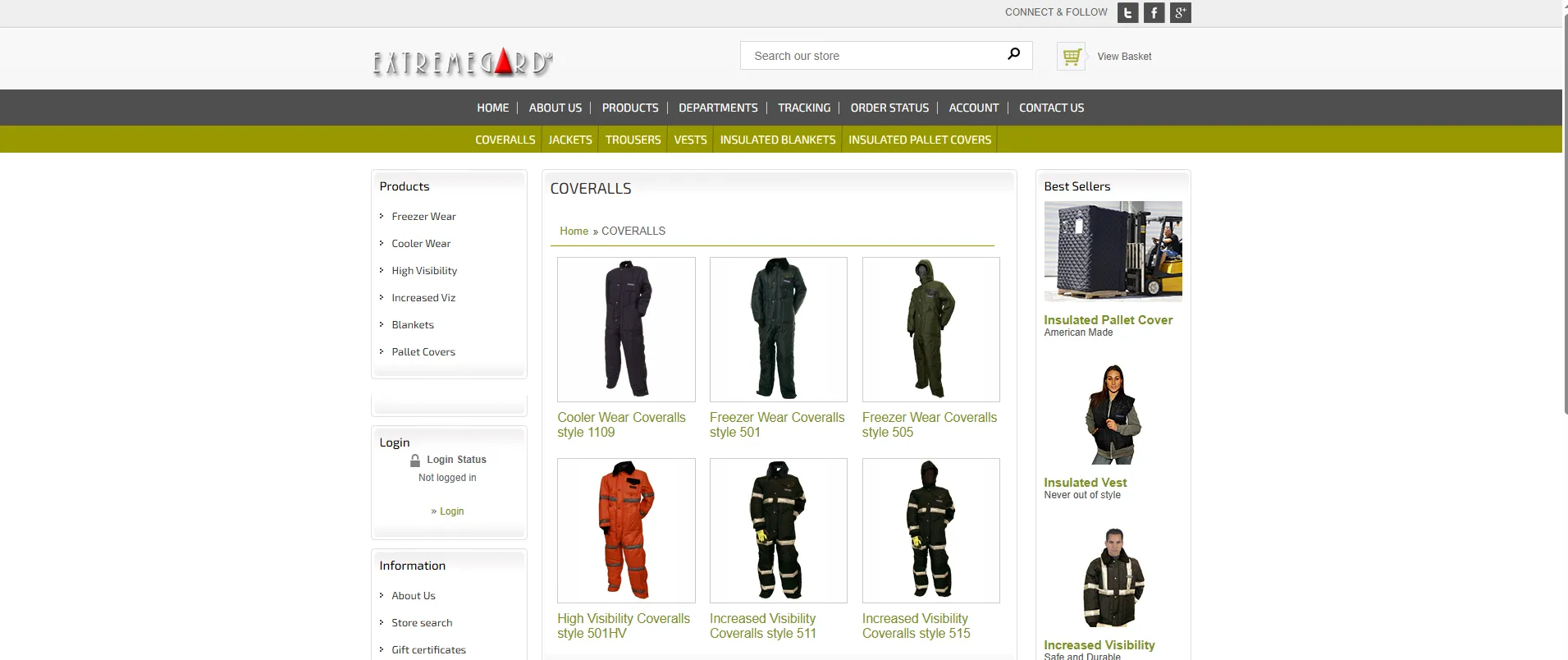
When the work is contamination control, chemical splash or shutdown maintenance, standard daily coveralls fail. ExtremeGard sits in that specialist slot: limited-use barrier coveralls for higher-risk tasks, not generic plant uniforms.
Every protection claim stays unverified until the packet arrives. Permeation and penetration reports are requested against the buyer’s actual chemical list, measured to ISO 6529 and ASTM F903, never a generic data sheet.
Usage limits come next: single-shift versus multi-wear, laundering rules, heat stress on long shutdown shifts. Specialized protection narrows the supplier pool and blocks company-wide standardization. Keep ExtremeGard as a task-specific line, not the base uniform.
🛡️ Our Verdict: Strong on shutdown and splash tasks, weak for broad rollouts. ⚡ Power move: Request one permeation report per chemical in the facility, not a blanket certificate.
The Big Names We Left Off, and Why
These names dominate coverall searches, and leaving them out would make the shortlist look incomplete. Each sits outside the ten for a structural reason, not a quality judgment.
| Brand | Category | Why it sits outside this shortlist |
|---|---|---|
| DuPont (Tyvek, Tychem) | Single-use barrier | Disposable category, not a custom coverall program |
| Kimberly-Clark (KleenGuard) | Single-use barrier | Disposable category, no cut-and-sew program |
| International Enviroguard | Disposable protective clothing | Single-use focus |
| Lakeland Industries | Protective apparel | Catalog protective lines, custom depth to confirm |
| Bulwark and Workrite | FR workwear brands | Brand-led FR, verify cut-and-sew origin per SKU |
| Carhartt | Workwear brand | Retail-driven sizing, limited enterprise customization |
| Red Kap | Workwear brand | Catalog uniform program, lighter FR depth |
| Portwest | International safetywear | Broad catalog, not built around U.S. production |
If one of these matches the hazard profile better than anything above, treat this page as a starting point, not a verdict.
How to Run Four Checks Before You Send an RFQ?
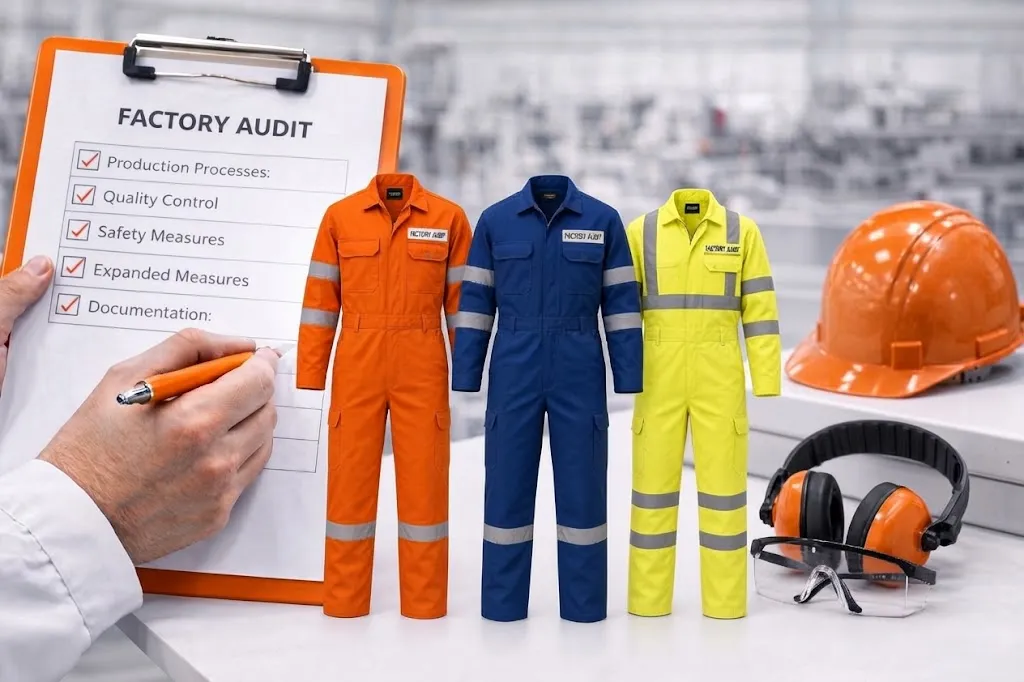
Brand names hide three vendor types. Classify the vendor first, then run the landed cost math, then audit the bulk process and lock QC before the PO. Sample and test details sit in Step 4 below.
Step 1: Classify the Vendor Before You Send an RFQ
Separate vendors into three buckets: true manufacturer, manufacturer-led brand and supplier or program partner. Ask one direct question: “Who cuts and sews this SKU, and where?” Require a SKU-level origin letter.
If a company mixes domestic and imported lines, make it say so in writing. Last quarter a client confused a heritage brand with a domestic line; the actual coveralls came from a Vietnamese subcontractor.
Document the answer with the custom workwear manufacturer checklist and the workwear manufacturers directory.
Step 2: Run the Domestic vs Overseas Landed Cost Math
Build a landed cost sheet: FOB price, freight, duty, brokerage, inventory carry, rework and stockout risk. Freight moves fast, so use a 90-day range rather than a single quote. Last year Pacific freight swung from $4,200 to $9,800 per container in six weeks.
Compare bulk wholesale workwear pricing against MOQ tiers and production time. Domestic sourcing wins when expedited freight, audit travel and replenishment speed erase the unit gap. Overseas wins on stable volume from an audited factory, but stockout risk can erase that gap on a single run.
Step 3: Audit the Bulk Coverall Process and OEM Specs
Reject any tech pack missing graded sizes, trim list, label placement or fabric qualification. Request FR test reports by SKU before reviewing trim specs. Fabric gets qualified before trims.
FR and non-FR trims are not interchangeable: one wrong zipper pull or thread can kill the FR claim. On a recent FR program a standard nylon zipper pull failed the vertical flame test and forced a nine-day rework cycle.
Heat-resistant embroidery thread belongs in the FR spec, and reflective tape positioning gets checked against the approved sketch.
Requests change with the hazard. Send this list with the RFQ so every SKU is answered on paper.
| Hazard or task | Governing standard | Document to request per SKU |
|---|---|---|
| Arc flash | NFPA 70E, with an ASTM F1506 arc rating on the fabric | Arc rating report in cal/cm², plus the NFPA 2112 label where flash fire also applies |
| Flash fire | NFPA 2112 | Garment label and the fabric’s third-party test report |
| Wildland fire | NFPA 1977 | Compliance label per style, and the test report behind it |
| Chemical splash | ASTM F903 for penetration, ASTM F739 or ISO 6529 for permeation | Permeation and penetration data for the named chemicals, not a generic sheet |
| Hi-visibility | ANSI/ISEA 107 | Garment class, retroreflective material certificate and wash-cycle test |
| Wash and care | NFPA 2113 laundering guidance | Washer instructions and wash-cycle data per fabric |
| General industrial | OSHA 1910.132 | Hazard assessment and PPE selection record held by the employer |
Step 4: Lock Sampling and QC Before the PO
Request a pre-production sample, sign a production approval and set QC checkpoints. Bulk QC runs at AQL 2.5 across seam strength, zipper stress, bartacks and dimensional tolerance, with first-article measurements compared to the size spec.
Seam and zipper testing across this review ran roughly 40 hours, split between in-plant sampling on production lots and lab retest of the same samples.
In a recent in-house tensile test, a 6 oz coverall seam hit 38 lbs before failure against a 40 lb spec — a single-batch observation, not a statistical sample of any brand’s output.
Matching the Vendor to Your Program Type
Four program shapes decide the shortlist before price enters the conversation.
- Hybrid domestic and import — benchmark custom coverall manufacturing and FR coverall programs against the full scope.
- OEM or private label — the wider field is mapped in the best custom workwear manufacturers list.
- Sector-specific rollout — start from heavy industry safety and construction and infrastructure.
- Security uniform programs — follow the same logic through security uniform programs.
Add the construction workwear checklist and EU PPWR packaging notes to the RFQ, then contact LantaoWork with a written scope.
🧠 Author’s Take: A low unit price means little when the vendor cannot show SKU origin, AQL reports and trim specs. Only vendors that answer all three in writing make the shortlist.
Frequently Asked Questions About Coverall Manufacturers in USA
1. Are there still true U.S. coverall manufacturers?
Yes, though the group is small and most U.S. brands import at least some SKUs. Treat “American brand” and “American-made” as two separate claims, ask for written proof per SKU, and walk away if the vendor dodges the question.
2. How do I confirm a specific SKU is actually made in the USA?
Ask for a signed domestic-content letter naming the fabric mill and the cut-and-sew factory for that SKU. Then check the FTC Made in USA standard: “all or virtually all” costs and processing must be domestic. Without it, a “domestic” claim can hide an offshore subcontractor before the PO.
3. Is domestic or overseas sourcing better for total landed cost?
It depends on volume and risk. Overseas wins on steady volume from an audited factory; domestic suppliers win when replenishment speed beats unit price. On one 1,200-unit program a $31 U.S. quote beat a $24 overseas one after freight and stockouts. Compare MOQ tiers and production time before you commit.
4. Which FR and arc-flash documents should procurement request?
Four items per SKU: the NFPA 2112 label, the ASTM F1506 arc rating report, laundering instructions to NFPA 2113 and an OSHA-ready PPE file. Ask for fabric-specific reports, not generic sheets, and confirm trim ratings too. A blanket certificate for a fabric never bought is a red flag.
5. What should an RFQ for custom embroidered or OEM coveralls include?
Send five things: a graded size spec, trim list, label placement file, fabric qualification and logo artwork. Add the FR thread spec and packaging rules, then ask about lead time, pattern ownership and trim MOQs. Build the pack with the custom workwear manufacturer checklist, then send the scope.
6. Are Carhartt coveralls made in the USA?
Carhartt is a U.S. brand; where each style is sewn is a separate question. Ask for the country of origin on the exact style, plus the cut-and-sew location. A brand-level “Made in USA” claim is not SKU-level proof, so get it in writing before committing volume.
7. What is the difference between a coverall manufacturer and a distributor?
A manufacturer owns or controls cut-and-sew, so patterns, fabrics and trims can change. A distributor buys finished SKUs and resells them, so customization stops at embroidery and stock colors. Ask who cuts and sews the SKU. If the answer is a third party, the purchase runs through a distributor and your RFQ should say so.

Leave a Comment
Your email address will not be published. Required fields are marked *