Table of Contents
The short answer Custom workwear MOQ is the highest of the fabric, dye-bath, trim, and certification minimums. Stock fabric runs at 100 per style, custom dye at 200–300, safety-rated at 300–500.
The worst first order is not the one with the highest quoted MOQ. It is the one with the wrong minimum hiding inside color, compliance, or size assumptions.
Splitting one quote sheet by style, color, size, fabric, and certification path makes the custom workwear MOQ problem visible: the total stays flat while the line items multiply.
The aim is to identify the real MOQ driver, redesign the spec when needed, and negotiate terms that lower exposure before the first PO.
Prerequisites: Assemble the Spec Pack First
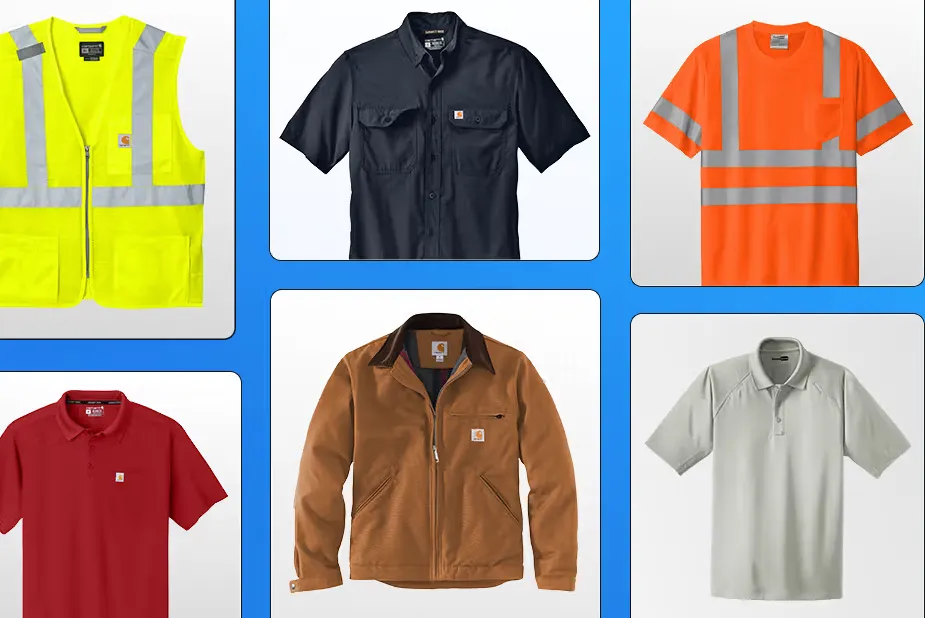
This guide reviews 30 failed first-PO RFQs. Missing details stalled MOQ negotiation. I work for LantaoWork, a cut-and-sew manufacturer — everything below is our own production-floor experience, disclosed rather than disguised.
- Spec inputs: style count, garment type, employee count or launch forecast, size curve S-4XL, color count and custom-dye flag, decoration files, and performance claims (hi-vis, FR, anti-static, antimicrobial, wash durability).
- Commercial terms: official Incoterms rules, target ship window, and pilot-order budget.
- Compliance screen: Split projects into ordinary work clothing, hi-vis PPE, and FR/arc-rated PPE before discussing MOQ. Use official ANSI/ISEA 107 and the OSHA PPE requirements overview as needed.
- Authority: Name who approves spec changes, owns size data, and signs off on compliance claims.
- Pack check: Build one shared folder before any factory call: one spec sheet per style, size curves, color chips, decoration files, and a text compliance matrix with columns for style, color, size, trim, certification, and unit cost.
- Primary route: True custom cut-and-sew negotiation. Alternative route: Stock colors or pre-certified materials when first-order risk is high.
⚠️ Safety First: Never accept a low-MOQ quote for safety-rated garments without matching test reports, technical file references, and trim/fabric traceability.
Typical MOQ by Sourcing Route
The number moves with the route, not with the factory’s mood.
| Sourcing route | Typical quoted MOQ | What sets the floor |
|---|---|---|
| Logo decoration on stock garments | None to 50 | Decoration setup only — no new materials |
| Private label, stock fabric and colors | 100 per style | Trim minimums and how many colorways the order splits into |
| Fully custom cut-and-sew, stock colors | 100–300 per style | Pattern, grading, and marker setup |
| Fully custom with custom dye | Roughly 200–300 per color | Dye bath minimum, quoted in kg per shade |
| Hi-vis or FR/arc-rated custom | 300–500 and up per style | Material qualification and finished-garment test units |
Most MOQ surprises start with pricing the first row and ordering the fourth.
How to Negotiate Custom Workwear MOQ in 5 Steps?
Five steps separate the quoted MOQ from the minimum that must actually be bought. Each step feeds the next, so work them in order.
Step 1: Rewrite the Order as Separate MOQ Buckets
Before comparing prices, split the order into six MOQ buckets. Buyers chase a blended quote, then find the low price only worked if every color shipped at 1,000 units.
The six buckets:
- Garment style
- Colorway
- Fabric platform
- Size range
- Trim/branding complexity
- Certification or lab-testing path
Splitting these columns calms the sheet. In one recent intake, a single row read “MOQ 500.” Split by color and size it read clearly: 500 total, 100 per size, 50 per color in that size.
Send these four questions in writing:
- Is MOQ per style, per color, or across the program?
- Can sizes be mixed inside one color MOQ?
- Which trims are custom and which can stay stock?
- Is the quoted fabric stock-dyed, yarn-dyed, or custom dyed?
The step is complete only when each factory answers with line-item minimums. Do not accept one blended MOQ number. If a factory replies “MOQ 300,” send these questions again.
Copy-paste email to the factory: Please confirm line-item minimums for each style, color, size, fabric, trim, and certification bucket. Do not blend them. State any custom-dye or custom-trim surcharges separately.
For a smaller team: replace the RFQ spreadsheet with an annotated tech pack plus a live clarification call. Ask the same line-item questions verbally and record the answers.
🧠 Author’s Take: This split is not busywork. It is the only way to see the real MOQ driver before negotiation.
Step 2: Calculate Fabric Demand Before You Accept the MOQ
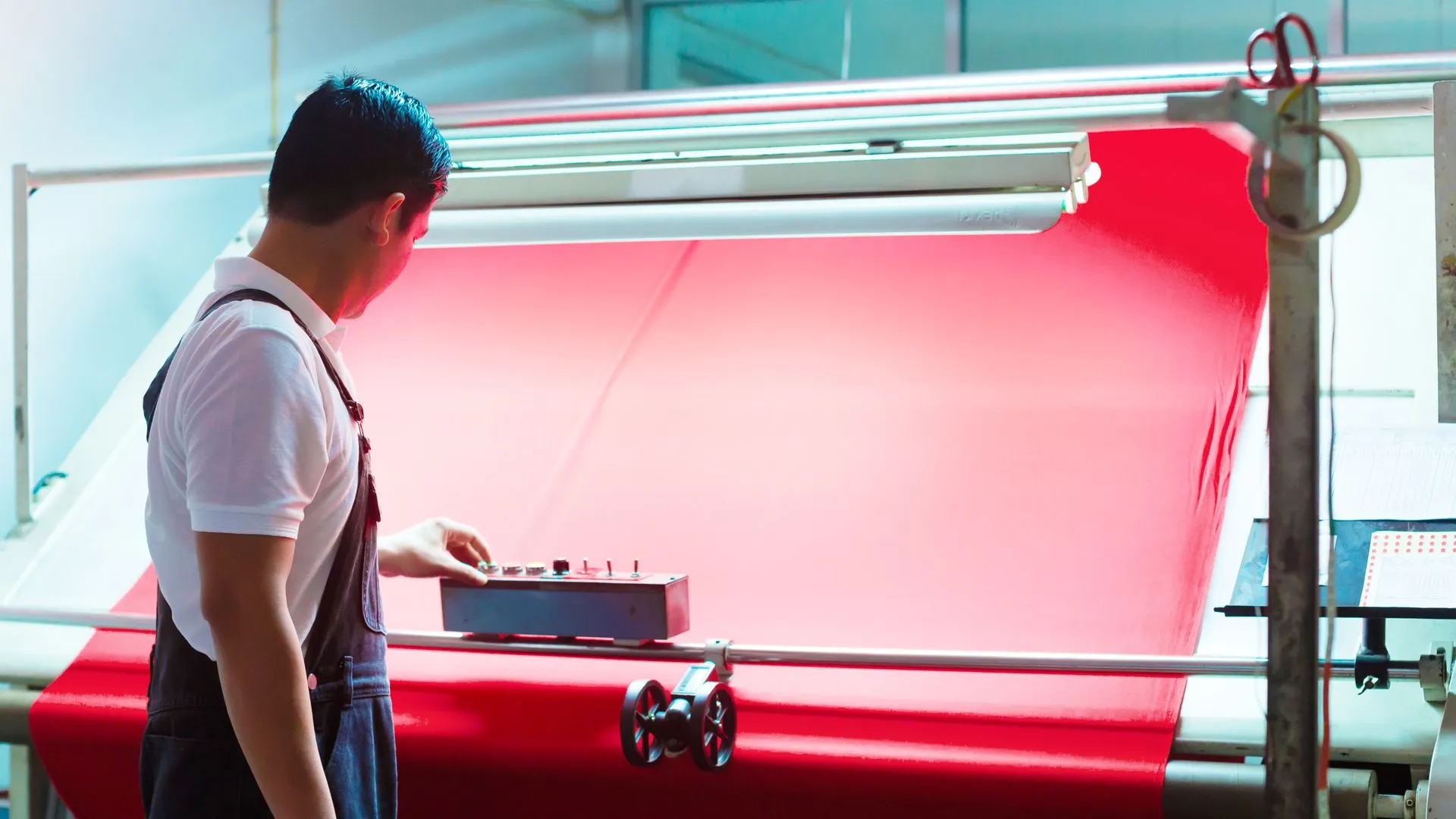
On a recent cutting-floor audit, the cutting spread ran 120 meters. The printed S-2XL marker showed large sizes pulling up to 30% more fabric off the same bolt width.
Run this five-line math before you sign anything:
- Per-size fabric consumption: Measure each size, not an average. One work jacket: M 2.3 m, XL 2.8 m; a 4XL coverall took about 30% more than L.
- Marker allowance and cutting waste: Add 5–7%. Tight nesting holds it near 6%.
- Shrinkage or wash-finish allowance: Add 3–5% for mechanical shrink or enzyme wash — a pre-wash trial took a 48 m test roll down to 46.1 m.
- Sample yardage and lab dips: Reserve 30–50 m for lab dips, handlooms, and strike-offs. Buyers forget this line.
- Custom trim or reflective-component minimums: One reflective transfer supplier required 1,000 patches per color, enough to force a garment count nobody planned.
Custom dye batches set the floor. A dye-house batch card reads 300 kg per shade. At 260 g/m² across a 150 cm width, that is about 769 linear meters. The dyer’s rule: “We do not run half a batch — the recipe alone needs the full drum.”
Worked example. 200 garments, one custom color, size curve S-2XL.
- Weighted average fabric use: 2.47 m per garment.
- Add 6% cutting waste: 2.62 m.
- Add 4% wash allowance: 2.72 m.
- Reserve 10 garments for testing: 210 units.
- Fabric needed: 210 × 2.72 = 571 m.
The dye floor of 769 m exceeds the 571 m this order needs: 769 ÷ 2.72 = 283 finished garments. A 200-piece program becomes 283 on fabric, color, and testing reserve alone — the sewing line was never the constraint.
Safety-rated garments: High-visibility and FR/arc programs add another MOQ layer. You must order enough for material qualification, finished-garment testing, and document control.
For FR/arc, request the official ASTM F1506 certification guidance and the official NFPA 2112 guidance. One FR program consumed 15 extra jackets just for testing and file retention.
⚠️ Experience Warning: A 200-piece quote can still become a 283-unit order. Ask for the dye-house batch card and the reflective-trim minimum before accepting the PO.
Step 3: Rebuild the Spec Around Stock Platforms and Shared Trims
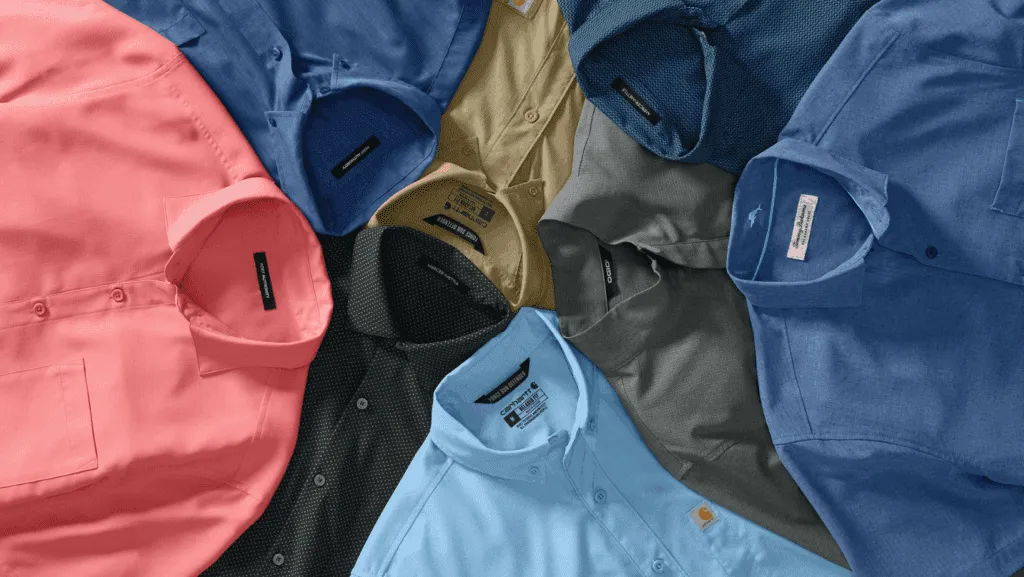
A rigid custom spec feels like pushing a locked door. In a recent intake, moving one custom-dyed navy shirt to the factory’s stock navy unlocked the whole quote.
Now rewrite the spec. Attack the highest-impact levers first:
- Switch custom-dyed colors to stock colors. Do this first.
- Keep certified or proven stock base fabrics. Move customization to trims and branding.
- Consolidate colorways across departments or sites. Fewer colorways means larger per-color runs.
- Reduce custom trim count in the first order. Each custom trim has its own hidden minimum.
- Merge near-identical styles into one pattern. One pattern beats two near-duplicates.
- Approve size mixing across S-4XL inside one batch. This unlocks the factory’s real sewing minimum.
LantaoWork’s Head of Production Operations explains why size mixing works inside one MOQ batch: “We grade the marker so smaller sizes fill the voids left by larger sizes. Cutting ratios must balance width utilization, not just total units.”
A tight nested spread keeps waste below 6%. Graded that way, size mixing does not penalize the inventory mix.
Choosing What to Protect
- If compliance is mandatory: protect the certified fabric and simplify brand variables.
- If branding is mandatory: protect the visible identity elements and relax custom fabric or color variables first.
Do not fight both. Pick the wall that holds the must-have.
The step is complete when 2–3 spec changes can be named that lower the minimum while preserving must-have requirements — for example, custom olive switched to stock olive, two jacket styles merged: 500 to 200 per color.
🧠 Author’s Take: I have never seen a buyer regret switching to stock navy. The brand survives. The MOQ falls. The factory relaxes.
Step 4: Build a Commercial Package Instead of Arguing One Number
By now, the real MOQ driver is visible and the factory has line-item minimums. The move is not to argue 200 instead of 300 but to redesign the commercial terms, so the sales manager stops defending a number and starts solving a production schedule.
Six moves, in sequence:
- Ask for MOQ by style or color, not per size. Open with: “Can we run 100 units across S-4XL inside one color MOQ?”
- Propose a blanket PO with split deliveries. Commit to a total volume but ship in two or three drops.
- Offer annual volume visibility. A rough 12-month forecast, in writing rather than on a call, has lowered first pilot MOQs by 20–30%.
- Reserve fabric or custom trims with a deposit. Paying 30–50% now lets the factory cut and finish later, converting their cash-flow risk into better terms.
- Negotiate a staged color rollout. Two colors now, two more in month six keeps per-color runs deep without freezing your brand.
- Ask for written shade-variance and substitution rules. The exact clauses are set out below.
Then put the ask in writing:
Our target is 300 units per color. We can do 150 now, 150 in 90 days. With a 40% deposit on the full 300, we will issue the blanket PO today. We also want written shade variance at Delta E ≤ 1.5 and lab-dip approval within 5 business days.
Risk allocation: Lower MOQ only works with written controls
A smaller first order is not safer if the factory substitutes zippers or ships a shade two steps off. On a hospitality project, a charcoal apron arrived with brown undertones — the lab dip was digital, the reference physical, and the variance went undocumented.
Before you sign, require these three written controls:
- Substitution rules: No trim or fabric switch without written approval.
- Lab-dip approval rules: Specify the physical vs. digital reference and response time.
- Reorder continuity: The same dye recipe and trim sources apply to every future batch.
If the factory resists documenting these, the lower MOQ is not worth the risk. Our manufacturer selection checklist and the workwear manufacturers directory cover document-control maturity before you commit.
Where direct negotiation stalls, or fabric reservations and split deliveries cannot be managed internally, a service-layer partner can pool sourcing, QC, and logistics.
The step is complete when those terms are in writing, not when a target quantity is agreed.
🧠 Author’s Take: The best MOQ negotiation I ever ran ended with the factory saying, “We can do 200 with three colors and a 50% deposit.” That is a yes. It just looks different than expected.
Step 5: Validate the Pilot with Cost Telemetry and a Pass/Fail Checklist
A cheap quote does not prove a healthy pilot. A calm pilot floor can hide a spreadsheet where one size destroyed the cost curve.
Anonymized intake telemetry across nine factory pilots tracks cost per unit at three run sizes.
| Run size (pieces) | Base cut-sew | Setup, grading, cutting | Dye, QC, overhead | Total per unit |
|---|---|---|---|---|
| 100 | $13.80 | $8.60 | $9.70 | $32.10 |
| 500 | $13.20 | $1.72 | $4.94 | $19.86 |
| 2,000 | $12.90 | $0.43 | $2.08 | $15.41 |
Unit cost drops 38% between 100 and 500 pieces and another 22% between 500 and 2,000. The largest reduction comes from fixed setup, grading, and cutting overhead spreading across more units.
Pilot approval checklist:
- Approved size curve S-4XL with per-size ratios
- Approved color or lab dip with physical reference
- Approved trims and branding placement
- Approved test-report path where applicable
- Acceptable lead time and split-shipment logic
- Reorder trigger and inventory threshold
Before a larger rollout, track three things: reorder velocity between trigger and next PO, spec stability with zero unapproved substitutions, and whether the cost curve can be explained to finance without hand-waving.
Packaging and freight mode are the next decisions; our packaging spec and freight mode guide cover both.
You are ready when the pilot has a clear pass/fail framework, not just an attractive quote.
🧠 Author’s Take: A pilot that cannot be explained to finance is a future write-off. The cost table is your evidence, not the supplier’s promise.
Troubleshooting Common Custom Workwear MOQ Problems
Even a well-negotiated MOQ can fail after the PO is signed. These three failures cover most of the damage, and all of them are cheaper to fix before bulk cutting than after.
1. MOQ changes after quoting
Problem: The supplier quotes a low MOQ, then raises it after lab dips or trim confirmation.
Cause: The quote hid fabric, color, or trim minimums.
Fix: Return to the Step 1 matrix. Demand line-item minimums by style, color, fabric, trim, and size in writing; custom-dye minimums are often folded into one blended number.
2. Size curve mismatch
Problem: The order clears the MOQ. Dead stock piles up in odd sizes.
Cause: You negotiated total units, not the size curve.
Fix: Rebalance ratios against real employee data. Document size mixing in the batch. A curve weighted to M–L often leaves 4XL stock unsold.
3. Material substitution
Problem: Bulk fabric is off-shade, inconsistent, or claims lack test reports.
Cause: The factory used leftover or substitute material to bridge small-order economics.
Fix: Require a pre-approved material list, substitution rules, and document-backed verification (ISO 9001 quality records) before bulk cutting.
🛡️ Prevention: Freeze the material list and lab-dip reference before cutting. In our floor audits, that one clause stops most first-PO disasters.
Frequently Asked Questions About Custom Workwear MOQ
1. What is a realistic custom workwear MOQ?
Our quoted floor is 100 units per style. On a fully custom program with custom dye, the effective minimum often lands at 200 to 300 units once dye-lot and trim minimums are added.
One dye house’s 300 kg per shade minimum forced 283 finished garments on a 200-piece plan. Ask for line-item minimums by style, color, size, and fabric — never one blended number.
2. Can I negotiate a lower MOQ on custom workwear?
Yes, but only after the real MOQ driver is identified. One first order went from 500 to 200 per color by switching a custom olive fabric to stock olive, then adding split deliveries and a 40% deposit.
The factory accepted because reorder visibility was on the table.
3. What should I ask before signing a custom workwear PO?
Ask four questions in writing. Is MOQ per style, per color, or across the program? Can sizes mix inside one color MOQ? Which trims are custom and which stay stock? Is the fabric stock-dyed, yarn-dyed, or custom dyed?
Send these questions every time a supplier replies “MOQ 300.” They force line-item minimums and expose hidden dye or trim surcharges.
4. Does a lower MOQ always mean lower risk?
No. A low MOQ quote has arrived filled with leftover fabric and off-shade trim because no substitution rules existed. Freeze the material list and lab-dip reference before bulk cutting.
A smaller order still becomes expensive if the factory substitutes material or ships two shades off. Lower MOQ only works with written controls.
Conclusion: Negotiate Toward a Reorderable Program
Custom workwear MOQ work starts by splitting the quote into style, color, fabric, size, trim, and certification buckets, then rebuilding the spec around stock platforms and shared trims. That is a safer first PO.
Your immediate next step is to book a feasibility conversation with a factory — or convert this article into an RFQ checklist. Do not wait for the perfect spec.
Trust disclaimer: My recommendations come from process experience and operational analysis. This is first-party factory experience — not paid placement.
The best MOQ negotiation is the one tied to a reorderable program. Aim for that, not just the lowest number.

Leave a Comment
Your email address will not be published. Required fields are marked *