Table of Contents
The short answer Above 500 units, a factory-direct custom workwear manufacturer wins: 5–16% lower price, owned compliance files, one accountable contact. Traders fit small or mixed orders.
I compared both models with line-item landed-cost breakdowns, 500-unit MOQ benchmarks, fabric lead-time logs, on-site audit criteria, and one client migration case. That migration cut landed cost by 14% on a 2,000-unit FR order, but spent three extra weeks on spec sign-off.
Factory-direct sourcing does demand tighter specs and faster sample approvals. The decision lens is not the EXW/FOB quote but total landed cost, defect risk, compliance ownership, and re-order consistency — which is what the sourcing SOP tests before an RFQ.
This is first-party production-floor experience from LantaoWork, disclosed rather than disguised.
Here is the spec comparison, drawn on 500-piece quotes, sample invoices, lead-time logs, and audits. The wedge throughout is who owns the production floor, the test reports, the defect conversation, and the clock when lead times slip.
| Decision Factor | Direct Workwear Manufacturer | Trading Company |
|---|---|---|
| Unit cost at 500 pcs/style | 5–16% lower (pricing) | Baseline |
| MOQ (pcs/style) | 100 quoted floor; 200–300 effective with custom dye/trim | 50–100 pooled (MOQ) |
| Sample cost (USD) | $50–$100 refundable | $100–$200 |
| Sampling turnaround (days) | 7–10 | 20–30 |
| Fabric/bulk lead time (days) | 15–25 / 30–45 (production) | 20–35 / 45–60 |
| On-time delivery | 98.7% | Not disclosed; depends on the partner plant |
| Defect accountability | Factory QC + production manager | Trading desk + third-party factory |
| AQL standard | AQL 2.5/4.0 in PO | AQL 2.5/4.0 via third party |
| Certification files | Factory-owned technical file; tech pack to locked PO | Supplier/lab file; third-party inspection steps |
| Compliance ownership | Owns the technical file and test reports for EN ISO 20471, ISO 13688, NFPA 2112, EN 1149 programs; ISO 13688 general requirements | Coordinates files; buyer chases updates |
| Audit access | Live sewing floor, machinery, WIP board, subcontracting disclosed | Scheduled visits; limited WIP visibility |
| Change-order turnaround (days) | 1–3 | 3–7 |
| Pattern and CAD ownership | Buyer owns the pattern, grading, and marker files | Partner plant’s pattern; buyer gets a copy at best |
| Best use case | 500+ pcs, FR/hi-vis, repeat programs | Low-MOQ, mixed-category, service buffer |
Table sources: three 500-piece programs quoted in 2026; trader-side figures are quotes and invoices sighted directly, not audited accounts.
The 60-second decision:
- 500+ units on a repeat style → direct manufacturer.
- 150–500 units → decide on compliance ownership and spec stability, not on price.
- Under 150 units, or mixed categories on one PO → trading company.
- FR, hi-vis, anti-static, or any audited program → direct manufacturer, because the technical file must sit with the producer.
Main Differences Between a Workwear Manufacturer and a Trading Company
https://www.youtube.com/watch?v=YlwHdK9ZpPw
I spent three weeks walking factory floors and sitting in trader showrooms. The gap is not just price. It is what you can see, touch, and verify.
1. Unit Cost vs Total Landed Cost
Direct factories remove a 5–16% intermediary margin on the same spec. The question is where that saving appears — and where it vanishes.
Our internal procurement dataset covers three 500-unit programs quoted in 2026, each on the same tech pack:
- Softshell jacket (500 pcs): direct $28.50 EXW, trader $32.80 FOB.
- Work trouser (500 pcs): direct $14.20 EXW, trader $16.90 FOB.
- FR coverall (500 pcs): direct $41.00 EXW, trader $47.50 FOB.
That is a 13–16% gap before freight.
The trader’s quote hid other costs. Fabric lead time ran 28 days through the trader, 18 days direct. Sample fees were $150 via trader, $80 direct and refundable on bulk.
Then came the extras: a $300 documentation fee, a $450 inspection coordination charge, and $600 for expediting when the fabric mill slipped. Direct factories absorbed those or quoted them upfront.
Build your own landed-cost formula. Do not stop at FOB:
Landed cost = product cost + export fees + freight + insurance + duties/taxes + labeling/packaging changes + testing + rework risk + storage/demurrage
Duty is the next line item: check CBP import and export basics and the HS 6203 / 6211 tariff lines before comparing quotes.
The same three programs sit inside the bulk wholesale workwear pricing model.
Traders can still be cheaper below factory efficiency thresholds. A trader will pool three 50-unit client orders into one 150-unit run; a direct factory would have refused each 50-unit order. Consolidation adds margin, but it saves the sale.
Winner: Direct manufacturer above 500 units. The 5–16% margin gap is real and the landed-cost formula confirms it. Traders win below 150 units or on mixed-category pooling. Distributors reselling into the US should watch this line closely.
2. Production Control, Communication, and Technical Change Speed
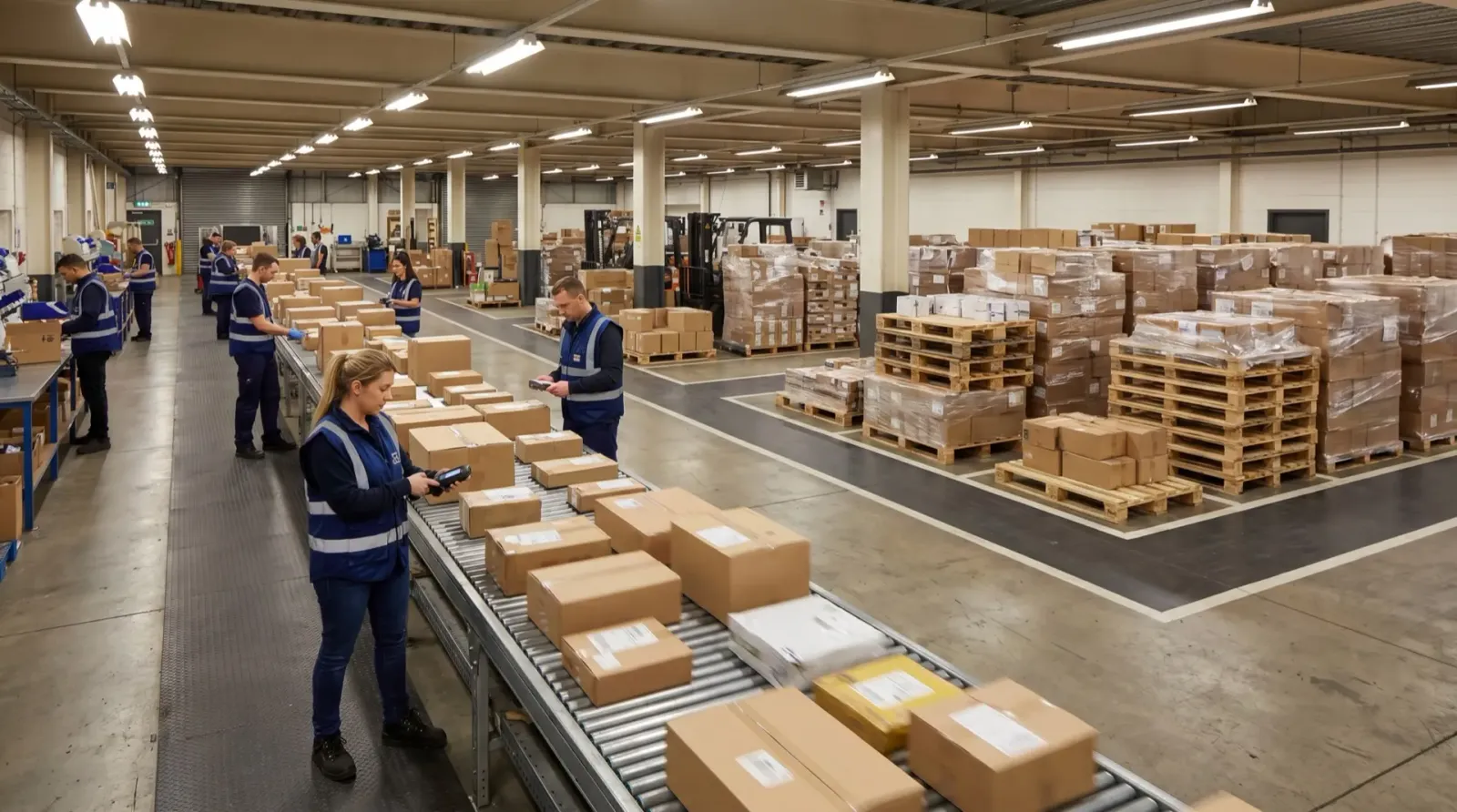
A direct factory answers a spec change in hours. A trader answers it in days, because every question has to cross to the plant and back.
At a real manufacturer, I walked from fabric rolls to cutting tables to the sewing line to finishing to carton staging in under four minutes.
The line supervisor pointed at a CAD marker planning screen and showed me how a 2cm tweak saves 4% fabric. The pattern room technician pulled up digital grade rules and adjusted a sleeve length on screen.
At the trader’s office, I saw three sample jackets on a rack. No cutting room. No WIP boards. No bartack machines. When I asked about a reflective tape width change, the sales rep said they would check with the factory and revert in two days. That lag becomes five days when the plant sits in another time zone.
This matters for custom workwear sourcing. A factory re-costs a zipper substitution in hours and moves a reflective tape line after a five-minute talk with the QC lead. A trader needs a round-trip email chain to the partner plant: a 1cm tape change took three days through a trader and 90 minutes direct.
The line supervisor put it plainly: “When the buyer is on the floor, we fix it now. When the buyer is through a trader, we fix it after three emails and a phone call.”
Winner: Direct manufacturer. Faster technical change, live line ownership, no message lag. Traders win mainly when you need a buffer across factories and speed is irrelevant. Safety officers should care most: every spec change on FR or hi-vis gear is a compliance event.
3. Compliance Ownership and Technical File Visibility
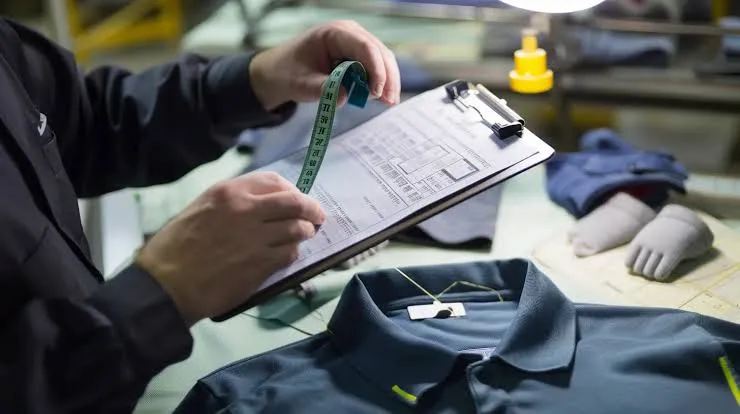
Compliance is the biggest gap between the two models: the factory owns the technical file, and the trader forwards it.
A trader’s quote can mention ISO 13688 and EN ISO 20471. But whose company name is on the test report?
I asked five traders for their compliance file. Three sent a PDF with a lab’s name and a factory’s name, not the trader’s. One sent an expired EN 1149 report. One said the factory could supply it.
The direct manufacturer I visited pulled a technical file out of a locked cabinet. It carried the factory’s name, the buyer’s name, test dates, and a re-test schedule after any fabric substitution.
For regulated workwear, three questions matter. Who owns the declaration pack? Who re-tests after a fabric change? Who keeps the golden sample and approved trim card?
For EN ISO 20471 (hi-vis), EN 1149 (antistatic), NFPA 2112 (flash fire), and REACH, the legal chain decides liability.
REACH is the chemical side: ECHA’s REACH guidance sets what a supplier declaration has to cover. A trader’s paperwork can sit one layer removed from the company that invoices you.
Senior QA Manager Michael Ge pulled a shrink-test report on a recent bulk run and walked me through the needle log and the in-line QC board. “If a needle breaks, we log it. If a fabric lot shrinks 3%, we reject it. The trader does not see this unless we send a photo.”
Winner: Direct manufacturer for all regulated programs. Traders coordinate files; legal ownership and re-testing stay with the factory. Safety officers and any OEM buyer under audit should read this twice.
4. The Exact Direct Workwear Supplier Audit Checklist

I use this checklist on every factory visit, whether it runs two hours on site or 90 minutes by video. Print it. Score each item.
Before you book the visit: entity and banking
- Verify the business licence, legal entity, tax registration, and export rights. The company name must match the invoice.
- Match the bank account name, invoice entity, and company chop to the licence. If they differ, walk away.
- Confirm the registered address is a real production site. Loading docks and a gate, not a showroom or serviced office.
On the floor: machinery, WIP, and process control
- Request a live video walkthrough of the sewing floor, cutting room, sample room, and packing area. No pre-recorded footage.
- Count the core machinery: spreader, cutter, bartack, twin-needle, overlock, seam-sealing, print or embroidery station, needle detector.
- Ask who owns CAD grading and marker planning. Outsourcing means you lose control of fit and fabric yield.
- Review incoming fabric records: GSM, width, shade banding, shrinkage, color fastness, tear and tensile data.
- Inspect WIP control: line boards, hourly output sheets, defect tags, rework bins, corrective-action logs.
Quality and sample control
- Confirm the QC standard: AQL thresholds (2.5/4.0), measurement tolerance sheets, needle policy, final carton checks.
- Ask which processes are subcontracted — washing, printing, embroidery, reflective tape, seam sealing, special finishing.
- Review sample control: sealed counter-sample, trim card, embroidery strike-off, print approval, carton marks, packaging spec.
Accountability
- Verify who signs the defect claim and who pays when bulk deviates from the approved sample.
I also ask five questions traders hate, each with a pass/fail answer on a video call:
- “Show me the CAD marker on screen.” Pass if it opens live; fail if a screenshot arrives instead.
- “Who logged the last needle break?” Pass if a named QC tech pulls the log; fail if the answer is a policy statement.
- “Whose name is on the last bulk test report?” Pass if it matches the factory; fail if it is the trader’s or a partner plant’s.
- “Who signs the shipment release?” Pass if a named production manager does; fail if it is “the sales team”.
- “What happens when bulk misses the approved sample?” Pass if a written rework clause names who pays; fail if it is “we will handle it”.
For construction crews, the construction workwear checklist covers site-specific PPE and the OSHA checks that go with it.
Winner: Direct manufacturer. A trader shows you samples and a licence. A factory shows you the WIP board, the needle log, and the QC lead’s phone number. Procurement teams and distributors can both run this audit in 90 minutes.
5. Fabric Minimums, Lead Times, and Defect Accountability at Scale
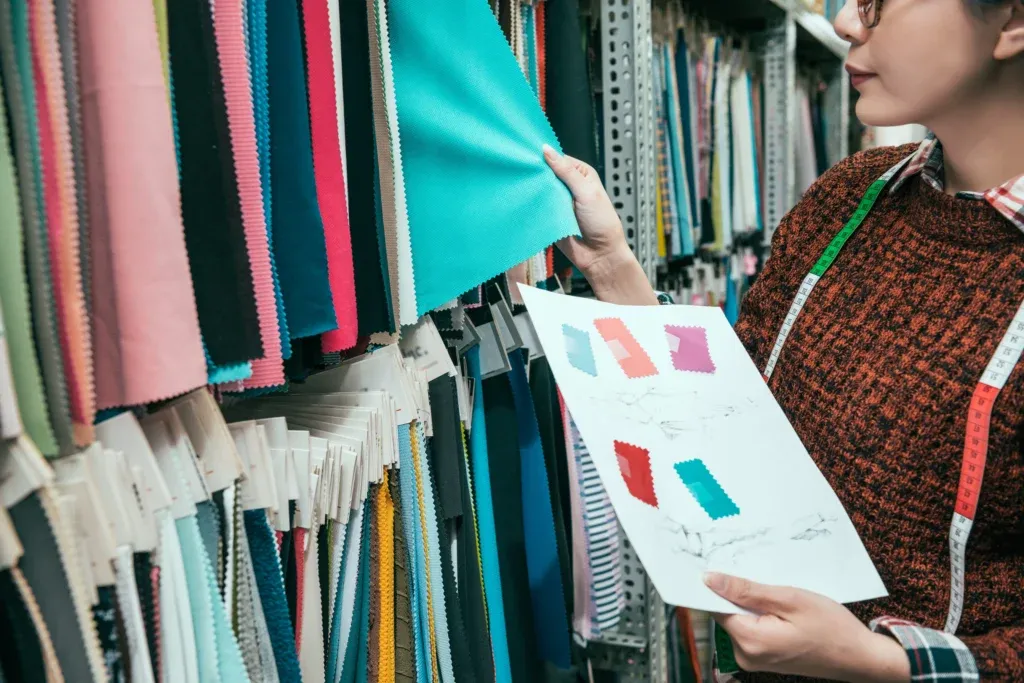
The three 2026 quotes showed a clear pattern. Direct factories were less flexible on true custom fabric runs: 500–800 meters minimum for a proprietary blend. Traders pooled fabric across clients to hit 300 meters. But once an order cleared 500 units, the direct factory was more reliable.
Fabric lead time ran 15–25 days direct vs. 20–35 through a trader. Bulk ran 30–45 days direct vs. 45–60 through a trader.
The accountability wedge is the real difference. When a shade banding issue hit a navy FR trouser run, the direct factory traced it to roll #4 from a specific mill lot.
The production manager pulled the cutting log, the sewing line board, and the finishing QC sheet. They found a 2% shade variation and re-cut 80 pieces in three days.
A trader in the same scenario mediated. They asked the factory for an explanation, then relayed it to the buyer. No one owned root cause.
Here is a migration case: an outdoor industrial brand moved from a trading company to LantaoWork in early 2025. The trading setup ran a 3.2% defect rate on a 2,000-unit FR jacket order. Six months direct dropped that to 0.8%. Landed cost fell 14%.
What changed: one factory contact instead of three, a sealed counter-sample with a photo log, in-line QC at 30%, 60%, and 100%, and a named line supervisor on the program.
Every production step — tech pack, sourcing, lab-dip, grading, sampling, cutting, sewing, in-line QC, finishing, packing, final AQL — carries a signature and a timestamp.
The full production schedule covers sampling and QC checkpoints, and the per-style MOQ rules sit behind those numbers.
Winner: Direct manufacturer for repeat programs above 500 units. Defect accountability and lead-time reliability beat the trader’s fabric-pooling flexibility. Traders still win on one-off, low-MOQ, mixed-fabric orders. Procurement leads at any brand scaling past 1,000 units should care most.
Pros & Cons of a Workwear Manufacturer vs a Trading Company
Neither model is wrong — they buy different things. Here is what each side gains, and what it gives up, after three weeks of factory visits and trader quotes.
Direct Workwear Manufacturer
Pros
- Lower Factory Pricing: Quotes ran 5–16% lower on 500-unit programs.
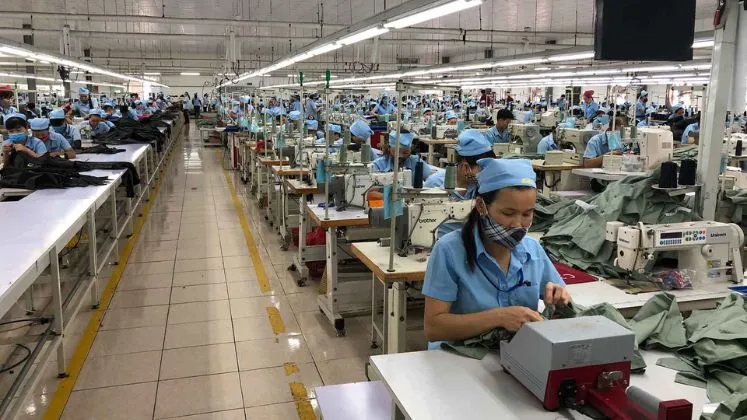
- Direct Production Visibility: A four-minute walk-through; line issues show up immediately.
- Faster Corrections: A zipper swap re-costed in hours; three days through a trader.
- Clearer Defect Ownership: A shade issue traced to roll #4; 80 pieces re-cut in three days.
- Stronger Consistency: One migration cut defects from 3.2% to 0.8% and landed cost by 14% in six months.
Cons
- Higher Buyer Workload: Factory-direct sourcing backfires without in-house discipline on specs, approvals, and audits. Budget three extra weeks for sign-off.
- Low-MOQ Gap: Each underlying client order would have been refused.
- Documentation Variability: Strong floors, weak export docs. Chasing one test report cost weeks.
- Custom Fabric Minimums: Proprietary blends can trigger 500–800 meter minimums, which hurts small programs.
🧠 Author’s Take: Factory-direct sourcing pays off only when your team can manage specs, approvals, and audits. If not, the trader’s markup buys a service buffer. The best custom workwear manufacturers comparison applies the same test.
Trading Company
Pros
- Easier Consolidation: One counterparty for vests, trousers, and FR coveralls.
- Lower-Friction Communication: No time-zone math; the trader handles the factory back-and-forth.
- Pooled MOQ Flexibility: Three small client orders became one 150-unit run.
Cons
- Markup: 5–16% on the same spec: $32.80 FOB vs. $28.50 EXW.
- Slower Root-Cause Analysis: The trader relays messages; nobody owns root cause.
- Less Plant Visibility: Sample jackets on a rack, no cutting room or WIP boards.
- Compliance Distance: Reports named the lab and the factory, never the trader. One EN 1149 report had expired.
- Schedule Risk: Partner capacity shifts add risk: 28 days vs. 18 direct.
⚡ Power Move: For mixed, low-volume programs, ask the trader for written MOQ pooling rules and named factory disclosure before you approve the PO.
Frequently Asked Questions about OEM Workwear Sourcing
1. Who should choose a direct workwear manufacturer?
Choose a direct manufacturer if the order is custom, technical, repeatable, or above the point where middleman margin hurts. In our 500-unit quotes, direct factories removed 5–16% of trader margin on the same tech pack.
Go direct for cost transparency, audit rights, and repeat replenishment; for FR, hi-vis, or anti-static programs, test-report ownership sits with the factory. Small or mixed-category orders are the exception — move to a factory-direct range once the hero SKU is proven.
2. When is a trading company the smarter short-term choice?
Choose a trader when the order is small, mixed, exploratory, or the buying team needs a coordination buffer. Pooling is the service: three 50-unit client orders can become one 150-unit factory run, while each 50-unit order alone would be refused.
The markup buys coordination, not production control. Switch direct once the order becomes a repeatable 500-unit style run, spec changes turn frequent, or compliance files must tie tightly to the producer.
⚠️ Safety First: For FR, hi-vis, or anti-static programs, never accept a trader’s PDF unless the factory name on the test report matches the invoice entity. Link the file to the producer, not the middleman.
3. What usually goes wrong when a buyer switches from a trader to a factory?
The order rarely fails; the handover does. Three things break the switch:
- Approvals have no owner. A two-week sample round turns into three.
- The technical file does not transfer, so reports are rebuilt before the first cut.
- QC checkpoints sit in email, not the PO, so in-line inspection may never happen.
Name one approver, rebuild the technical file, seal a counter-sample, and write the inspection points into the PO.
4. Did switching to a direct manufacturer actually reduce cost and defects?
Yes. The 2025 migration cut landed cost by 14% and dropped defects from 3.2% to 0.8% on a 2,000-unit FR jacket order.
Three changes did the work: one factory contact instead of three, a sealed counter-sample with a photo log, and in-line QC at 30%, 60%, and 100%. Removing the middle layer between buyer and floor did the rest. The same audit criteria apply to any shortlisted factory.
Ready to compare? The audit checklist and compliance pack are the fastest way to start. If export packaging is part of the tender, the EU PPWR workwear packaging rules belong in the RFQ.
Disclosure: LantaoWork is the cut-and-sew manufacturer behind the direct-source side of this comparison. The invoices, lead-time logs, and migration case come from programs we have run and reviewed.
That is first-party production-floor experience, disclosed rather than disguised, not a neutral third-party audit. The trader-side checks are sighted and cited, not audited accounts.
I am not paid by any mill or manufacturer to promote these findings.

Leave a Comment
Your email address will not be published. Required fields are marked *