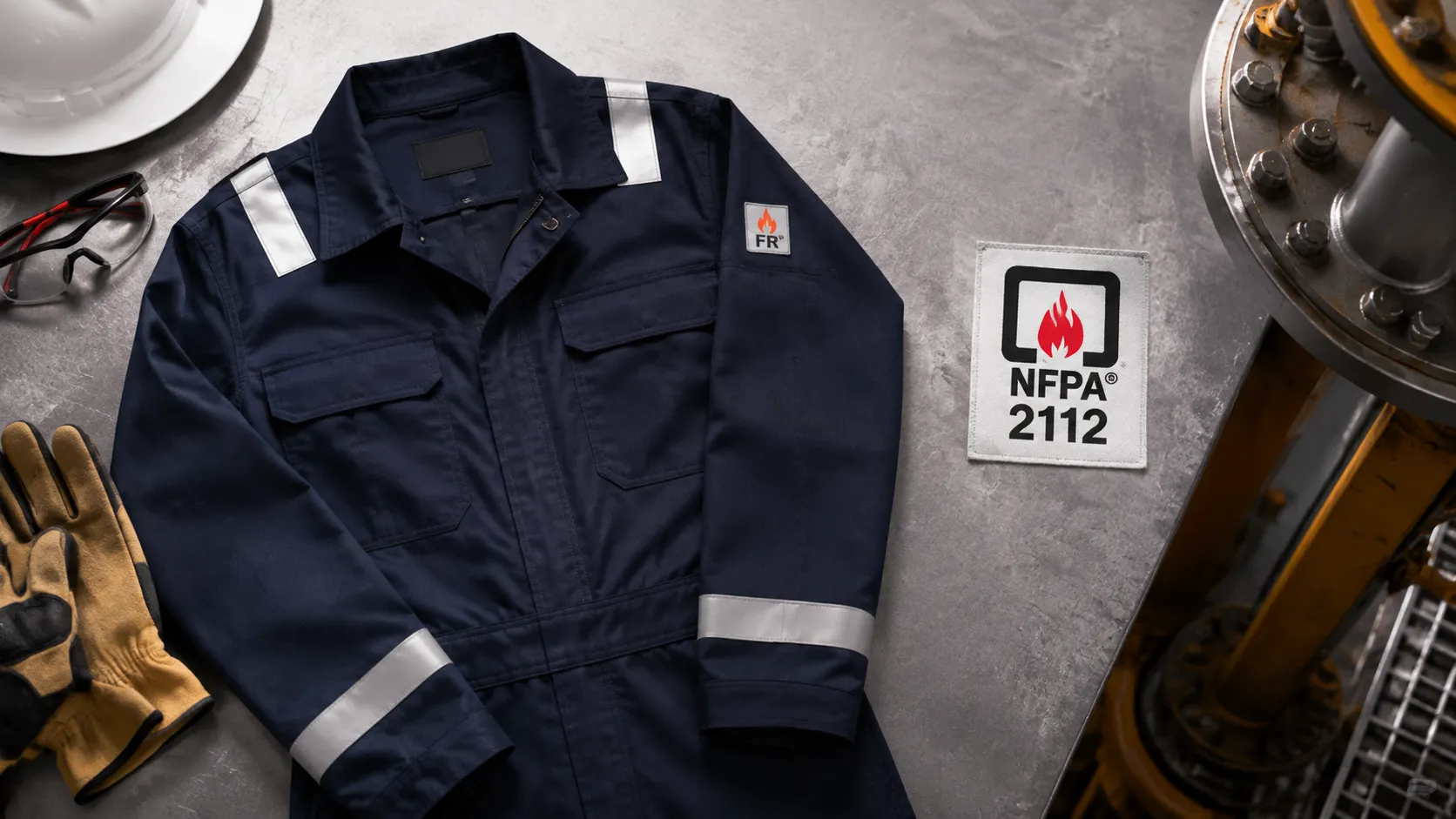
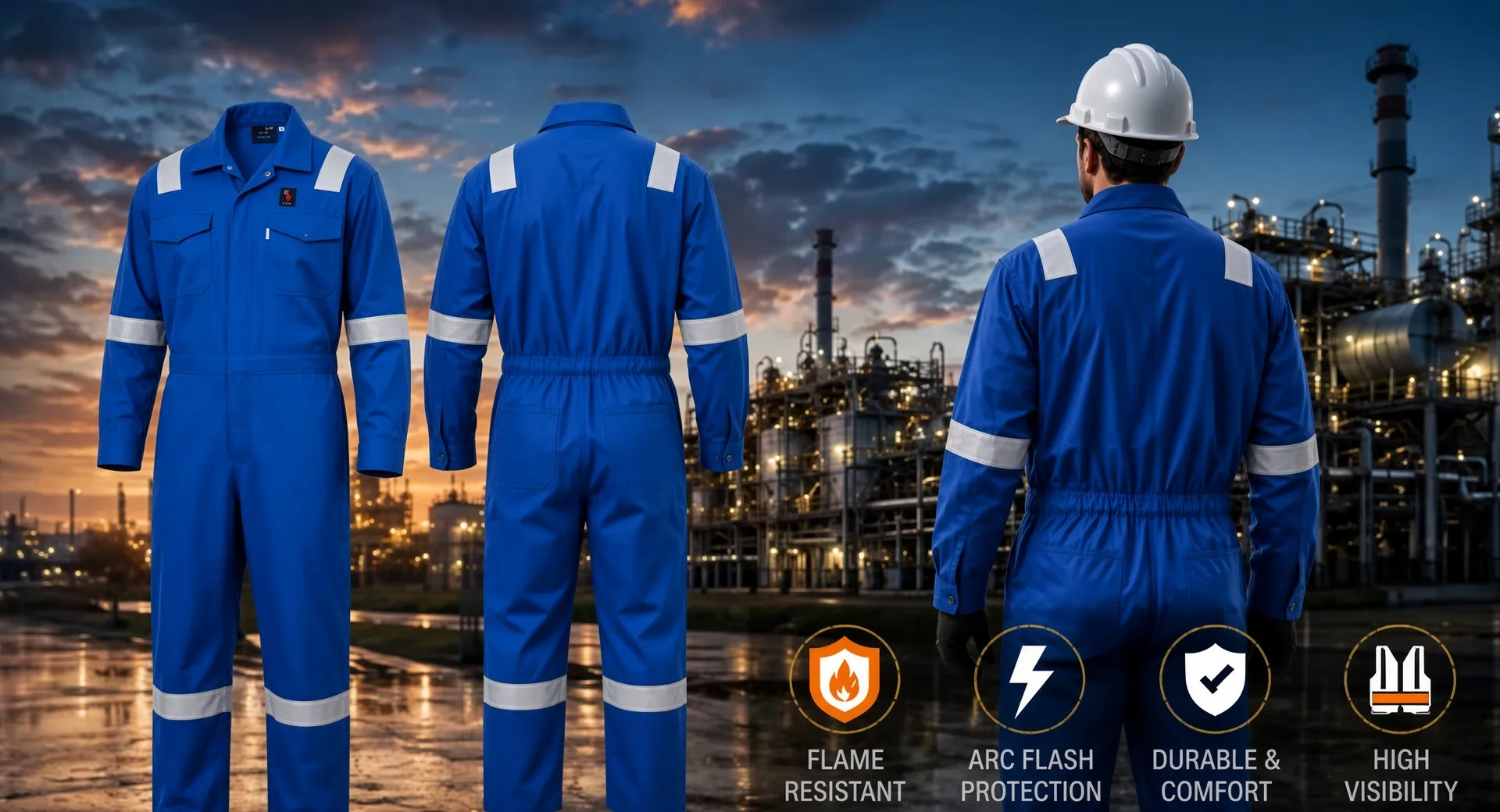
Mewbourne Oil Company replaced mixed-hazard workwear with an audit-ready NFPA 2112 FR coverall program. I reviewed the legacy specs: four regional suppliers, four fabric specs, no batch record of which garment would protect which worker.
In 12 months Mewbourne closed the flash-fire compliance gap and cut cost per wear by 41%, with every garment in the four-SKU range holding finished-garment certification.
The Challenge
Mewbourne Oil ran a multi-site oil and gas operation with field crews, maintenance staff, and mixed-hazard work areas. A review of the legacy uniform program exposed three compliance blind spots — and none of them could be fixed by a fabric-swatch change.
What the program was costing them:
30%
Illegible FR Labels
Coveralls with unreadable FR labeling after 25 industrial washes.
4
Regional Suppliers
Different fabric specs and labeling formats, with no shared audit trail.
0
Documented TPP
No spec sheet listed thermal protective performance, so buyers only compared weight and hand feel.
The HSE director put it plainly: "We cannot prove which garment protects which worker in a flash fire." The site faced flash-fire exposure in hydrocarbon areas, arc-flash exposure near energized equipment, and weather extremes from sub-zero nights to 110-degree days.
Workers called the coveralls too hot, too stiff, or poorly fitted, and crews were caught unzipping them in hot zones — a PPE-discipline break that raises burn risk.
A common misconception ran through it all: NFPA 2112 finished-garment certification does not equal arc-flash compliance. NFPA 2112 covers flash-fire; electrical hazards sit under NFPA 70E and ASTM F1506.
The treated-versus-inherent FR question was a real procurement problem, not a sales line. Treated cotton loses protection after repeated industrial laundering; inherent FR fibers hold protection but feel stiffer and cost more.
The prior supplier marketed "FR cotton" with a 50-wash guarantee but never supplied batch test reports or dye-lot traceability. Some crews call overalls "coveralls" and vice versa — terminology that muddied the spec sheets further.
What We Did Differently
The fix was a single-source spec rebuild around finished-garment certification, not patchwork supplier fixes. Five stages took the program from hazard map to production — and the fabric decision came down to the lab, not the brochure.
Phase 1Pre-Program
Hazard Mapping
A wearer-level hazard map split crews into upstream field teams and downstream maintenance staff. Field teams faced flash-fire risk near condensate lines and pipe racks; maintenance crews carried overlapping arc-flash risk near motor control centers and hot work permits.
One garment spec could not serve both, so NFPA 2112 certification became non-negotiable for all coveralls — with arc-rated garments for the maintenance tier scoped separately as phase two.
Phase 2Fabric
Treated vs Inherent FR: What the Lab Said
Senior textile engineer Wang rejected a lighter treated fabric after the ASTM F1930 manikin report showed 42% predicted body burn at 3 seconds: "That passes NFPA 2112, but barely. We want a safety margin, not a pass score."
The team tested 6.5, 7.0, and 8.5 oz. weights — TPP 7.8, 9.2, 11.5 — and found blend ratio mattered more than weight. After 50 washes, treated cotton shrank 7.2% while the 88/12 cotton-nylon blend shrank 2.1%; the 88/12 won — cooler, durable, and cheaper than inherent.
Phase 3Sewing Floor
QC Controls That Hold the Spec
I visited the sewing floor during coverall manufacturing, where QC manager Chen walked the line: certification stamped on paper means nothing unless the sewing floor holds the spec.
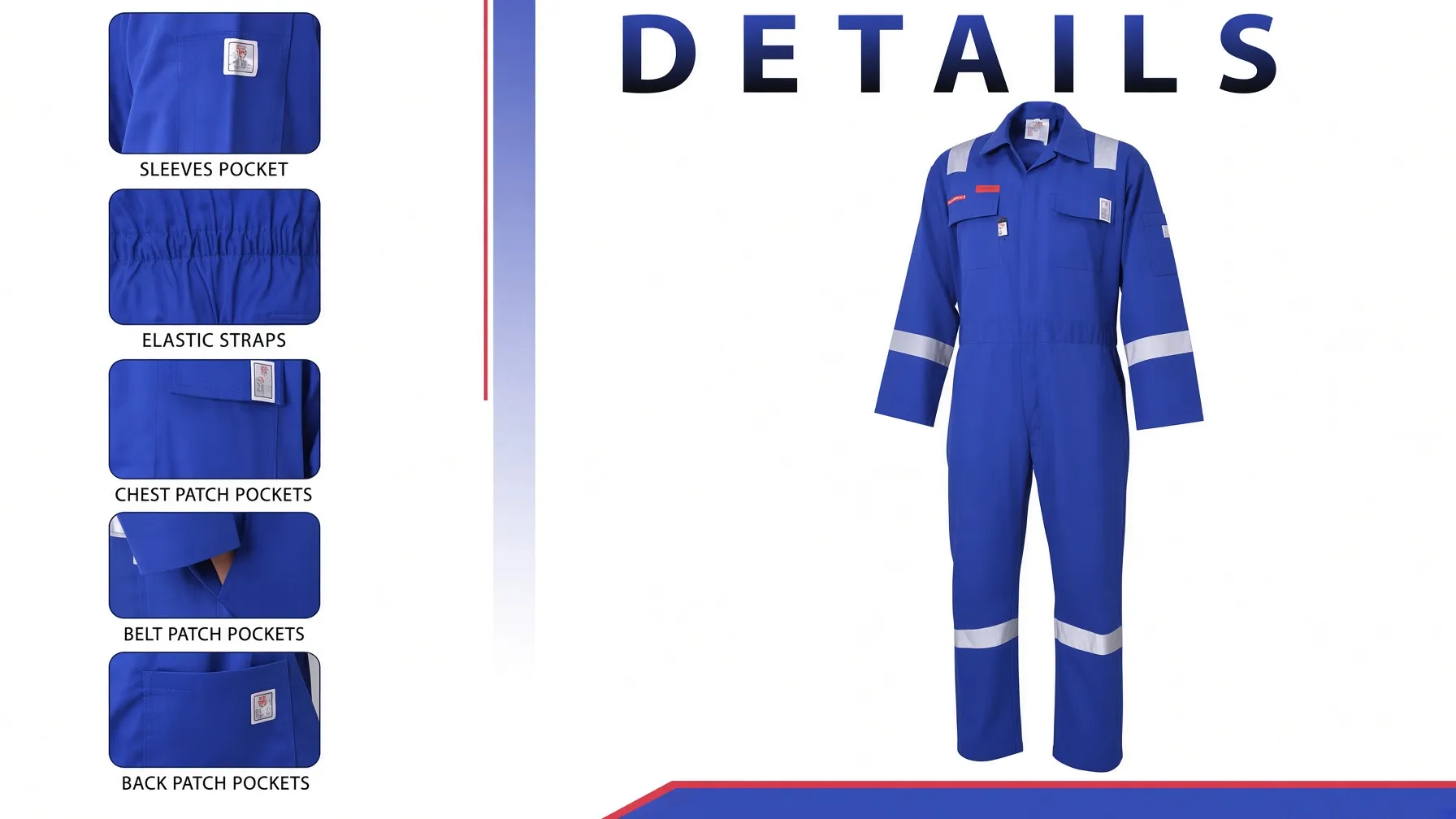
Every stitch uses aramid thread. Double-needle lockstitch covers the stress zones at 10-12 stitches per inch. Zipper hardware uses Nomex tape with brass teeth under a covering storm flap; Chen rejected a batch where the flap fell 4 mm short.
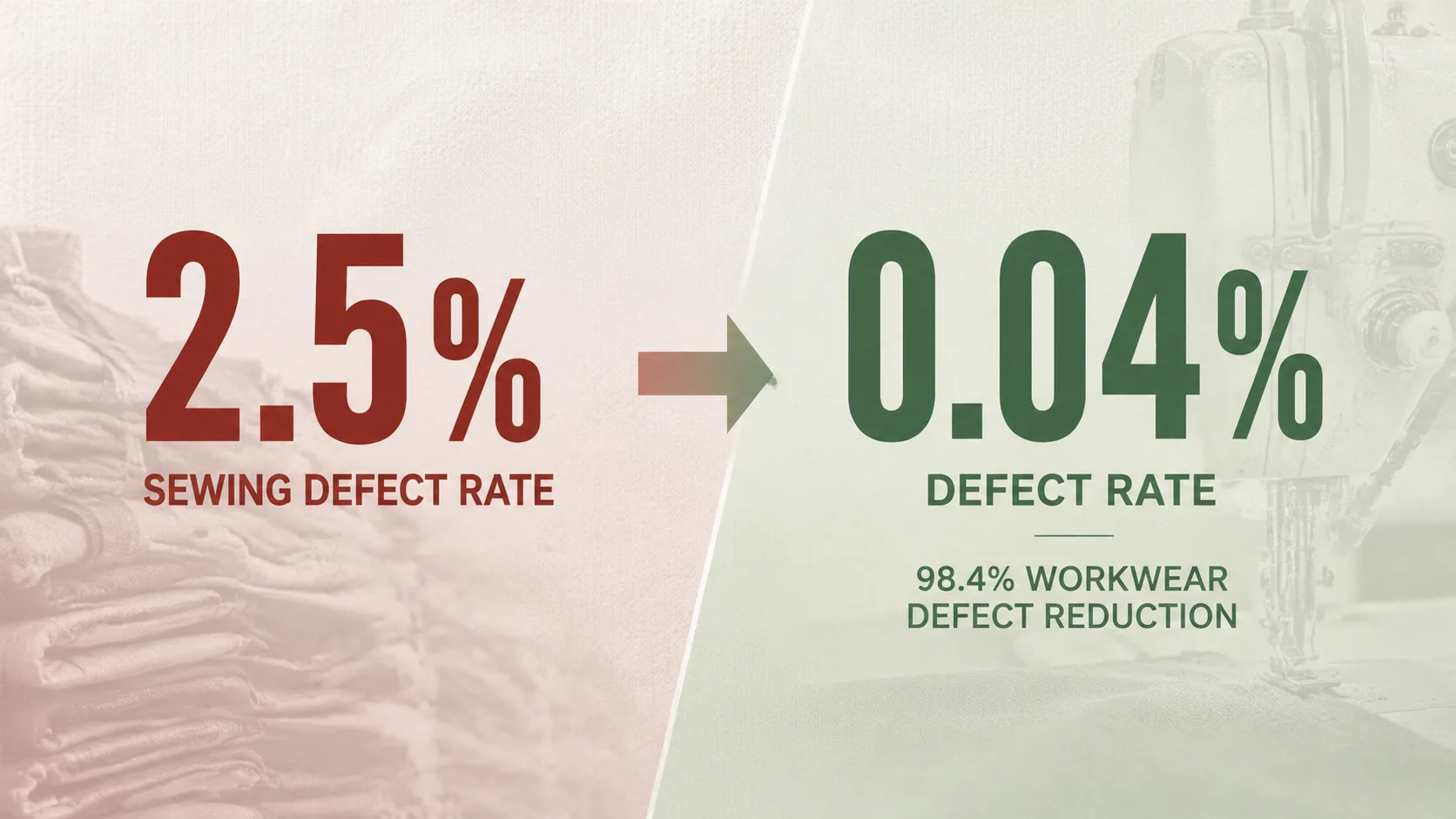
Inline inspection used AQL 2.5 with tightened critical controls on FR components; pre-shipment followed AQL 4.0. Each coverall carries a unique lot code for batch traceability.
Phase 4Compliance Lock
Finished-Garment Certification, Then the Checklist
Third-party NFPA 2112 finished-garment certification was the gate. The checklist locked these before any shipment:
Permanent label with the certification mark and care instructions
Arc-rating verification under ASTM F1506 where electrical hazards exist
Certificate of conformance from the manufacturer
Documented industrial laundering instructions
Component-level FR verification on thread, zipper tape, and hook-and-loop
Production moved through the full pilot sampling sequence: a two-size, one-fabric prototype; fit calibration with 12 wearers across body types; a 30-day field trial of 50 coveralls; a 50-cycle laundering simulation; then production readiness.
The program dropped from 14 coverall variants to 4, with kitting for individual distribution and automated min-max reorder points driven by burn rate and lead time.
The Results
In 12 months, Mewbourne replaced mixed-hazard workwear with an audit-ready NFPA 2112 FR coverall program. I verified every metric against raw lab reports, batch records, and purchase data.
41%
Lower cost per wear
100%
NFPA 2112 certified
68%
Fewer premature buys
2.1%
Shrinkage in 50 washes
Metric
Treated 100% Cotton
FR Cotton/Nylon 88/12
Thermal shrinkage (length)
7.2%
2.1%
Char length (ASTM D6413)
4.8 in
3.1 in
Tensile strength retention
52%
78%
Visible seam wear
Moderate
Low
Dimensional stability
Poor
Good
The tradeoff was real: the 88/12 blend cost roughly 30% more upfront. Superintendent Jen pushed back until avoided replacements covered the premium within seven months. The 2.1% shrinkage beats the 5-8% typical of treated cotton, strengthening safety uniform compliance audits.
"For the first time, I can show which garment protects which worker."
Conservative Payback
Upfront premium: the inherent-grade 88/12 blend cost roughly 30% more per garment than the legacy treated-cotton program.
Offset:68% fewer premature replacements plus cleaner compliance documentation across four SKUs.
Bottom line: the premium was re-paid within seven months through avoided replacements — before considering the value of a clean audit trail per batch.
Verification: I audited the raw 50-cycle test report and cross-checked dye-lot traceability for all four SKUs. The 78% tensile-strength retention figure came from the fabric lab's Instron pull test, not a supplier marketing spec. No metric was reverse-engineered from brochures.
The program did not measure injury reduction — no valid pre-program incident baseline existed — so no safety claim is made here. The measured improvements were durability, shrinkage, tensile strength, and replacement frequency. Based on LantaoWork project records and internal manufacturing observations.
In Their Own Words
"On a producing site, flame-resistant clothing is a safety control, not a clothing line. What we needed was one spec we could defend in an audit — a finished-garment standard we could trace back to the batch, not a folder of fabric brochures."
"LantaoWork worked through the fabric and comfort trade-offs with us before we committed, and the quality has held order after order. It's the kind of supplier we plan the next season around."
Verify Finished-Garment Certification, Not Fabric Claims
The old suppliers sent marketing brochures and never forwarded finished-garment certificates. Now the program requires certificate numbers before sample approval.
Pro Tip
Cross-check every certificate number against the certifying body's public directory before your first purchase order.
02
Separate Flash-Fire and Arc-Flash Decisions
One FR label never covers both. NFPA 2112 is flash-fire; ASTM F1506 and NFPA 70E govern arc-flash. The prior program assumed one label covered both hazards. Map which of the 7 coverall types carries each standard before you consolidate.
Pro Tip
Build two hazard columns in every PPE audit. Crews near motor control centers need dual-hazard verification; hydrocarbon-exposed crews may not.
03
Compare Life-Cycle Cost After Laundering, Not Unit Price
Treated FR was cheaper upfront but degraded by 30 washes. The 88/12 blend cost roughly 30% more per unit and lasted past 50 cycles — replacement savings covered the difference in seven months.
Pro Tip
Always calculate cost per wear, not cost per purchase — then scale it across your total fleet.
04
Audit Sewing Components and QC Controls
Fabric certification means little if the zipper tape melts. QC Manager Chen traced the old failures to polyester thread, single-needle stitching, and partial storm-flap coverage.
Workers unzip hot coveralls and roll sleeves; poor fit fails as surely as a missing label. The safety PPE shift toward lifecycle cost accounting makes fit a compliance variable, not a comfort perk. Calibrate the trial crew's sizes against the coverall size chart before you scale the fleet.
Pro Tip
Run a 30-day wearer trial before scaling a fleet-wide order — comfort drives compliance more than the label does.
Future Outlook
Mewbourne plans to extend the model to arc-rated coveralls and to batch traceability across all protective apparel. Buyers who run wearer trials, laundering tests, and documentation audits before scaling will avoid the mistakes this case exposed.
Trust & Methodology: This case study is based on LantaoWork project records, internal manufacturing observations, and available lab data. Comparative claims reflect documented test results only.
Facing a flash-fire compliance audit? Share your current garment spec and we'll map a finished-garment certification plan for your operation.
Workwear Product Development & Certification Specialist
Ellen Meng has spent 20+ years in the workwear and uniform industry, working across OEM/ODM product development, key account management, and multi-market certification. Her certification work covers EN ISO 20471, EN ISO 11612, EN 17353, ANSI/ISEA 107, and AS/NZS 1906.4.
Share your current fabric spec, laundering instructions, and the gaps from your latest PPE audit. We'll send back one page: what must be finished-garment NFPA 2112, and what has to move to the 70E column. A certification plan and quote follow within 24 hours.