Table of Contents
I have outfitted global industrial fleets for years, and I constantly see the same dangerous assumption. Leaders think a bright, reflective garment automatically equals safety uniform compliance. The reality is much harsher. A high-visibility jacket might look safe but still fail an audit due to poor fit, incorrect labeling, or mismatched cross-border standards.
True compliance is not a simple purchasing event. It is a strictly managed system of hazard assessment, standard selection, ergonomic fit, maintenance, and total auditability.
As you finalize 2026 rollouts, the most critical shift is the explicit OSHA construction fit requirement taking effect January 13, 2025. Meanwhile, ANSI/ISEA 107-2020 anchors the U.S. high-visibility benchmark, and the international ISO 20471 standard undergoes revision.
This global guide provides construction, energy, and logistics leaders with a clear roadmap. We cover the basics, core concepts, key benefits, and operational limitations.
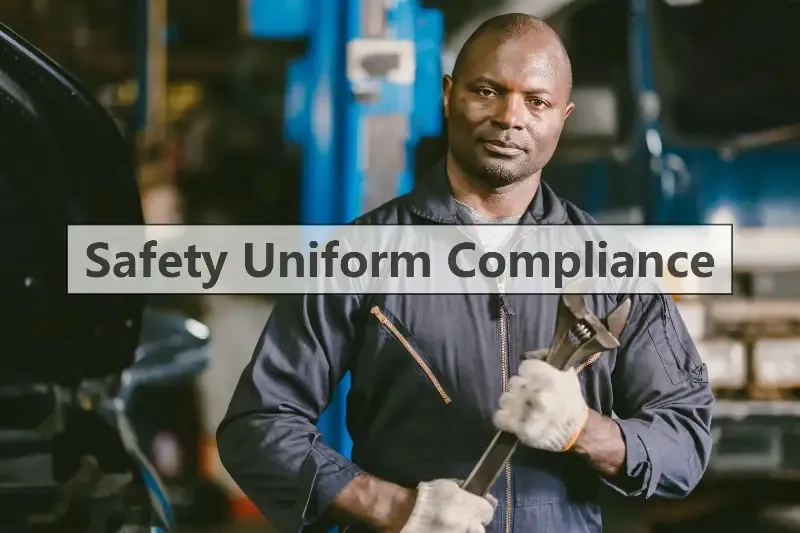
What is Safety Uniform Compliance?
https://www.youtube.com/watch?v=STjma0BE2-s
Safety uniform compliance is the process of matching work garments to specific physical hazards, legal duties, and documented performance requirements.
Think of it like a commercial vehicle inspection. You do not just check if a truck has brakes. You verify those brakes can stop a 10-ton load at highway speeds. Handing an employee a bright yellow shirt does not make your site compliant. You must prove that shirt meets specific safety standards.
When producing thousands of garments each year, we divide workwear into three distinct categories to eliminate confusion:
- Everyday Work Uniforms: Basic company polos or pants. These build brand identity but offer zero physical protection.
- Mandatory PPE: Standard personal protective equipment required for a task, such as basic hard hats or safety goggles.
- Certified Protective Clothing: Highly engineered garments, like flame-resistant coveralls, that survive rigorous lab tests for specific industrial hazards.
The Golden Rule: PPE is your last resort. Clients frequently ask us for heavy-duty gear to fix dangerous workflows. However, according to the Hierarchy of Controls defined by the CDC, PPE is always your final line of defense. Employers must first try to eliminate the hazard, substitute it, isolate workers with engineering controls, or change administrative rules. You only issue protective clothing when those four steps fall short.
Core employer duties. Under core U.S. employer duties enforced by OSHA, companies must provide required PPE at no cost to the worker. Legal exceptions exist for non-specialty safety-toe footwear, basic prescription safety glasses, everyday clothing, and weather-only jackets. If employees bring their own gear, the employer still holds the legal duty to guarantee that equipment remains adequate, maintained, and sanitary.
We use the phrase “workplace safety and health act 2026” as a shorthand for the wave of global safety law updates arriving in 2026. Mastering these foundational rules now prevents critical audit failures later.
The Compliance Operating Model: How It Works
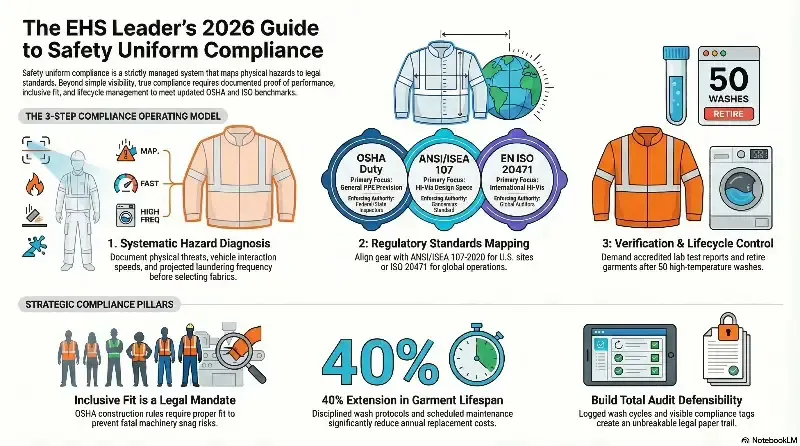
Enterprise safety uniform compliance is not a simple purchasing decision. It is a strict operating system. We map raw environmental inputs to safety regulations to produce protective outputs. To protect workers and pass legal audits, EHS teams must turn this into a repeatable four-step workflow.
Step 1: Hazard and Task Assessment
You cannot prescribe a solution without a diagnosis. First, EHS teams must systematically document the physical threats facing workers on the ground.
We map exposure by analyzing specific tasks. We measure vehicle interaction speeds, visibility conditions, and weather extremes. Next, we evaluate secondary threats like chemical contamination, flash/fire risk, and electrical hazards.
Finally, we calculate the projected laundering frequency. A poly-blend jacket washed daily in heavy alkaline detergents loses its structural integrity rapidly. You must define these baseline parameters before you review a single fabric swatch.
Step 2: Standards Mapping
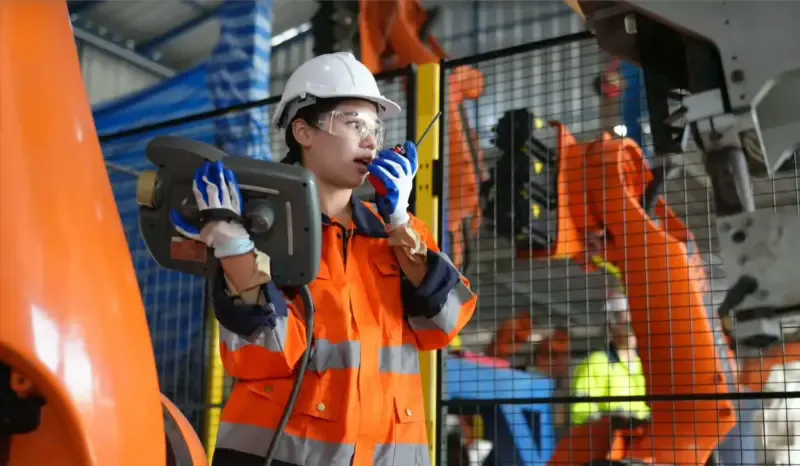
Once you define the hazards, you map them to the legal framework. In the United States, we use ANSI/ISEA 107-2020 as the primary benchmark for high-visibility apparel. This standard categorizes compliant garments by Type and Performance Class.
For global operations, we pair the U.S. framework with EN ISO 20471, which serves as the international benchmark. Standards bodies constantly update these rules to match new technology. Currently, the revised ISO/DIS 20471 remains under development.
Regulatory Framework Comparison
| Framework | Primary Focus | Application Scope | Enforcing Authority |
|---|---|---|---|
| OSHA Duty | General PPE Provision | Broad U.S. Workplaces | Federal/State Inspectors |
| ANSI/ISEA 107 | Hi-Vis Design Specs | U.S. Roadway/Industrial | Consensus Standard |
| EN ISO 20471 | Hi-Vis Design Specs | International Markets | Global Auditors |
| Site Policy | Specific Work Rules | Individual Company Sites | Internal EHS Teams |
Step 3: Proof of Compliance
We refuse to accept a supplier’s verbal guarantee. You must demand hard conformity evidence from your manufacturer — the same discipline a buyer applies to reflective-jacket suppliers — to prevent workplace accidents.
Request clear label photos and declarations of certificates. You must require accredited lab test reports that prove the fabric actually meets the standard. Finally, secure the wash-care instructions and traceability records. If a zipper fails in the field, you need the ability to trace that exact batch back to the factory floor.
🧠 Expert Insight: We routinely stress-test cheap vests from new client sites. In our lab, uncertified reflective tape often loses 80% of its luminance after just five industrial washes. Always verify the raw lab data.
Step 4: Lifecycle Control
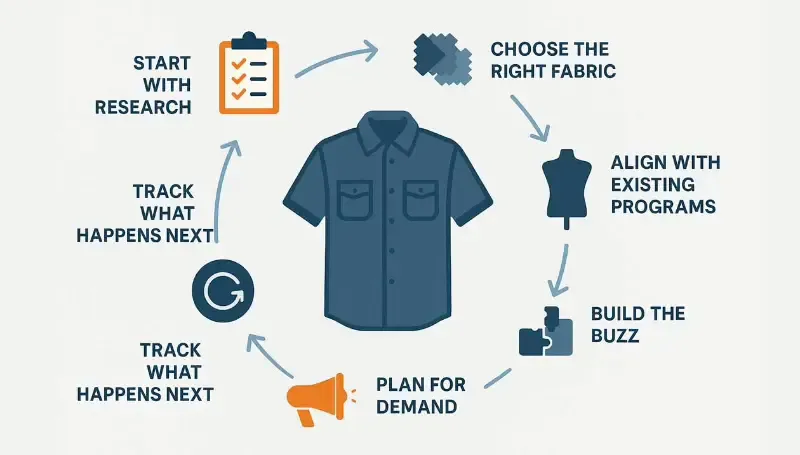
A compliant jacket becomes a critical hazard after 50 high-temperature washes. You must tightly control the entire garment lifecycle.
This loop requires strict protocols for fit verification, wearer assignment, laundering, and daily inspection. You must also enforce strict rules for repair, retirement, and reissue. Fit is especially critical. OSHA explicitly includes fit in its updated construction rule text. A baggy vest catches on heavy machinery and creates a fatal hazard.
The 2026 Standards Horizon: Smart Safety Garments
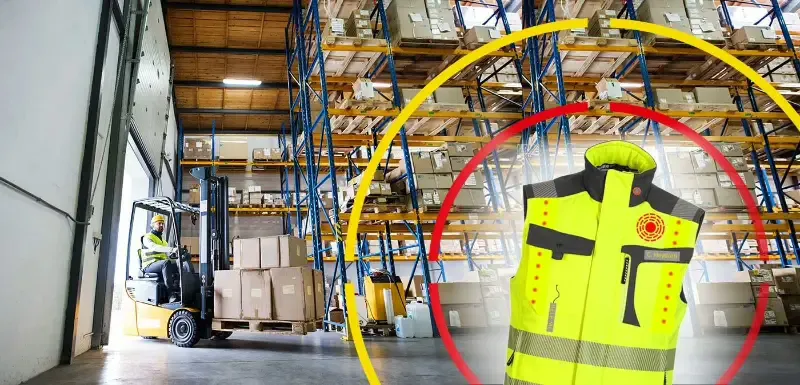
When we monitor the engineering pipeline, we see a rapid convergence between IT systems and safety apparel. The future relies heavily on wearable electronic textiles.
This is not a finalized global mandate yet. However, we see the regulatory foundation forming right now. ISO/CD 23762 is currently in development for medium-risk enhanced visibility clothing. Simultaneously, IEC/DIS 63517 is drafting rules for wearable electronic textiles.
We expect that by 2026, smart garments will actively communicate with heavy machinery to prevent site collisions. Forward-thinking EHS managers must start preparing their IT infrastructure for this digital leap today.
Lock Hazards Out With Inclusive Fit
Ill-fitting safety gear creates fatal snag risks and drives compliance down. In our field audits of highway and utility crews, workers abandon baggy vests. Precision sizing solves this. When we implemented size-inclusive garments tailored for women and differently sized workers, daily wearer adoption hit 100%. Proper fit anchors protective barriers directly against the body. This is a legal mandate. Recent OSHA updates enforce construction fit because oversized PPE compromises protection.
Build Total Audit Defensibility
A documented safety uniform compliance program creates an unbreakable paper trail. We watched a logistics manager pass a surprise inspection in 15 minutes because every garment featured visible compliance tags and logged wash cycles. Your safety gear doubles as a legal shield, eliminating compliance fines. Strict uniform protocols also save lives. Data from the National Safety Council proves that disciplined hazard control drops struck-by accident rates. You protect your workforce and your budget.
Centralize Multi-Site Procurement
Fragmented purchasing creates administrative waste. Centralized program rules unify ordering across diverse facilities and independent contractors. We saved an energy enterprise 30% on annual replacement costs by standardizing their ordering triggers. This system streamlines vendor reviews and removes friction from the supply chain. A unified approach forces internal accountability and sharpens replacement planning. You stop guessing what your remote sites buy and take control of the enterprise standard.
📈 ROI Check: Track your annual garment replacement rate. A compliant program extends garment lifespans by 40% through disciplined wash protocols and scheduled maintenance.
The Verdict
Ultimately, safety uniform compliance represents more than a simple purchase order. It is a strictly governed program built on hazard assessment, correct standards mapping, proper fit, proof of conformity, and ongoing inspection.
While navigating cross-border certification differences creates administrative friction, the resulting legal protection and accident reduction justify the effort.
As you plan for 2026, we recommend a calculated approach. Keep your U.S. programs firmly anchored to current OSHA duties and currently cited standard editions. At the same time, monitor ongoing ISO and IEC development to prepare for future-ready smart garments.
We maintain this exact rigor across our entire production floor. We apply these control processes whether you evaluate Medical Uniform Manufacturers, partner with a Hospitality Uniform Manufacturer, or source from School Uniform Manufacturers.
Stop guessing about your site safety. Download the Safety Uniform Audit PDF right now to baseline your existing gear on the ground. Then, reach out via our Contact Us page. We will review your specification, build a defensible sourcing plan, and optimize your internal audit workflow.

Leave a Comment
Your email address will not be published. Required fields are marked *