Table of Contents
Most workwear brands treat fabric compliance as the primary focus.
But individual polybags, hanger bags, master cartons, pallet stretch wrap, paper inserts, barcode stickers, and moisture-control sachets each carry separate liability under EU PPWR workwear packaging rules.
That liability now shifts freight costs, audit exposure, and extended producer responsibility fees.
The compliance era starts 12 August 2026, with recyclability expectations tightening by 1 January 2030. This guide covers what counts as packaging, who carries the obligation, and where brands can cut EPR fees before 2030.
LantaoWork, a workwear manufacturer, compiled this assessment from packaging bills of materials, supplier documents, warehouse handling checks, drop tests, and moisture-barrier comparisons.
Editorial note: This guide reflects LantaoWork’s own packaging and sourcing QA experience and was reviewed by our production and compliance teams. It is operational guidance, not a substitute for destination-country legal advice.
What Is EU PPWR Workwear Packaging?
https://www.youtube.com/watch?v=PKNdutcTwVU&pp=ygUaZXUgcHB3ciB3b3Jrd2VhciBwYWNrYWdpbmc%3D
EU PPWR workwear packaging is every packaging component placed on the EU market with B2B workwear, per the EU Commission guidance and Regulation (EU) 2025/40.
It covers primary, secondary (grouped), transport, and e-commerce packaging, regardless of material or weight. For a compliance-team walkthrough of the rules, the SGS PPWR FAQ is a useful independent reference.
The audits split packaging into four layers:
- Primary: each garment polybag, hanger bag, or fold sleeve
- Secondary/grouped: inner cartons, set bundles, branded sleeves, dividers
- Transport: master cartons, pallet wrap, corner protectors, void fill
- E-commerce: shipping envelopes, return mailers, sealing tape, inserts
Small items still count. Brands often treat labels, films, accessory bags, and sachets as “not packaging.” That is a mistake — these small items drive disproportionate EPR registration gaps in our supplier audits.
Who carries the obligation? Under PPWR, roles split by OEM vs ODM supply model:
- Manufacturer: produces packaging or garments. Owns technical file and declaration.
- Importer: places non-EU goods on EU market. Verifies docs and registers for EPR.
- Own-brand seller: packages under own label. Assumes manufacturer obligations.
- Distributor: stores and moves goods. Must not obscure markings.
- Cross-border seller: sells directly to EU users. May appoint authorised representative.
PPWR documentation proves recyclability and substance compliance. National EPR registration is a separate fee and reporting obligation, not a replacement.
Manufacturer vs producer: the manufacturer answers for packaging conformity — design, technical file, and EU declaration of conformity.
The EPR producer is whoever first makes packaging available in a member state where it becomes waste, and can be the manufacturer, importer, or distributor. The two are not necessarily the same company, so an own-brand seller importing under its own label can end up owning both duties.
Timeline:
- 12 August 2026: PPWR applies. Packaging must meet recyclability and documentation rules.
- 1 June 2029: first EPR reporting deadline — producers report calendar-year-2028 data to national registers.
- 1 January 2030: Recycled content minimums and stricter recyclability benchmarks take effect.
Textile teams often already manage garment labeling and chemical compliance, but packaging needs its own evidence stack. Keep workwear labeling and branded packaging evidence in the same release-gate record.
💡 Key Insight: Low-cost components like polybags and labels carry the same scope risk as master cartons.
The PPWR Articles, Threshold by Threshold
Regulation (EU) 2025/40 puts concrete numbers behind the definitions. These are the thresholds that change workwear packaging, and most supply a direct spec you can hand a supplier.
| Article | Requirement | Applies from |
|---|---|---|
| Art. 5 Hazardous substances | Pb + Cd + Hg + Cr(VI) sum ≤ 100 mg/kg in every packaging component; REACH Annex XVII limits; EC 1935/2004 for food-contact packaging | Now |
| Art. 5 PFAS (contact-sensitive) | Targeted PFAS ≤ 25 ppb; sum including precursor degradation ≤ 250 ppb; total including polymeric PFAS ≤ 50 ppm | 12 Aug 2026 |
| Art. 6 Recyclability | Grade A ≥ 95%, Grade B ≥ 80%, Grade C ≥ 70% (EN 13430:2004). Every unit recyclable from 12 Aug 2026; Grade C minimum from 1 Jan 2030, Grade B minimum from 1 Jan 2038 | 12 Aug 2026 |
| Art. 7 Recycled content | Minimum post-consumer recycled content by plastic category — a standard workwear polybag falls under “other plastic packaging”: 35% from 1 Jan 2030, 65% from 1 Jan 2040 | 1 Jan 2030 |
| Art. 10 + 24 Minimisation | Void space ≤ 50% for grouped, transport, and e-commerce packaging; sales packaging minimised to the smallest suitable size | 1 Jan 2030 |
| Art. 11 + 12 Reuse & labels | Transport reuse target 40% (2030) / 70% (2040), e-commerce 10% / 25%; harmonised material and recycling labels from 12 Aug 2028 | 1 Jan 2030 |
| Art. 38 + 39 Declaration | EU declaration of conformity + technical file (Annex VII); keep 5 years for single-use, 10 years for reusable | 12 Aug 2026 |
| Art. 44 EPR | Producer registers nationally in each member state where packaging becomes waste | 12 Aug 2026 |
The polybag number that matters: under Art. 7 the residual “other plastic packaging” class is where a standard polyethylene workwear bag sits — 35% post-consumer recycled content from 1 Jan 2030, rising to 65% by 1 Jan 2040. Contact-sensitive plastic and single-use beverage bottles follow their own lanes. Evidence is a GRS or equivalent transaction certificate, not a catalogue claim.
Textile exemption nuance: sales packaging made from lightweight wood, cork, textile, rubber, ceramic, porcelain, or wax is exempt from the recyclability criteria. Relevant if you ship in a reusable textile tote — but it does not extend to a plastic polybag.
Two of these thresholds change how you design up front:
- Recycled mono-material PE reads clean on a design-for-recycling check; a multi-layer laminate does not.
- Art. 10 + 24 makes the empty-space formula a compliance metric, not just a freight one.
How to Audit EU PPWR Workwear Packaging? A 9-Step Release Gate
Most teams stop at supplier self-declaration — that is where liability begins. The EU PPWR timeline becomes a nine-step packaging release gate, used across hospitality and security uniform programs.
Step 1: Build the packaging bill of materials for each SKU
Start with packaging, not the garment spec. List every component by garment family — high-vis jackets, FR trousers, hospitality shirts, school uniforms, security uniforms, and medical garments. One-piece garments add a further axis, because coverall packaging needs vary by type.
Capture material type, gauge, dimensions, print area, closure style, vent holes, label format, carton size, palletization, and unit weight.
| Component | Purpose | Material | Supplier | Unit weight | Test file | Country obligations | Approval status |
|---|---|---|---|---|---|---|---|
| Individual polybag | Primary protection | LDPE or recycled mono-material PE | Factory | 4.2 g | PPWR-001 | FR: EPR registration | Draft |
| Carton insert | Presentation support | Recycled paperboard | Brand specified | 12.0 g | PPWR-002 | DE: LUCID | Approved |
| Master carton | Transport consolidation | Corrugated board | Factory | 1,100 g | PPWR-003 | NL: Afvalfonds | Pending |
Step 2: Classify each component by packaging level and market role
Assign each row to a single level — primary, grouped, transport, or e-commerce — and do not mix them. Separate factory-bought components from brand-specified items, and flag own-brand packaging.
Own-brand status increases documentation duties because the seller takes on manufacturer obligations.
Step 3: Request supplier evidence before discussing claims

Suppliers like to start with a green catalog; the audit starts with documents. Request these before any claim conversation:
- Material specification sheet
- Recycled-content declaration
- GRS or equivalent transaction-certificate trail
- Chemical compliance declarations
- Recyclability or design-for-recycling evidence
- Print/ink disclosures
- Change-history record
One missing document stops the release gate. Files are rejected when the recycled-content declaration does not match the transaction certificate.
Step 4: Check recycled-content claims without marketing language
Build a comparison lane for three common workwear options:
- Virgin LDPE bag: lower cost, no recycled-content credit
- Recycled mono-material PE bag: must show a GRS transaction certificate
- Home-compostable alternative: must prove seal and moisture performance
Ask for chain-of-custody evidence, not words like green, eco, or recycled. A catalog claim is not compliance.
From 1 Jan 2030, Art. 7 turns this into a hard number — check the polybag threshold in the article table above.
Step 5: Evaluate design-for-recycling fit for workwear realities
Ask whether mixed materials, opaque printing, zippers, labels, windows, or adhesives interfere with recyclability.
In workwear, the best bag is the one that protects sharp zippers and heavy FR fabric while still being evidenced cleanly — not the one with the greenest sales sheet. Mono-material simplification is the common route for textile polybags; validate choices against the CEN packaging recyclability standard.
Step 6: Audit packaging minimization and empty-space control

Use this formula for grouped, transport, and e-commerce packaging:
Empty-space % = ((carton inner volume - garment bundle volume) / carton inner volume) × 100
Oversized cartons for bulky PPE or mixed employee kits create avoidable compliance and freight cost.
PPWR caps this at 50% void space for grouped, transport, and e-commerce packaging from 1 Jan 2030 (Art. 10 + 24).
- Construction workwear with heavy trims: use reinforced but tighter cartons.
- Hospitality uniforms with lighter folds: shrink carton height.
- School/university bundles: pack by size set, not single units.
This review pairs with air vs sea freight density planning.
Step 7: Compare the In-House Test Data
These are screening results from our sample-room trials against our own garment mix. Cells still marked conditional are re-testing before release — we flag them rather than publish an unverified number. Request the release-gate file for the full protocol.
| Test | Traditional LDPE | Recycled Mono-Material PE | Home-Compostable Garment Bag |
|---|---|---|---|
| Drop-test outcome after defined fall height | Conditional — retest pending | Conditional — retest pending | Conditional — retest pending |
| Seal integrity after repeated handling | Conditional — retest pending | Pass — no seal failure in trial | Fail — seal line rupture after 48h at 85% RH |
| Tear/puncture resistance around sharp trims or zippers | Conditional — retest pending | Pass — no puncture at zipper heads | Fail — punctured by exposed zipper heads |
| Moisture-barrier performance after humid warehouse exposure | Pass — baseline moisture protection | Pass — held up in trial | Fail — failed after 48h at 85% RH |
| Barcode scannability after condensation/rub | Conditional — retest pending | Conditional — retest pending | Conditional — retest pending |
| Visual appearance after pallet compression | Conditional — retest pending | Conditional — retest pending | Conditional — retest pending |
Step 8: Bring in internal SME voices
From compliance engineer Mia Lin:
“Most teams can organize documentation and material simplification now. Stricter recycled-content percentages arrive closer to 2030, but the file you build now needs to survive a 2030 re-audit.”
From packaging testing specialist James Huang:
“Compostable film failed at the seal line. Recycled mono-material PE held up better than expected, but we still checked puncture resistance around zipper heads.”
Step 9: Finish with the packaging release-gate workflow
Route each SKU through these seven gates before release:
- Record packaging item.
- Attach materials and supplier evidence.
- Review recycled content, recyclability, and chemical declarations.
- Check void space and unit economics.
- Run physical handling tests.
- Approve, reject, or conditionally approve.
- Trigger re-review whenever supplier, print, material, gauge, or factory changes.
Conditional approval means a shipment can go out with a documented correction window. This SOP reflects the internal audit practice and is not a substitute for destination-country legal advice.
Key Benefits of Smarter Packaging Design

Smarter packaging design also cuts cost and protects shipment reliability.
Cut EPR Fees with Cleaner Specs
Standardizing a few packaging families lowers both material count and reporting complexity. We consolidated one client’s packaging from 14 spec variants to 4; EPR data-collection time dropped 30%.
Lower Total Landed Cost by Packing Smarter
Right-sized cartons reduce waste. Downgauged films cut weight. Reduced filler lowers freight inefficiency. Removing 22% excess void space cut volumetric freight cost 9% per container.
Stop Warehouse Damage Before It Starts
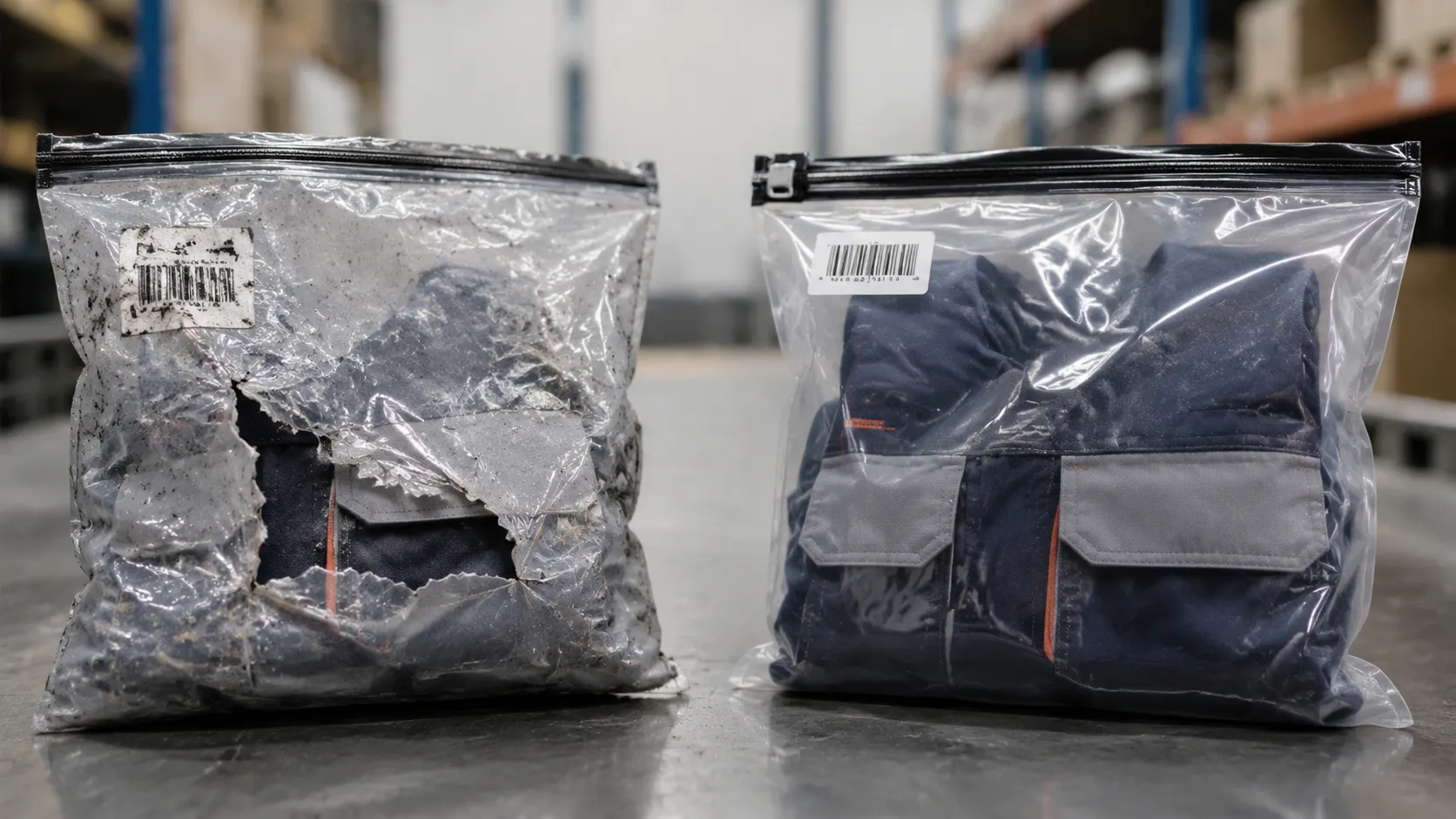
Packaging must survive warehouse handling — a torn polybag soils workwear, a scuffed barcode delays receiving. Abrasion, seal integrity, and barcode scannability are tested after condensation; recycled mono-material PE held up around zipper heads.
For a broader look at how PPWR, EPR and circularity reshape packaging cost and design, see this Smithers impact analysis.
Lock Supplier Accountability with a Release Gate
Documented release gates reduce last-minute substitutions. Two files were rejected last quarter when recycled-content declarations did not match transaction certificates.
Align Teams on One Packaging Record
Sustainability, sourcing, QA, and logistics work from one record — one audit file serves compliance, freight, and delivery across corporate uniform programs.
Commercial note: outcomes vary by print coverage, thickness, and certification demands. No generic MOQ or unit-cost directionality is published without real sourcing data.
🚀 Strategic Insight: Standardize recycled mono-material PE for standard workwear. Reserve virgin LDPE for high-moisture or sharp-trim environments.
Challenges You’ll Hit Under PPWR Workwear Packaging
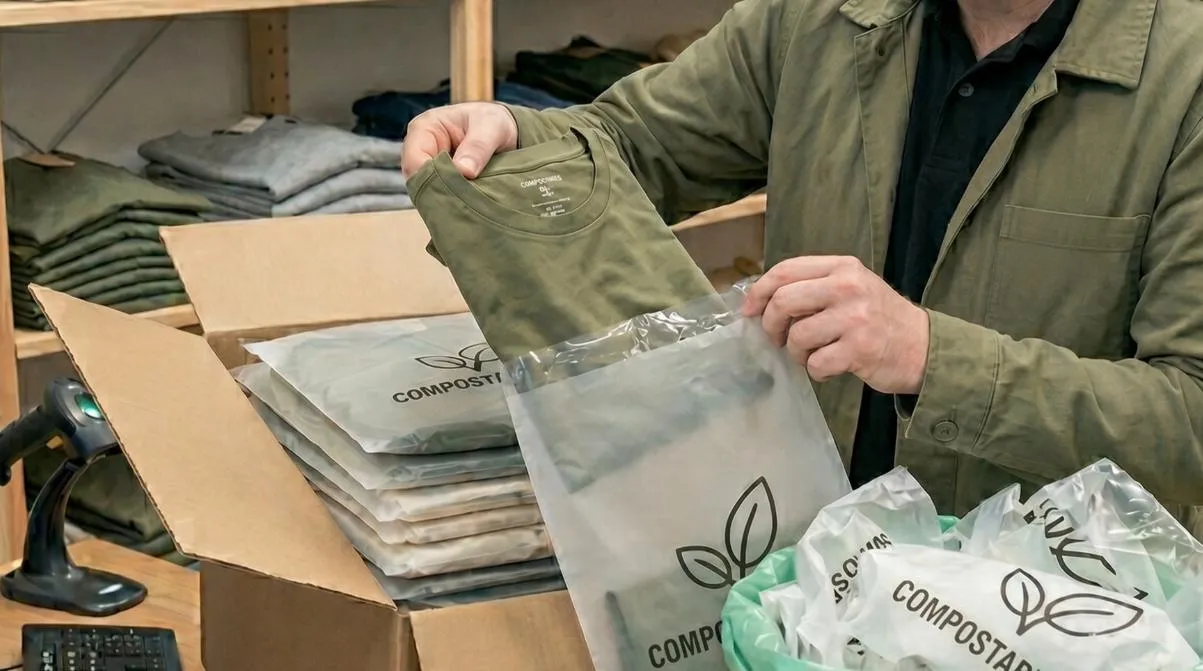
We tested these pathways in our own warehouse trials and supplier audits.
Country-by-Country EPR Complexity
PPWR does not erase national registration differences — Germany requires LUCID, France and the Netherlands apply different fees, and Spain uses its own format. One client lost three weeks reconciling the same file across four markets.
Own-brand or e-commerce packaging makes you the producer under multiple schemes; PPWR compliance does not replace EPR registration.
Evidence Burden
Supplier declarations sit in one inbox, GRS certificates in a shared folder, and factories can switch film gauge without notice. In one audit, a supplier declared 30% PCR; the certificate showed 18%. The file was rejected and five days were lost.
Mitigation: Centralize packaging evidence per SKU in one release-gate record, and re-verify after any material, print, or gauge change.
Alternative Materials Fail Under Workwear Conditions
Humidity weakens compostable seals. Stacking crushes thin film. Sharp zippers puncture it. One compostable garment bag failed at the seal line after 48 hours at 85% relative humidity.
James Huang, our packaging testing specialist, said: “It looked fine on the loading dock. It failed two days later inside the container.” The client switched to recycled mono-material PE and accepted a higher unit cost with a GRS trail.
⚠️ Critical Warning: Do not use home-compostable film for heavy construction workwear with exposed zipper heads.
Chemical and Restricted-Substance Uncertainty
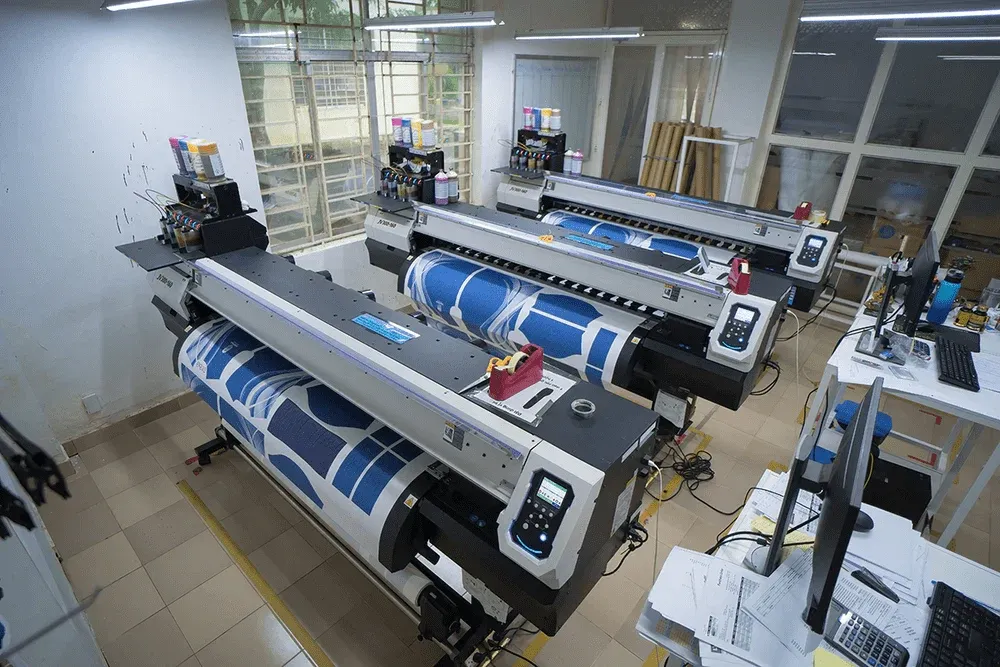
Inks, adhesives, and recycled additives face growing PFAS and heavy-metal scrutiny, and national regulators differ. Some brand audits now request packaging chemical declarations; unfinalized requirements stay conditional.
MOQ and Supply Continuity Tension
Certified recycled-content bags can raise MOQ or extend lead time. One corporate batch needed 5,000 units for custom recycled mono-material packaging; the brand accepted a longer lead to avoid dead-stock.
Over-standardization creates a second risk: one packaging spec rarely suits every garment family.
Disclosure: This is operational guidance. Validate final obligations against destination-country rules and your legal or compliance team. Unresolved PPWR percentages are flagged as conditional.
Frequently Asked Questions About EU PPWR Workwear Packaging
1. Is a polybag considered packaging under PPWR?
Yes. Polybags, hanger bags, and fold sleeves are primary packaging. Even small components like labels, films, accessory bags, and sachets count. They carry the same scope risk as master cartons, and they drive the registration gaps we see most often in supplier audits.
2. Who is responsible for EPR — the manufacturer or the importer?
Under PPWR these are two different roles. The manufacturer owns the technical file and the EU declaration of conformity. The producer — whoever first makes packaging available in a member state where it becomes waste — registers for EPR and pays the fees.
Depending on whether you run an OEM or ODM supply model, the importer or the own-brand seller may become the producer.
3. Does PPWR apply to packaging made outside the EU?
Yes. PPWR applies to any packaging placed on the EU market, regardless of where it was made. An importer placing non-EU goods on the EU market is responsible for verifying the documentation and registering for EPR.
4. When does PPWR apply, and when do the recycled-content rules tighten?
PPWR applies from 12 August 2026; packaging must meet the recyclability and documentation rules. Recycled-content minimums and stricter recyclability benchmarks take effect from 1 January 2030.
5. Do I need a separate EPR registration for each EU country?
Generally, yes. PPWR does not remove national registration differences — Germany requires LUCID, France and the Netherlands apply different fees, and Spain uses its own format.
Own-brand or e-commerce packaging can make you the producer under multiple schemes.
6. Is home-compostable packaging compliant under PPWR?
Only if it also survives workwear logistics. In our trials, compostable bags failed at the seal line after 48 hours at 85% relative humidity and were punctured by exposed zipper heads, while recycled mono-material PE held up better.
Compliance needs both the certifications and the warehouse performance.
7. What recycled-content level does PPWR require for a workwear polybag?
Under Art. 7, a standard polyethylene bag sits in the “other plastic packaging” class and should carry 35% post-consumer recycled content from 1 Jan 2030, rising to 65% by 1 Jan 2040. Contact-sensitive plastic and single-use beverage bottles follow separate lanes. The evidence is a GRS or equivalent transaction certificate, not a catalogue claim.
Final Verdict: Packaging Is Now a Documented System
Under EU PPWR, workwear packaging is no longer a bag choice. It is a documented system covering what counts, who carries liability, and how evidence survives a 2030 re-audit. The smartest immediate move follows three steps.
First, identify your top 10 packaging SKUs by shipment volume or EPR exposure. Do not start with the long tail — start where fees and liability concentrate.
Second, request missing supplier evidence and build one release-gate file per SKU. Files fail most often when recycled-content declarations do not match transaction certificates. Close that gap before 12 August 2026.
Third, pilot-test at least one recycled mono-material option against your current LDPE performance. The trials favored recycled mono-material over home-compostable.
We recommend recycled mono-material PE as the default for standard workwear, reserving virgin LDPE for high-moisture or sharp-trim environments. The best packaging choice depends on the garment and the logistics route, not the latest trend.
Need help building your release-gate file? Contact the packaging team for an audit. For broader manufacturing context, see the workwear manufacturers overview.
Disclosure: This article is educational and reflects the packaging and sourcing experience. No packaging supplier paid for a result.
Validate final obligations against live EU and destination-country requirements. The comparison data reflects warehouse-style conditions — replicate those tests against your garment mix.

Leave a Comment
Your email address will not be published. Required fields are marked *