Table of Contents
The short answer The best custom workwear manufacturers for procurement teams balance customization depth, compliance readiness, and MOQ flexibility. Of 30 researched, these 10 stand out: Cintas for managed programs, Carhartt for adoption, Alsico & Portwest for compliance, Oasis for private labeling.
Waiting 47 days for a “10-day” sample changed how this list gets audited. The list below, built from LantaoWork and the workwear manufacturing page, vets 30 factories to find the best custom workwear manufacturers — each scored on a fixed rubric, from customization depth to sample speed.
Some entries are true OEM/ODM cut-and-sew partners; others are strongest as corporate uniform or white-label partners.
Methodology & verification: I evaluated each factory for procurement fit, customization potential, and supply-chain reliability against public company data as of Sep 2026 — with no compensation from any company listed. “Author’s Take” notes are editorial assessment, not a claim of personal product testing. This list covers garments only; footwear sits in the safety footwear manufacturers shortlist.
Disclosure: LantaoWork is a China-based contract manufacturer of custom workwear, so some companies below compete with us. This page maps U.S.- and EU-facing brands and their researched supply chains (public company data, Sep 2026).
List of 10 Custom Workwear Manufacturers
Here are the 10 that survived the screen — and the role each one plays for a procurement team.
| Company | Price Tier | MOQ | Sampling · Lead Time | Certification | Best Industry |
|---|---|---|---|---|---|
| Cintas | Premium (rental) | Program-based, per-site volume floor | N/A — recurring replenishment | No published certified-garment matrix | National multi-site managed programs |
| Vestis | Premium (rental) | Contractual weekly volume | N/A — recurring replenishment | No published certified-garment matrix | Large multi-site rental & replenishment |
| UniFirst | Mid–Premium (rental) | Contract volume | N/A — recurring replenishment | No published certified-garment matrix | Regional-to-national service accounts |
| Carhartt | Premium (brand) | Account-based | Stock / account orders | FR duck (varies) | Rugged branded workwear, employee adoption |
| Alsico Group | Mid–High | Certified designs, limited private label | Thorough certification / COA workflow | EN ISO 20471, EN ISO 11612/14116, IEC 61482-2, ASTM F1506 (NFPA 70E) | Industrial & protective compliance |
| Strauss | Mid–High (brand) | Logo / color, not published | Not published — confirm per style | EN ISO 20471, EN ISO 11612, IEC 61482-2, EN 343 | Modern trade workwear, brand pull |
| Portwest | Mid (catalog value) | Stock, or custom 60-day | Stock; custom = 60-day window | ANSI/ISEA 107, EN ISO 20471, EN ISO 11612/11611, IEC 61482-2, EN 343 Class 3–4 | Broad safetywear catalogs, intl. compliance |
| Fristads | Premium | Limited customization | Not published — batch trace | EN ISO 20471, select IEC 61482-2/EN ISO 11612, ISO 15797 (25–50 washes) | Premium industrial + ESG / wash-life |
| Oasis Uniform | Mid | 300 (site) / pilot-size | Fast sample, short revision | Spec-driven | Private-label, design-led development |
| Essential Workwear | Budget | 25 (screen print) | Stock replenishment | Embroidery / screen print / heat transfer only | Catalog baseline, fast replenishment |
Price tiers, MOQ, and lead times reflect publicly documented data as of Sep 2026; confirm current test reports, MOQ, and production lead time with each supplier before an award. Tier labels are a starting point — a line-item quote audit turns any of these quotes into a comparable cost model.
Rental providers (Cintas, Vestis, UniFirst) sell programs, not published certified-garment matrices, so their certification and MOQ cells are program-based rather than factory terms.
1. Cintas — Best for national managed uniform programs
For enterprise rollouts, Cintas makes the shortlist only for managed programs, not deep garment design. You need Cintas when you run 3,000 employees across 14 branches and need recurring replenishment plus centralized vendor management.
The strength is service infrastructure: account visibility, branch coverage, scheduled replacements. Customization stays simple — logo placement, color matching, basic hem adjustments. Don’t expect proprietary blends or unusual female-specific safety fits.
Cintas wins on replenishment discipline and multi-site control; a pure OEM factory wins on garment engineering.
Coverage is continental, but there’s no published unit MOQ or wash-cycle spec — in your RFQ, demand sizing governance, repair turnaround, replacement cadence, SLA-backed reorders, and a named owner for size audits.
Also confirm minimum order size and how it applies per color, per-site delivery cadence, and fabric wash durability with the supplier.
⚡ Power Move: Write a quarterly size audit clause into the SLA.
2. Vestis — Best for large multi-site rental and replenishment rollouts
For hundreds of locations issuing, collecting, washing, and reissuing uniforms without owning inventory, Vestis fits. Treat it as a procurement-first option, not a factory partner.
Vestis wins on national coverage and garment circulation. Route density lets one vendor manage rental inventory across regions; smaller suppliers can’t match that daily issue, collection, and replacement cadence. Buyers get central account visibility without separate laundries or warehouses.
Custom construction stays shallow. Specialty FR, anti-static, or antimicrobial fabrics come from approved suppliers only; private-label freedom is usually logo and trim, not full tech-pack control.
Because it rents rather than sells, pricing is per account and minimum weekly volume is set contractually — confirm the volume floor, per-location pickup cadence, and replacement thresholds with the supplier.
⚡ Power Move: Make the circulation report a contract deliverable.
3. UniFirst — Best for service-heavy regional-to-national uniform accounts
UniFirst fits buyers who value account support and predictable replenishment over deep garment design. Use it as a service partner, not a factory.
Customization stops at logo placement, color matching, and basic hem adjustments. UniFirst wins on branch coverage and repair turnaround, but routes custom anti-static or proprietary-fabric requests to approved suppliers.
Branch-level service variance is why the pilot rollout and written reorder ownership matter. Confirm who owns local branch support and the escalation path, the exact garment replacement policy for damaged pieces, and how the pilot rollout is structured across the first 90 days.
⚡ Power Move: Name the reorder control owner in the agreement.
4. Carhartt — Best for rugged branded workwear employees will actually wear
Brand acceptance changes behavior. Cintas rental shirts stayed in lockers while workers wore Carhartt jackets on weekends — that adoption earns Carhartt a place here, even though it isn’t a deep OEM factory.
Employees trust the duck canvas and triple-stitched seams. Corporate accounts offer logo embroidery and screen printing, but don’t mistake this for private-label flexibility — pockets, base fabric weight, and female-specific fits stay off the table.
Price-to-lifespan math works: a $120 jacket lasting three seasons costs $40 a season. Size continuity matters too — Dungaree Fit stays consistent across reorders, unlike many OEM runs where waist and chest measurements drift.
🛡️ Our Verdict: Use Carhartt when adoption drives compliance. Push custom construction to a true OEM partner.
🚀 Actionable Insight: Before committing, run a 12-unit pilot to test adoption.
5. Alsico Group — Best for industrial and protective apparel programs with compliance complexity
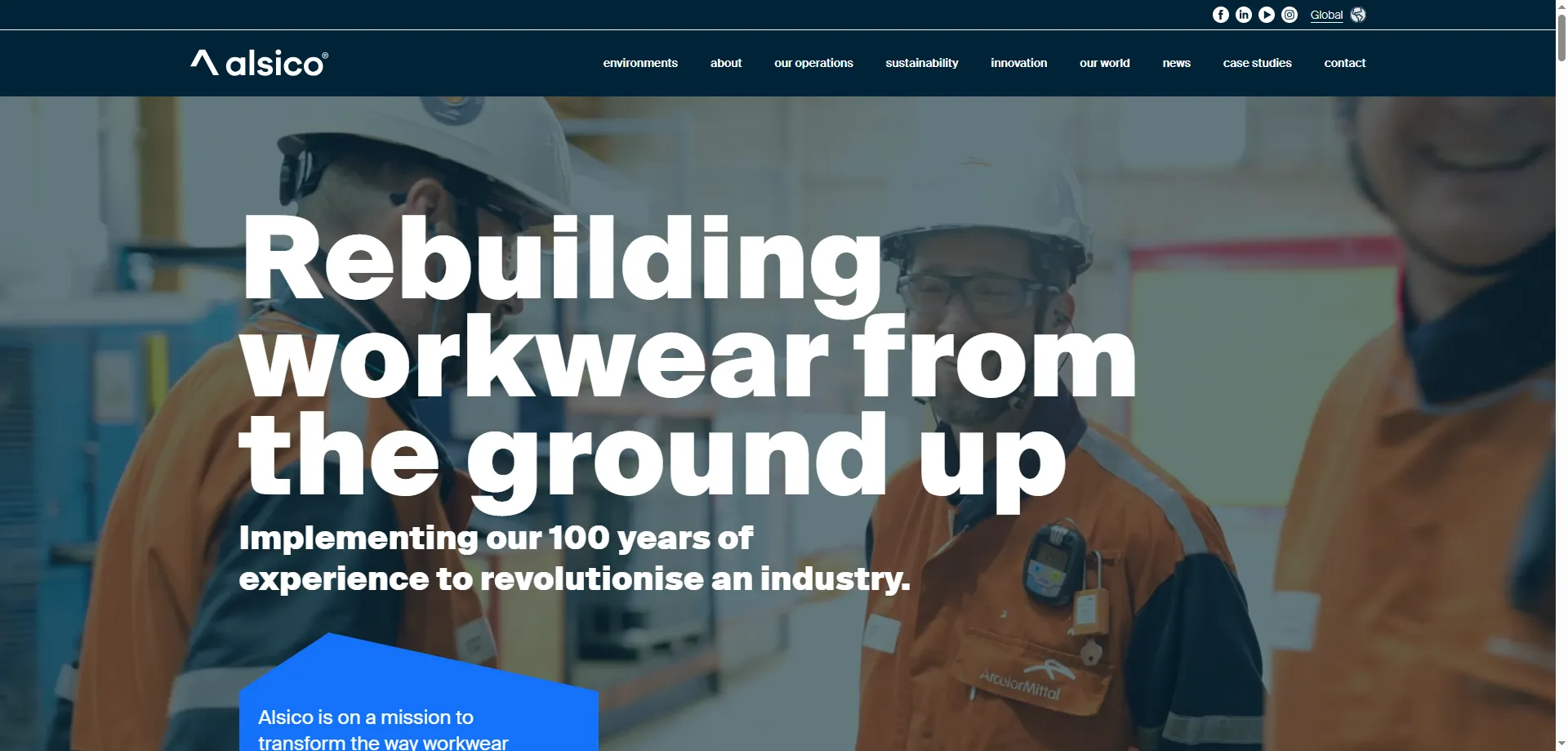
When audits demand more than a logo, Alsico enters. It’s a protective-clothing specialist, not a basic uniform decorator.
Its certified families are published in official documentation — covering EN ISO, IEC, and selected NFPA standards — so verification starts at the source, not a sales sheet.
Verify four details:
- Certification scope and current test reports.
- Mill COAs and batch records for traceability.
- Which plant runs your order.
- Modify certified design or build new OEM.
For structured security rollouts, Alsico fits better than a generic cut-and-sew factory. For deep private-label freedom, push for a true OEM partner — the security uniform programs guide frames that same trade-off.
Author’s Take: Alsico is compliance-first, so expect the certification and COA workflow to be thorough rather than quick. Use it when compliance proof beats design novelty.
⚡ Power Move: Request batch-level COAs and current test reports with the quote.
6. Strauss — Best for modern trade workwear with strong brand pull
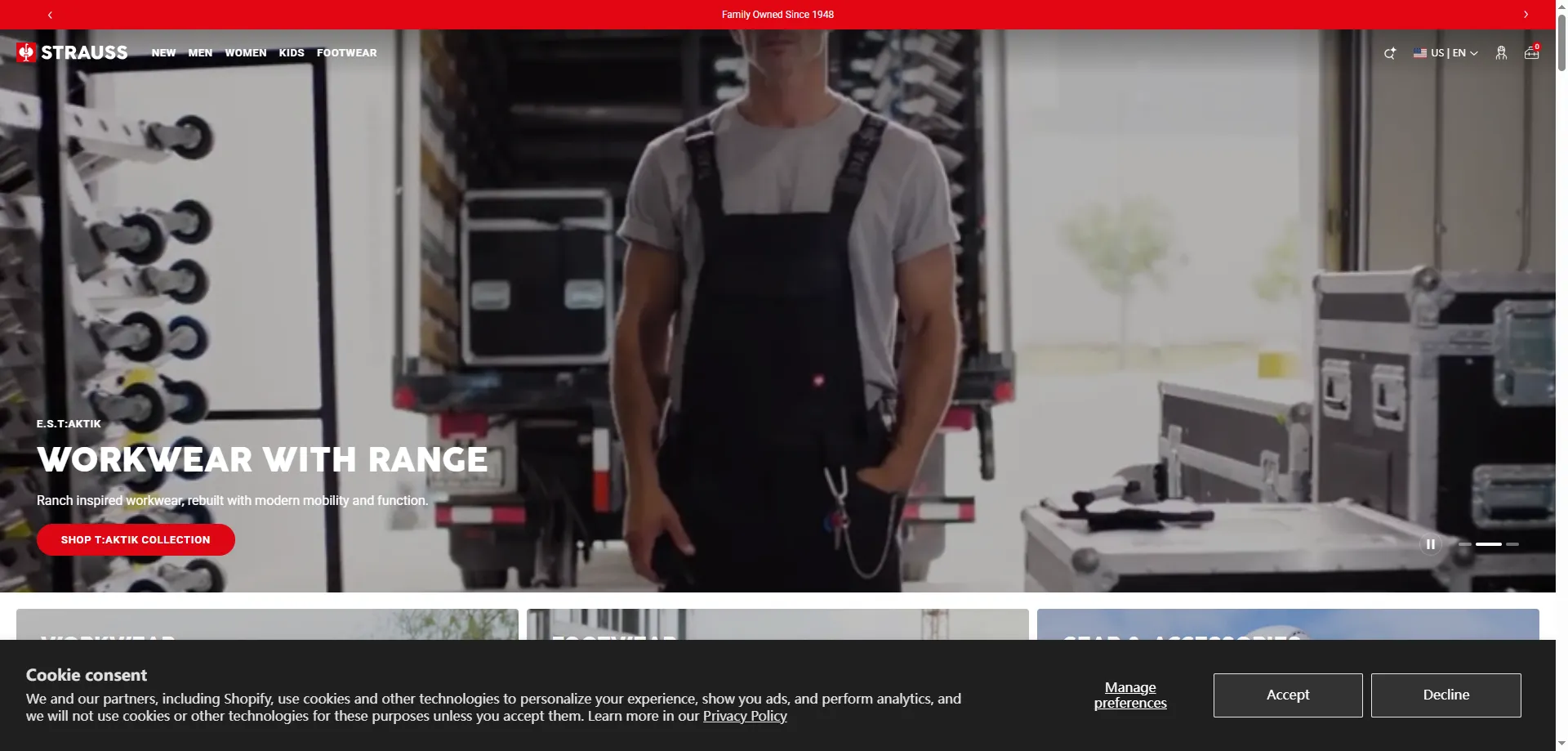
Some crews hate looking like a safety poster. Engelbert Strauss fills that gap with workwear that feels contemporary, not purely utilitarian — a 120-piece sample run showed a fit that felt like streetwear, not site gear.
Clean lines, contrast trims, and modern cuts lift employer branding for younger hires, while trades still get reinforced knees, stretch panels, and durable zippers.
Hi-vis lines are rated EN ISO 20471 Class 1–3, and multinorm versions add EN ISO 11612, EN 1149-5, and IEC 61482-2 arc protection on top of EN 343 weather proofing. Lead time and MOQ are not published — confirm current production lead time and per-style MOQ with the supplier.
Don’t assume OEM freedom. Strauss runs strong branded ranges; customization usually stops at logo placement and color choices, and pattern or fabric changes are often off the table.
Check real site conditions — an urban warehouse loves the look, a demolition crew may need heavier fabric. Verify modern cuts still meet EN ISO 13688.
⚡ Power Move: Pilot Strauss in one depot, then confirm lead times, logo setup, and wash durability with a named local rep.
7. Portwest — Best for broad safetywear catalogs and international compliance needs
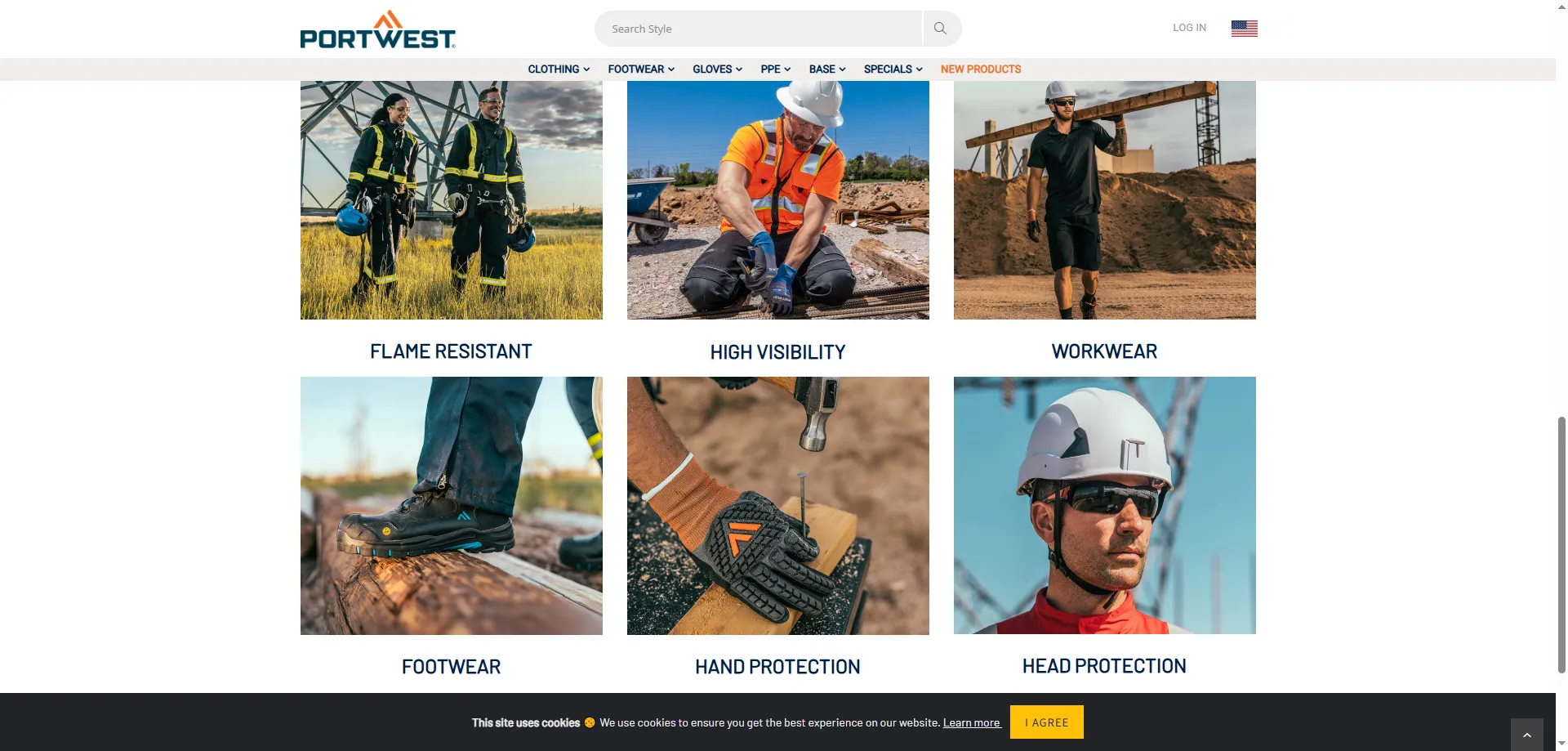
Portwest speeds benchmarking for hi-vis, FR, rainwear, and PPE-adjacent apparel from one source. Catalog breadth means you don’t chase separate vendors for each category.
Hi-vis sits at EN ISO 20471 Class 3; rainwear is rated EN 343 Class 3–4 (up to 30,000 mm hydrostatic head); multi-norm FR pieces combine EN ISO 11612/11611 with IEC 61482-2 arc protection.
To map which garment family your hazard actually needs before you benchmark catalogs, start from the top 7 types of coveralls.
Verify compliance before ordering — ask for current CE or ANSI/ISEA 107 test reports, not catalog claims.
Custom trim limits buyers to logo zones and color options; deeper cut or fabric changes need an OEM partner. Many lines ship from stock, but custom trim or unusual sizes can flip to the 60-day production window — confirm stock status, lead time, and line-specific MOQ with the supplier.
⚡ Power Move: Ask for batch-level test reports per size and colorway with the quote — not the catalog’s single CE mark.
8. Fristads — Best for premium industrial workwear with sustainability requirements
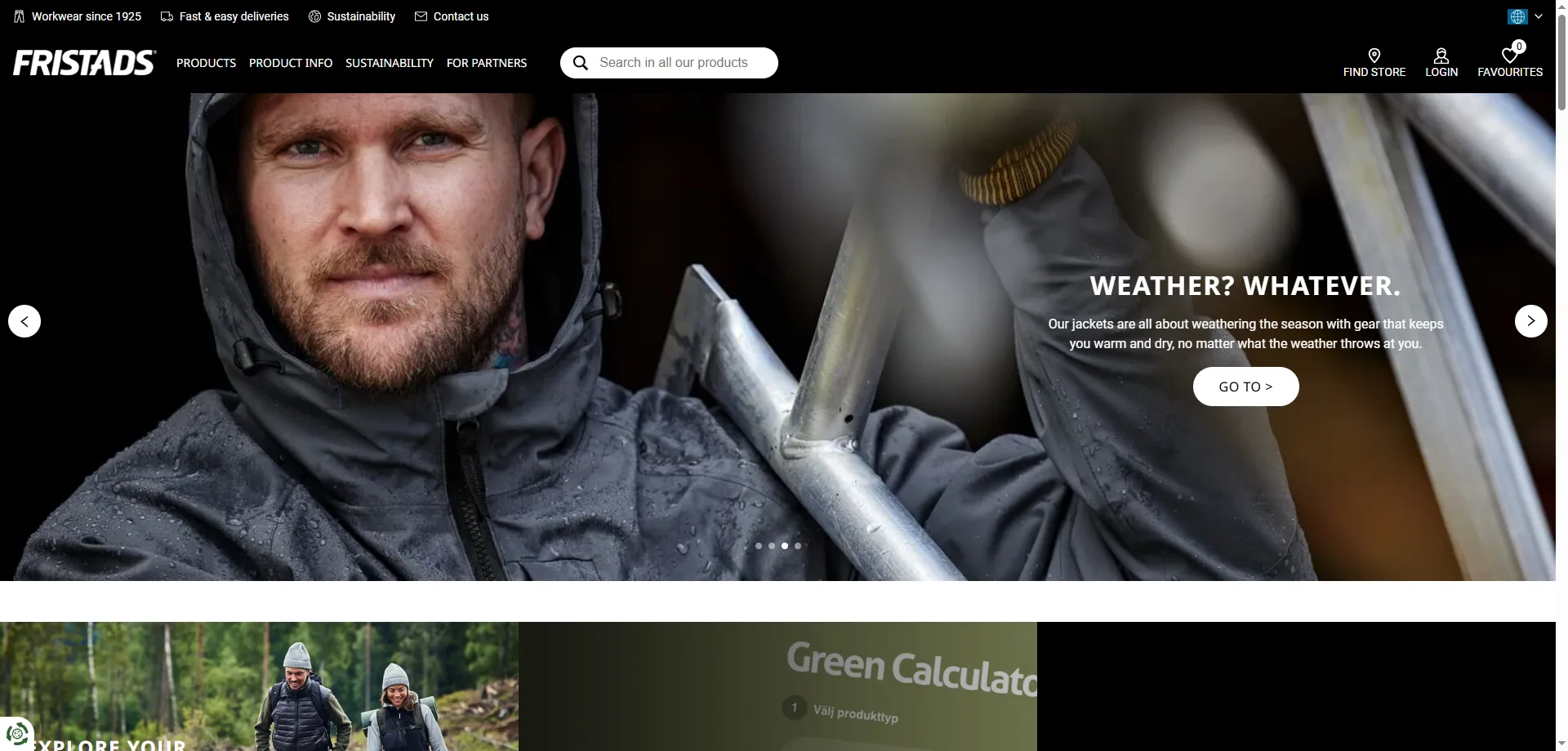
Chasing the lowest piece price usually kills the ESG story. Fristads proves premium pricing carries value when wash-life, repairability, and fabric traceability get tracked.
EPDs are published for the Green line, and batch trace files back reorder consistency. Reinforced high-wear zones and repair flows beat full replacement.
Batch records make reorder consistency easier to predict than on typical OEM runs. Verify wash-test reports against ISO 15797 and audit repair programs before signing.
⚡ Power Move: Add a 50-wash durability guarantee to your RFQ.
9. Oasis Uniform — Best for private-label and design-led custom uniform development
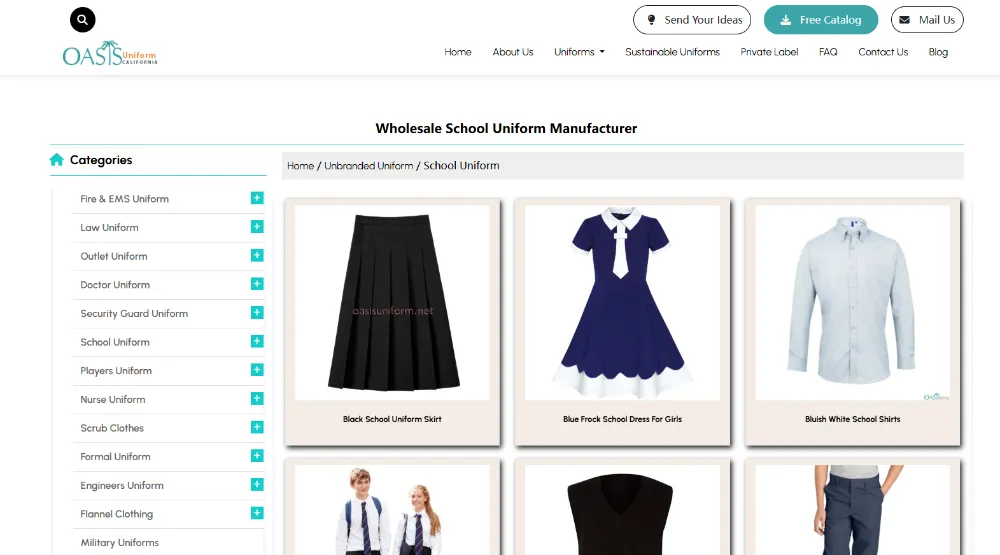
Brands, distributors, and enterprise teams often need custom development, not stock garments. Oasis Uniform fits — a 12-piece hospitality collection went from rough sketches to full tech packs in four days via their hospitality uniform manufacturing.
Sample speed is the pitch — short first-sample and revision windows, compared against the 47-day wait noted in the intro.
The site lists a 300-unit MOQ, and the white-label line is positioned for pilot-size orders — a flexible entry point to white-label distribution.
They added private-label neck tapes and hang tags, matching your branded packaging service.
Our Verdict: Choose Oasis for design-led development. It trades the lowest piece price for sample speed and private-label control.
⚡ Power Move: Lock a pilot-size MOQ up front.
10. Essential Workwear — Best for benchmarking catalog breadth and basic custom supply options
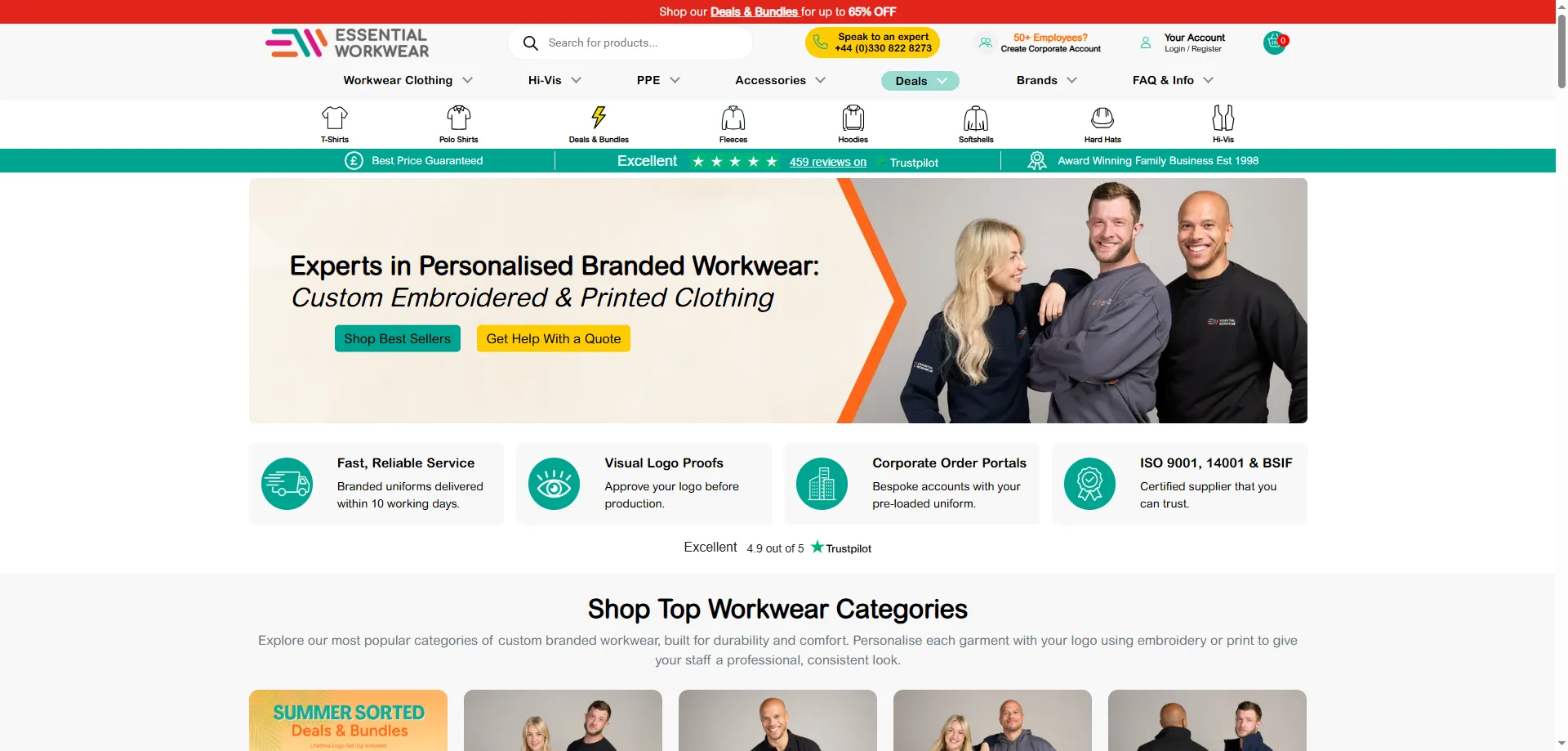
For a fast catalog baseline, Essential Workwear works. Its catalog lists 200+ stock SKUs in core colors.
Logo methods:
- Embroidery
- Screen print
- Heat transfer
MOQ starts at 25 units for screen printing, and core colorways ship from stock.
Don’t treat this as deep customization; fabric weight and pocket design can’t change. Use Essential for standard replenishment, an OEM partner for proprietary fits or FR testing.
⚡ Power Move: Request batch dye-lot records on every reorder to verify shade continuity.
How to Vet Custom Workwear Manufacturers?
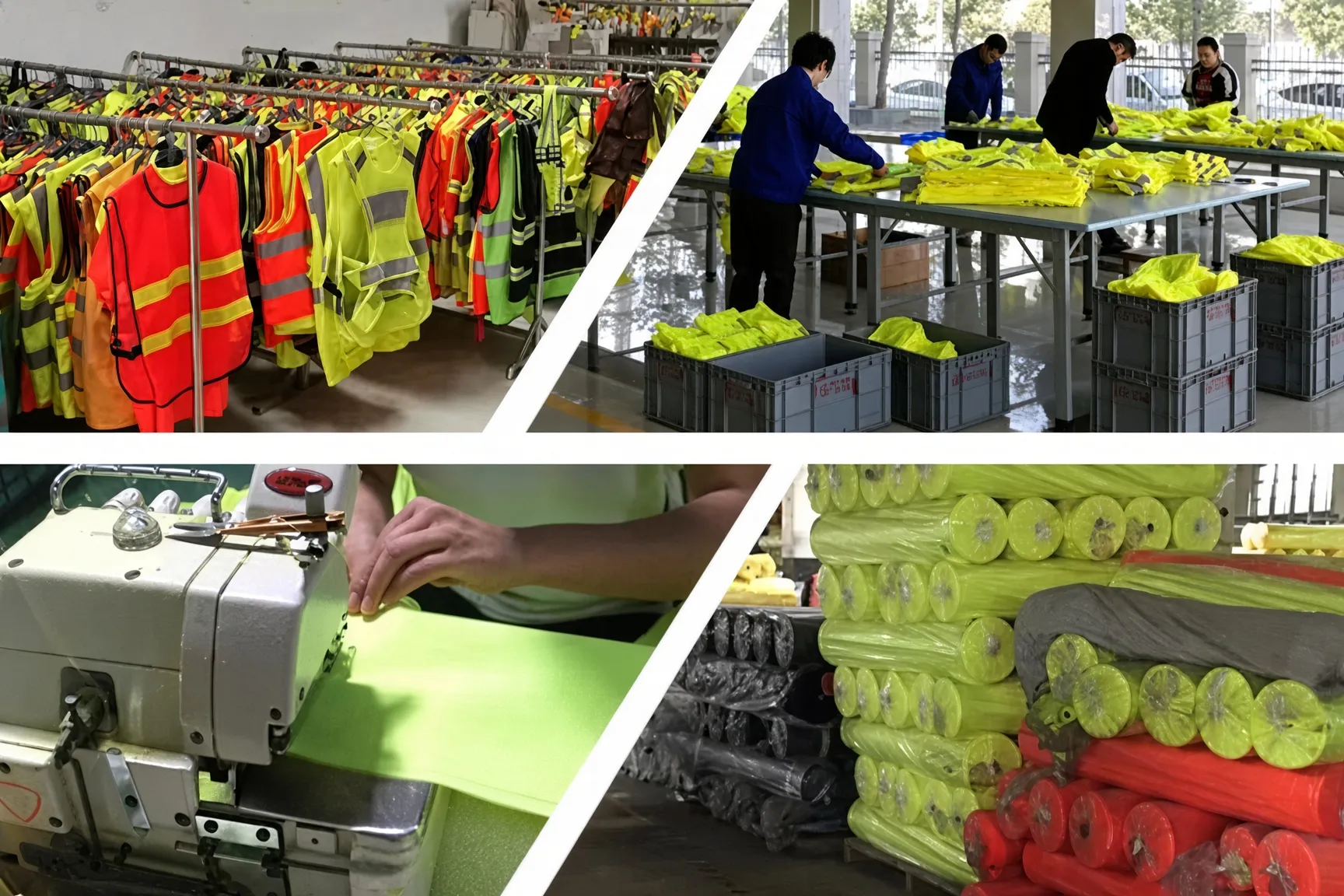
The list is the starting point, not the answer. Vetting is a process — from a long list to a working partner — and the order of those steps protects the budget.
Step 1: Screen the List Before You Sample
Do not pay for samples on all 30. Screen on paper first with the same criteria; the red flags below cost nothing to catch.
- Score every candidate against the same criteria. Rank on customization depth, compliance readiness, reorder consistency, MOQ flexibility, and sample speed. Weight them to your program, not the factory — adoption weights brand pull, safety weights compliance proof, private label weights sample speed and tech-pack control.
- Cut on paper red flags — a legal-entity mismatch on the certificate, no current batch test report, no COA traceability, or a single-product-lane when you need multi-category. Any one removes the factory at zero cost.
- Hold a working shortlist, not a favorites list. Three finalists are enough to run a real benchmark; ten quoted profiles make a catalog, not a process.
Step 2: Prove It With a Controlled Pilot
Do not go from a sample straight to a container. The reorder is not the sample — run a small, controlled order and measure what carries into repeat runs.
- Size the pilot to the risk, not the ambition. A dozen pieces for an adoption test (Carhartt), a 120-piece sampling run to check fit and finish (Strauss), or a pilot-size off-season order to test private-label controls (Oasis).
- Measure the three things a sample cannot show. Shade continuity across the whole batch, first-fit against the spec, and branding durability after a wash cycle.
- Price the pilot on cost per wear, not unit price. A $120 jacket lasting three seasons beats a cheap jacket replaced every year — that number decides the reorder (Carhartt).
Step 3: Benchmark and Lock the Reorder Terms
Run the same tech pack against your finalists, then lock the guarantees that protect the third reorder — not the first sample.
- Benchmark the same spec against two or three finalists. Compare on lead time, fulfillment, and cost per wear across the whole program, not the per-piece price of the first order.
- Lock the reorder-governance terms in the contract. SLA-backed reorder cadence, repair turnaround, and who owns size audits — this is where the program-level partners (Cintas, Vestis, UniFirst) earn their place.
- Write the failure clause. Name the penalty when a reorder cut slips and the escalation path when a site bypasses the program — the written lever that stops the “replacement cadence lags” problem.
Frequently Asked Questions About Custom Workwear Manufacturers
1. What should I verify before choosing a custom workwear manufacturer?
Start with five controls: review the tech pack, confirm fabric specs with mill certificates and lab reports, set AQL checkpoints at 2.5 or 4.0, lock a sample-approval workflow (pre-production and top-of-production), and define reorder governance in writing.
Factories skip AQL checks unless buyers demand them — ask who owns that gate.
2. What is the difference between an OEM/ODM workwear factory and a managed uniform provider?
An OEM/ODM factory gives deep control: patterns, fabrics, and safety features change. A managed provider like Cintas or Vestis handles service, rental, and replenishment.
Choose OEM/ODM when proprietary fits or private labeling matter; choose managed when multi-site logistics and laundering matter. Enterprise buyers often need both.
3. Which certifications matter for hi-vis, FR, waterproof, and industrial protective workwear?
Ask for third-party test reports, not catalog claims. For hi-vis in the US, require ANSI/ISEA 107; in Europe, EN ISO 20471.
For flame-resistant garments, confirm NFPA 2112 or NFPA 70E. Waterproof workwear needs EN 343 or similar lab proof. Reject any vendor who can’t produce current batch-level documentation.
4. What MOQ, sample, lead-time, and landed-cost questions should buyers ask before placing a bulk order?
Confirm dye-lot minimums and trim setup costs upfront. Ask for a sample timeline in writing, including revision rounds. Clarify lead time for bulk after sample approval.
Get HS-code and tariff responsibility settled before committing. Demand an audit trail for every batch — buyers have lost margin by ignoring landed cost.
If the program spans education, compare the education school uniforms guide or the scrub manufacturers in USA list for a related baseline.
5. What’s the MOQ difference between an OEM factory and a rental or managed program?
The comparison isn’t apples-to-apples. An OEM/ODM factory prices per finished garment with a stated minimum — custom workwear typically starts at an MOQ of 100 units per style, with pilot-size orders available on request.
A managed provider like Cintas, Vestis, or UniFirst sets a contractual volume floor per site, because you’re paying for rental, distribution, and laundering of a uniform population — not buying finished goods.
6. How do I verify a factory’s certifications are real — not just a certificate on the wall?
Demand third-party test reports tied to your purchase order number, plus batch records and a certificate of analysis — not a certificate on the wall.
Check three things on each report: which accredited lab issued it, which standard edition is cited, and whether the finished garment or only the fabric bolt was tested.
7. Which manufacturer is cheapest — and is cheap the same as lowest cost?
Cheapest upfront is usually a catalog or budget supplier. Cheapest over the program’s life is a different question — that’s a whole-program number, not a first-order price.
Compare on cost per wear, wash durability, reorder consistency, and compliance rather than the first per-piece price — and factor whether you’re buying from a factory (factory-direct, no middleman markup) or through a distributor that adds a layer, which changes both unit and landed cost.
Where LantaoWork Fits
The list above reads across U.S.- and EU-facing suppliers — the service and catalog models solve procurement continuity and speed. If a program needs a proprietary fit, private-label development, or one partner that holds pattern, fabric sourcing, and QC under a single roof, that’s the OEM lane.
It’s the direct-from-factory counterpart to the catalog and service partners listed here — in-house cutting and sewing across 12 production lines and factory-direct pricing.
Factory-direct numbers (LantaoWork source): MOQ from 100 units · 5–7 day sampling · 50,000+ units/month · 98.7% on-time delivery.
See the factory-direct model or send your spec for a 24-hour quote.

Leave a Comment
Your email address will not be published. Required fields are marked *