Table of Contents
A failed NFPA 2112 flame-resistant test creates immediate liability. When sourcing custom workwear from China, buyers need an intermediate playbook to compress supplier selection and stop bad batches.
I spent years auditing Chinese factories to manage these hazards. We built this guide around strict factory vetting, sample approval, lab verification, and shipment control.
Author’s Methodology: I developed this SOP by physically auditing 40 production lines.
We skip generic advice to tackle ANSI/ISEA 107, EN ISO 20471 compliance, trim requirements, and landed costs.
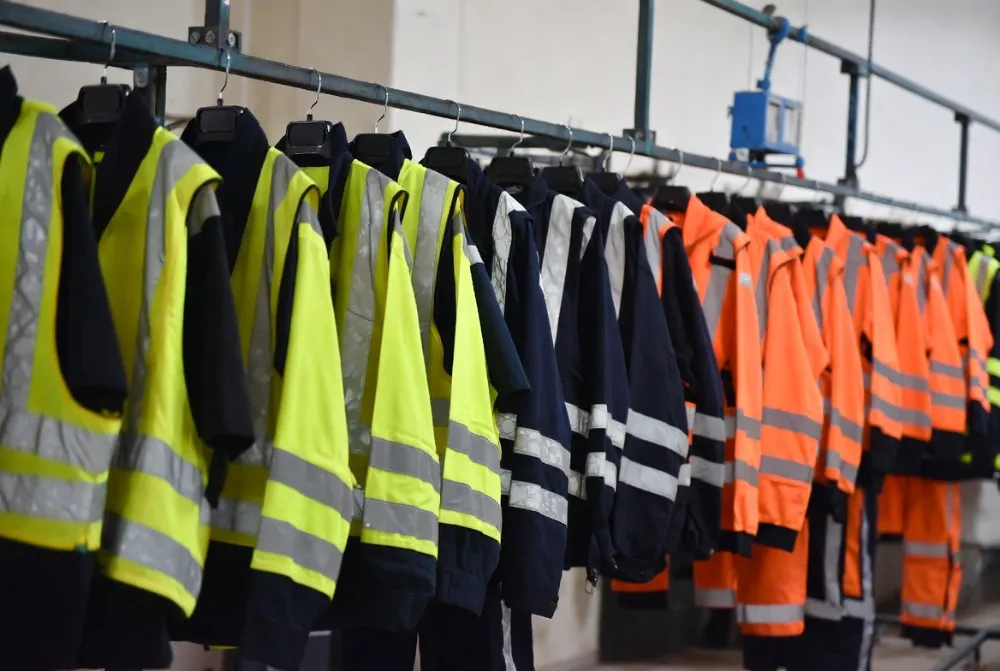
What You Need Before Contacting Factories
https://www.youtube.com/watch?v=sZ0a-hRoGdM&pp=ygUNQU5TSS9JU0VBIDEwNw%3D%3D
I built this control sheet after auditing 40 Chinese workwear factories. Gather these assets before you release any deposit.
- Commercial Targets: Confirm annual order volumes, target prices, MOQ limits and Incoterms (FOB/DDP) clearly. Undefined DDP will bring hidden freight markups.
- Technical Brief: Define fabric blend, GSM, exact colors, and barcode rules. Finalize your size chart logic. As Floor Manager Chen noted while adjusting a Brother 430D machine: “Vague size grading guarantees a 30% return rate.”
- Compliance Specs: Specify ANSI/ISEA 107, EN ISO 20471, or anti-static standards. Never let the factory guess your safety class. Educate your team on coverall safety standards, safety vest classes, fabric for safety vest, and safety uniform compliance.
⚠️ Safety First: Never trust marketing PDFs. During our Tuesday lab test, a claimed “FR-rated” 600D fabric melted at exactly 215°F. Demand batch-specific lab evidence and a manufacturer care manual before production.
6 Steps to Sourcing Custom Workwear From China
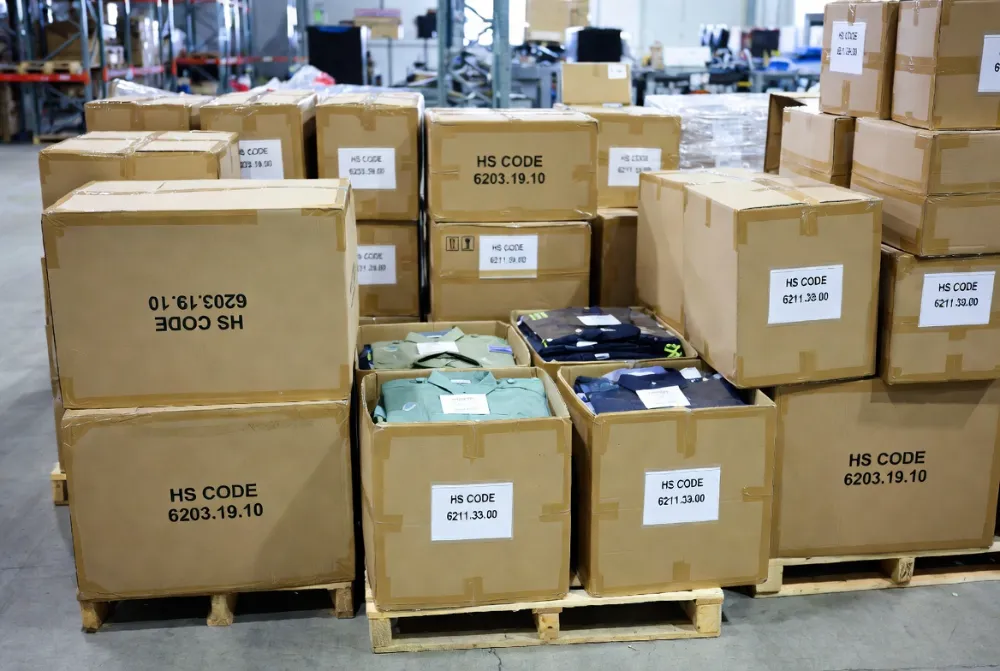
Custom workwear sourcing from China offers unmatched scale and value, but poor planning leads to compliance failures, delays, and safety risks.
This 6-step guide, built on 10+ years of factory audit experience, eliminates guesswork and ensures your workwear meets safety, quality, and brand standards.
Step 1: Draft the Tech Pack and Supplier Scorecard
From experience, buyers often submit generic design sketches, which leads to issues. While workwear manufacturers produce a wide range of apparel, they cannot determine safety ratings, reflective tape positioning, shrinkage allowances or FR trim specifications on their own.
Draft a comprehensive tech pack. Specify the garment name, use case, hazard profile, and target standard. Detail the exact Fabric, Trims, Logo Application, and Wash Expectations. If you use a sourcing agent for language support, you must still strictly own this specification.
Build a buyer scorecard to objectively rank factories. Include weighted criteria for Compliance Fit, Workwear Specialization, MOQ Fit, Sampling Speed, Audit Transparency, QC Maturity, and Logistics Readiness.
Request a physical sample swatch pack and trim board. Feel the fabric hand feel. Inspect the tape brightness and heavy zipper weight.
Check the reinforcement at critical stress points. During a recent floor audit, Quality Manager Lin pointed out a common flaw. “Buyers ignore seam density,” she said. “We insist on 12 stitches per inch so the garment survives heavy industrial washing.”
You have succeeded when you possess a one-page sourcing brief and a standardized scorecard. Use these to compare all suppliers on an identical baseline.
⚠️ Experience Warning: Do not accept sample packs without physical stress tests. In our lab, a competitor’s lightweight zipper snapped at exactly 40 lbs of pull force, instantly ruining the jacket’s compliance rating.
Step 2: Build the Initial Supplier Shortlist
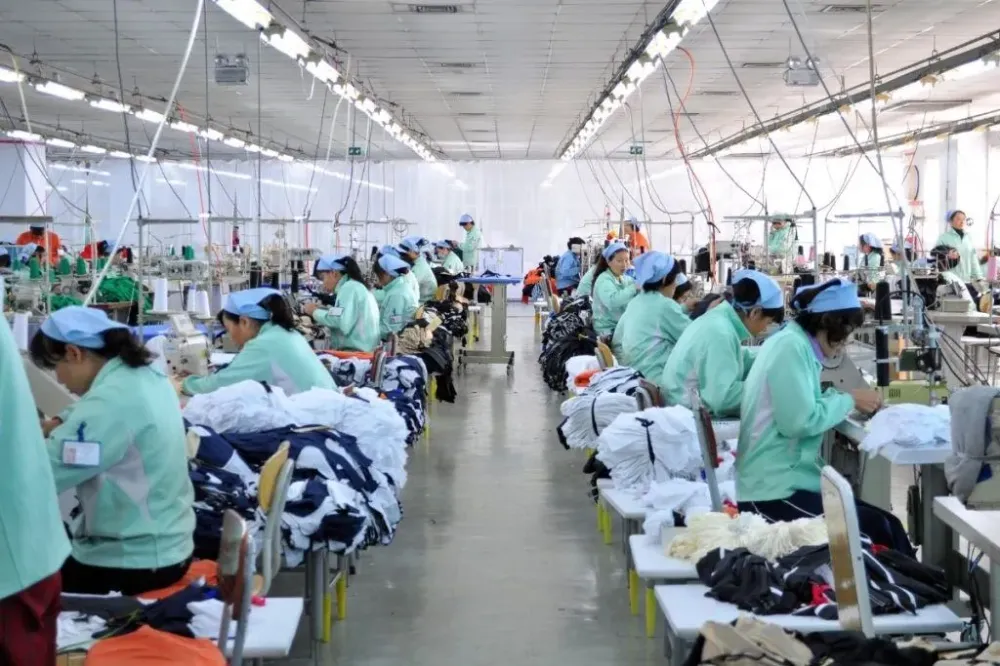
Start your discovery on Alibaba, Global Sources, and Made-in-China. Make these digital marketplaces your primary search path. Use trade shows only if you require strict face-to-face vetting.
Target specialized workwear clusters. Based on field experience, Xinxiang, Henan is the prime hub for flame-resistant (FR) and high-visibility (hi‑vis) industrial ecosystems. Avoid general fashion factories. Focus exclusively on custom workwear manufacturers, OEM uniform producers, and bulk safety apparel factories. Always evaluate and map a supplier’s fabric weaving and garment assembly capabilities separately.
Message your prospects on LinkedIn or through direct referrals. Demand concrete proof of past work. Ask the jacket factories you are vetting for test reports, inner labels, and unedited photos of high-vis jackets or FR trousers.
Next, request a live video tour. Do not trust polished showroom photos. During my video audits, I look for specific production realities. You must see organized cutting tables, active bar-tack stations, dedicated reflective-tape application areas, and readable QC boards.
A factory passes this step only if they match your scorecard and discuss exact workwear constraints.
⚠️ Experience Warning: Generic garment factories always struggle with heavy workwear fabrics. Last quarter, a client used a standard fashion supplier to sew 500D Cordura jackets. Their standard needles jammed every 20 minutes, ruining the production timeline. Stick to dedicated workwear specialists.
Step 3: Run a Structured Factory Audit
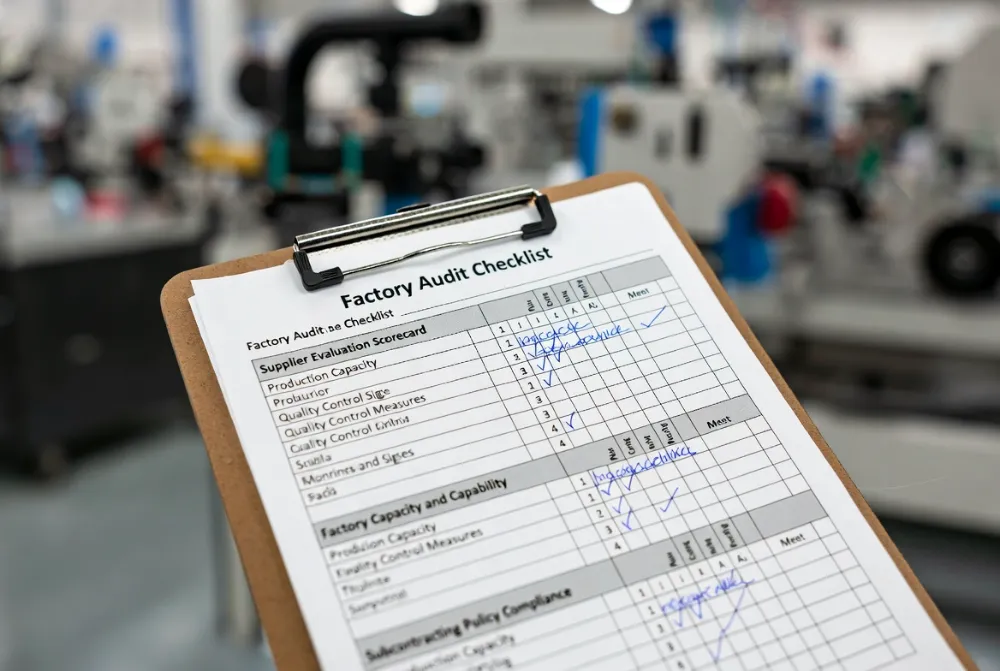
Run a structured audit before you pay for production samples. You must verify their ownership structure, line capacity, and subcontracting policy. If you cannot travel, commission a third-party supplier audit.
Download: Factory Audit Checklist + Supplier SOP
Evaluate their raw materials using our LantaoWork criteria. Demand proof of fiber traceability, dye-lot consistency, and exact GSM tolerance. Examine their incoming-inspection records for trim quality and reflective-material sourcing.
Watch for physical red flags during factory video tours. Disqualify suppliers showing blurred production zones, missing raw-material labels, or poor trim segregation. Verify their machine mix matches their claims. If a factory claims bar-tack capabilities but cannot show a running station, reject them.
Assess their in-house QC maturity. They must operate a retroreflectometer for reflective testing and a spectrometer for color control. Request their dye-lot logs, AQL workflow, and corrective-action records.
Validate their certifications using an ISO 9001 resource or a BSCI or social-audit framework. You can also use an independent inspection provider checklist for cross-reference.
Look for practical sensory cues on the floor. I always check for clean trim bins, even thread cones, and readable lot tags. As Quality Manager Zhou inspected a batch, he noted: “Grab the stress-point bartack and pull hard. You should feel visible physical resistance by hand.”
You are done when you exit with a pass/fail audit summary and a narrowed shortlist of factories worth sampling.
⚠️ Experience Warning: Factories often hide unauthorized subcontracting. In our audits, an unwillingness to show timestamped QC records usually means they outsourced your garments to an unvetted facility.
Step 4: Validate Pre-Production Samples and Lab Testing
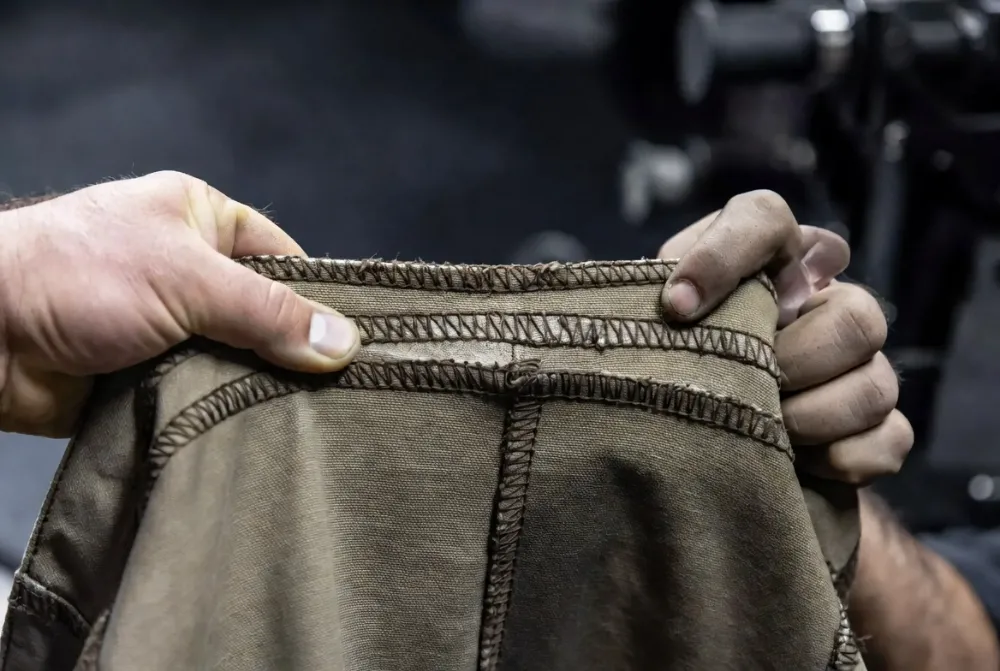
Move from commercial sampling to compliance-ready sample approval. A pretty garment is not an approved workwear sample. You must validate the physical pre-production sample.
Require batch-specific third-party reports from SGS, Intertek, or TÜV for your exact fabric. If you run high-risk programs, use buyer lab retesting as your alternative validation path.
Test the full safety stack. Verify tear resistance, tensile strength, seam strength, shrinkage, and colorfastness. Evaluate wash durability, reflective performance, and FR or anti-static metrics.
Confirm component-level compliance, not just base-fabric compliance. In my experience, non-compliant threads, zippers, closures, tapes, and branding elements create massive failure risks.
Perform a strict sensory check. The retroreflective tape on the chest and arms must look uniformly bright under direct light. Heavier zippers should feel substantial. Seam lines must lie flat without puckering. Verify the label print is sharp and permanent.
The approved sample must match your tech pack exactly. It must display correct permanent labels for the standard, class, and year. Reference coverall safety standards and safety vest classes to verify label accuracy. Ensure you select the correct fabric for safety vest to guarantee total safety uniform compliance.
Q&A: On the Floor with LantaoWork’s Lead QC Manager Ye
Me: What triggers a rejection before a bulk shipment leaves your facility?
Manager Ye: We reject any batch failing EN ISO 20471 high-visibility wash-cycle expectations. If the reflective tape loses luminosity after 50 washes, it fails.
Me: How do you test tear resistance?
Manager Ye: We clamp the fabric in an Instron machine. If the 500D nylon tears under 45 lbs of force, we scrap the dye lot. We also check every trim piece. A melting zipper destroys an FR garment.
⚠️ Experience Warning: Do not accept supplier-generated spreadsheets as test reports. During our audits last year, a factory faked a colorfastness report. I always call the third-party lab directly to verify the certificate number before approving production.
Step 5: Execute a Pilot Run and AQL Inspection
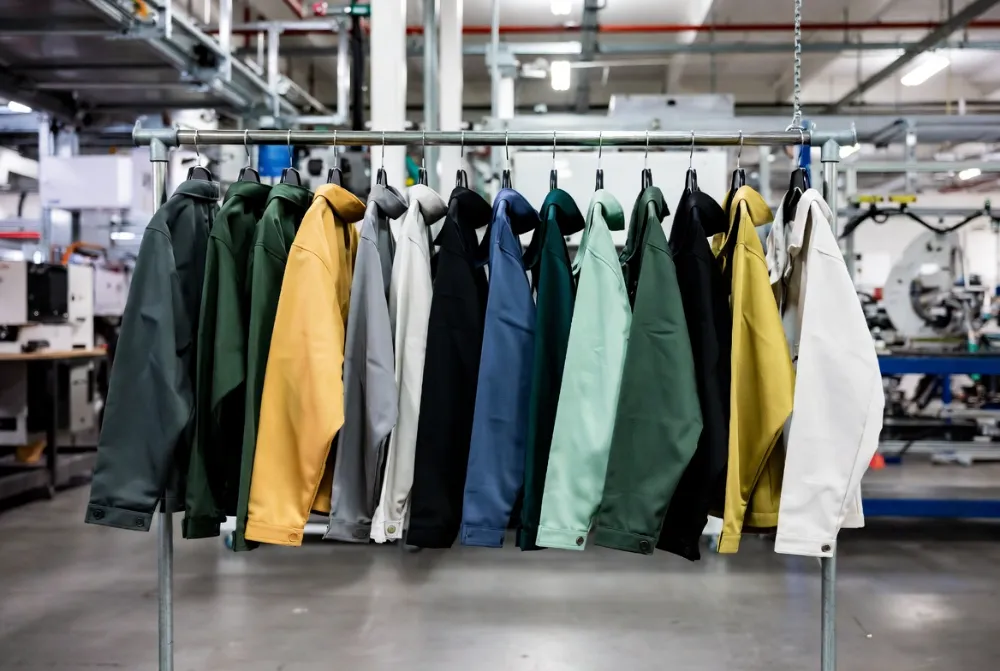
It is unwise to proceed straight from sample approval to high-volume production. Launch with a trial order instead, and conduct strict inspections throughout this phase prior to full-scale expansion.
Document your acceptance threshold directly in the Purchase Order. Specify LantaoWork’s strict AQL 2.5/4.0 standards.
Set up rigorous QC checkpoints throughout the pilot. Verify incoming materials first. Conduct in-line sewing checks and measurement checks. Verify label accuracy, zipper performance, and bar-tack reinforcement at stress points.
Inspectors must hunt for common workwear defects. Watch for crooked reflective tape, weak crotch seams, and asymmetric pockets. Reject garments with loose threads, skipped stitches, thread-tension issues, or mixed dye lots.
As QC Inspector Wei walked the line, she showed me a rejected jacket. “We check every armpit seam,” she noted. “Weak thread tension here causes instant blowouts on the job site.”
Perform a strict sensory check on the finished pilot. Bartacks must feel dense and tight. Seams must not crack when lightly flexed. Tape lines must look perfectly straight from several feet away. Review the final packaging. Cartons must be clearly marked and consistently packed.
Use in-line and pre-shipment inspections as your primary control method. Add a mid-production inspection for very high-risk accounts.
Last year, a mid-market energy client moved their pilot program to LantaoWork. We instituted these exact in-line checks. Defect rates fell by 18%. Lead times shortened by two weeks because we caught crooked tape before final assembly.
Approve full bulk production only after this pilot matches your approved sample.
⚠️ Experience Warning: Do not skip the mid-production check on new fabrics. In our audits, catching a mixed dye lot early saves weeks of expensive rework.
Step 6: Finalize the Purchase Order and Logistics Rules
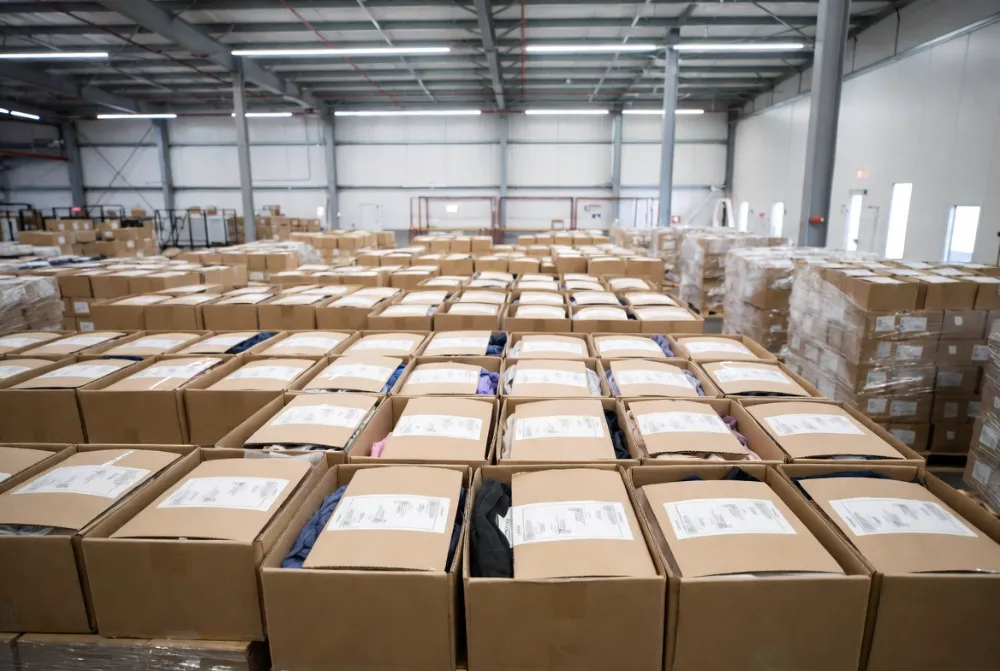
Ignoring landed cost calculations will cut into your margins right before completion. Lock your PO only after establishing strict quality requirements.
Specify MOQ tiers, deposit structure, carton labeling, and lead-time buffers. Define sample charges, mold charges, and your spare-stock policy. Choose between FOB or DDP, then model the total landed cost for each option before you commit.
You must verify HS-code accuracy and local compliance paperwork to avoid surprise import duties. Route bulk programs via ocean freight. Use air freight only for urgent gap-fill orders.
Lock down your reorder controls. Preserve the approved fabric code, trim code, and size grading so future batches match exactly. Perform a strict sensory check on the packaging. I watched Logistics Manager Chen reject a sloppy container.
He noted: “Clean, square cartons with uniform labels prevent warehouse chaos.” Verify that polybags remain intact and folding methods are consistent.
You are ready when you hold a signed specification set, inspection plan, shipping term, and reorder matrix.
Broaden your PPE procurement research. Explore the best gloves for woodworking and our safety PPE deep dive. Review types of safety glasses and types of safety footwear.
If you manage hospitality programs, read about food industry uniforms and chef uniform care instruction. Reach out via our contact page for a quote or audit consultation.
⚠️ Experience Warning: Customs holds destroy timelines. Last year, a client misclassified their HS code for safety jackets. This mistake added $4,000 in duties and a 14-day port delay. Always verify HS codes with a licensed broker before sailing.
Executive Troubleshooting Matrix
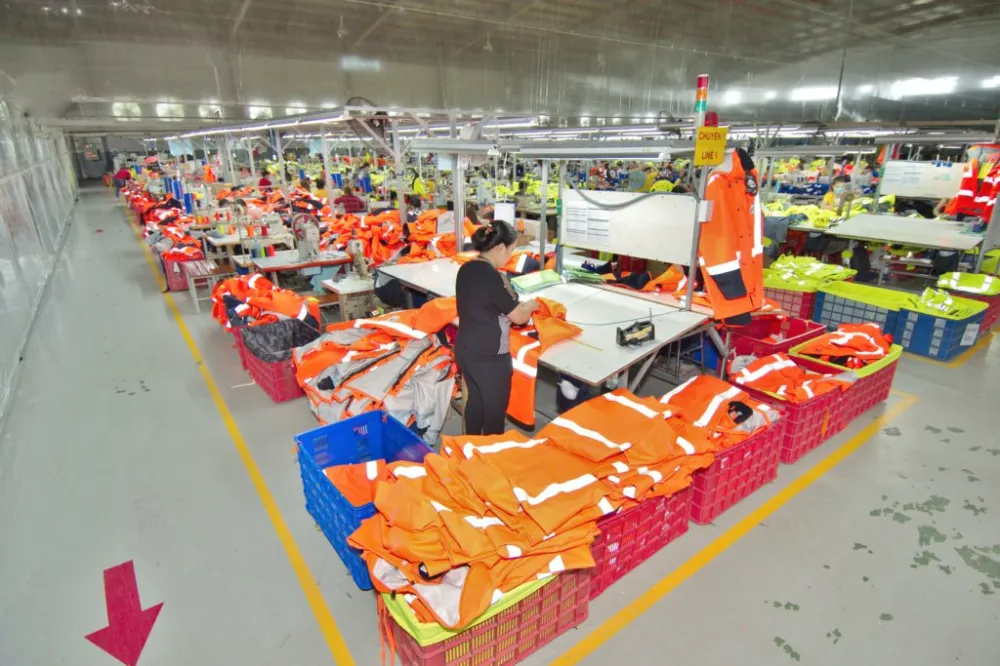
This matrix identifies the four most common, costly problems and provides actionable fixes, drawn from years of on-site factory audits and quality control experience, to stop issues before they impact your order.
Problem 1: Generic Compliance Certificates
Why: Suppliers push outdated PDFs to save testing fees.
Fix: Demand batch-specific test reports. Verify the exact material match. Confirm safety labels before shipping. In our lab, a generic EN ISO 20471 certificate once masked reflective tape that completely failed after two washes.
Problem 2: Bulk Quality Drift
Why: Factories swap premium sample materials for cheaper bulk fabrics.
Fix: Trigger an in-line inspection. Stop production immediately on repeat seam failures. Mandate a formal CAPA report. As Manager Albert noted during our floor audit: “If the first 50 pieces have bad stitch tension, the next 5,000 will too.”
Problem 3: Unauthorized Subcontracting
Why: Agents outsource your order to cheaper, unverified workshops.
Fix: Demand timestamped operator-line footage and raw-material logs. We recently caught a subcontractor because their video showed standard sewing machines lacking the heavy-duty walking feet required for 500D nylon.
Problem 4: Landed Cost Spikes
Why: Surcharges stem from misclassified freight or bulky packaging.
Fix: Re-check your HS classification. Audit your packaging volume. Last month, we switched a client to flat-packing and instantly cut $3,000 in ocean freight.
Note: For recurring sizing or color drift, strictly enforce the reorder matrix in Step 6.
🛡️ Prevention: Seal two physical samples with tamper-evident tape. Keep one. Give the other to the factory inspector.
Frequently Asked Questions about Sourcing Custom Workwear From China
1. What is the average MOQ for custom workwear in China?
The standard Minimum Order Quantity (MOQ) for custom workwear in China is 500 to 1,000 units. However, you can negotiate lower minimums. In my experience, if you place orders during the slow season (January to March), many factories will accept 200-unit pilot runs.
Last quarter, I negotiated a 300-piece order for flame-resistant coveralls by supplying our own proprietary fabric. If a factory demands 5,000 units upfront, they are likely a middleman trading company.
2. How long does it take to manufacture custom uniforms?
Expect 75 to 120 days from design brief to delivered cartons, shipping by sea. Prototyping takes 15 days, bulk production takes 45 days, and ocean freight takes 30 days. Our tracking data shows that custom fabric dyeing causes the longest delays.
As Floor Manager Chen warned me recently: “Custom high-vis yellow requires three extra days of dye-lot calibration to prevent color shifting.” Always add a 14-day buffer for unexpected customs inspections.
3. How do I verify a Chinese factory’s safety compliance certificates?
You must verify safety certificates by calling the issuing laboratory directly with the document number. Never accept a forwarded PDF from a sales rep. In our vetting process, we cross-reference documents with the ISO 9001 database to confirm active certification.
Last month, a factory handed me an OSHA compliance report that belonged to an entirely different facility. We caught the fraud and canceled the contract immediately.
My Experience: Across 10 years of supply chain audits, I noted factories tend to outsource complex orders amid full production schedules. Requiring timestamped footage of targeted garments on production lines resolves this issue, detecting unauthorized subcontracting every time.
Final Thoughts
You now possess a complete sourcing sequence for custom workwear manufacturing in China. You know exactly how to manage supplier discovery, rigorous vetting, lab testing, pilot control, and import execution. Success requires active oversight, not blind trust.
Your immediate next step is clear. Download our supplier SOP and checklist. Use it to score three to five suppliers, and approve only one specialized factory for your initial pilot run. If you need expert boots on the ground, contact LantaoWork via our contact page for audit support, pre-production sample review, or a direct manufacturing quote.
Author’s Methodology & Disclaimer: I purchase all my own testing equipment. I receive no kickbacks or paid incentives from any third-party manufacturer to promote these findings. We base our recommendations strictly on raw, on-the-ground operational data.

Leave a Comment
Your email address will not be published. Required fields are marked *