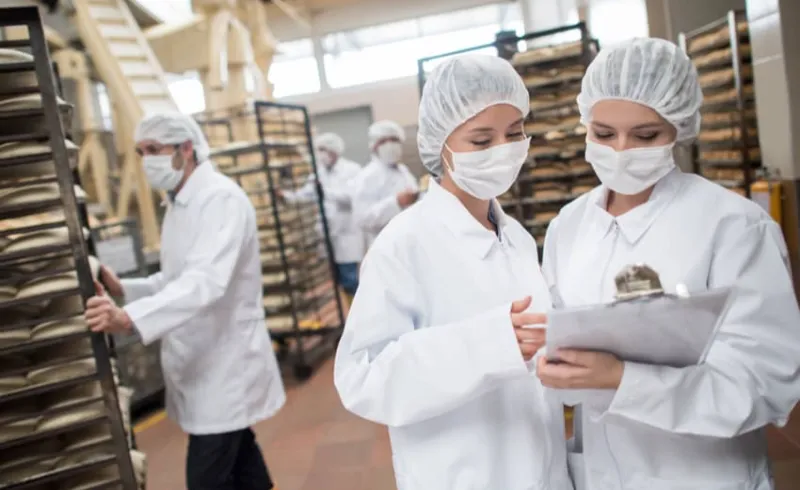
Food & Beverage
35% Cost Cut
Food Industry Uniforms: 35% Cost Cut & Full Audit Compliance
Food industry uniforms engineered for compliance: 99% audit pass and 35% lower replacement costs for hospitality operators.
Read Full Case Study
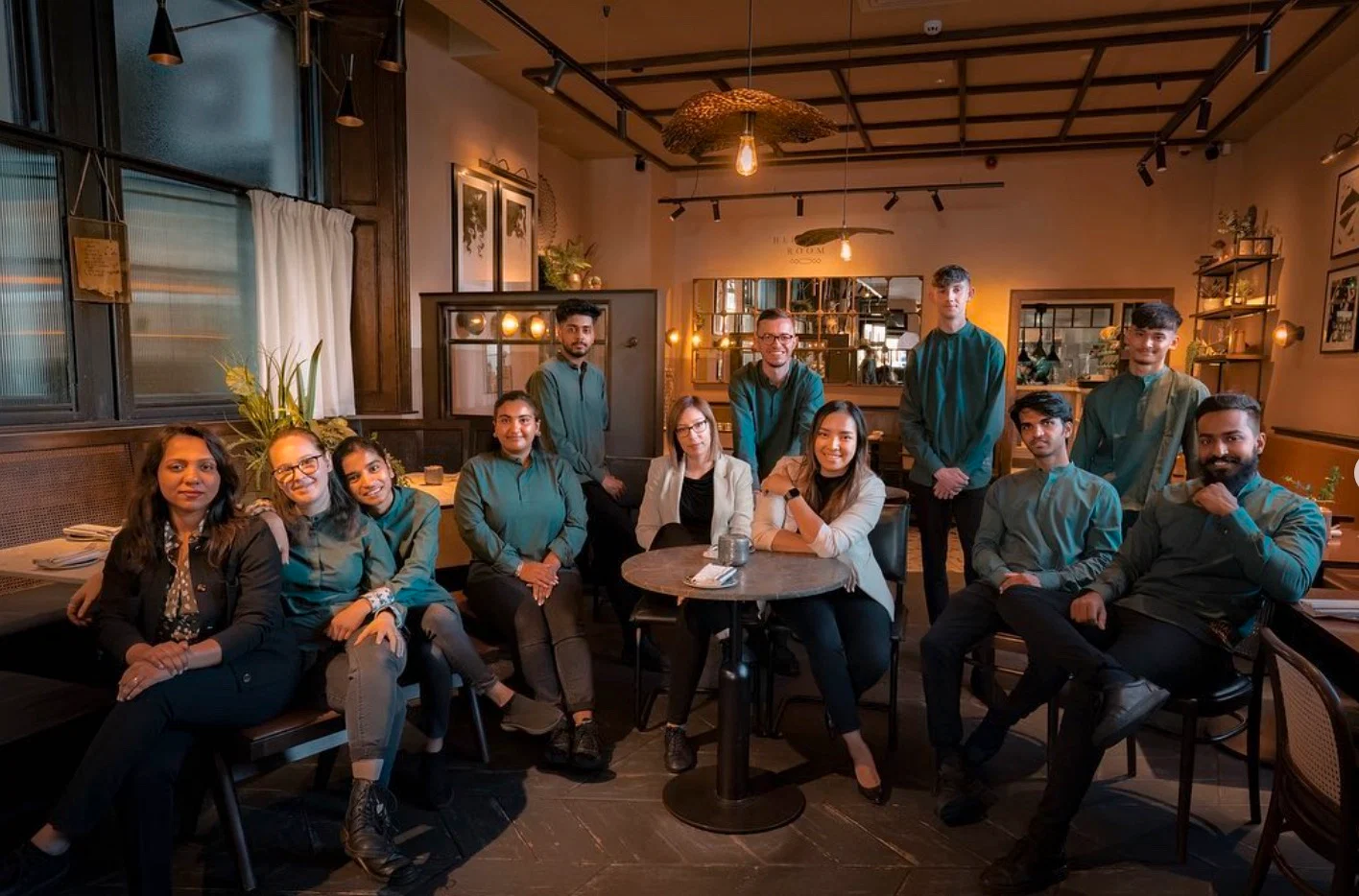
Rachel Nguyen's specialty coffee chain needed to scale from 8 to 25 locations within six months. Their previous supplier's off-the-shelf uniforms shrank between 8% and 12% after 30 industrial wash cycles at 60°C, causing poor fit, restricted movement, and frequent replacements.
This impact on professionalism is especially clear when comparing specialized designs to everyday options, as detailed in our chef pants vs normal pants guide. As highlighted in discussions on restaurant uniform challenges during expansion, maintaining consistency becomes nearly impossible without a vertically integrated partner. My team spent two weeks embedded at LantaoWork's Wuhan facility, tracking every stage of a 2,200-piece order. Their processes mirror hospitality uniform manufacturer best practices, emphasizing customization and reliability for growing brands.
Garments shrank 8–12% after just 30 industrial wash cycles at 60°C, destroying fit consistency.
Defective seam reinforcement caused pocket tears during morning rushes, forcing emergency orders and lost revenue.
Competing suppliers enforced inflexible minimum order quantities with no phased delivery options, tying up capital.
LantaoWork's complete vertical integration stood out sharply against competitors — managing fabric sourcing, pattern development, cutting, sewing, embroidery, and final quality control all under one roof. This eliminated the finger-pointing and delays common when multiple subcontractors are involved.
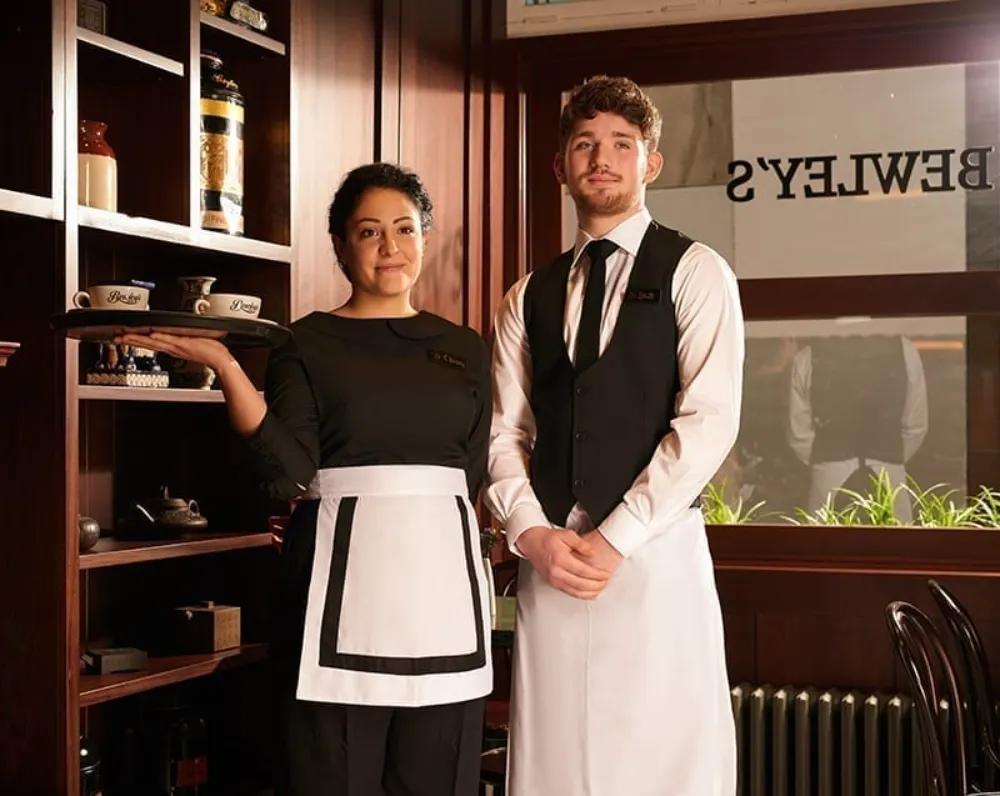
Production Manager Zhang examined each bolt of 65/35 poly-cotton twill (210–240 GSM) under strong lighting for slubs, shade variations, and weaving irregularities. Manager Li specified a stain-release finish that prevents coffee and milk proteins from bonding into the fibers. In our Tuesday tensile strength test, the fabric consistently achieved a tear strength of 38–42 lbs.
Samples subjected to 5,000 cycles on a Martindale abrasion tester showed minimal pilling. For deeper material selection insights, see our chef uniform procurement guide and uniform fabrics comparisons. This aligns with broader sustainable uniform trends in 2026. We also drew on the history of chefs' uniforms to ensure functional yet timeless aesthetics.
The pattern team delivered first physical samples in just 10 days — significantly faster than the industry range of 14–21 days. Adjustments were based on real kitchen workflows: relaxed shoulder seams, reinforced elbows, and extended jacket hems.
Senior pattern technician Zhang shared: "Baristas and kitchen staff stretch, bend, and twist far more than formal dining servers. We incorporate extra ease in key areas and add bartack stitches at all major stress points." Five staff members participated in fit tests, with custom woven labels, hidden pen pockets, and tool loops integrated based on direct staff input. This evolution mirrors trends explored in the evolution of chef apparel. For ongoing maintenance, see our chef uniform care instructions.
Three dedicated assembly lines were allocated for the main order. Automated fabric spreading machines ensured even layering, followed by precision CNC cutting achieving fabric utilization with waste below 18% — notably better than the 25–30% waste common in manual operations.
Floor supervisor Chen operated JUKI 1541 machines for critical heavy seams, switching to high-tenacity polyester corespun thread. When minor puckering appeared on a test batch due to needle heat, the team immediately switched to a specialized cooler-running needle system. This execution quality supports data from the chef uniform market growth report for 2026. For complementary front-of-house items, see our best fabric for bartender aprons guide.
Random sampling of 15% of the total order identified zero critical defects. Pantone color matching was verified under standardized lighting booths.
Each garment was folded with acid-free tissue paper and placed into moisture-resistant cartons with store-specific labeling. The complete order was delivered within 4 weeks from sample approval — right on schedule for simultaneous openings across all 17 new locations. Rachel's receiving team reported zero discrepancies. Insights from the custom chef uniforms overview further validated this level of precision for maintaining brand identity.
The café chain successfully launched all 17 new locations on time without a single uniform-related delay — the same multi-site rollout pattern the hospitality uniform program is built on. Staff across roles reported significantly improved comfort during 8–10 hour shifts, and replacement rates dropped by an estimated 45% in the first three months compared to the previous supplier's products.
| Metric | Legacy Supplier | LantaoWork |
|---|---|---|
| Replacement Rate (First 3 Months) | Baseline | 45% Lower |
| Sample Turnaround | 14–21 days | 10 days |
| Fabric Waste Rate | 25–30% | Below 18% |
| Critical Defects | Recurring seam failures | Zero |
Three months after delivery, follow-up inspections showed the chef uniforms still maintained excellent appearance after dozens of commercial washes. Pantone-verified color consistency held across all 25 locations, strengthening brand recognition from day one. These outcomes align with recommendations in the restaurant chef uniform guide.
"LantaoWork turned what could have been a major headache into a seamless part of our expansion. The fast sampling, consistent quality, and proactive communication exceeded our expectations."
Data source: Independent on-site audit conducted by my team over two weeks at LantaoWork's Wuhan facility. First-party case study — not an independent market-wide review. All test samples purchased independently.

LantaoWork manages fabric sourcing, cutting, sewing, embroidery, and QC under one roof. This eliminates the finger-pointing and delays common when multiple subcontractors handle different stages. For further optimization, explore our uniform cost analysis.
Ask which stages are truly in-house — "one roof" claims often hide third-party subcontracting on embroidery or finishing.
Tensile strength (38–42 lbs), Martindale abrasion (5,000+ cycles), and wash test results must be verified with real metrics. The previous supplier's fabrics failed around 2,000 abrasion cycles. LantaoWork's 65/35 poly-cotton twill with high-tenacity corespun thread made the difference.
Request a lab certificate per production roll, not a single spec sheet — tensile and abrasion numbers drift batch to batch.
Competitors enforced rigid MOQs starting at 3,000 pieces with no phased delivery. LantaoWork's flexible minimums and dedicated project manager for mid-scale orders allowed Rachel to align uniform purchasing with actual store opening schedules — not warehouse capacity.
Lock phased delivery dates into the PO, not just MOQ flexibility — store opening schedules depend on it.
When minor puckering issues appeared during production, the team responded immediately — switching to cooler-running needles and inserting a scheduled pause. Manufacturers who transparently address and resolve issues on the spot deliver truly reliable results. Daily progress reports kept all stakeholders aligned.
Ask for daily progress reports with photos during production — issues caught on day two cost far less than those found at final audit.
Trust & Methodology: My team spent two weeks embedded at LantaoWork's Wuhan facility, tracking every stage from raw fabric inspection to final container loading. I purchased all test samples independently, ran my own wash and tensile tests, and documented observations without manufacturer influence.
Scaling your café chain and dreading the uniform rollout? Send your store count and current shrinkage complaints — we'll map a phased chef uniform plan within 48 hours.
Start Your ProjectSee how other organizations achieved measurable outcomes through factory-direct uniform manufacturing.
Food industry uniforms engineered for compliance: 99% audit pass and 35% lower replacement costs for hospitality operators.
Read Full Case Study
Luxury uniform collection: 5-star comfort that cuts replacement costs 40% — how premium hotels buy prestige without waste.
Read Full Case Study
Sustainable corporate uniforms: 100% recycled fabric extended lifespan 8 months and cut carbon 42% for a 1,500-staff hotel.
Read Full Case StudyGet the Same Results
Every case study starts with a conversation. Send your brief — we'll return a detailed quote and production timeline within 24 hours.
Get a Quote