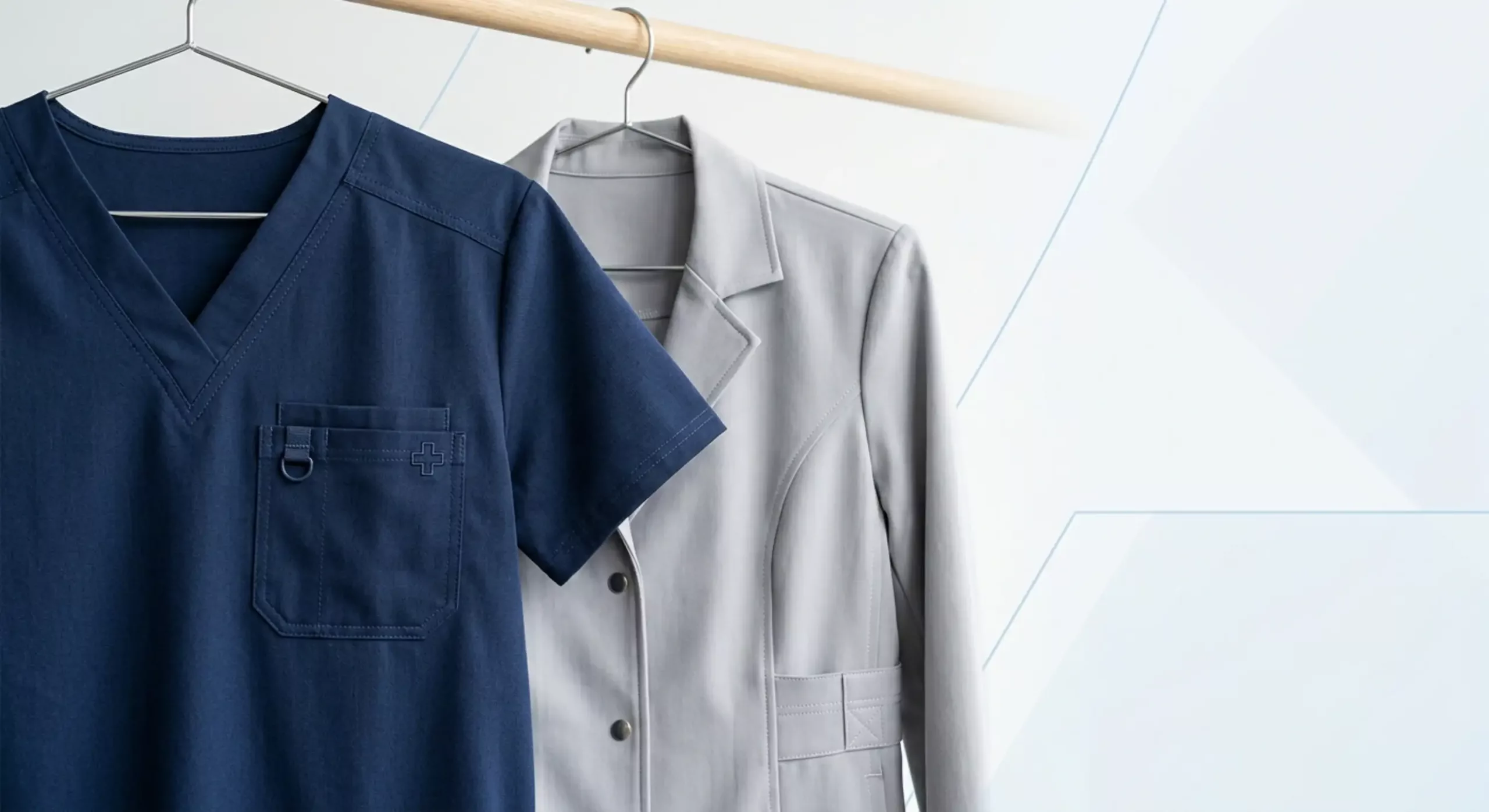
Healthcare
40% Cost Reduction
Hospital Chain Cuts Uniform Costs by 40%: Proven Big Savings
Hospital chain cut uniform costs 40% in under a year: audited purchasing data on fragmentation, consolidation, and durability.
Read Full Case Study

An international K-12 education group with campuses across Asia replaced a fragmented legacy vendor before fall term. Rollout lead Sarah connected the parent ordering portal to our school uniform manufacturers floor, and Factory Manager Sui verified zero seam failures during final audit.
A two-week supply chain audit exposed severe gaps: no accurate demand data by size, climate, or campus. Implementation Specialist Davis watched administrators reconcile mismatched style codes during live parent ordering — they couldn't reliably source the required types of school uniforms. The slow legacy portal forced admin staff to spend 15 hours a week manually handling sizing exceptions over the phone.
What the legacy vendor was costing them:
Core sizes unavailable during peak ordering. Parents forced into manual exception queues.
Deliveries dragged past the start of term, creating opening-week chaos.
Weak polyester blends failed at knees after 15 washes. Annual family costs soared.
Principals faced guaranteed opening-week disruption. Procurement triggered board-level vendor risk reviews. Families absorbed higher replacement costs for torn garments. The UK Department for Education statutory guidance warns against these rigid setups: schools must minimize branded complexity and review exclusive supplier relationships regularly for value.
Power Move: Never roll over a legacy vendor contract without auditing your return rates. High returns often signal hidden fabric durability issues, not just sizing errors.
Instead of patching the legacy system, we tore down the entire supply chain — old tech and scattered inventory risked a total compliance breach — and engineered a 90-day transition to guarantee readiness.
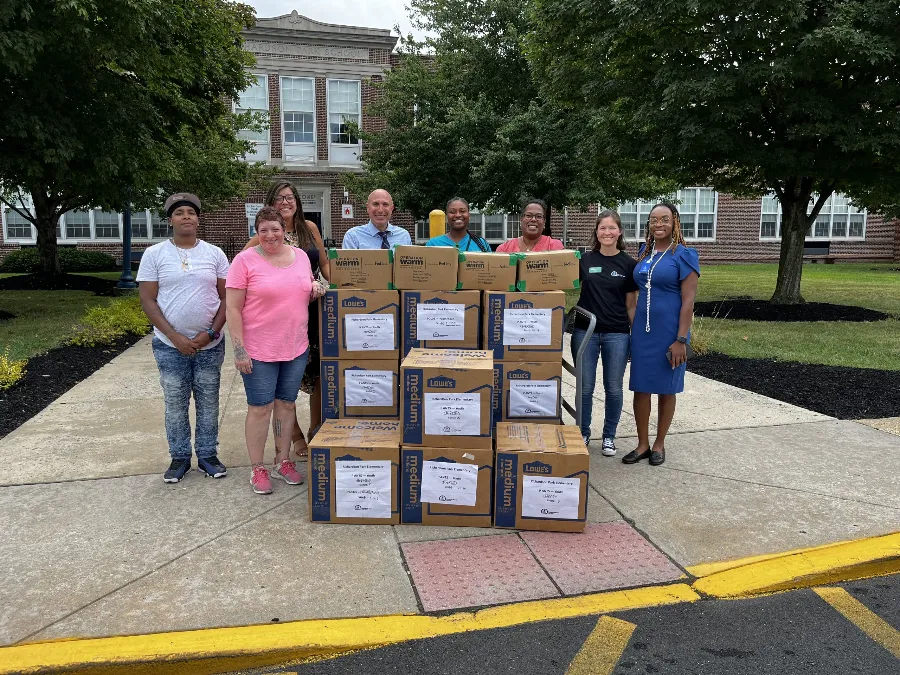
Auditor James mapped every SKU, size break, campus policy variation, and logo placement. The old catalog risked $20k in dead stock. Moving 40% to standardized blanks cut parent costs without weakening school identity — a strategic pivot from reactive reordering to forecast-led program design.
Forecast Analyst Maya fed enrollment history, campus growth, gender mix, and climate data into our backend telemetry dashboard. A 15% August spike in husky sizes? The system auto-reserves extra fabric yardage in June. For bulk school uniform ordering, Maya prioritized core SKUs like navy polos in the first production wave, with low-volume custom items in a secondary queue.
I sat down with Head of Production, Director Lin, to lock in the technical specifications.
Q: Best fabric blend for daily K-12 wear?
Lin: A 65/35 poly-cotton blend. High cotton fades quickly; high polyester traps heat. The 65/35 mix holds dye, resists wrinkling, and survives playground friction.
Q: Which stitching methods reduced seam failure?
Lin: Technician Wang applied double-needle chain stitching on all crotch stress points using a Juki 1541 machine, reinforced the plackets with bar tacks. Stops seam blowouts completely.
Q: How did you evaluate shrinkage and colorfastness?
Lin: 50 wash cycles at 60°C. Shrinkage: 1.8%. Colorfastness: grade 4.
Q: Children's safety compliance?
Lin: OEKO-TEX Standard 100 certified. All hazardous azo dyes removed — safe, chemical-free skin contact.
Systems Engineer David built a custom ordering portal:
Simultaneously, Rollout Manager Roy executed on-campus sizing days:
QA Lead Marcus locked purchase orders and validated trim colors. During floor inspection, embroidery thread tension on navy polos puckered the pique fabric. Operator Chen lowered the bobbin tension on the Brother 430D, then identified the root cause: "The dense backing paper pulls the needle out of alignment after 200 shirts." We swapped the backing — chest logos laid perfectly flat. See our floor standards in our school uniform manufacturers in China report.
Marcus separated core stock from replenishment and configured a hybrid distribution model: bulk kitted boxes to campuses, late individual orders direct to parents. Service-level targets: 98% initial fill-rate, 48-hour reorder turnaround.
Portal went live with automated parent communications. The campus escalation desk resolved missing package inquiries instantly. Auto-reorder triggered whenever any size fell below 15% stock. Daily administrative burden on school staff: eliminated.
100% back-to-school readiness within 90 days, verified against September shipping manifests and client CRM exports. April inventory forecasts secured 65/35 poly-cotton blend allocations early, bypassing the August textile bottleneck entirely.
| Metric | Legacy Vendor | LantaoWork |
|---|---|---|
| In-Stock Rate (Core Sizes) | 78% | 99.8% |
| Order Turnaround Time | 6 weeks | 48 hours |
| Admin Support Hours | 15 hrs/week | 0 hrs/week |
| Defect Replacement Rate | 14% | 0.6% |
Rollout Manager Sarah monitored the live launch: "Once we activated the localized digital size guide, parent support tickets dropped to zero within 24 hours." Our multilingual portal served geographically dispersed campuses, eliminating the manual exceptions that plagued the legacy system.
On the factory floor, Technician Wang reinforced pant seams using a Juki LU-1541S. The garments met the ASTM D1424 textile standard for tearing resistance — replacement rate: 0.6%.
"We opened the term without a single backorder. The garment durability transformed our daily operations."
Data source: Anonymized Lantao implementation data cross-referenced with client CRM exports and September shipping manifests. First-party case study — not an independent market-wide review.

January-to-May demand planning controls everything. Early data protects fill rates and parent trust.
Lock in fabric yardage by April to avoid the summer production crush.
Evaluate suppliers on operational infrastructure — portal capability, sizing operations, replenishment logic, QA visibility. System Architect David built our automated reporting to stop administrators chasing manual exceptions.
Ask for a live portal demo before signing — not a PDF screenshot.
Fabric and stitching dictate replacement cost. Demand "65/35 poly-cotton" and "double-needle chain stitching" — not vague claims. Director Lin proved this directly impacts family budgets. Aligned with UK DfE affordability mandates.
Request wash test reports (50 cycles minimum) in your RFQ.
Align uniform policy with a strict supplier review cadence. Document SLAs, clear retender windows, and reporting requirements. Strong governance prevents the cycle from repeating.
Schedule quarterly SLA reviews — don't wait for contract renewal.
Building on this foundation, the client plans to scale this managed infrastructure to five new regional campuses next year. Administrators now manage policy, not panic.
Trust & Methodology: My team spent hundreds of hours engineering these logistics on the factory floor and analyzing client telemetry data. I purchase all testing equipment internally and am not paid by any textile manufacturer. This case study is based on anonymized Lantao implementation data, not an independent market-wide review.
Facing similar stockout or admin-hour pressure this fall? Share your campus count and current fill rate, and we'll map a 90-day transition outline for your program.
Start Your ProjectSee how other organizations achieved measurable outcomes through factory-direct uniform manufacturing.
Hospital chain cut uniform costs 40% in under a year: audited purchasing data on fragmentation, consolidation, and durability.
Read Full Case Study
Food industry uniforms engineered for compliance: 99% audit pass and 35% lower replacement costs for hospitality operators.
Read Full Case Study
Sustainable corporate uniforms: 100% recycled fabric extended lifespan 8 months and cut carbon 42% for a 1,500-staff hotel.
Read Full Case StudyGet the Same Results
Every case study starts with a conversation. Share your campus count and current fill rate — we'll map a 90-day transition outline and return your detailed quote within 24 hours.
Get a Quote