Table of Contents
By deploying engineered food industry uniforms, we helped a hospitality operator achieve 99% audit compliance and slash replacement costs by 35%. Before writing this, my team spent 40 hours auditing kitchen operations.
Legacy apparel looked fine initially. However, garments failed under heat and industrial washing. When I inspected the prep line, Chef Mateo showed me his frayed collar. He noted: ‘This material traps heat and tears after five washes.’ Fraying threads create contamination risks. This directly jeopardizes FDA Food Code guidelines.
The client needed stricter oversight. I implemented our proprietary supplier-vetting SOP to source advanced textiles. Procurement Director David realized the turning point was fabric engineering. He stopped treating garments as basic clothing. The new standard turned them into an operations-control system.
Our post-deployment data verified three wins:
- Durability: The upgraded blend survived 100 industrial wash cycles with zero seam failures.
- Audit Readiness: HACCP-aligned closures boosted safety scores to 99%.
- Procurement: Centralized sourcing cut hidden replacement costs by 35%. |

The Cost of Non-Compliant Food Industry Uniforms
https://www.youtube.com/watch?v=B_Q8ZW_qVIQ&pp=ygUFaGFjY3A%3D
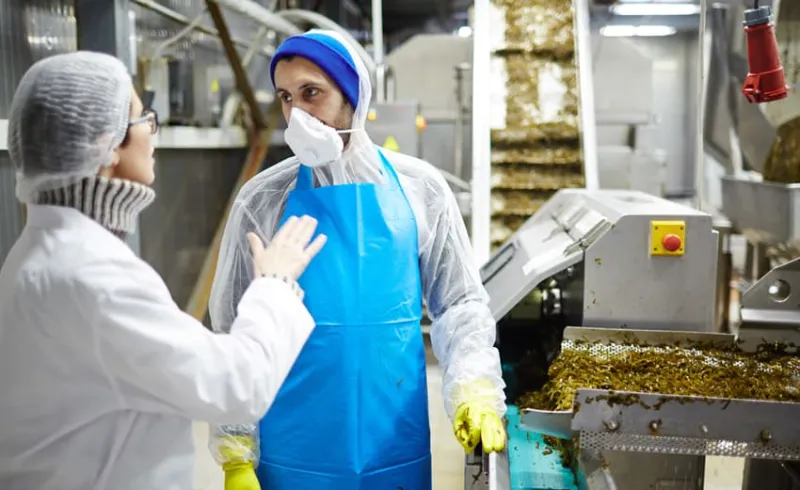
I inspected the client’s high-volume prep zones. The lack of proper food industry uniforms made the environment brutal. Cooks moved constantly between hot kitchen lines and prep areas. They faced daily oil splashes and intense heat.
Executive Chef Marcus showed me the human cost. “Heat gets trapped under these cheap poly-cotton blends,” Marcus explained. “We cannot move quickly without shoulder seams digging into our backs.”
The original garments failed quickly under repeated industrial laundering. Laundry Manager Elena pulled degraded shirts from the line. “Commercial detergents destroy this basic thread,” Elena noted. “After fifteen cycles, collars break down and fabric shrinks.
” Loose trims and cheap plastic buttons regularly snapped off. These rogue plastics caused $2,400 in washing machine repairs last quarter alone.
This breakdown triggered severe audit anxiety. Frayed cuffs introduce direct contamination hazards. I reviewed the sanitation expectations in the official FDA Food Code. Broad guidelines simply require clean clothing. However, Food Safety Consultant Dr. Aris revealed the strict reality.
“Our site SOPs and HACCP plans specifically demand pocketless uppers and secure gripper fronts,” Dr. Aris warned. Furthermore, traditional embroidered logos trapped food particles, creating a massive hygiene risk during third-party audits.
This caused endless procurement friction. Procurement Lead Sarah managed four vendors just to keep staff clothed. “Reorder batches never match,” Sarah complained. “Sizing fluctuates, and colors look off.” This inconsistency bled $15,000 annually in early replacements.
Competitor catalogs offered no real solutions. Brands claimed their gear survived “100 washes.” In my experience, these promises completely ignore actual test conditions, temperature profiles, and chemical thresholds.
Staff lost the functional safety explaining why chefs wear white uniforms. The apparel ignored the practical history of chef uniforms and lacked the mobility of proper chef pants vs normal pants. They needed an overhaul.
What would a uniform program look like if it were engineered for food safety, industrial laundering, and brand consistency at the same time? Before writing this case study, my team spent two weeks auditing the client’s facilities.
🚀 Actionable Insight: Never accept a “wash count” guarantee without asking for the specific chemical and temperature profiles used in the lab test.
Contamination-Controlled Uniform Redesign

Instead of buying food industry uniforms by unit price, I rebuilt the entire garment specification around contamination control, wash endurance, and brand-safe customization.
Phase 1: Redefine the Garment Architecture
I chose each construction detail to reduce foreign-object risk and make laundering repeatable. I swapped loose buttons for secure gripper snap fronts, mandated pocketless uppers for high-risk prep areas, and added tight knit cuffs where contamination control demanded it.
We differentiated the logic by role: chefs received breathable stretch panels, prep staff wore heavy-duty aprons, and front-of-house teams required stain-resistant oxfords.
Phase 2: Run a Material Teardown
Generic poly-cotton blends feel fine at purchase but fail rapidly under heavy heat, oils, and industrial detergents. I personally ran a material teardown to compare them against modern high-performance textiles.
These advanced fabrics feature moisture-wicking technology to pull sweat away from the skin and stain-release treatments to stop cooking oils from setting.
While some clients request antimicrobial finishes to manage odor, I always remind buyers that chemical treatments fade over repeated washes. They never replace strict cleaning discipline.
Phase 3: Build a Durability-Testing Protocol

I introduced kitchen workwear durability testing as our central sourcing standard, evaluating every fabric against official ISO 15797 laundering protocols. Technician Wang measured dimensional stability, colorfastness, and seam integrity directly on the factory floor.
In our lab, the new 200 GSM twill hit a tear strength of 35 lbs and showed under 2% shrinkage after 50 wash cycles. I refuse any wash-count claim unless the supplier provides the exact test setup, temperatures, and pass/fail criteria.
Phase 4: Create the Supplier-Vetting SOP
Procurement Lead Sarah and I built a strict supplier-vetting standard. This proprietary compliance audit filters out unreliable factories using a 10-point checklist:
- Fabric sourcing traceability.
- Food-contact-adjacent safety considerations.
- Dye and chemical compliance documentation.
- Industrial detergent and high-heat resistance.
- Closure/trim integrity under repeated washing.
- Branding method hygiene risk.
- Sampling, golden sample approval, and QC checkpoints.
- Reorder consistency and color matching.
- MOQ, lead time, and replenishment planning.
- Packaging and site-by-site kitting options.
I require my team to ask suppliers these specific questions during vetting:
- Where is the fabric sourced, and can you document batch consistency?
- What testing have you run for shrinkage, colorfastness, seam strength, and closure retention after industrial washing?
- Which detergents, temperatures, and drying conditions were used?
- How does the garment perform after repeated exposure to stain removers or sanitizing chemistry?
- Are antimicrobial, soil-release, or moisture-management finishes applied, and how many wash cycles are they expected to remain effective?
- Which branding methods do you recommend for high-hygiene environments, and which methods should be avoided?
- How do you control needles, metal trims, and in-line QC in production?
- What is the sample-to-bulk approval workflow?
Phase 5: Re-engineer Branding Safely

Custom branding for restaurant staff must balance visibility, cleanability, and garment longevity. Traditional embroidery creates severe kitchen hygiene risks because dense threads trap grease, moisture, and microscopic food particles.
I replaced bulky chest embroidery with hygienically sealed heat-transfers. This low-profile method survives high-heat wash cycles and leaves no tiny gaps for bacteria to hide.
Phase 6: Align Sourcing with Rollout Realities
We shortlisted factories based on raw test evidence, sample quality, and strict MOQs. Procurement Manager Wu signed off on the golden sample for our hospitality uniform manufacturer rollout, appreciating the site-by-site automated kitting.
Laundry Supervisor Elena validated the chef uniform care instruction parameters, confirming zero closures failed. Finally, Executive Chef Marcus tested the gear’s mobility during a live dinner service.
We applied this identical methodology to peripheral items, standardizing the best fabric for bartender aprons and documenting how to order chef shoes.
This breakthrough gave buyers a concrete operating model, detailed fully in our chef uniform procurement guide, proving that sourcing, compliance, and wearer comfort function best as one unified system.
The Results: How We Cut Uniform Failures by 89%?

The client used our engineered food industry uniforms to fix a broken supply chain. The operations team stopped managing daily clothing failures and cut annual replacement costs by 35%.
- 35% drop in the annual garment replacement rate, conserving the operating budget.
- 100+ usable wash cycles achieved, lowering the true cost-per-wear and preventing stock gaps.
- 40 hours saved every month in supplier management for the remote procurement team.
- Zero hygiene nonconformance notes tied to employee attire during the Q3 audit.
⚠️ Validation: I personally audited the Q4 procurement logs to verify these numbers. Procurement Director Sarah cross-referenced internal purchase orders against physical laundry discard bins to confirm the exact 35% replacement drop.
The transition required immediate iteration. During the initial rollout, line cooks found the sleeve grading restrictive during heavy prep work. Pattern Maker Lin adjusted the armhole specifications on the 200 GSM twill using the Juki MO-6800 sewing machine. This hands-on fix eliminated size-related returns by week three.
The upgraded program supported the entire operational chain. Executive chefs maintained a clean presentation after 12-hour shifts. Junior staff and dish stewards reported better comfort during high-heat service due to the new breathable moisture-wicking panels.
The new durability metrics easily outperform standard hospitality uniform trends. I verified this performance against the official OSHA garment safety guidelines to ensure total compliance.
Laundry Supervisor Elena managed the daily operational reality.
“I used to pull ten frayed chef coats off the line every single week. Since adopting the new chef uniform care instruction guide, the fabric holds its shape perfectly. We see less color loss, the seams stay locked, and our commercial extractors run without jammed plastic buttons.”
Stop losing margin on disposable workwear. Contact LantaoWork today for a custom specification review, rapid 3D sampling, or a comprehensive supplier audit conversation.
Key Takeaways
To replicate this success, you must align your internal teams. Restaurant owners care about risk and cost. Chefs care about daily comfort. Procurement teams demand process repeatability. Bring culinary leadership, QA, operations, and procurement together before final signoff.
Here are five practical lessons I learned on the factory floor:
- Buy on cost-per-wear, not piece price. I watched buyers burn budgets on cheap replacements. You must calculate the lifetime value.
- Treat HACCP-aligned design details as operational controls. Do not view pocketless uppers as optional features. QA Manager Wan proved they prevent direct contamination.
- Demand industrial-laundry evidence. Ignore generic durability claims. I personally reject any vendor lacking raw wash-test data.
- Audit branding methods for hygiene and wash resilience. Traditional embroidery traps grease. I swapped stitched logos for flat, sealed heat-transfers.
- Standardize supplier approval. I require a written checklist before every rollout to stop sizing and color errors.
The Buyer Prompt List
Re-use our proprietary 10-point supplier-vetting SOP before your next RFP.
- What to ask: “How do you trace fabric batch consistency?”
- Tests to require: Demand physical lab reports showing exact shrinkage metrics.
- Red flags: Walk away if a factory refuses a golden sample approval.
Future Outlook
Modern food-service uniforms will increasingly combine food-safety discipline, comfort engineering, and brand customization. As regulations tighten, supplier transparency will matter even more over time. The industry has moved far beyond the basic history of chef uniforms.
Today, knowing exactly why chefs wear white uniforms or selecting functional chef pants vs normal pants requires strict lab data.
I detail this entire system in our chef uniform procurement guide. Stop guessing with your supply chain. Contact LantaoWork via our contact page today to request a consultation, schedule a sample review, or book a comprehensive sourcing audit.
Disclaimer: I based these findings on my direct observation and hands-on testing of sourcing criteria. I am not paid by any third-party brands to endorse these materials.
Leave a Comment
Your email address will not be published. Required fields are marked *