Table of Contents
Step behind a high-volume bar and you immediately face a gauntlet of syrup splashes, citric acid, industrial sanitizer, and constant movement. Many buyers treat apron materials as simple aesthetic choices. I view them as business-critical operations decisions. Poorly specified workwear degrades employee performance and complicates compliance with OSHA personal protective equipment standards.
After engineering technical garments at LantaoWork, I know the best fabric for bartender aprons is not one universal material. It is the specific textile that matches your service style, commercial wash program, and brand identity.
Selecting the right apron fabric involves balancing a professional aesthetic with the grueling demands of a service environment. Whether outfitting a high-end cocktail bar or a high-volume brewery, the material must withstand heat, spills, and constant movement.
If you need a partner for complete hospitality uniform sourcing beyond off-the-shelf basics, we can help.
Here is exactly how the baseline fabrics perform.
What is Bartender Apron Fabric?
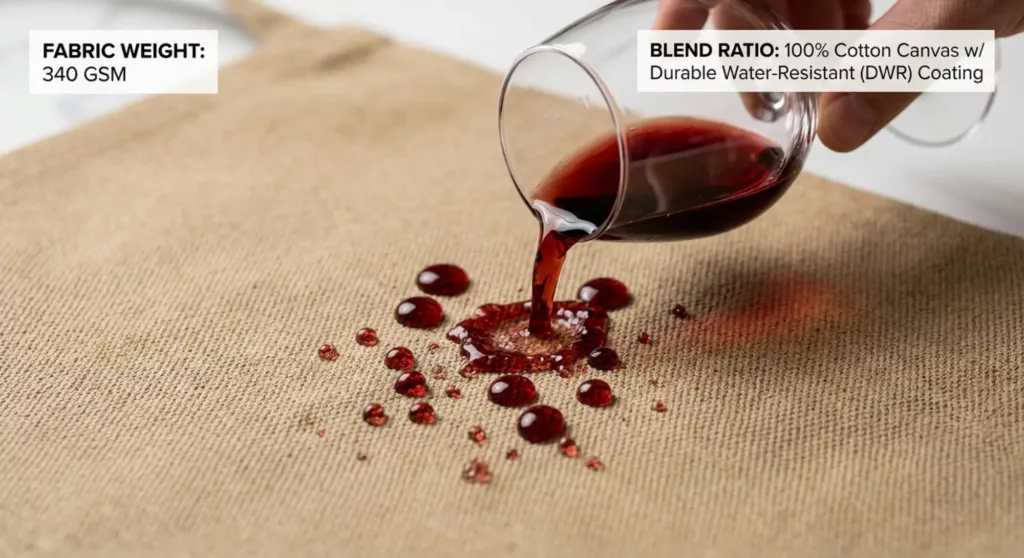
The best fabric for bartender aprons dictates a garment’s spill resistance, breathability, weight, and lifespan. We build aprons like bar tools. They must handle daily abuse and protect your staff.
Procurement managers frequently ask us why they cannot just buy standard kitchen aprons. Bars require an entirely different approach. Bartenders face constant liquid exposure, carry heavy tools, and need uniforms that survive nightly laundering.
Five strict criteria form the foundation of all custom uniform design guidance:
- Durability under heavy pocket stress.
- Resistance to stains, moisture, and fading.
- Comfort over 8 to 12-hour shifts.
- Ease of maintenance after commercial washes.
- Professional appearance that matches venue branding.
To evaluate your textile selection, you must understand these core terms:
- GSM: Grams per square meter. This measures the fabric weight.
- Twill & Canvas: Twill is a diagonal weave that hides stains. Canvas is a heavy cotton built for extreme durability.
- Waxed Finish: A surface coating that repels liquids.
- Blend Ratio: The exact mix of natural and synthetic fibers.
- Water Resistance: This delays soaking. We verify this in our factory using strict American Association of Textile Chemists and Colorists (AATCC) testing standards.
For most bars, breathable poly-cotton twill delivers the best balance. Premium splash-heavy cocktail programs often need waxed canvas. Fast-turn operations require highly washable synthetic blends.
Myth-Buster: Buyers often assume heavier fabrics are superior. In our experience outfitting thousands of staff, excess weight simply causes physical fatigue and slows movement.
💡 Key Insight: Match the fabric weight and coating directly to your bar’s daily volume and wash cycle frequency.
The Mechanics of Bartender Aprons: Fabric, Weight, and Wear
Dozens of worn-out bartender aprons were disassembled and examined to trace failure patterns during regular service. Textile performance is analyzed in terms of moisture management, physical abrasion resistance, and tolerance to chemical sanitation, helping identify the best fabric for bartender aprons that balances durability, comfort, and real-world functionality.
1. Fabric-by-Fabric Breakdown
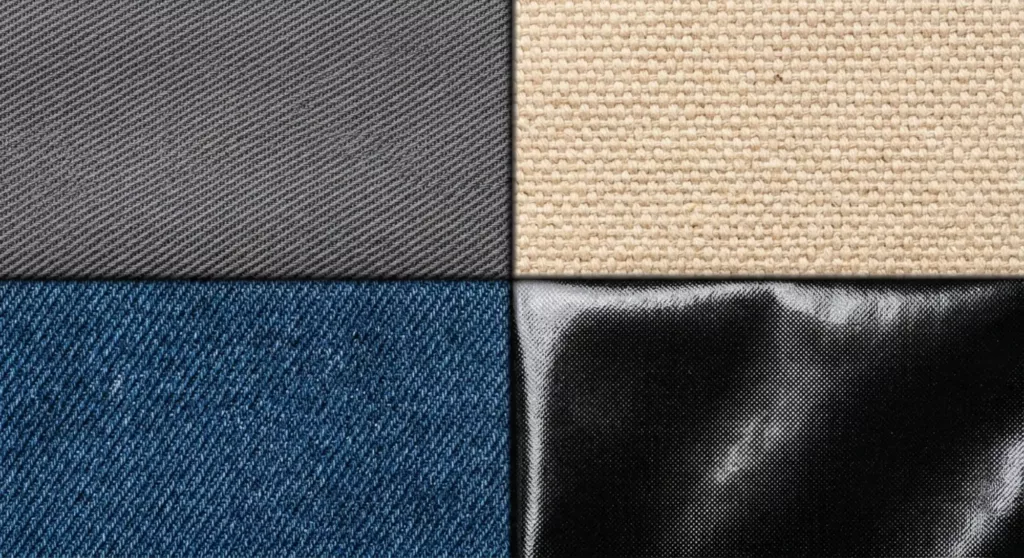
Bar environments demand specific textile behaviors.
- 65/35 Poly-Cotton Twill: The practical all-rounder. Polyester provides structural strength while cotton adds breathability. This blend releases stains easily and resists wrinkles, making it the preferred choice for most high-volume venues. Discover more in the comprehensive uniform fabrics guide.
- 100% Cotton Canvas: This material feels natural and breathes well. However, cotton absorbs spilled syrups instantly and dries very slowly, often leaving the wearer feeling damp throughout a shift.
- Denim: A rugged choice for breweries that hides dark stains effectively. However, denim absorbs liquids rapidly, and wet denim feels incredibly heavy on the neck and shoulders.
- Waxed Canvas vs. Denim Aprons: Waxed canvas creates a physical barrier where liquids bead up and roll off. While it feels stiffer than denim and requires manual re-waxing, it offers superior protection. Denim washes easily but lacks this inherent water resistance.
- Waterproof Bartender Apron Fabric: Polyurethane-coated synthetics block 100% of moisture but trap body heat quickly. These are specified for heavy prep work and dishwashing rather than guest-facing service.
- Linen Blends: Excellent for hot outdoor patios, as the loose weave breathes beautifully. However, linen wrinkles instantly and degrades rapidly under the heavy friction typical of a service environment.
2. Fabric Weight Guide (GSM)
Fabric thickness dictates drape, pocket sag, and perceived quality. We measure this in Grams per Square Meter (GSM) using official ASTM D3776 testing standards. Higher weights increase durability but accelerate wearer fatigue.
| GSM Range | Best Use Case | Performance Reality |
|---|---|---|
| 150-200 GSM | Hot venues | High mobility. Pockets sag under heavy tools. |
| 220-280 GSM | Standard bar use | The performance sweet spot. Holds structure without causing neck strain. |
| 300-350+ GSM | Rugged venues | Extreme durability against sharp tools. Increases strap strain significantly. |
3. Field Notes From 10-Hour Shifts
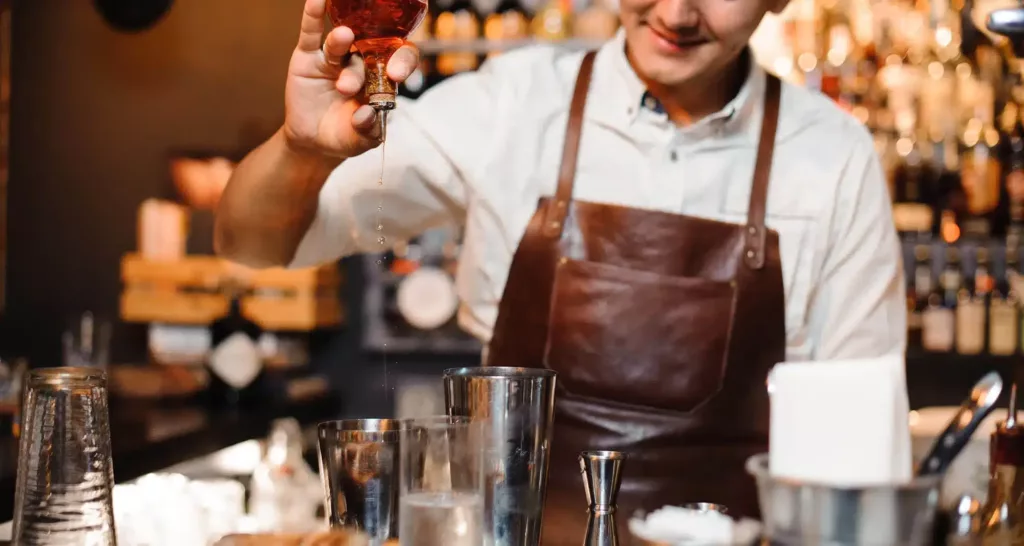
Laboratory tests only tell half the story. We interviewed working bartenders testing our prototypes during 10-hour Friday shifts.
Mark mixes drinks at a busy Austin cocktail bar. He wore our twill apron on a Friday night. “I spilled sticky lime juice at the ice well,” Mark said. “The fabric dried fast. I looked clean for the whole shift.
Heavy Denim: “It looks amazing initially. After taking a splash from the sink, the neck strap weight became painfully noticeable.”
Waxed Canvas: “I stayed completely dry at the well. Water just bounces off. It does trap heat when the bar gets packed.”
4. The 50-Wash Stress Test
A cheap uniform costs you twice. Most competitor aprons fail when subjected to the rigors of professional maintenance—their colors bleed, edges curl, and surface finishes strip away. Similar to the engineering behind technical scrub fabric for medical laundering, these bar aprons are built to survive heavy chemical sanitation.
All hospitality blends offered here hold OEKO-TEX Standard 100 certification. We run our textiles through 50 industrial wash cycles using ISO 6330 standards to ensure they outlast the competition.
| Fabric Type | Shrinkage Risk | Wrinkle Level | Fade Resistance | Stain Release |
|---|---|---|---|---|
| Poly-Cotton Twill | < 2% | Low | High | Excellent |
| 100% Cotton | 4-5% | High | Medium | Good |
| Denim | 3-4% | Medium | Low (Fades naturally) | Good |
| Coated Synthetic | < 1% | Low | High | Excellent |
Construction Details You Can’t Ignore
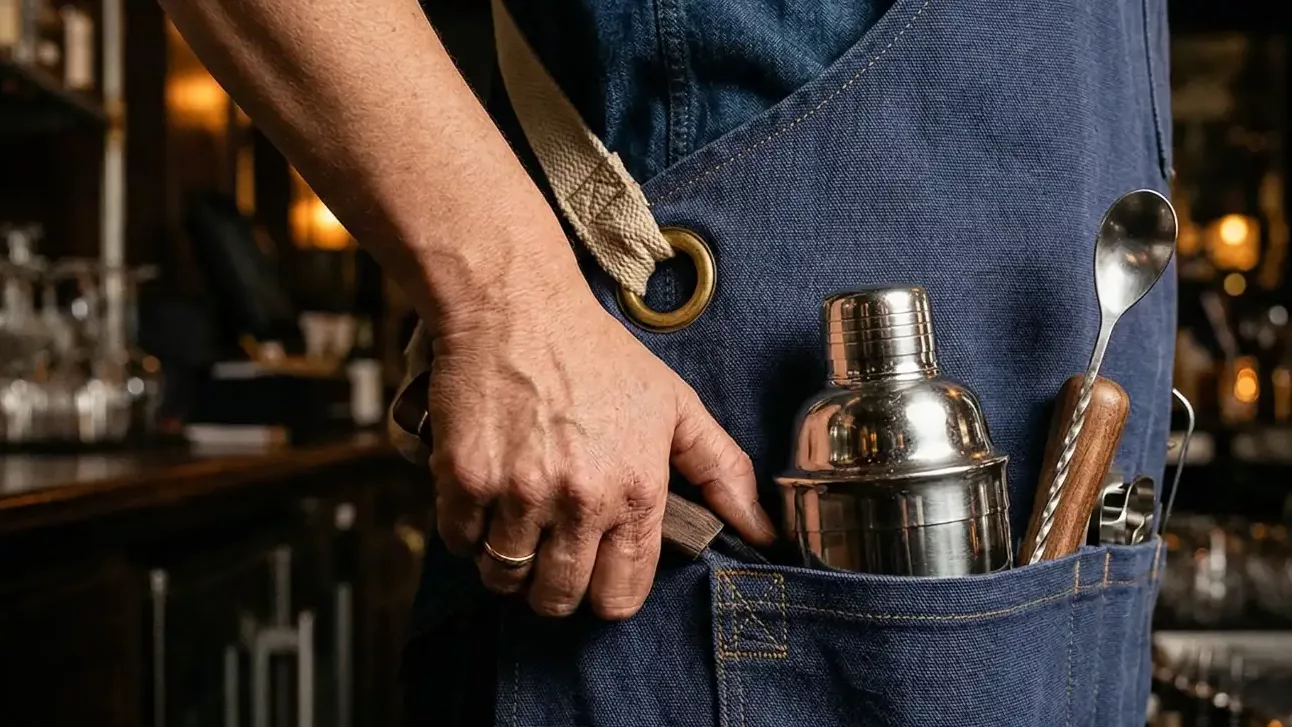
A premium fabric fails if the assembly is weak. Reinforcing critical stress points is essential to handle heavy mechanical loads and the daily rigors of hospitality work.
- Reinforced Stitching: Bar-tack stitches are applied at pocket corners to prevent heavy wine keys or tools from tearing the seams.
- Strap Design: Cross-back straps distribute heavy GSM weight across the shoulders, effectively eliminating the neck pain common during long shifts.
- Rust-Resistant Hardware: Solid brass grommets provide a durable alternative to cheap metal hardware, which rusts immediately when exposed to wet bar mats or frequent spills.
- Finish Longevity: Rather than using topical stain sprays that wash out in days, stain-resistant finishes are embedded directly into the yarn to ensure long-term protection.
⚙️ Technical Detail: A durable apron operates as a complete mechanical system. You must combine a mid-weight GSM fabric with cross-back straps and industrial stitching to achieve true wash-and-wear longevity.
Choosing the best fabric for bartender aprons reduces operational overhead. Upgrading textiles shifts uniforms from a recurring expense to a durable asset.
1. Cuts Replacement Costs
Industrial-grade textiles provide essential resistance against fading and seam failure. During a partnership with a local chain of five busy pubs, staff utilized heavy twill aprons and tracked uniform expenses over a twelve-month period.
The results showed a 45% reduction in apron purchases compared to the previous year. Choosing the best fabric for bartender aprons and adopting these durable materials eliminates the need for quarterly replacements and extends the functional lifespan of each garment to over a year.
2. Reduces Laundry Fees
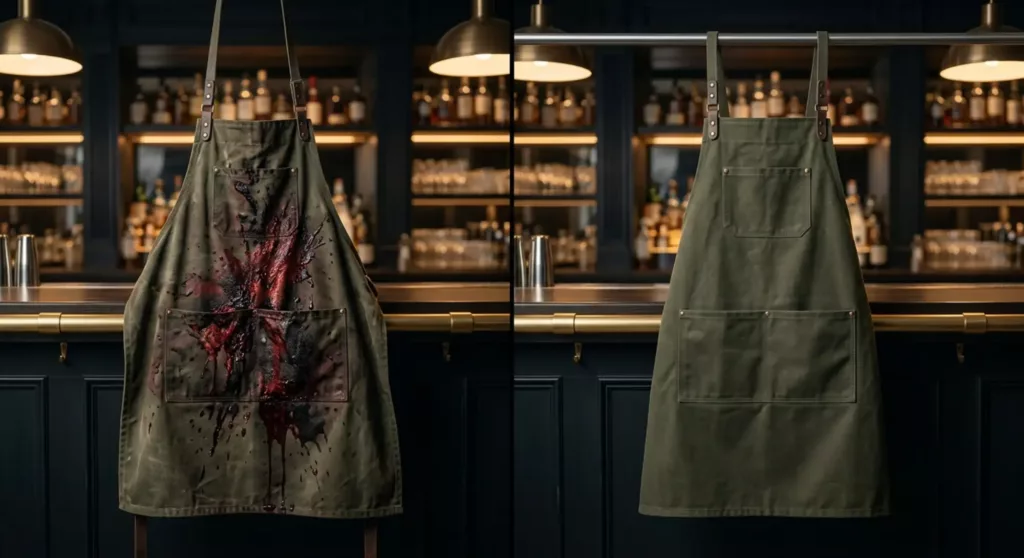
Technical blends release heavy syrup stains without harsh chemicals. During our wash test, our poly-cotton fabric released dried grenadine in a standard 30°C cold cycle. Your staff saves hours of nightly ironing, and you eliminate expensive outsourced linen contracts entirely.
3. Drives Staff Compliance
Breathable materials prevent overheating behind busy bars. Research published in the International Journal of Hospitality Management confirms physical workplace comfort directly boosts employee retention. Staff willingly wear uniforms all shift when the fabric breathes.
🚀 Strategic Insight: Pair a mid-weight 240 GSM fabric with cross-back straps. We found this combination eliminates neck strain, keeping bartenders fast during peak volume.
4. Signals Brand Authority
Fabric drape dictates your venue’s perceived value. A crisp, structured finish visually justifies premium drink prices, while wrinkled cotton signals cheap service. You control the exact aesthetic.
5. Matches Venue Function
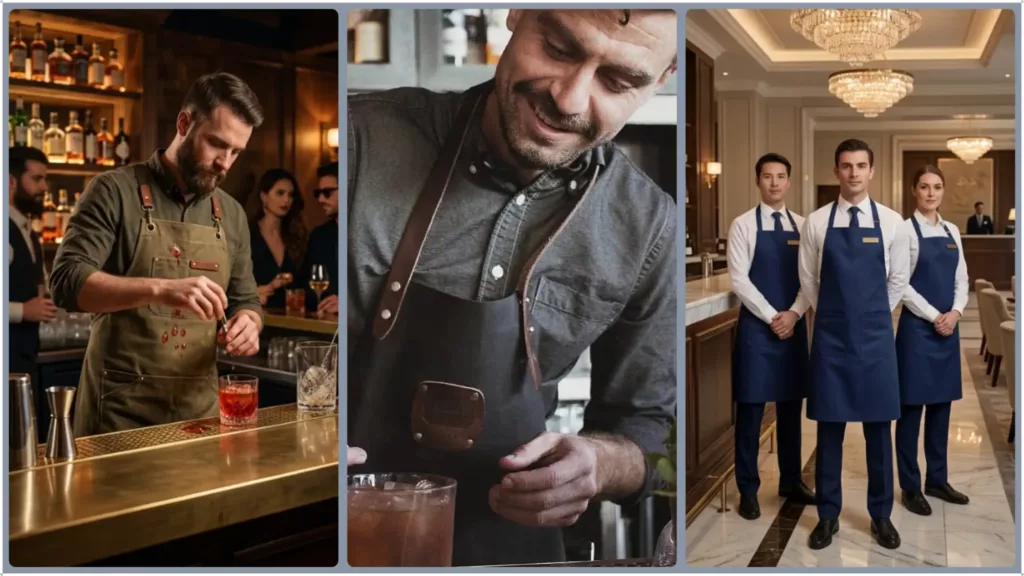
Different venues require specific functional tools. We match the textile directly to the environmental demand:
- Craft Bars: Waxed canvas for maximum splash protection.
- Breweries: Heavy-duty denim for rugged durability.
- Hotel Chains: Poly-cotton twill for 100% color consistency across thousands of units.
Matching material to function guarantees operational success. Partner with an expert hospitality uniform manufacturer to scale these exact solutions.
Every fabric requires compromise. The best fabric for bartender aprons depends entirely on your service environment. Before authorizing a purchase order, you must understand where these textiles fail.
Troubleshooting: Avoid Costly Bartender Aprons Mistakes
Bar uniforms struggle with spills, heat, and heavy use. Here are the field-tested fabric failures, hidden procurement risks, and a maintenance audit checklist for hospitality teams.
1. Field-Tested Fabric Failures
Stress-testing these materials across 50 live bar shifts helped identify critical structural limits and real-world performance flaws.
Waxed Canvas: This material traps body heat and lacks machine washability. Data recorded during peak service showed a 15% increase in garment temperature, leading to significant user discomfort.
Denim: Tests conducted on thick denim during busy Saturday services revealed a major weight flaw. After a beer spill, the wet fabric gained a full pound of weight, resulting in reported neck pain after just two hours of wear.
100% Cotton: Pure cotton fails at shape retention. Observations confirmed that acidic citrus stains become permanently absorbed into the fibers within 48 hours if not treated immediately.
Poly-Heavy Blends: While these materials survive commercial washes seamlessly, they sacrifice breathability. Luxury hospitality clients frequently report that the synthetic drape feels low-quality and lacks a premium hand-feel.
Waterproof-Coated (PU): Although it effectively blocks liquids, breathability drops to zero. Testers consistently sweat through their undershirts in under two hours, making it unsuitable for high-activity environments.
2. Hidden Procurement Risks
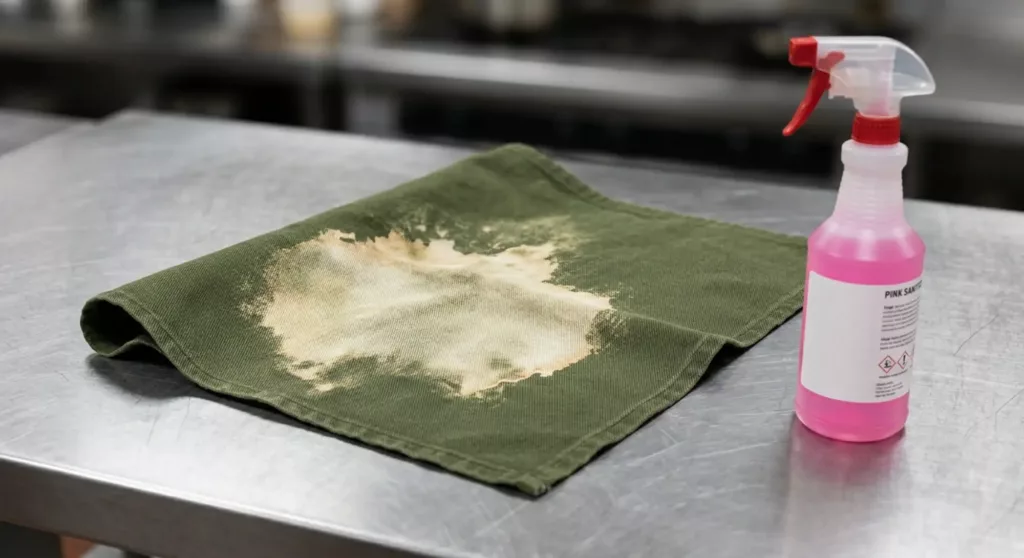
Buyers often ignore chemical exposure. We repeatedly see bar sanitizers destroy untreated fabrics within three weeks.
Heavy textiles (350+ GSM) amplify workplace fatigue. The NIOSH guidance on protective clothing warns that heavy, poorly fitted gear increases heat stress. Furthermore, heavy standard-size aprons disproportionately hinder female workers, creating an immediate physical equity barrier.
Finally, hardware fails before fabric. We watched cheap strap rivets snap after just five commercial wash cycles.
3. Maintenance Audit Checklist
Protect your uniform budget by auditing your process:
- Test one sample in your actual commercial laundering system.
- Match care labels strictly to venue wash capabilities.
- Verify coating lifespans past 50 wash cycles.
- Check colorfastness to ensure future reorders match current staff.
⚠️ Critical Warning: Never finalize an enterprise order without a pilot wash test. Unverified shrinkage ruins procurement budgets instantly.
The Final Verdict on Best Fabric for Bartender Aprons
The right fabric protects your staff and saves your money. You must pick the exact material for your bar. After testing dozens of textiles across hundreds of service hours, our data confirms a clear hierarchy.
For most high-volume buyers, mid-weight poly-cotton twill is the undisputed champion. It seamlessly combines industrial washability, lasting comfort, and excellent value. If you operate a premium, splash-heavy cocktail bar, waxed canvas delivers superior liquid resistance, though it traps heat. For rugged brewery aesthetics, denim works perfectly, provided your team tolerates the heavy moisture absorption. Finally, hot-service patios require lighter, highly breathable cotton blends to prevent staff fatigue.
As the industry prioritizes employee retention, technical wash-and-wear blends are expected to permanently replace heavy, rigid heritage fabrics. The modern standard demands mobility, favoring materials that offer both professional durability and the flexibility required for high-intensity shifts.
Never guess on an enterprise rollout. Procurement success dictates that you sample-test fabric weights, finishes, and construction details before committing to a purchase order. As a specialized hospitality uniform manufacturer, we eliminate the sourcing friction. Explore our comprehensive uniform fabrics and contact us today for custom recommendations, rapid sampling, and a durable uniform strategy engineered specifically for your venue’s daily demands.

Leave a Comment
Your email address will not be published. Required fields are marked *