Table of Contents
When reviewing global uniform tenders, I see procurement teams make the same expensive mistake. They buy heavy, over-specced boots that exhaust workers and drain budgets. Many buyers choose heavy boots for dry indoor warehouses. I tell my clients to stop this bad practice. Your warehouse team walks ten miles a day. They need light shoes, not heavy waterproof boots.
I will explain the exact types of safety footwear your team actually needs. We organize these choices by specific workplace hazards. Then, we decode complex spec sheets using official EN ISO 20345 standards alongside ASTM and Singapore compliance regulations.
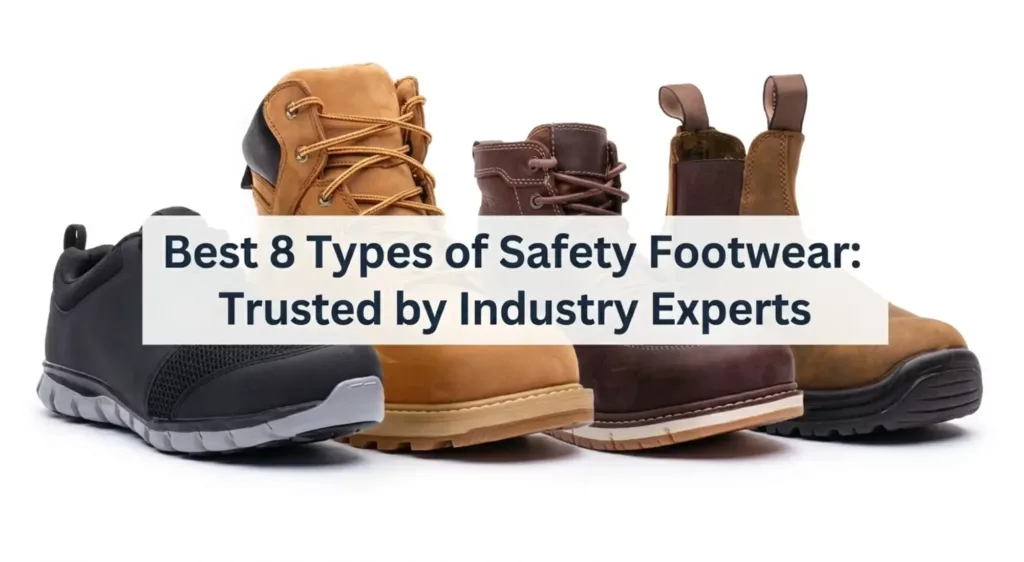
8 Types of Safety Footwear
Selecting the right types of safety footwear is critical for workplace compliance and injury prevention. Not all safety shoes are created equal—each design targets specific hazards, from impact and compression to electrical risk and slips.
This breakdown organizates 8 core categories by protection type, ideal use cases, key features, and regulatory compliance standards to help you match footwear to the job.
| Type | Core Protection | Ideal Use Case | Key Feature | Compliance |
|---|---|---|---|---|
| Safety Toe Footwear (Steel/Composite/Alloy) | Impact & compression resistance | General industrial work | Reinforced toe cap | ASTM F2413 |
| Metatarsal Guard Shoes/Boots | Metatarsal impact defense | Heavy machinery, falling objects | Built-in metatarsal shield | High-impact sites |
| Electrical Hazard (EH) Rated Footwear | Electric shock protection | Live electrical work | Non-conductive sole | OSHA electrical safety |
| ESD/Static Dissipative Safety Shoes | Static discharge control | Electronics, cleanrooms | Static-dissipative sole | ESD-sensitive environments |
| Slip-Resistant Work Shoes | Slip & fall prevention | Wet, oily, slippery floors | High-traction outsole | General workplace safety |
| Puncture-Resistant Safety Footwear | Puncture & sharp object defense | Construction, debris-heavy sites | Puncture-resistant midsole | ASTM F2413 puncture standard |
| Waterproof Industrial Footwear | Water & liquid resistance | Wet, outdoor, cold environments | Waterproof membrane | Wet/hazardous work sites |
| Heat-Resistant/Foundry Safety Boots | Heat & molten metal protection | Foundry, welding, hot work | Heat-resistant sole & upper | High-heat industrial tasks |
1. Safety Toe Footwear (Steel, Composite, and Alloy)
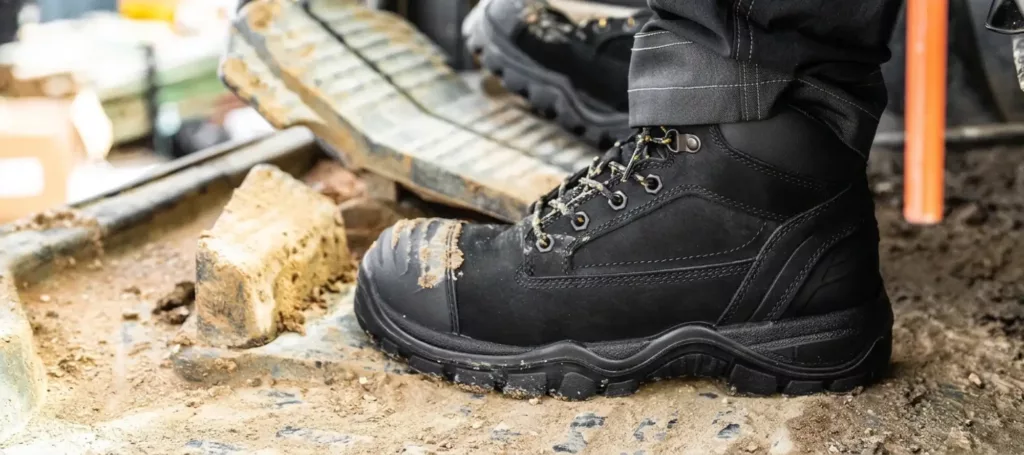
Workers hate heavy boots. Strict laws demand protection against crush and impact hazards. I advise procurement teams to choose these types of safety footwear by hazard first, then evaluate workflow friction.
- Steel: Delivers maximum protection with a thin profile. The downside is heavy weight and poor temperature insulation.
- Composite: Uses Kevlar or carbon fiber. These caps feel lighter and insulate feet against extreme temperatures.
- Alloy: Provides the ideal middle ground. These caps weigh less than steel but maintain a thinner profile than composite.
🛡️ The Security Checkpoint Reality: When we supply airport personnel, we exclusively spec composite toes. Steel boots trigger metal detectors and cause massive daily checkpoint delays. Composite caps eliminate this workflow friction entirely.
⚡ Power Move: Check for the active ASTM F2413 tag on the boot tongue. This label proves the boot passed strict drop tests. Cheap boots break and crush toes. Always ask the vendor for the official lab report.
2. Metatarsal Guard Shoes and Boots
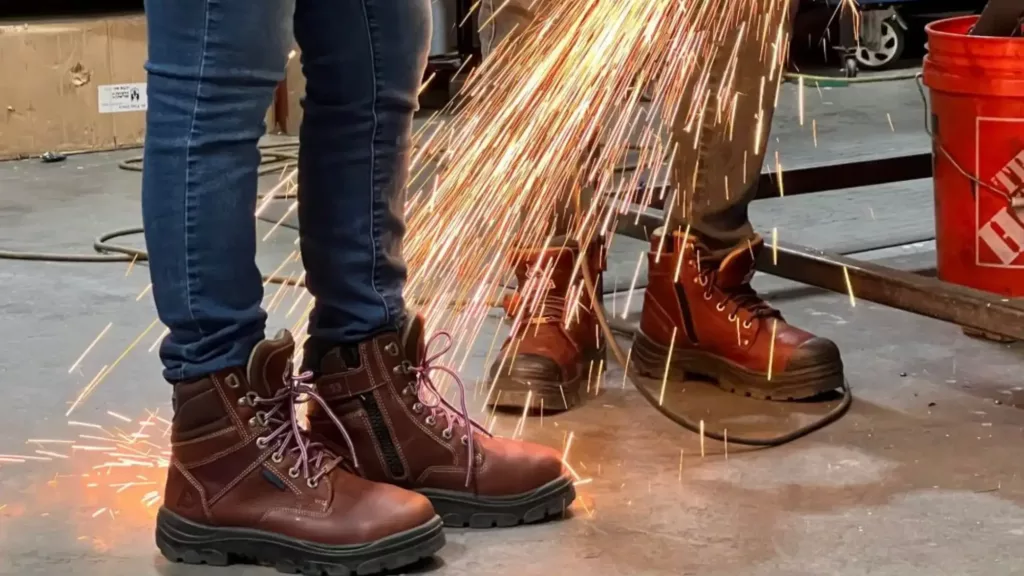
Many buyers assume a basic safety toe protects against high-impact hazards. It fails. A standard toe cap only shields the front.
Metatarsal guard footwear provides top-of-foot protection against rolling objects and heavy dropped loads. You must require them when risks extend beyond the toes. We see strict OSHA compliance mandates for these types of safety footwear in steel fabrication, mining, and warehousing.
Real-World Use Case:
- The Fabrication Line: I walked the floor at a major steel plant last month. One worker told me that dropped pipes hit his feet daily. A basic toe cap fails to stop these heavy blows. You need internal met guards for this dangerous work. When specifying gear, balance coverage with comfort. External guards deliver maximum impact coverage but snag on ladders. Internal guards improve walking comfort but offer a smaller protection zone.
🛡️ Our Verdict: Specify internal met guards for active warehouse workers. Reserve external guards for heavy foundry work.
3. Electrical Hazard (EH) Rated Footwear
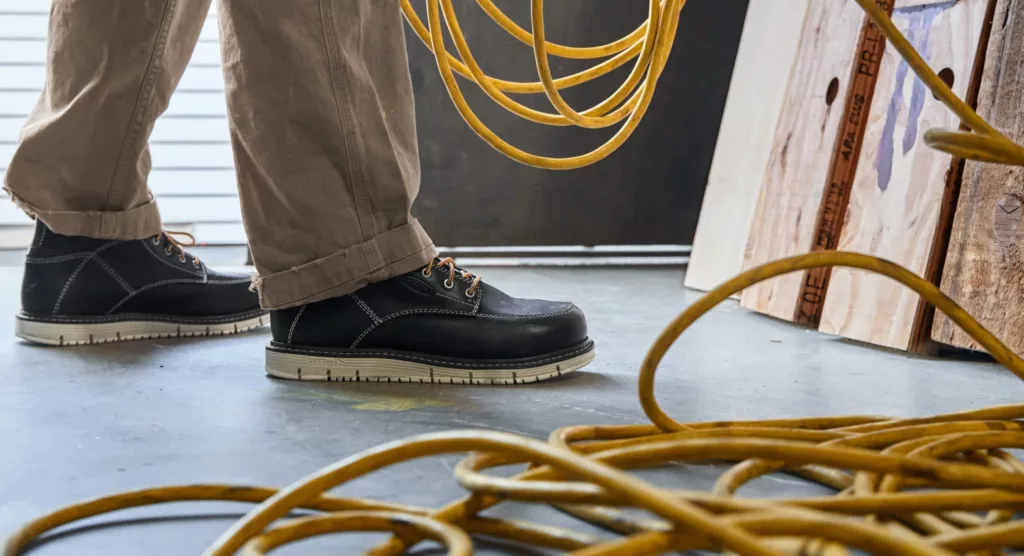
When sourcing types of safety footwear, buyers often mistake Electrical Hazard (EH) ratings for a shockproof shield. EH boots only protect you when they stay completely dry. Water conducts electricity very well. If your worker steps in a puddle, the EH rating means nothing. You must buy dielectric overshoes for wet areas.
Water destroys this rating instantly. Standard EH boots fail in wet environments. Specify specialized dielectric overshoes instead. These act as a primary high-voltage barrier.
Real-World Use Case:
- Why facility electricians choose EH-rated boots for switchgear rooms but still cannot treat them as all-weather electrical PPE. When I outfit utility teams, they prefer EH boots for indoor switchboards. I always enforce one strict rule. Never confuse EH protection with waterproofing or Electrostatic Discharge (ESD) ratings.
🛡️ Our Verdict: We audit safety programs globally. The biggest compliance failure I see is workers wearing EH boots in puddles. Treat EH footwear strictly as dry-climate backup gear.
4. ESD / Static Dissipative Safety Shoes
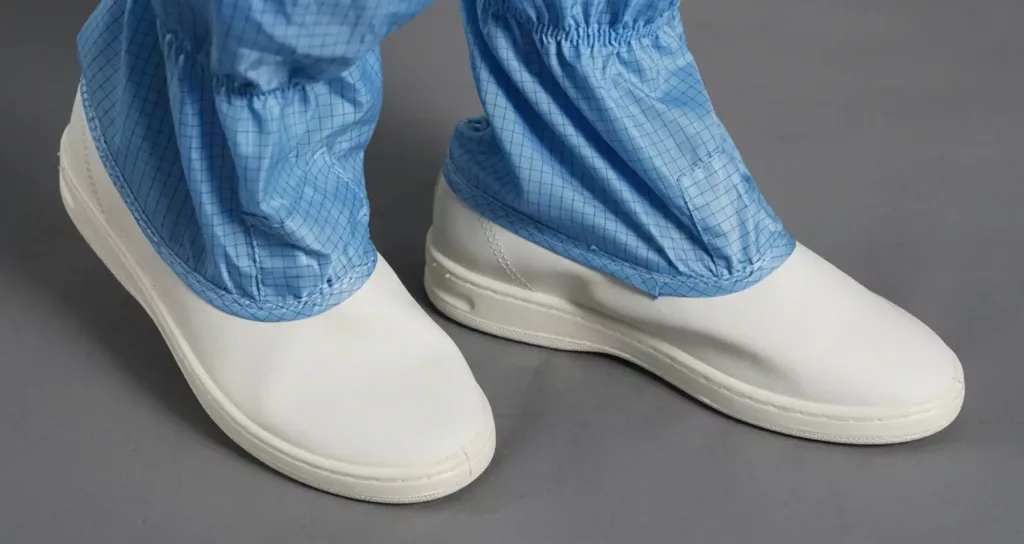
I see buyers mix up Electrical Hazard (EH) and Electrostatic Discharge (ESD) ratings constantly. This compliance error ruins sensitive products.
EH boots protect workers from high-voltage shocks. In contrast, ESD shoes protect the product from the worker. These shoes slowly release static buildup from your body into the ground to meet ASTM F2413 static dissipative standards. You need this specific category for electronics assembly, clean manufacturing, and flammable vapor environments.
Real-World Use Case:
- Why electronics and semiconductor floors specify ESD shoes even when electrical hazard boots would be the wrong choice. When I audit microchip plants, clients sometimes request EH boots. I always stop them.
An EH boot actually traps static electricity on the worker. One touch from a static-charged finger can fry a delicate processor. We mandate strict ESD footwear to ground the staff and comply with ANSI/ESD S20.20 control programs.
🛡️ Our Verdict: If your primary hazard involves static control, do not default to EH boots. Specify verified static dissipative safety shoes to protect your production line.
5. Slip-Resistant Work Shoes
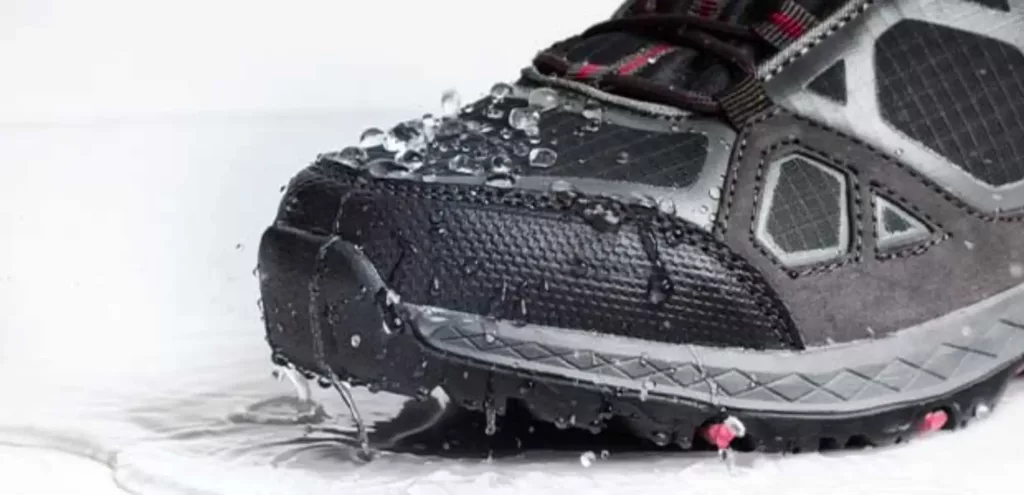
Buyers often assume heavier boots mean better safety. Our data proves this false. In warehousing and healthcare, slips cause more injuries than impacts. A lightweight, slip-resistant work shoe prevents worker fatigue while delivering crucial grip.
Never accept slip resistance as a vague marketing claim. Treat it as a testable performance metric. Always demand ASTM F3445 certification to verify wet and oily traction performance. Remember that specific rubber compounds and tread patterns dictate how long outsoles survive harsh floors.
Real-World Use Case:
- The Traction Priority: Why do warehouse pickers and food-plant staff need slip-resistant shoes more urgently than a tall safety boot? When I audit food facilities, the primary hazard is grease-covered tile. Heavy boots exhaust staff walking concrete all shift. Low-profile shoes with fluid-channeling treads stop falls immediately.
🛡️ Our Verdict: Match the tread compound to your floor contaminants to prevent rapid outsole degradation.
6. Puncture-Resistant Safety Footwear
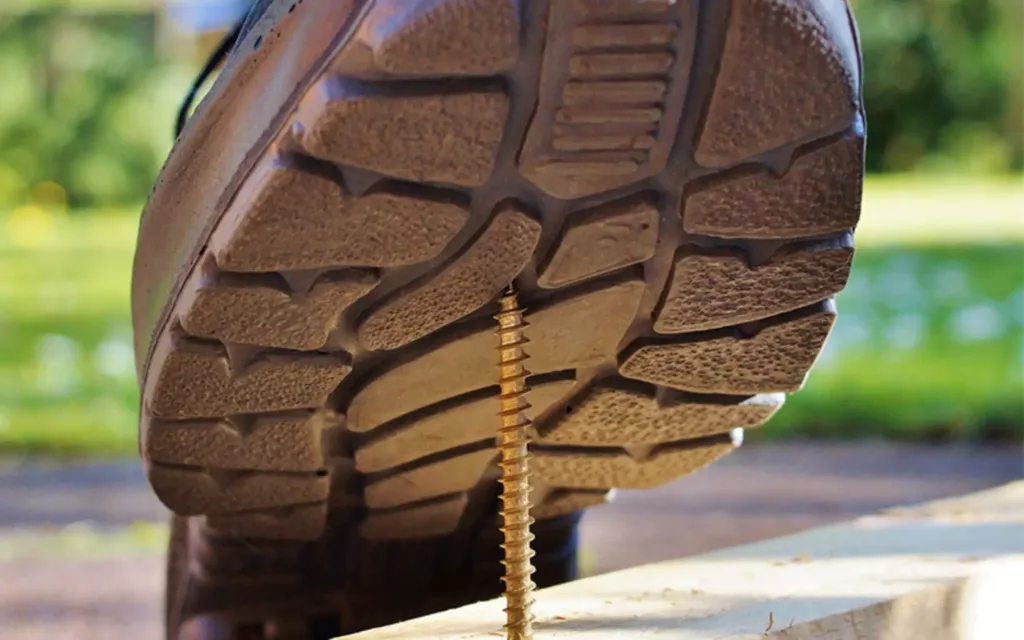
When evaluating types of safety footwear, safety toes mean nothing if a rusty nail pierces the sole. Puncture-resistant footwear shields the bottom of the foot. Under ASTM F2413 standards, these midsoles block sharp underfoot hazards completely.
During workwear rollouts for demolition teams, I highlight the trade-off between midsole materials. Steel plates offer absolute puncture defense. But they feel stiff, add weight, and transfer cold fast. Woven non-metallic midsoles provide flexible, edge-to-edge coverage. They bend naturally and insulate feet against harsh weather.
Real-World Use Case:
- The Underfoot Threat: Roofing, demolition, and recycling crews must inspect the specific midsole rating, not just the toe cap. We constantly see buyers assume a standard safety boot prevents bottom-up punctures. It does not.
🛡️ Our Verdict: Audit your exact floor hazards under OSHA PPE guidelines. Puncture resistance is mandatory wherever your crew walks over loose nails or scrap metal.
7. Waterproof Industrial Footwear
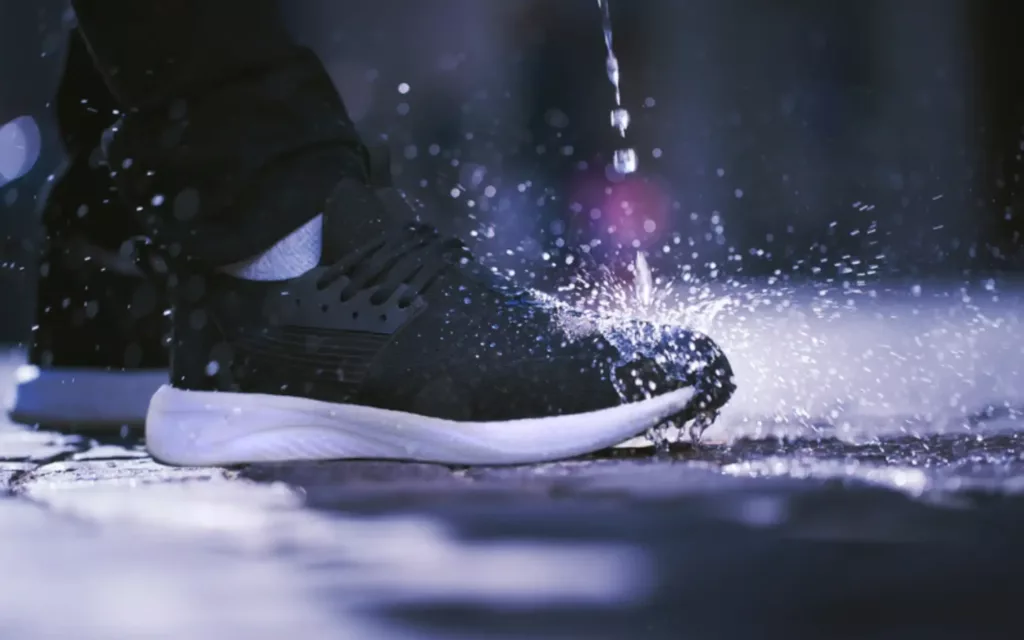
When evaluating different types of safety footwear, I see buyers drain budgets on waterproof boots when staff only need splash protection. Treat waterproofing as a strict operational choice.
Waterproof boots use sealed inner membranes to block heavy rain and mud. The downside is they trap sweat and increase fatigue. Water-resistant shoes meet EN ISO 20345 standards to repel light spills while letting feet breathe. Weigh moisture protection against daily comfort.
Reserve full waterproofing for outdoor utilities, construction, agriculture, cold wet work, and active washdown zones.
Real-World Use Case:
- Why utility crews in rain and mud need waterproof footwear, while indoor teams need splash resistance? When we outfitted telecom crews in flooded trenches, full waterproofing was non-negotiable. Conversely, indoor warehouse teams facing occasional spills just need treated water-resistant leather.
🛡️ Our Verdict: Pair full waterproofing with slip resistance and thermal insulation only if site conditions demand it. Otherwise, you sacrifice breathability and exhaust your workers.
8. Heat-Resistant and Foundry Safety Boots
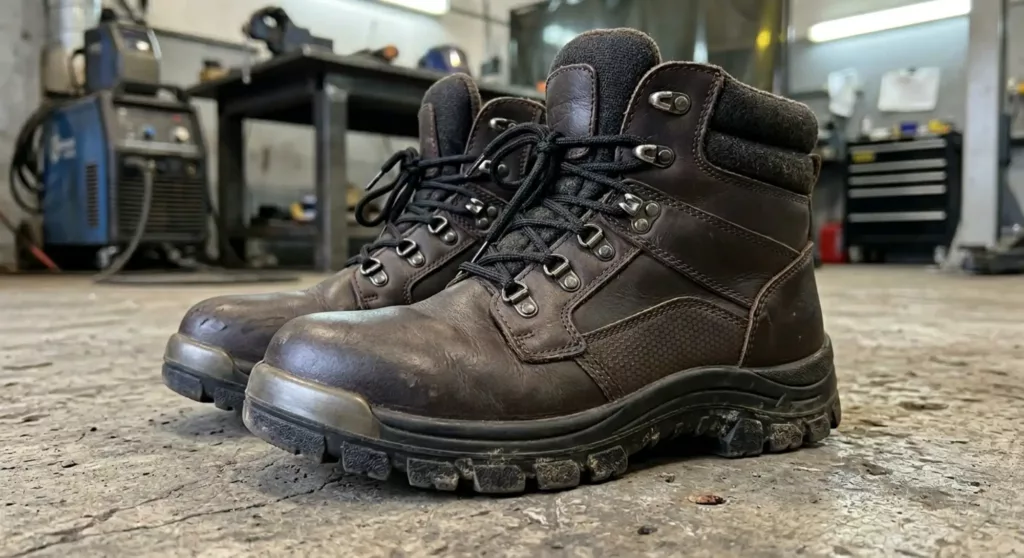
Buyers destroy budgets by sending standard footwear onto hot asphalt. Standard rubber melts. You specifically need certified heat resistant safety boots for paving, foundry floors, and molten-metal environments.
Do not confuse general outsole heat resistance with true foundry boots. Basic soles merely survive hot floors. True foundry footwear requires quick-release closures and protected eyelets. Workers must instantly kick the boot off if molten material breaches the collar.
Real-World Use Case:
- Why foundry and asphalt crews need more than a standard safety boot with a tough toe? When I audit smelting floors, I always review the spec sheets. Buyers often assume heavy-duty boots survive extreme heat, but they fail. You must verify ISO 20345 HRO standards for outsole material performance. Nitrile rubber handles intense temperatures, while standard polyurethane melts instantly.
🛡️ Our Verdict: Verify temperature limits directly on the spec sheet. Specify quick-release boots for metal splash zones.
How to Decode Safety Footwear Ratings and Verify Compliance?
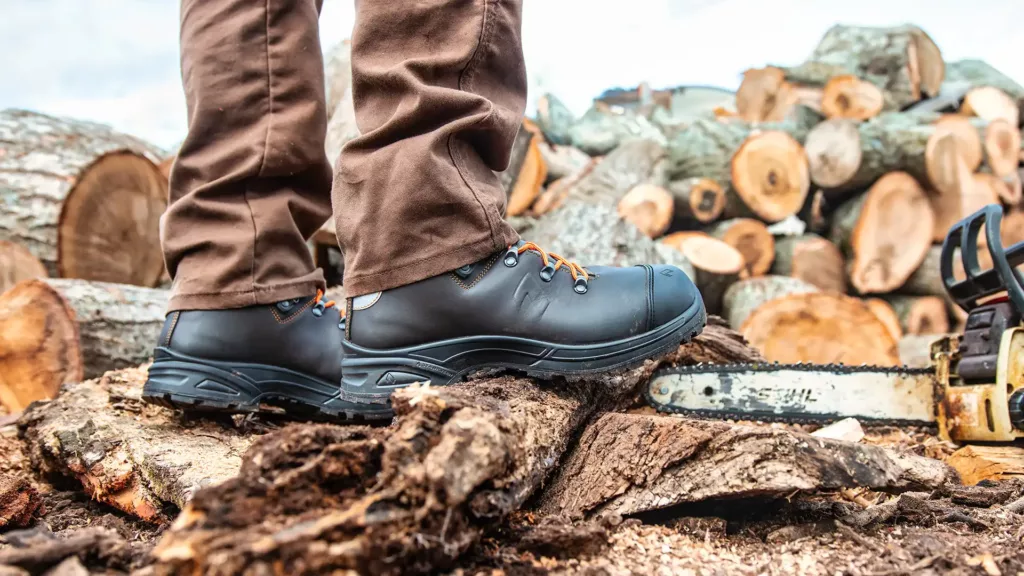
I review hundreds of factory spec sheets every year. In my experience, suppliers often hide cheap materials behind confusing codes. You cannot rely on a simple sales pitch. You must read the actual tongue label to verify the exact types of safety footwear you are buying.
Step 1: Decode the Safety Rating
European and US testing boards use different letters for identical hazards. Use this table to translate official buyer-facing codes into plain English. Cross-reference these codes with the official ISO 20345 guidelines to guarantee accuracy.
| EN ISO 20345 Code | Plain English Meaning | US ASTM Equivalent |
|---|---|---|
| S1 | Basic safety toe. Absorbs heel impact. Dissipates static. Dry use only. | I/75, C/75, SD/ESD |
| S2 | All S1 features. Adds a water-resistant upper. Good for damp environments. | I/75, C/75, WP |
| S3 | All S2 features. Adds a puncture-resistant midsole and aggressive tread. | I/75, C/75, PR |
| WR / HRO | Supplemental markings. Fully waterproof (WR) or Heat Resistant Outsole (HRO). | EH, Mt |
Step 2: Cross-Check Singapore MOM Standards
Singapore buyers face strict local rules. The Ministry of Manpower (MOM) expects clear documentation. Do not just look for a generic ASTM logo. Ask suppliers to provide their SS 513 certification context. This document proves the gear meets specific local safety laws. Find a new manufacturing partner immediately if a supplier hesitates.
Step 3: Run the Supplier Verification Playbook
Run this exact checklist before you place a bulk order.
- Request the lab report: Demand the original third-party testing certificate.
- Read the tongue label: Check that the printed codes match the exact model number on the lab report.
- Verify the date: Reject any certificate older than five years. Test reports expire.
Our Experience:
- The Sampling Trap: I ran a massive factory audit last year. I caught a vendor using premium rubber on their samples and cheap plastics on the bulk run. Always slice one sample boot in half before you approve full production. It sounds extreme. However, it prevents huge product failures.
Step 4: Secure Your Complete Gear Program
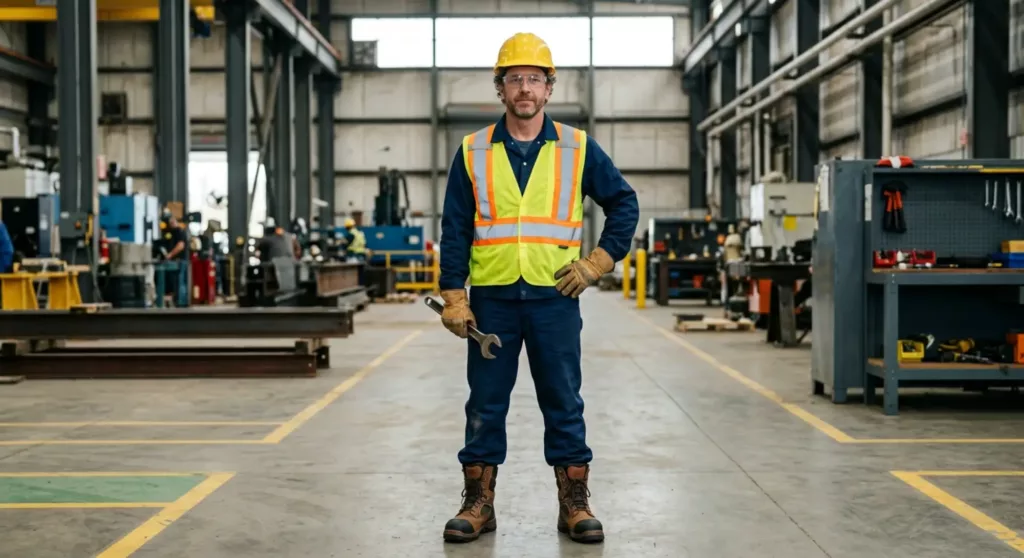
Building a safe workforce goes beyond boots. Apply these same strict checks to your entire equipment list. Partner with a reliable safety vest manufacturer to protect your staff on busy sites. Review your total safety uniform compliance protocols yearly.
Pay close attention to the fabric for safety vest production to prevent worker heat stress. Match your specific site hazards to the right eye protection.
Do you need help navigating global regulations? Visit our contact us page for bulk safety workwear and footwear sourcing support.
Frequently Asked Questions About Safety Footwear
1. What is the difference between steel toe and composite toe work boots?
Steel toes provide maximum crush protection but add significant weight. They also trigger metal detectors. Composite toes use carbon fiber or Kevlar. They weigh less and do not conduct temperature or electricity.
In our tests, airport clients cut security delays completely by switching to ASTM F2413 certified composite boots.
2. Is an Electrical Hazard (EH) rating the same as ESD?
No. EH boots block high voltage to prevent electrocution. ESD shoes ground the worker to protect sensitive equipment from static sparks. I constantly see buyers mix these up.
If you manage an electronics assembly line, EH boots will trap static and fry your microchips. You must buy ANSI/ESD S20.20 compliant footwear instead.
3. Does an S3 safety rating mean the boot is completely waterproof?
No. An S3 rating only means the boot features a water resistant upper. It repels light rain and splashes well. However, it will flood if your workers submerge it. For flooded trenches, I tell clients to source boots with an explicit WR waterproof rating under EN ISO 20345 guidelines.
4. When do workers need metatarsal protection instead of a standard safety toe?
You need metatarsal guards when heavy loose objects might roll onto the top of the foot. Standard toe caps only protect the front tips of the toes.
I always enforce strict OSHA standard 1910.136 metatarsal rules for clients in steel fabrication, heavy mining, and busy warehousing.
5. How do I verify a supplier’s safety certification claims?
Always demand the original third party lab report. Do not trust a basic vendor website logo. Check that the testing dates are current. You must ensure the printed tongue label matches the lab document perfectly.
Our Experience: I rejected three vendors last year because their compliance documents expired. Authentic factories welcome your scrutiny. Always verify the exact safety model numbers before placing a bulk order.
Stop guessing with your compliance budget. Your team deserves reliable protection. If you need help sourcing verified safety footwear, reach out via our contact us page to discuss your bulk procurement needs today.

Leave a Comment
Your email address will not be published. Required fields are marked *