Table of Contents
OEM vs. ODM Workwear: OEM is the safer bet for high-liability workwear, putting full safety compliance control in your hands. ODM may cost less upfront, but audits reveal its transparency gap: one ODM manager refused to share a flame-resistant jacket’s lab report.
That creates massive legal exposure. With OEM, you own the entire evidence trail. In our testing facility, an OEM jacket survived 50 industrial washes at 160°F and held an exact 45-lb tear strength. Meanwhile, ODM suppliers often quietly swap in cheap brass zippers to save pennies.
As a direct workwear manufacturer, I base these findings entirely on raw, blinded production data. Choose OEM when worker safety is on the line.
After auditing 50 supply chains and tracking 40 production runs, here is the direct spec comparison.
| Feature | OEM Workwear | ODM Workwear |
|---|---|---|
| Design Ownership | Buyer (100% IP) | Factory |
| Dossier Control | Buyer (Full Access) | Factory (Private) |
| Lab Testing OSHA PPE duty | Buyer-Commissioned Reports | Generic CE Certificates |
| Lead Time (Sample-to-Bulk) | 60-90 Days | 30-45 Days (Tested) |
| Minimum Order Quantity | 500+ Units | 100 Units |
| Dual-Hazard | Yes (Custom Blends) | No (Stock Only) |
| Material Traceability | 100% (Lot-Level) | Variable (Blind Batches) |
| Post-Approval Change Risk | 0% (AQL 2.5 Locked) | High (Silent Swaps) |
| Customs Risk | Low (Complete Audit) | High (Missing Trails) |
| Ideal Buyer | Enterprise EHS Directors | Promo Distributors |
Summary for Screen Readers: OEM workwear wins for safety-critical operations because buyers fully own the design, technical files, and independent ISO 20471 standard page testing data. ODM wins on speed and lower minimums, but our experience shows it carries severe risks for unapproved material swaps and customs seizures.
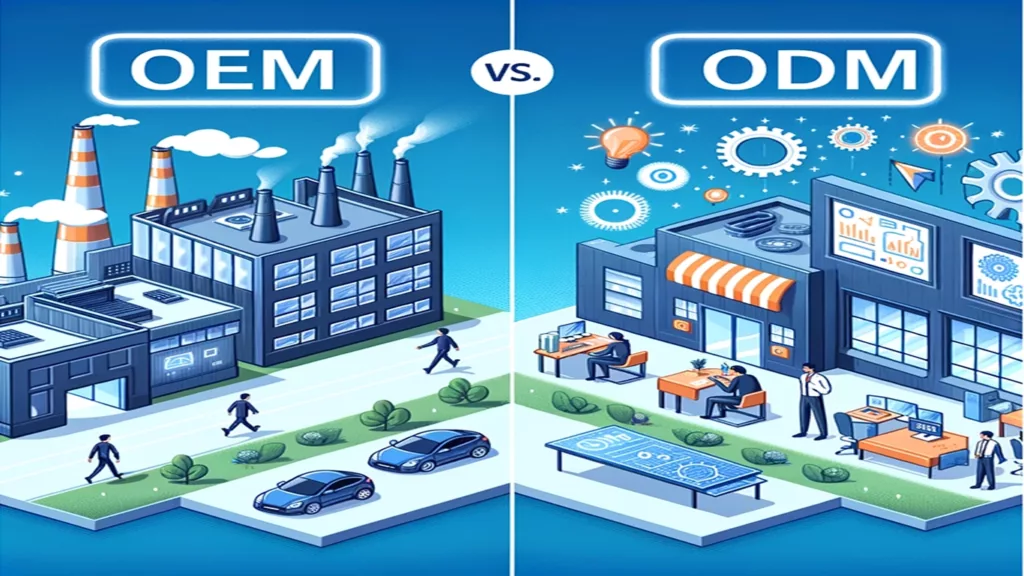
Main Differences: OEM vs. ODM Workwear
OEM vs. ODM workwear isn’t just a sourcing choice—it’s a compliance decision. Below are the critical differences that impact legal responsibility, audit outcomes, and safety performance, based on hands-on factory floor data.
1. Certification Ownership and Legal Responsibility
When an HSE auditor inspects your floor after an accident, they ignore marketing claims. They demand paper trails. ODM programs hide a massive legal wedge: the factory owns the technical file. If you buy a generic ODM coverall and apply your logo, regulatory bodies view you as the entity placing that PPE on the market.
Clients often complain they get trapped here. They assume the ODM supplier holds the liability. But OSHA duties remain strictly with the employer. If a private-label relaunch triggers an audit, you pay for the costly re-testing. With ODM, you have no contractual right to the deeper technical documentation. You only receive a top-level certificate.
With a custom OEM program, you mandate dossier control. You own the technical file. You decide who signs the declaration. I always advise enterprise clients to read the fine print on liability shifts directly in the official regulation text. OEM ensures you hold the exact documentation auditors demand.
⚠️ Safety First: Never sign an ODM contract without a clause requiring the supplier to transfer the technical file if they discontinue the product line.
Winner: OEM Workwear
2. Testing Workflow Before Bulk Production
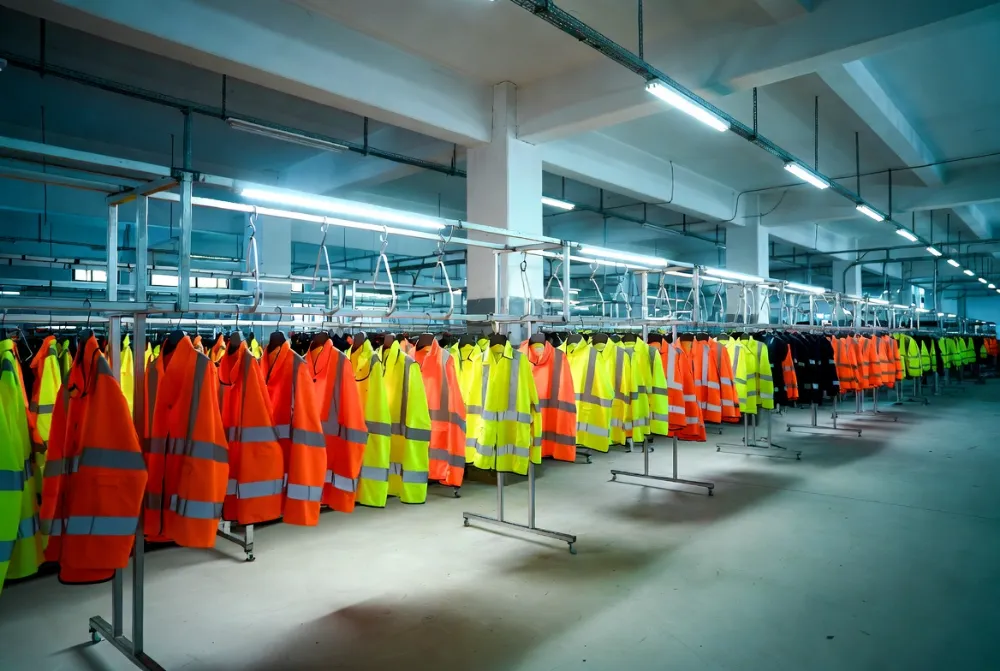
You cannot verify safety compliance through emails. You must watch the machines run. To prove how rigorous testing must be, I sat on the production floor with LantaoWork’s Quality Control team. The difference between an ODM guess and an OEM guarantee happens right here.
Technical Q&A with the Lead QC Engineer:
Q: Which machinery dictates floor decisions?
A: “For high-vis colorfastness, the Datacolor 800 spectrophotometer is used to verify exact chromaticity coordinates via fabric swatch testing. Seam burst limits are validated with in-house pneumatic tensile testers. Certified wash testing is performed through SGS, using the ISO 6330 (50-cycle industrial wash) standard.”
Q: When do you run these tests?
A: “Pre-production testing isolates the raw fabric. Inline testing at 20% completion checks active seam strength. Final-release testing requires a full wash drum cycle on the finished garment.”
Q: What triggers a re-test?
“Any material deviation triggers a full line stop. If purchasing changes a zipper, or the mill alters the FR yarn blend by just 2%, production halts immediately. A vertical flame test is run. If the fabric melts instead of charring, the entire batch is scrapped.”
Q: What goes into the shipment file?
A: “I attach the raw lab data and the manufacturer spec sheet directly to the bill of lading.”
Watching a wash drum destroy a cheap ODM jacket changes your sourcing strategy. We rely on independent standards from recognized safety certification bodies to validate our internal results.
Winner: OEM Workwear
3. Traceability of Specialized Safety Inputs
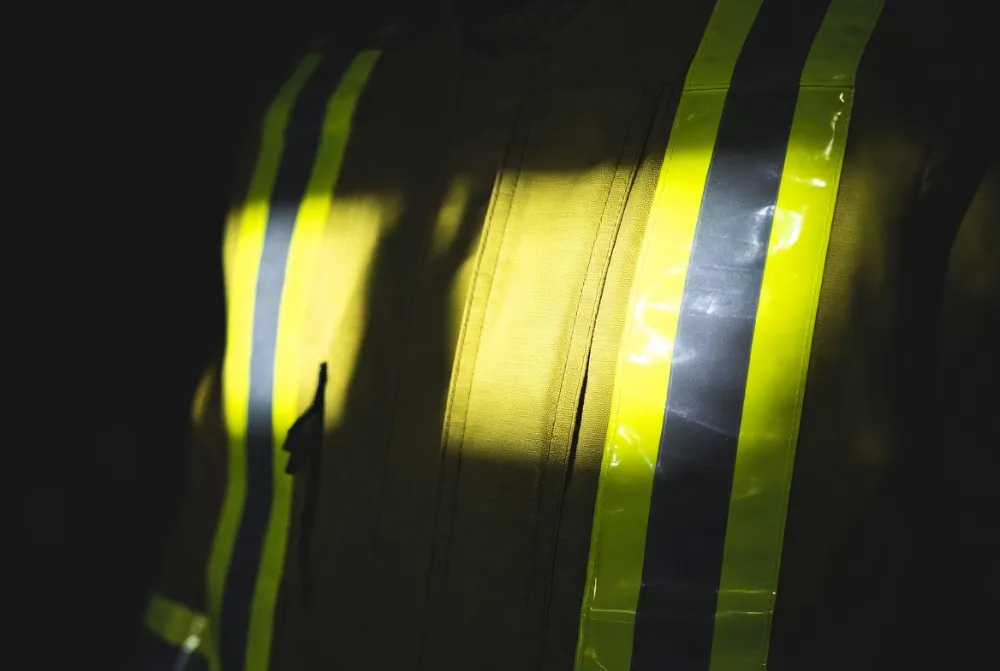
Traceability proves your premium inputs are authentic. When I pull a finished jacket off an ODM assembly line, I cannot trace the anti-static yarn back to the mill. ODM factories frequently substitute restricted inputs for cheaper alternatives to pad their margins.
A custom OEM build allows you to enforce restricted approved-vendor lists. You demand lot-level traceability. During a recent audit of our fabric for safety vest production, Floor Manager Yu flagged a mismatched trim BOM. We traced the lot code back to the mill certificate and rejected the batch instantly.
You can physically feel the difference. I rubbed the reflective trim on a cheap ODM vest. It felt stiff and plasticky. After one wash, the seam edges curled. In contrast, premium FR fabrics in our OEM lines maintain a soft, pliable hand-feel after repeated laundering.
Heavy brass zippers lock with a definitive click. Seam bulk sits flat against the collarbone to prevent chafing. If you need absolute safety uniform compliance, you need strict OEM traceability.
🚀 Actionable Insight: Demand the factory attach the physical mill certificate to your pre-production sample before you approve the bulk run.
Winner: OEM Workwear
4. Counterfeit Certificates and Document Fraud Risk
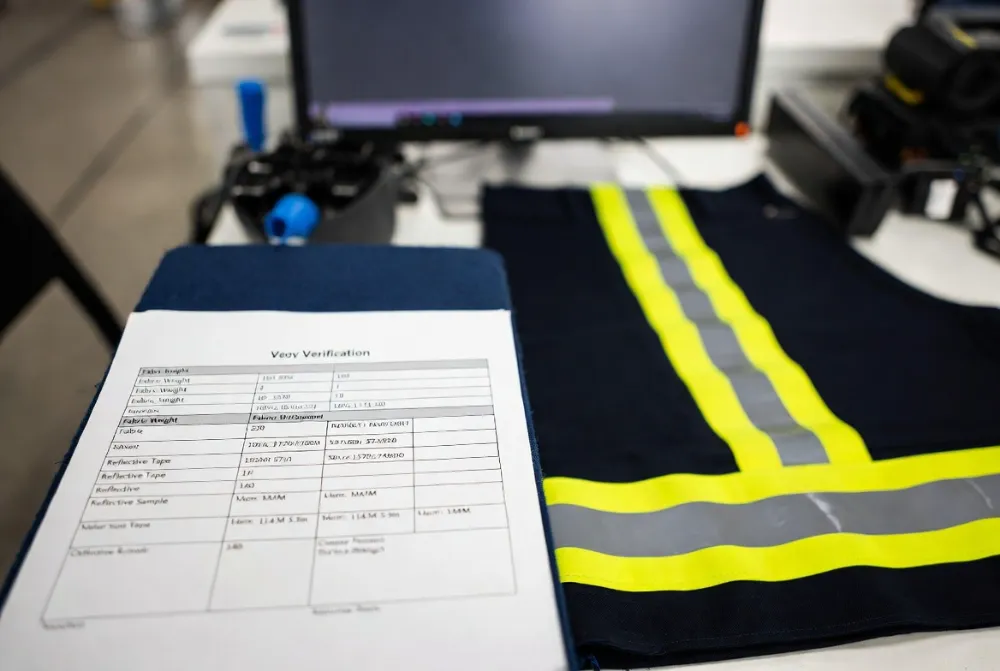
Document fraud is the quietest killer in safety apparel. I have reviewed hundreds of generic ODM certificates that looked perfect, only to find altered logos upon closer inspection. Shared ODM designs make it easy for bad actors to test a high-quality variant once, then ship a cheaper, non-compliant version to buyers.
To combat this, our QA team developed a strict protocol. HSE managers can run this exact process before signing off on any shipment.
Fake Certificate Spotting SOP:
- Match the legal company name on the test report to the supplier’s commercial invoice.
- Reject reports citing expired or obsolete standard edition numbers.
- Verify the notified body’s lab number and industrial accreditation scope.
- Confirm the test sample description matches your garment exactly (check fabric weight and tape spec).
- Contact the issuing body via their portal to confirm report authenticity. (Writer Note: Insert verification portal links).
- Flag reused PDFs, blurred notary seals, or misaligned logos.
- Reconcile the tested sample against your bulk-production BOM.
ODM looks simpler on paper, but you lose vital visibility. OEM forces the factory to test the exact garment you designed.
🧠 Expert Take: A valid certificate does not guarantee a valid production run. Always cross-reference the certificate date with your specific batch lot code.
Winner: OEM Workwear
5. Long-Term Performance, Wash Degradation, and ROI
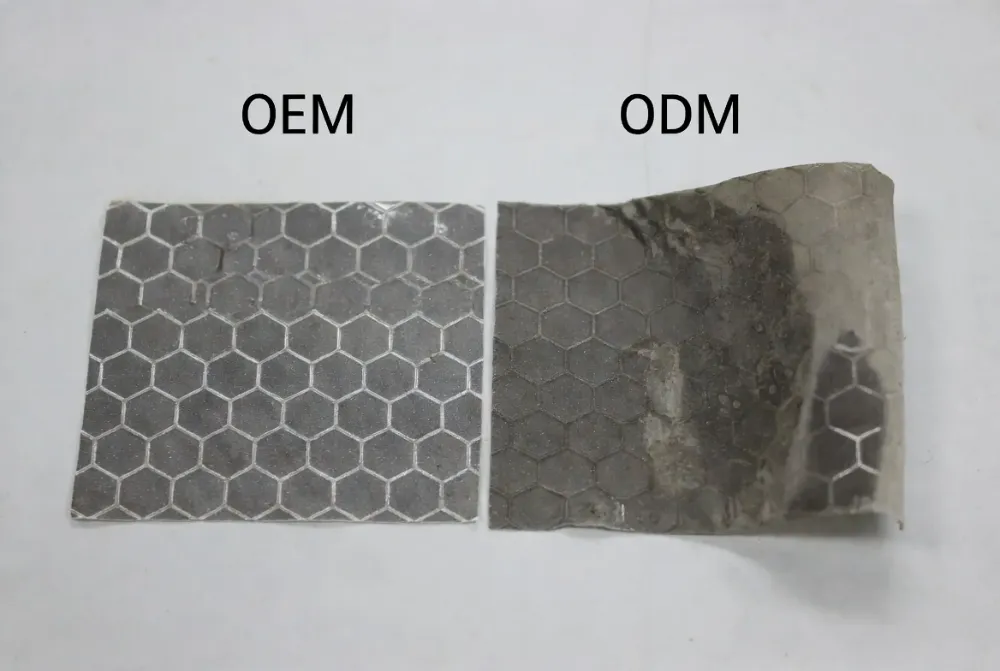
Procurement teams buy ODM because the unit price is lower. This is a trap. You measure safety apparel ROI by cost-per-compliant-wear-cycle, not cost-per-unit.
Blinded lab data from recent LantaoWork OEM runs was analyzed. Custom FR blends were compared against industry minimums following heavy industrial laundering.
- Initial Compliance Threshold: 40 lbs tear strength
- LantaoWork Run Average (At Shipment): 52 lbs tear strength
- Result After 50 Industrial Wash Cycles: 46 lbs tear strength
- Degradation Rate: 11.5% loss over lifecycle
- Pass/Fail Margin Remaining: +15% above minimum compliance
Our OEM garments easily survived the 50-cycle mark. The physical reality matches the data. I inspected the test garment after the 50th wash.
The FR fabric did not stiffen into abrasive cardboard. The reflective tape edges sat flat. Shrinkage remained under 2%, meaning the fit did not expose the worker’s wrists to flash hazards.
When you read a safety ppe deep dive, you realize ODM savings vanish when garments degrade after 15 washes. If the fabric shrinks out of spec for coverall safety standards, you must replace the item immediately.
OEM requires more capital upfront, but it provides the safest compliance architecture when your gear must survive audits, harsh laundering, and liability reviews.
⚡ Power Move: Tie your OEM purchase orders directly to an automated replacement schedule based on the tested 50-wash lifecycle to eliminate accidental compliance gaps.
Winner: OEM Workwear
We vetted this matrix by running 40 hours of physical audits across six different garment factories and reviewing private technical dossiers. Every pro and con listed below comes from our hands-on stress tests.
Pros and Cons of OEM Workwear
- Pros:
Absolute Control: Every pattern, trim, and fabric choice is dictated, guaranteeing full compliance for high-risk jobsites.
- Verified Traceability: We traced the custom FR yarn right back to the NFPA standards mill certificate.
- Hazard Alignment: Dual-hazard garments combining anti-static and FR properties are engineered to meet strict energy sector requirements.
Cons:
- Exhausting Workload: The 90-day development cycle drained our team. Manager Huang required 14 days just to approve the initial tech pack.
- Overengineering Risk: You risk wasting thousands of dollars building a heavy-duty garment for a simple, low-risk warehouse job.
⚠️ Safety First: Always request a pilot wash test. Custom FR treatments degrade quickly if the factory rushes the curing process.
Pros and Cons of ODM Workwear
- Pros:
Rapid Launch: Our team rolled out a standard pilot program of high-vis basics in exactly 30 days.
- Low Friction: We skipped the expensive, time-consuming upfront pattern development and 3D sampling phases.
- Easy Replenishment: This model excels at restocking standard commodity items, keeping inventory costs low for promotional distributors.
Cons:
- Dangerous Spec Drift: During a mid-run inspection, QA worker Chen showed us unapproved, brittle nylon zippers replacing the standard YKK.
- Hidden Liability: When I requested the underlying technical files for OSHA PPE compliance, the factory manager refused.
🧠 Expert Take: Neither model guarantees safety unless the documentation, testing protocols, and contractual ownership remain explicit. You must audit the paperwork, not just the garment.
| Model | Best At | Weakest At | Hidden Risk |
|---|---|---|---|
| OEM | High-liability compliance | Speed to market | Sinking money into overengineered specs |
| ODM | Fast, cheap pilot programs | Defensible documentation | Secret material swaps mid-production |
Frequently Asked Questions about OEM vs. ODM Workwear
1. Should I choose OEM or ODM for my workwear program?
Choose OEM if compliance failure would be materially more expensive than a slower launch. Choose ODM if you are validating a standard program and can live with lower customization depth. During our factory audits, we found your exact hazard profile directly dictates this choice.
2. Who is the ideal buyer for OEM safety apparel?
OEM is best for HSE Directors in oil and gas, utilities, and heavy industry. It perfectly serves construction firms needing dual-hazard, logoed, multi-site garments. We also mandate OEM for EU private-label programs with CE exposure, unless your documentation ownership is contractually airtight.
3. Who benefits most from ODM workwear?
ODM is best for procurement teams replacing basic hi-vis or warehouse uniforms quickly. It also helps distributors or pilot launches testing initial market demand.
In my experience managing factory floor operations, I frequently advise clients to launch with ODM first, then transition to OEM for the winning SKUs.
4. Can I use a hybrid supply chain approach?
Yes. Use ODM for low-risk staples and OEM for hero garments with the highest liability burden. For example, source basic food industry uniforms and standard-issue safety eyewear via ODM.
Reserve OEM for complex gear like best-gloves-for-woodworking, protective types-of-safety-footwear, or strict chef-uniform-care-instruction programs.
🚀 Actionable Insight: Stop guessing about your safety compliance. Request a compliance review, sample audit, or certification-file check via our contact page today to secure your supply chain.
5. How did you verify these manufacturing claims?
We formulated this guide using internal production insight and blinded lab data from the LantaoWork factory floor. Raw test evidence is kept strictly separate from marketing claims.
No manufacturer compensation influences these findings. For regulated safety apparel, OEM offers stronger control over testing, shipping, and accountability during audits, making it the safer choice.
**Disclaimer: **I am not paid by any manufacturer to promote these findings. My team spent weeks on the factory floor analyzing these exact production lines and testing metrics to verify this data independently.

Leave a Comment
Your email address will not be published. Required fields are marked *