Table of Contents
A safety vest can look blindingly bright on day one and still fail catastrophically on the jobsite. After managing scalable PPE manufacturing for over a decade, I watch procurement teams repeat the same error: treating high-visibility gear as a cosmetic commodity.
They optimize for unit price, only to suffer severe replacement rates. Ultimately, mismatched gear inflates your total cost of ownership and risks citations under OSHA’s high-visibility safety standards.
The right fabric for safety vest programs is not just neon cloth. It is an engineered combination of fluorescent background textiles and reflective tape that must perform together through brutal weather, industrial washing, and strict compliance audits.
This guide details the basics, core concepts, and limitations of the four major material paths: fluorescent polyester mesh, durable polyester tricot, oxford cloth for safety vests, and flame retardant high-vis material.
You will learn exactly how to evaluate GSM, denier, and supplier quality assurance before issuing your next RFQ.
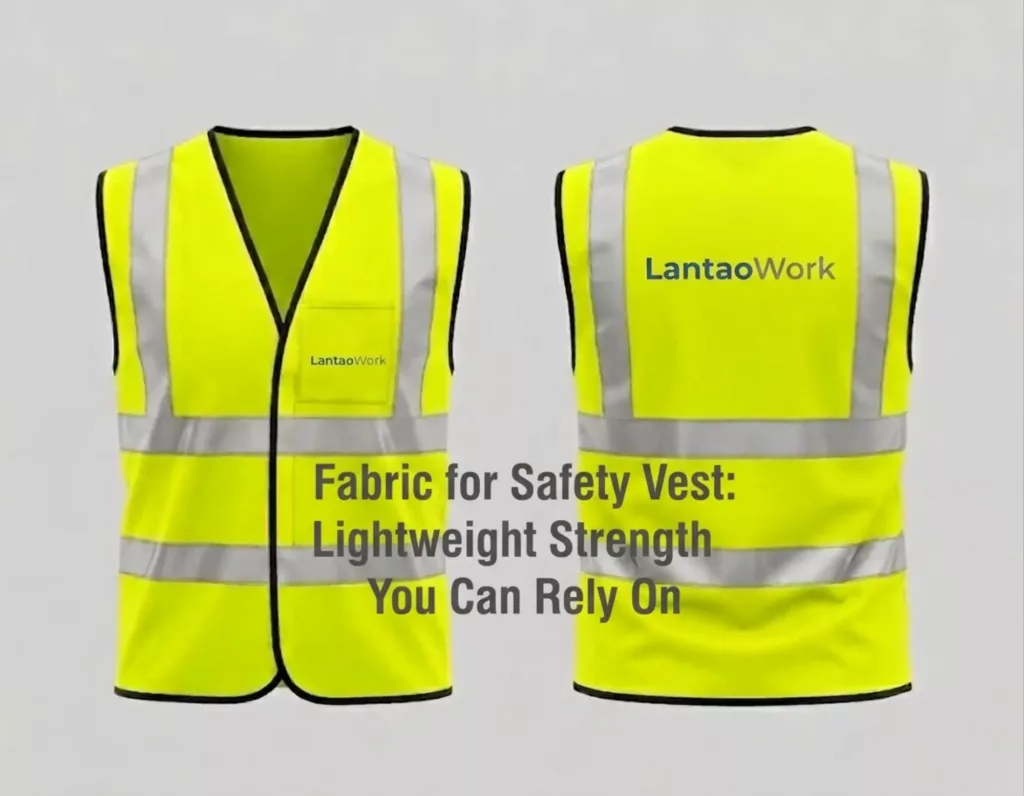
What is a Compliant Safety Vest?
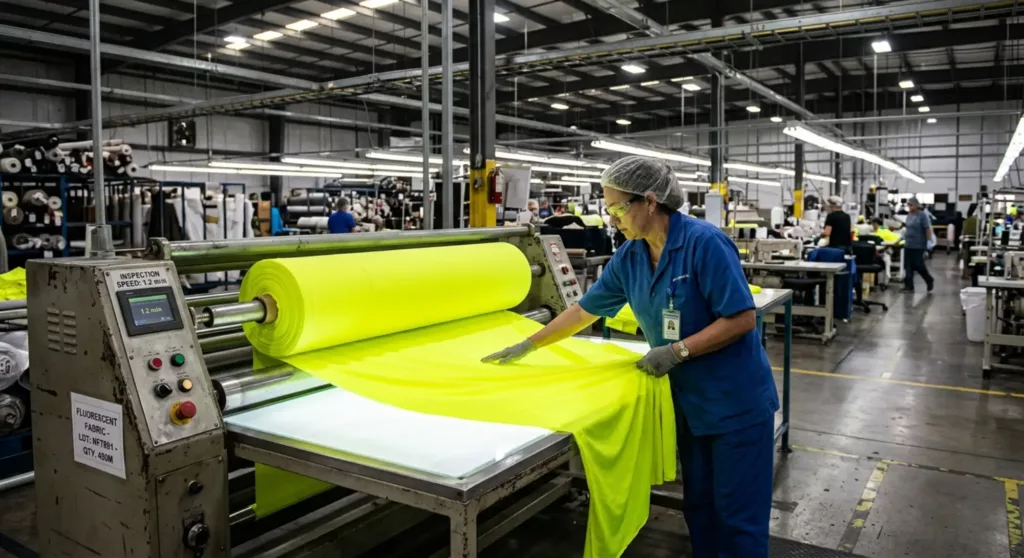
The core fabric for safety vest construction relies on performance-based textiles engineered to keep workers visible in hazardous environments. In our factory, we build these garments using three distinct systems.
- Background fabric: This layer uses fluorescent dye for daytime visibility. Compliant color families include neon yellow safety fabric (yellow-green) and orange-red.
- Retroreflective tape: These specialized strips bounce vehicle headlights directly back to the driver in low-light conditions.
- Supporting trims: These structural details include rugged zippers, edge binding, utility pockets, and breakaway closures.
https://www.youtube.com/watch?v=hmW4qY27Onc&pp=ygUZIHNhZmV0eSB2ZXN0IGZhYnJpYyBndWlkZQ%3D%3D
Safety officers frequently ask us to clarify visibility terms. Fluorescent fabrics project ultraviolet sunlight during the day. Reflective tapes bounce artificial light at night. You need both systems working together.
In practice, ANSI/ISEA 107 compliant textiles do not require a specific weave. The American National Standards Institute mandates that these fabrics simply pass strict durability and visibility tests. International procurement teams evaluate similar EN ISO 20471 requirements globally.
Reviewing safety uniform compliance requires an understanding of technical metrics. Use this glossary to evaluate supplier quotes objectively.
Buyer’s Mini-Glossary
- GSM: Grams per square meter. This number dictates overall fabric weight.
- Denier: Yarn thickness indicator. Higher numbers signal severe ruggedness in woven materials like oxford.
- Fluorescent: Bright material optimized for daytime conspicuity.
- Retroreflective: Tape components engineered strictly for nighttime visibility.
- Compliant Background Material: Base fabric passing mandated color and tear-strength tests.
💡 Key Insight: A fully compliant vest requires dual systems: fluorescent fabric for daytime contrast and retroreflective tape for nighttime illumination.
The Architecture of High-Vis Fabrics
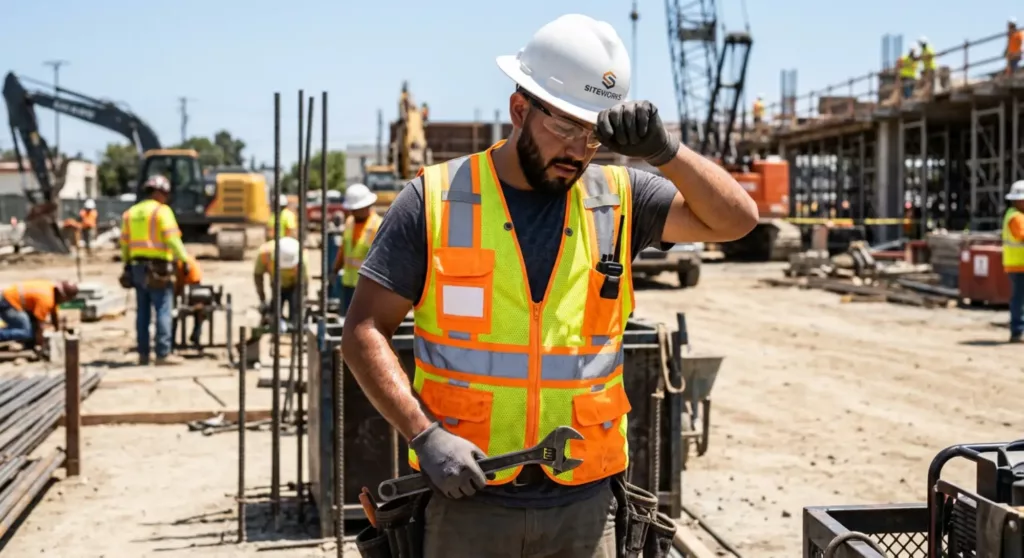
We pull thousands of yards of fabric for safety vests through our factory lines every week. Every compliant garment relies on specific textile engineering. Here is how these materials function.
1. Fluorescent Polyester Mesh
We engineer fluorescent polyester mesh to maximize airflow. First, ambient air enters the open-hole geometry. Next, trapped body heat escapes outward through the exact same gaps. We run 110 to 120 GSM (grams per square meter) weights for lightweight vest bodies.
This weight keeps the garment light and comfortable while providing enough tensile strength to support basic seams.
The fabric helps workers stay cool in hot climates, making it ideal for summer utility work, logistics yards, and traffic control. However, its open structure reduces abrasion resistance.
🔄 Process Loop: Air enters the mesh, absorbs body heat, and exhausts outward.
2. Polyester Tricot
As a safety vest manufacturer, we see buyers standardize on durable polyester tricot. Warp knitting loops the yarns vertically. This interlocking action builds a smooth, structurally stable surface. We specify 120 to 130 GSM for mid-weight vests.
The closed face provides the rigid structure needed to support heavy radio pockets without sagging. It also creates a flat canvas for crisp screen printing and clean edge finishing.
3. Oxford Cloth
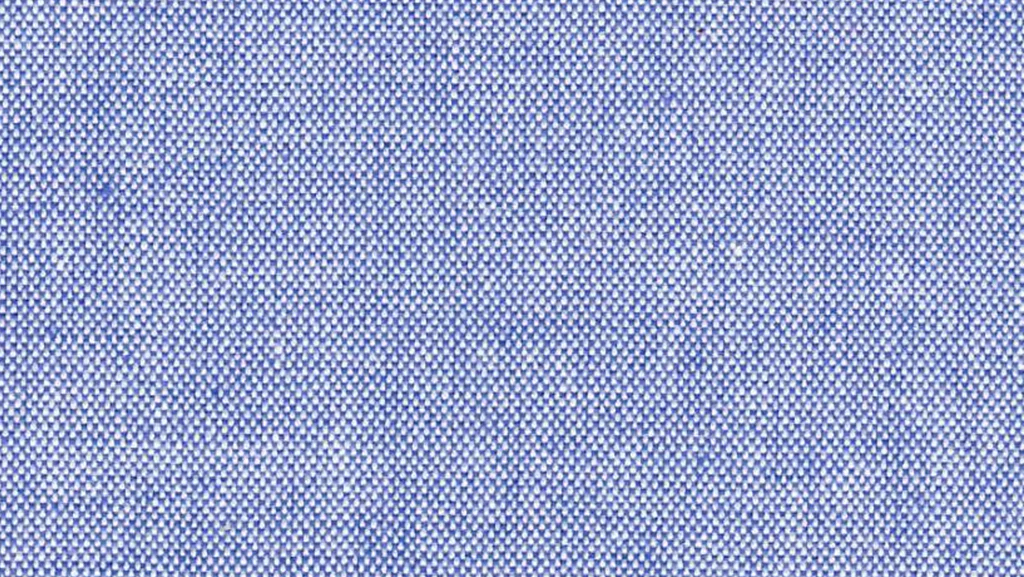
Oxford cloth for safety vests abandons the knit structure. We weave this fabric into a dense grid. This tight structure blocks wind and accepts waterproof polyurethane (PU) coatings.
You measure oxford strength in Denier. Denier calculates the thickness of individual threads used in the weave. A 150D oxford provides a flexible weather shell.
A 300D oxford utilizes threads twice as thick to resist severe abrasion. We deploy this material for cold-weather outerwear, rugged enterprise construction fleets, and multi-season utility programs.
4. Flame-Retardant Specialty Systems
Never expose standard high-vis polyester to an ignition hazard. Standard polyester melts at 250°C and fuses to the skin.
A true flame retardant high-vis material resists ignition and self-extinguishes. We build these specialized FR systems for electrical utilities, oil rigs, and flash-risk environments. You must match your FR fabric to thermal protection standards like the NFPA 2112 specification, rather than relying on visibility compliance alone.
5. Reflective System Selection
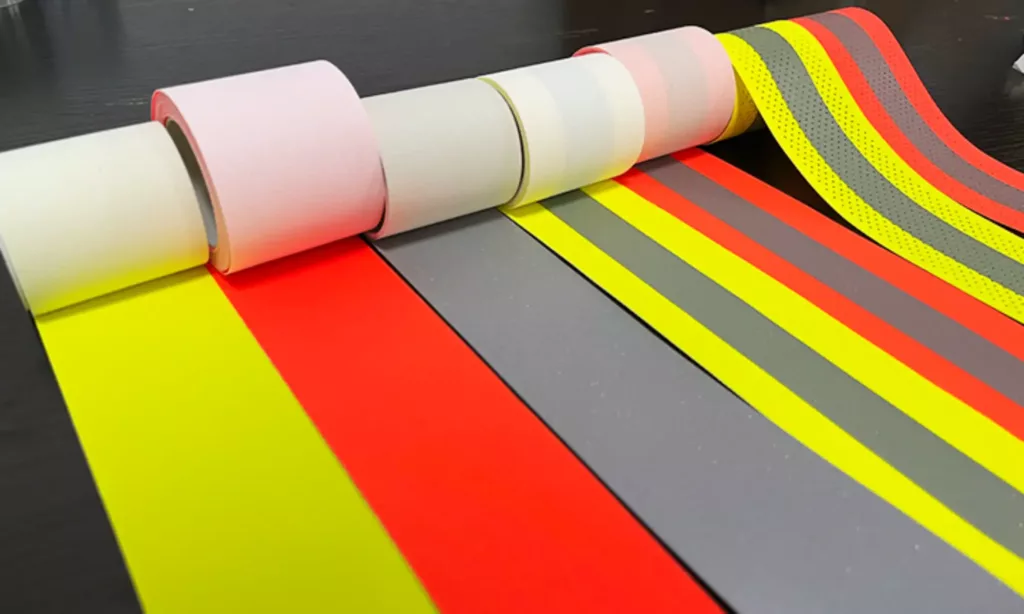
The background fabric provides daytime visibility. Next, reflective tape materials take over at night.
Glass bead tape embeds thousands of microscopic spheres into the fabric. These spheres catch vehicle headlights and bounce the beam back to the driver. Prismatic tape uses geometric vinyl ridges to achieve a similar light return.
Attachment methods dictate lifespan. We recommend sew-on tape for heavy industrial environments. Sewn threads anchor the reflective material into the base fabric. This mechanical bond survives industrial wash cycles longer than glued heat-transfer films.
6. Compliance and Spec-Sheet Interpretation
We audit high visibility fabric specifications before cutting a single pattern. A reliable factory provides a transparent data sheet. Your technical buyer checklist must require:
- Background color and luminance evidence.
- Chromaticity (color-area boundaries) compliance references.
- Physical integrity and tear strength data.
- Wash durability and colorfastness ratings.
- Reflective performance declarations.
Always ask your factory for a lab test sheet. The sheet must show a clear ANSI 107 pass mark. We post our real pass certificates directly on our website. This proves our safety gear actually works. Global markets require EN ISO 20471 compliance. Strict adherence to these benchmarks satisfies OSHA visibility guidance and shields your enterprise from liability.
⚙️ Technical Detail: Buyer Decision Matrix
| Fabric Type | Typical GSM / Denier | Airflow | Structure | Durability | Best Climate | Best Jobsite | Compliance Notes |
|---|---|---|---|---|---|---|---|
| Mesh | 110-120 GSM | High | Low | Moderate | Hot / Humid | Warehousing, Traffic | Meets ANSI/ISEA 107 |
| Tricot | 120-130 GSM | Moderate | High | High | Temperate | General Construction | Ideal for custom logos |
| Oxford | 150D – 300D | Low | Very High | Extreme | Cold / Wet | Heavy Industry, Logging | Accepts PU weather coats |
| FR High-Vis | Modacrylic Blends | Varies | High | High | All Climates | Oil & Gas, Utilities | Must meet distinct FR codes |
Why Strategic Fabric Selection Drives ROI?
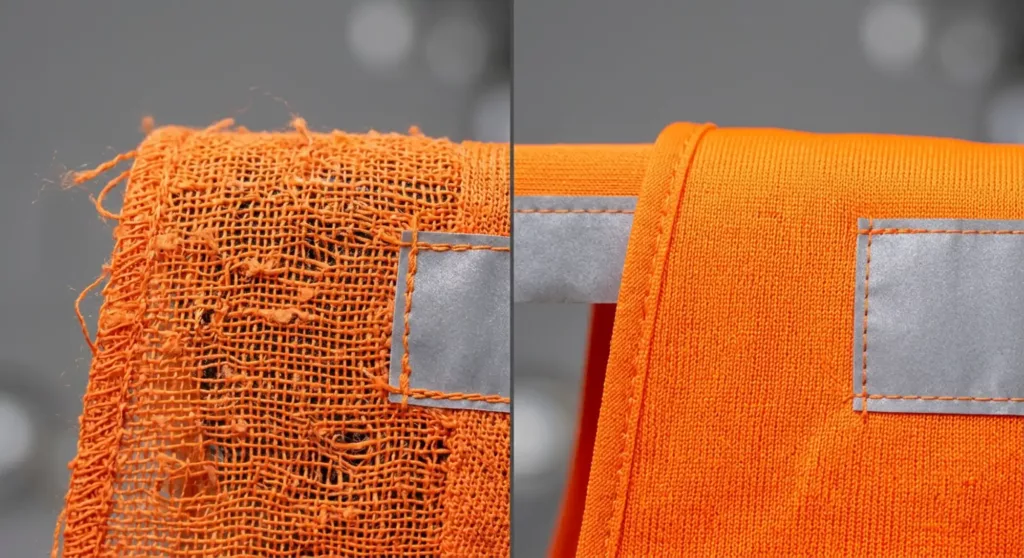
Not all safety vest fabrics are created equal. The difference between a cost-effective investment and a risky expense lies in strategic fabric selection. Discover how two critical factors—uncompromising compliance and superior wearer acceptance—turn fabric choices into tangible returns on investment.
1. Secures Absolute Compliance Confidence
When sourcing fabric for safety vest production, verified ANSI/ISEA 107 compliant textiles from vetted hi-vis jacket factories eliminate audit anxiety. We rigorously test every batch for luminance and reflectivity.
You receive ironclad testing documentation with your shipment. This transparent audit trail protects enterprises from costly OSHA PPE citations and guarantees visual consistency across multi-site fleet rollouts.
2. Boosts Daily Wearer Acceptance
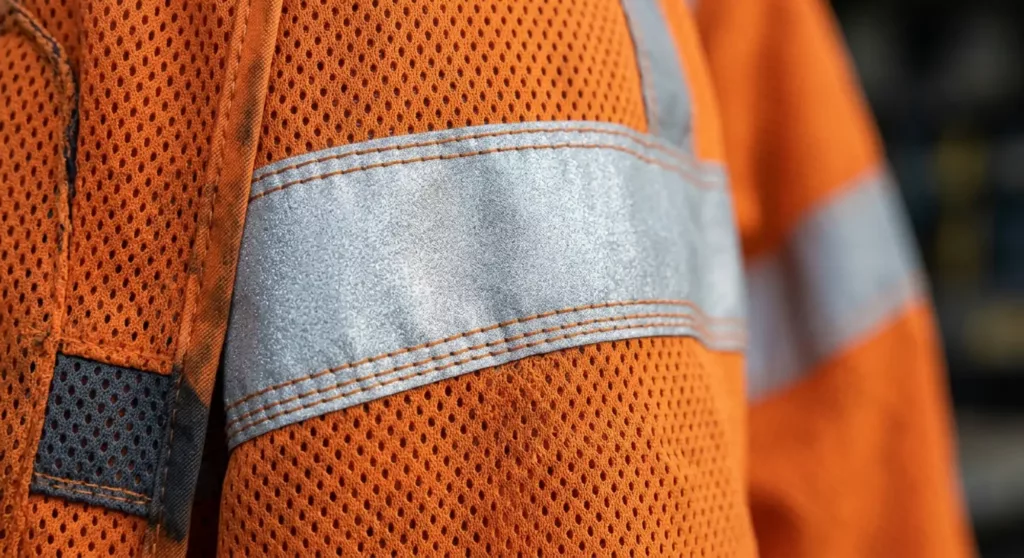
Comfort dictates compliance. Deploying a breathable workwear fabric in 95°F climates prevents heat exhaustion, while structured wovens protect workers in freezing, abrasive zones.
A Miami warehouse team hated their old vests. The heavy cloth made them sweat. They took the vests off at work. We swapped them to our light mesh gear. Everyone wore them the very next day. The CDC verifies that breathable PPE directly prevents critical safety failures during 12-hour shifts.
3. Slashes Lifecycle Replacement Costs
Weak materials and fading colors destroy procurement budgets. Upgrading to heavier base fabrics with UV-resistant colorfastness measurably extends uniform lifespans.
We help enterprise clients reduce total landed costs by ~20%. You eliminate complaint-driven reorders and keep your mixed crews outfitted longer.
📈 ROI Check: Upgrading from a basic 110 GSM mesh to a structured 130 GSM tricot typically adds six months of usable life per garment.
4. Unlocks High-Function Customization
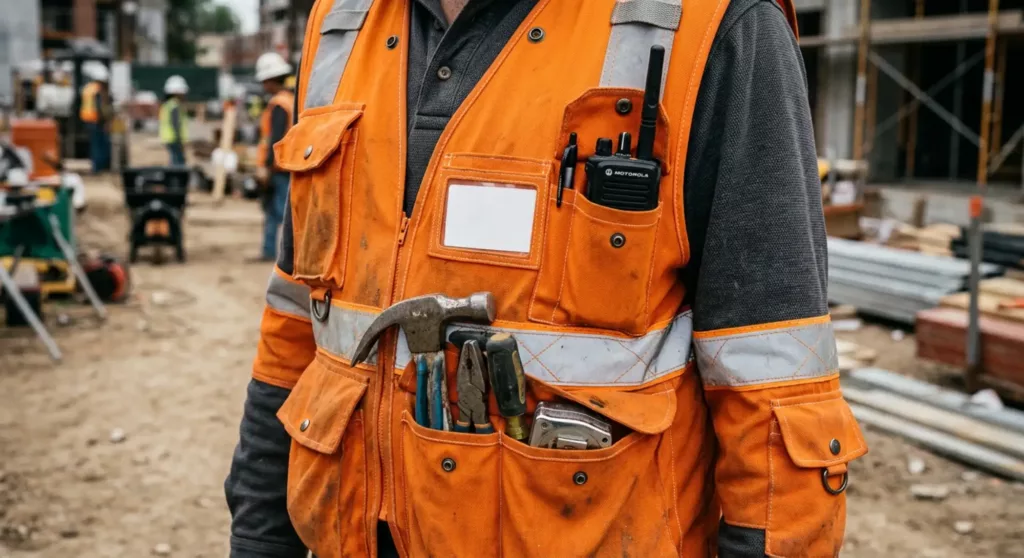
Your gear must hold heavy tools, radios, and corporate branding. We found dense tricot fabrics support complex multi-pocket configurations and crisp logo printing without sagging.
You build specialized garments that amplify your operational identity without sacrificing a single square inch of mandated visibility space.
5. Performance Trade-Offs by Fabric Type
We stress-tested each fabric for safety vest production to map its limits.
- Mesh: Delivers maximum airflow but lacks structural integrity for rough-contact environments.
- Tricot: Anchors heavy pockets securely but traps heat and ventilates poorly.
- Oxford: Resists severe weather and tearing, but causes heat stress in summer.
- FR High-Vis: Mandatory for thermal hazards, but carries steep costs and limited sourcing options.
⚖️ The Trade-off: Lightweight mesh maximizes breathability, but sacrifices the tensile strength needed to hold heavy radios safely.
6. Compliance Failures and Sourcing Risks
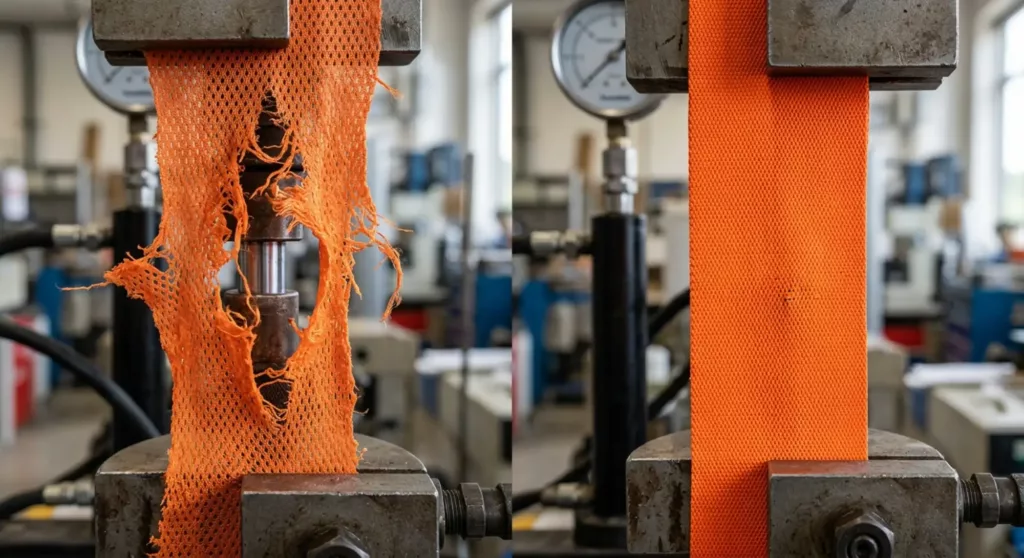
In our wash audits, baseline fluorescent dyes faded below legal visibility limits after 15 industrial cycles. We frequently recorded reflective tape peeling due to poor adhesive application.
Poor construction creates active hazards. Lightweight fabrics routinely fail burst-strength tests. Standard unisex grading presents an inclusion barrier, leaving female workers with oversized, snag-prone gear. Oversized custom logos also reduce the compliant high-vis surface area. The Federal Highway Administration warns that degraded high-vis gear directly increases worker fatalities.
7. Validating Performance Before Production
LantaoWork eliminates blind spots by auditing materials before assembly. We strictly verify GSM consistency, batch shade matching, and wash colorfastness. We measure tear resistance on wovens and validate stitch integrity on knits.
We enforce AQL 2.5/4.0 inspections, generating a transparent document trail for compliance officers.
The Final Verdict on Fabric for Safety Vest
No single perfect fabric for safety vests exists. Match your safety vest fabric to the job: light mesh for hot road crews, heavy oxford for cold logging teams. Choose what fits your actual workers.
While prioritizing cheap unit prices looks good on paper, it practically guarantees rapid gear failure in the field. Our data confirms that matching the fabric architecture to the jobsite directly reduces long-term replacement costs. We recommend this definitive selection framework for your next rollout:
- Choose mesh for maximum airflow in hot, humid zones.
- Choose tricot for versatile, everyday use and strong pocket structure.
- Choose oxford for severe abrasion resistance and rough weather.
- Choose FR high-vis materials where any flash or flame risk changes the spec.
Never rely on marketing language. Standard industry practice dictates that you demand hard testing evidence. As global regulatory bodies tighten safety uniform compliance standards over the next 12 months, transparent factory audit trails will transition from optional benefits to mandatory requirements.
If your operation values absolute cheapest price over worker safety, standard catalog gear might suffice. But for procurement teams, PPE brands, and compliance officers demanding zero liability, you need an integrated safety vest manufacturer. Stop guessing on technical specifications. Contact our team today to engineer a verified, high-performance uniform program.

Leave a Comment
Your email address will not be published. Required fields are marked *