Table of Contents
The short answer Ten U.S. work-boot brands cover most safety-footwear programs, but none are interchangeable. The ASTM F2413-18 report for the exact SKU is the only check that settles a shortlist; which protection class you need comes first.
A glossy catalog proves nothing. I have watched polished brand pages fail AQL 2.5 seam checks — a failure only third-party inspection tends to surface — and procurement teams still cannot lean on generic “ASTM certified” claims. Real risk sits at construction, factory audit trails, and batch consistency.
Some brands below mix domestic and imported production, so verify origin by line. If the same program also covers uniforms, LantaoWork handles the uniform half directly — the workwear manufacturers list is the place to start.
Disclosure: LantaoWork is a cut-and-sew workwear manufacturer — we do not make safety footwear. This list covers the U.S. brands procurement teams buy; the framework at the end is our own factory-floor experience, disclosed rather than disguised.
10 Safety Footwear Manufacturers at a Glance
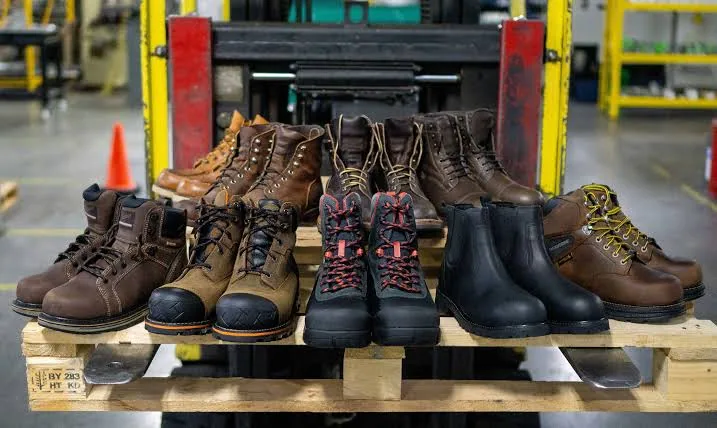
Ten U.S. work-boot brands, sorted by what each one is actually best at. The two middle columns decide most quotes — what the SKU-level ASTM F2413 paperwork looks like, and whether origin changes line by line.
| Brand | Best fit | ASTM F2413 by SKU | Origin sheet | Commercial |
|---|---|---|---|---|
| Red Wing for Business | Vertically integrated U.S. work-boot programs | Confirm which safety-toe lines are domestic before quoting | Required — mixes U.S. and imported SKUs | 9 weeks at 150 pairs on the 2406 line |
| Thorogood | Union-made safety-toe programs in construction and trades | American Heritage moc-toe and 1957 Series meet F2413-18 | Required — some lines assembled overseas | 6–8 weeks; program pricing at 100–150 pairs |
| Belleville Boot | Tactical, uniform, and military-adjacent footwear | Confirm safety-toe, EH, and slip per SKU — a duty label is not a safety boot | Required per line | Not published |
| McRae Footwear | Domestic heritage and traceability | Not all styles carry composite or steel toes — report per SKU | Mt. Airy, North Carolina — lot-level traceability | 8–10 weeks on custom military orders |
| Wesco | Rebuildable heavy-duty welted work boots | Some boots lack safety toes — spec per SKU | Oregon workshop, stitchdown, resoleable | 10 weeks custom; resole runs $180–220 |
| Original Footwear | Duty, uniform, and public-safety programs | Non-metallic toe meets F2413 on select SKUs; many models are soft-toe | Service lines only — keep industrial boots separate | Not published |
| Liberty Footwear | Value-oriented wholesale safety programs | F2413-18 reports on exact styles — safety lines change between catalogs | Not toured — verify factory origin by line | Not published |
| Carolina Shoe | Broad work-boot portfolios across multiple trades | Confirm F2413 and use case per SKU | Required — domestic and imported lines differ, including sizing | Not published |
| Justin Boots | Western work and ranch-industrial crossover | Not every western SKU meets F2413 — some pull-on boots have soft toes | Not line-verified — check slip resistance too | Not published |
| Danner | Premium field, tactical, and performance work boots | Tachyon ships without F2413; Kinetic and some Striker lines carry safety toes | Verify per model | $180–350 per pair |
How Was This Shortlist Built?
This is a desk shortlist, not a factory audit. We screened U.S. brands against five criteria: relevance to the U.S. market, control over manufacturing, breadth of the safety line, fit for industrial crews, and compliance signals a buyer can actually verify.
Sources are public: manufacturer specification sheets, published compliance documentation, and the primary standards themselves. Where a brand has not published something, the table says so rather than estimating.
Two limits are worth stating plainly. We have not audited these factories and we have not tested their footwear.
The lead times and prices below are indicative ranges as of October 2026, not quotations — capacity and raw-material pricing move them, so reconfirm every figure with the supplier before you budget against the quote.
1. Red Wing for Business — Best for Vertically Integrated U.S. Work-Boot Programs
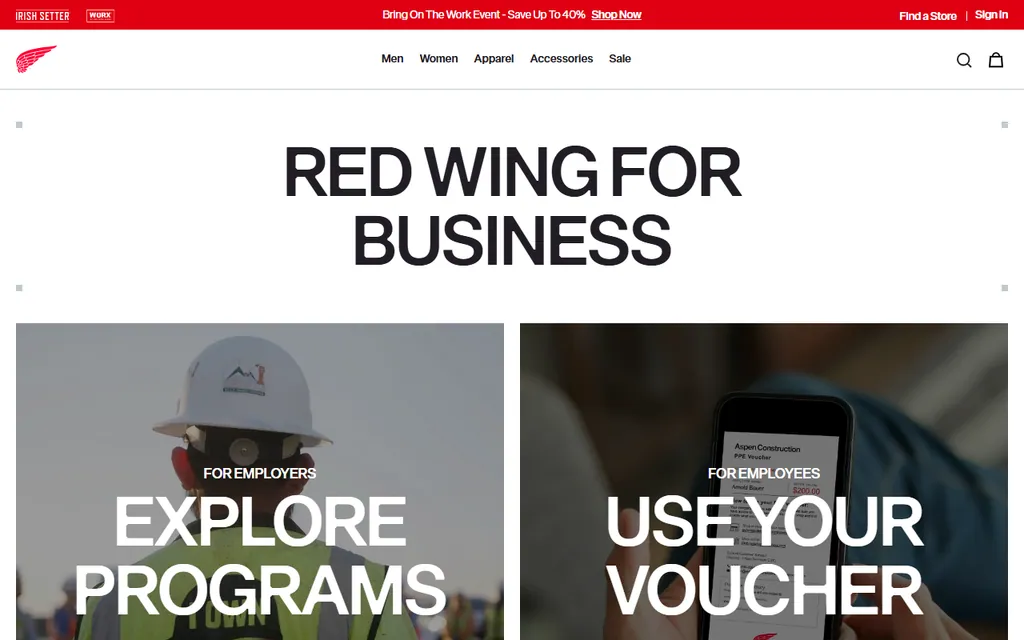
Among U.S. safety footwear manufacturers, Red Wing for Business leads on material control. It owns its own tannery, stitching, and recrafting operations — vertical integration few work-boot brands match.
Controlling hide selection and cutting in-house is what keeps loose grain out of the finished boot, and consistent batches are what support a long-term safety program.
Before you send an RFQ, verify three things:
- Confirm which safety-toe lines are domestic. Red Wing mixes U.S. and imported SKUs. Request a line-by-line origin sheet.
- Check repairability. The 2233 and 2406 lines are recraftable. That changes total cost of ownership — but only once the rebuild is priced. A $300 boot with two rebuilds runs $660–740 over six years, so the math only wins if you would otherwise be replacing $120 pairs about twice a year.
- Match the line to the site. Construction, manufacturing, and energy buyers gain the most from U.S.-made puncture-resistant styles.
🛡️ Our Verdict: Budget for program pricing on the 2406 line to start around 150 pairs, with lead times around 9 weeks. Tell procurement to plan winter buying early.
2. Thorogood — Best for Union-Made Safety Toe Programs in Construction and Trades
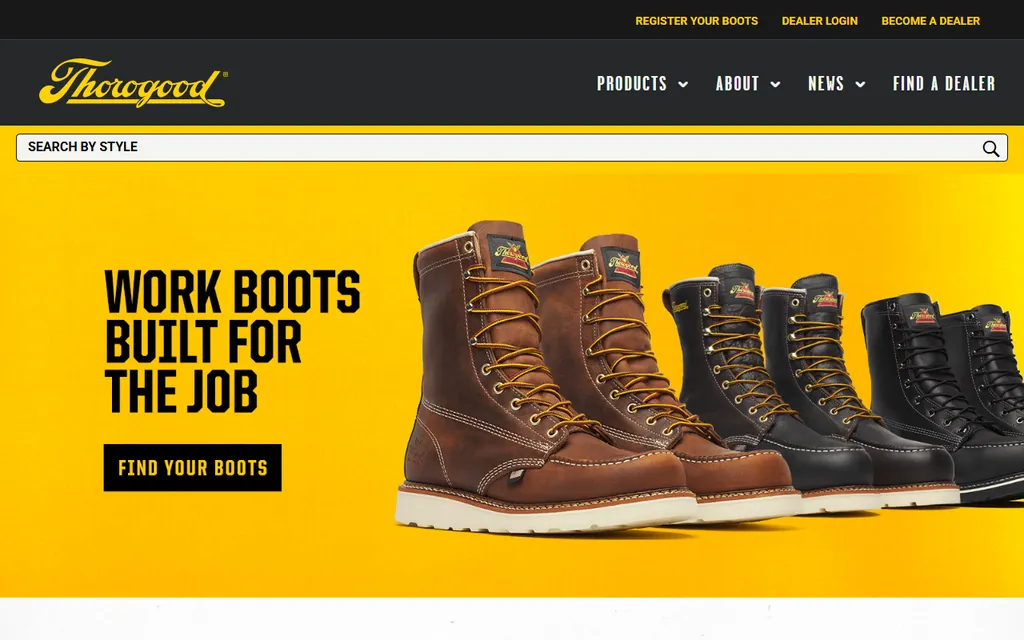
Contractors ask me if “Made in USA” covers every Thorogood style. It does not. Thorogood builds certain boots in two Wisconsin plants, with union labor on select lines. That matters for project bids and field crew buy-in.
For procurement, focus on the American Heritage line. Their moc-toe and 1957 Series safety-toe styles use Goodyear welt construction, which makes them resoleable, and both meet ASTM F2413-18 impact and compression ratings.
For highway crews, the 1957 Series 8-inch boot adds ankle coverage and electrical hazard protection.
Separate product families by origin. Thorogood assembles some lines overseas, so ask for the factory sheet before committing.
🛡️ Our Verdict: Thorogood approves program pricing around 100–150 pairs on union-made lines. Expect 6–8 week lead times. Confirm the union label per SKU before cutting a purchase order.
3. Belleville Boot — Best for Tactical, Uniform, and Military-Adjacent Safety Footwear Needs
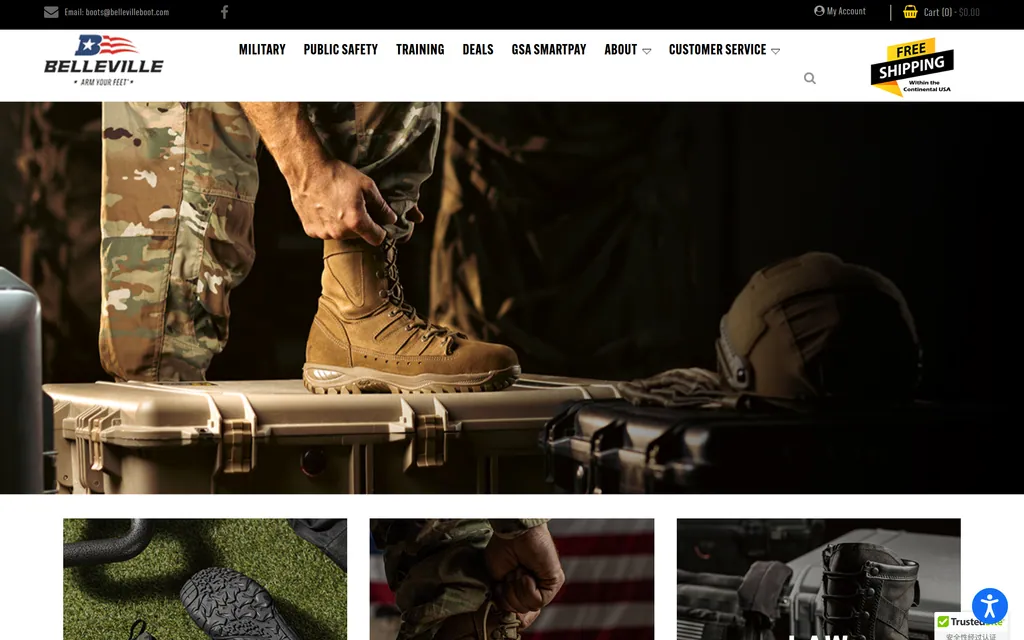
Government contractors and uniformed teams need field credibility standard industrial boots often lack. Belleville stands apart for a different reason: the company has supplied U.S. military boot contracts for decades, and contract discipline shows in its product development.
But do not assume every tactical or duty boot is an industrial safety boot. OSHA’s safety-toe rule is blunt about what qualifies, so confirm the exact SKU’s safety-toe status, electrical hazard rating, and slip resistance before final shortlisting, and request the ASTM F2413-18 test report for each line.
🛡️ Our Verdict: For uniformed fleets and field procurement, Belleville is a strong shortlist addition — as long as you confirm the exact SKU’s toe certification rather than trusting the duty label.
4. McRae Footwear — Best for Buyers Prioritizing Domestic Heritage and Traceability
McRae earns a spot for manufacturing traceability. It builds in Mt. Airy, North Carolina, and a single domestic site makes origin documentation far easier than any mixed-origin catalog can offer — which matters when a buyer has to prove where the boots came from.
Do not mistake military heritage for a broad industrial safety catalog. Their assortment narrows outside duty and uniform lines, and not all McRae styles include composite or steel toes, so verify exact safety specs before volume.
Request the ASTM F2413-18 test report per SKU. Check replenishment capacity too: custom military-style orders typically run 8–10 weeks. If federal contracts matter, confirm Berry Amendment eligibility for every style.
🛡️ Our Verdict: McRae fits controlled sourcing stories and mid-size uniform fleets. For large industrial programs, compare range depth and fill rates first.
5. Wesco — Best for Rebuildable Heavy-Duty Welted Work Boots
Wesco seems overpriced if price per pair is your only metric. It belongs on your shortlist when rebuild cycles and yearly cost matter. The Jobmaster line uses stitchdown construction and dense 7-oz leather — the build for repeated rebuilds in logging and fire work.
A rebuild strips the old sole, replaces the midsole, and re-stitches the upper. Depending on the sole and the scope of the work, the figure runs roughly $180–220 and adds years of service.
Custom Wesco orders run about 10 weeks; stock models ship faster, so confirm lead time first. Some Wesco boots lack safety toes — don’t buy on reputation alone.
🧠 Author’s Take: Use Wesco where lifecycle cost matters more than sticker price. Ask for rebuild pricing and resole turnaround up front.
⚡ Power Move: Get a 3-year cost-per-wear quote before comparing rebuildable boots to disposables.
6. Original Footwear — Best for Duty, Uniform, and Public-Safety Footwear Programs
Most security RFPs fail by treating duty boots like heavy construction boots. Original Footwear addresses patrol duty instead. Duty teams moving from heavy welted work boots to side-zip patrol boots report faster donning and fewer fatigue complaints — the build suits the post, not the plant.
The brand fits public safety, corrections, and uniformed security. These are not OSHA plant boots: many models are soft-toe, and only select SKUs carry a non-metallic toe meeting ASTM F2413. Verify the exact safety rating per line.
If you need shirts, trousers, and high-vis outerwear in the same rollout, use LantaoWork’s security uniform programs. That keeps color and sizing consistent.
🛡️ Our Verdict: Use Original Footwear for patrol, transit, and gate duty. Keep industrial safety boots separate — a duty label is not a safety rating, so check the toe classification on every patrol SKU on the order.
⚡ Power Move: Verify each SKU’s ASTM F2413 rating before ordering, and assign soft-toe styles only to non-industrial posts.
7. Liberty Footwear — Worth Screening for Value-Oriented Wholesale Safety Programs
Liberty Footwear earns a screening slot for value-driven procurement teams, not a default recommendation. I treat the brand as a price anchor: the catalog covers safety-toe boots and work styles for uniform and light industrial programs, which helps when you need budget alternatives.
But do not let catalog language carry the decision. I have not toured Liberty facilities. Before I present them as a top U.S. safety footwear manufacturer, verify:
- Which SKUs sell into the U.S. market with current stock.
- Factory origin by line. Manufacturing footprint matters for compliance and lead time.
- ASTM F2413-18 reports on exact styles. Safety lines change between catalogs.
Also check program suitability for your hazard class before quoting.
🛡️ Our Verdict: Screen Liberty when value is the first filter. Verify U.S. stock, factory origin, and ASTM reports before quoting.
8. Carolina Shoe — Best for Broad Work-Boot Portfolios Across Multiple Trades
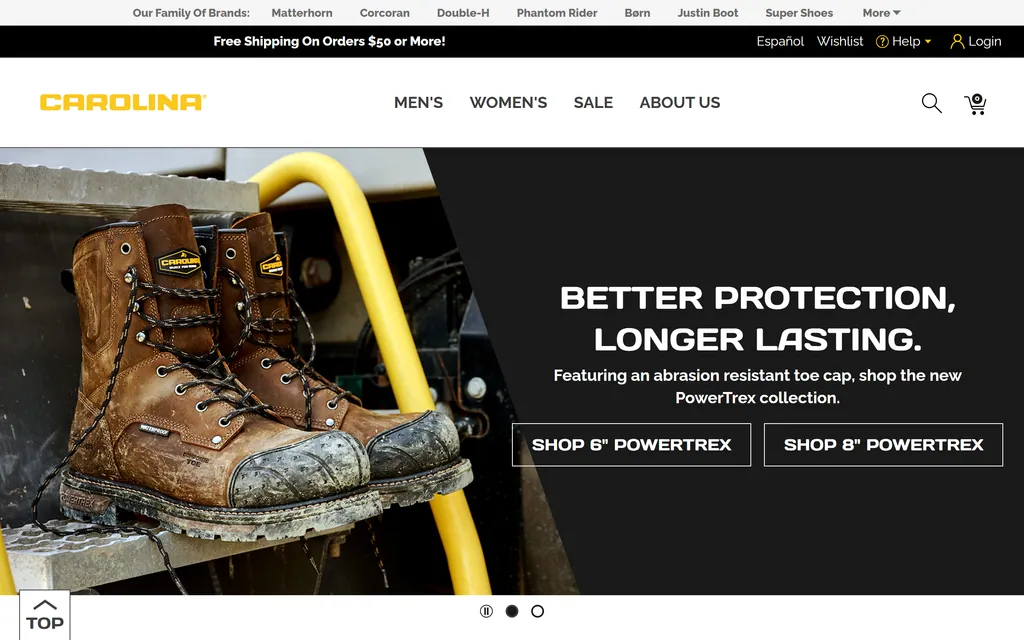
Carolina is my broad-catalog choice for buyers covering multiple trades. Niche depth is not the draw; assortment width is. Its range covers welders, electricians, construction crews, and light manufacturing. Spec 6-inch and 8-inch boots with soft, steel, or composite toes under one brand to cut vendor count.
Do not assume consistency. Carolina mixes domestic and imported SKUs, and sizing can drift between those lines. Audit each line and confirm origin, ASTM F2413, and use case per SKU.
For distributors and multi-site employers, that width simplifies assortment planning — one purchase order can cover several departments. Mixed-origin consistency is the watch item.
🛡️ Our Verdict: Use Carolina as one practical brand umbrella across trades — as long as origin and sizing are verified line by line before quoting.
9. Justin Boots — Best for Western Work and Ranch-Industrial Crossover Programs
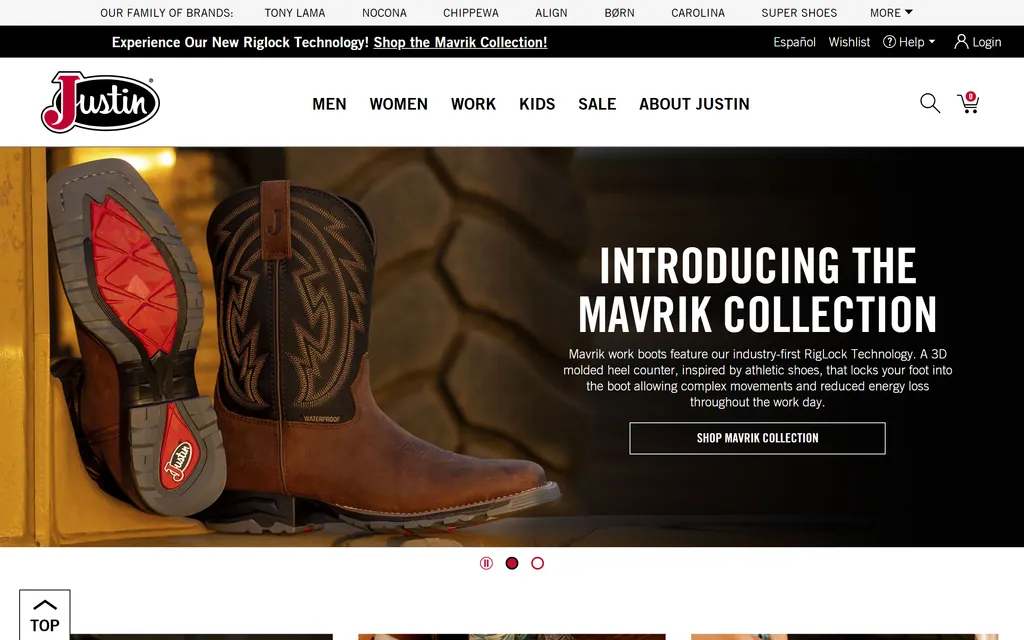
For ranch, agriculture, and field service crews, pull-on western boots win on speed. The Stampede and J-Max lines use a roper heel and pull straps suited to oil-and-gas crews who need easy on and off, and the leather shaft holds up in dry brush and light mud.
Style is not a safety certificate. Not every western SKU meets ASTM F2413: some pull-on boots have soft toes or no electrical hazard rating.
Before purchase, verify per SKU:
- Ask for the exact test report, and check slip resistance against OSHA’s walking-working surfaces guidance. Smooth leather soles can be slicker than lugged soles on wet rig floors.
🛡️ Our Verdict: Justin fits western work programs where crew preference matters. We flag the brand for ranching and field service only after SKU-level safety checks.
⚡ Power Move: Get the ASTM F2413 report and slip-resistance data before committing.
10. Danner: Best for Premium Field, Tactical, and Performance-Oriented Work Boots
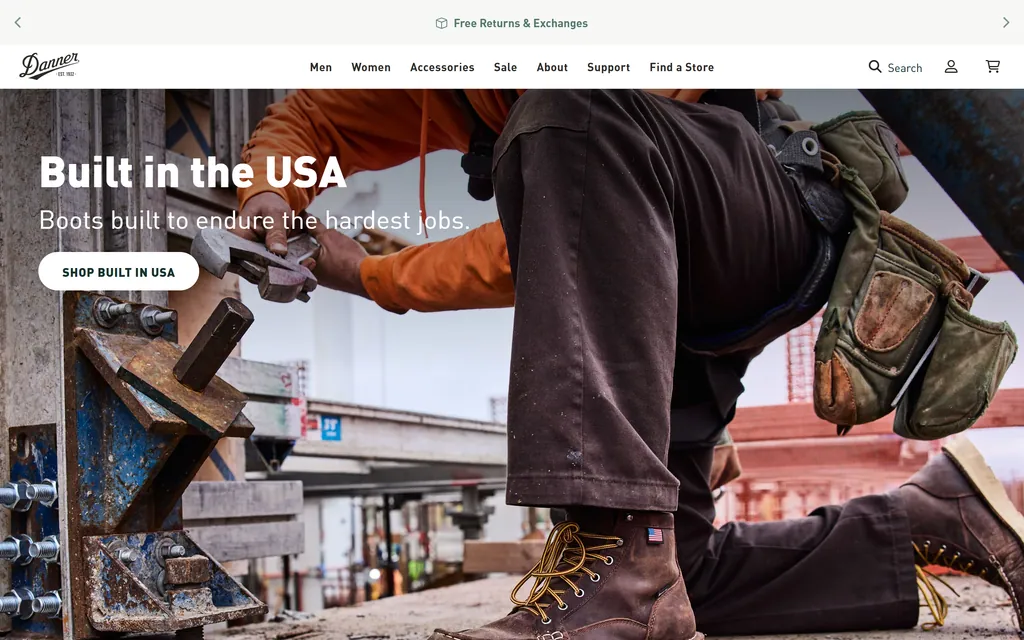
Heavy welted boots beat up field crews by hour six. Danner takes a different route. It builds lighter, performance-driven boots for tactical and field work.
The Kinetic 8-inch composite-toe comes in around 22 ounces. The Red Wing 2233 runs over 40. On a 10-hour shift, the gap is the whole argument for the lighter build.
But Danner is a premium buy. Expect $180–350 per pair. Do not buy on brand prestige.
Not every model is a safety boot. The Tachyon duty boot ships without ASTM F2413 protection, while the Kinetic and certain Striker lines carry safety toes. Verify each SKU.
🧠 Author’s Take: Danner earns a spot when lighter technical footwear beats legacy welted builds. Get the ASTM F2413 report for your spec before signing off.
⚡ Power Move: Match Danner to mobile crews only — the lighter build pays off over distance, not on a shop floor.
How to Vet U.S. Safety Footwear Manufacturers?
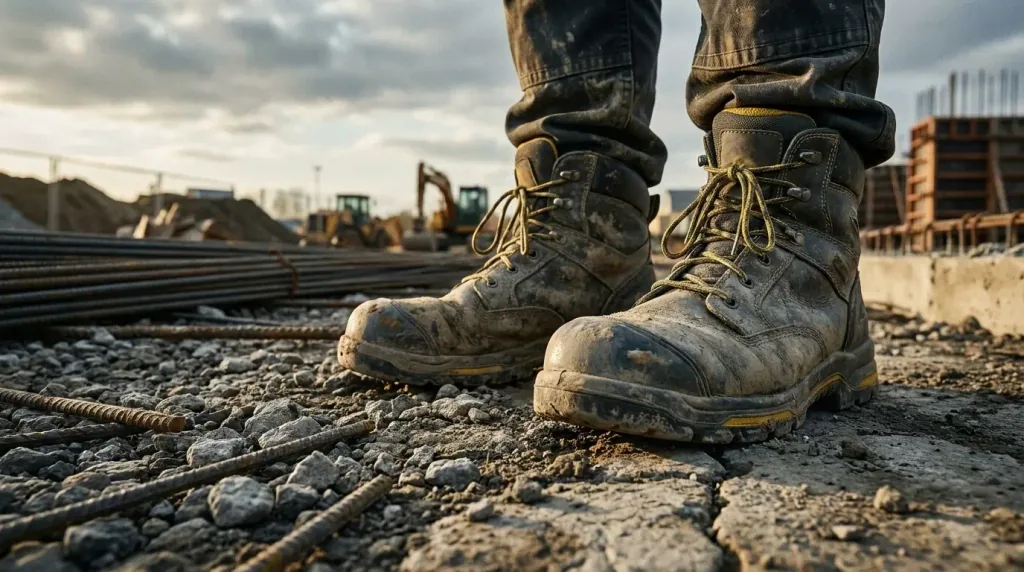
Before writing this guide we reviewed public specification sheets, compliance documentation, and published lead-time data from U.S. safety footwear vendors. I am not paid by any mill or manufacturer to promote these findings.
Step 1: Verify the Exact Product, Not Just the Brand
Never accept “ASTM F2413” on a catalog cover. Brand-wide claims are the trap: one catalog line often covers steel, composite, and soft-toe SKUs at once, so the cover certificate says nothing about the specific model. Ask for the model-level test report citing ASTM F2413-18 before pricing.
Steel toe versus composite toe is a component decision. Steel handles impact and compression better in some settings. Composite weighs less and does not transfer cold. Neither is a quality shortcut.
Before writing specs, confirm whether each line is U.S.-made, U.S.-assembled, or imported. The FTC Made in USA standard defines these terms. I call sales and request a line-by-line origin sheet.
Step 2: Ask About Construction and Quality Control
Match the build to the job. Goodyear welt fits rebuildable leather boots. PU injection works for wet, chemical-heavy environments. Cemented builds cost less but fail faster in high flex. Then request four QC checkpoints in writing:
- Pre-production testing: valid ASTM F2413-18 reports per SKU.
- In-line inspection: stitch density and sole bonding.
- Finished-goods verification: final measurements against the approved sample.
- Shipment control: AQL 2.5 or 4.0 sampling per lot.
Hidden AQL reports are a red flag. Before approval, run the order against the production time and MOQ benchmarks rather than the sales estimate.
Then validate the quote against real bulk wholesale pricing, and use the custom workwear manufacturer checklist for the wider supplier screen.
Step 3: Close With Commercial Diligence
Ask for sample timelines and replenishment capacity in writing. Sample speed says nothing about production speed — a 7-day sample quote and a 10-week bulk lead time can come from the same supplier. Confirm packaging and private-label flexibility before signing. Many suppliers hide these costs until after P.O. approval.
Check whether they can supply uniforms alongside footwear — one partner keeps color and sizing consistent across the rollout. The construction workwear checklist covers the garment spec sitting next to the boot order; the best custom workwear manufacturers list covers who can produce it.
Site-wide programs add two things a footwear-only order does not: the construction and infrastructure scope, and EU PPWR packaging rules that count every bag and carton.
Then send your spec to LantaoWork.
Frequently Asked Questions About U.S. Safety Footwear Sourcing
These are the questions most often stalling a footwear spec between shortlist and purchase order.
1. How do I verify that a safety boot is actually ASTM certified?
Request a model-level ASTM F2413-18 test report for the exact SKU you plan to buy, not a brand-wide catalog claim. One catalog line routinely covers steel, composite, and soft-toe SKUs at once. That is a procurement trap.
Match the report number and date to current production batches. A compliant factory will not refuse this request — ask the sales rep to email the report while you are on the call.
2. Is steel toe or composite toe better for bulk safety shoe orders?
Neither is universally better. Match the toe material to the hazard, climate, and site rules. Steel handles extreme impact and puncture better than composite. Composite weighs less and does not conduct cold.
A cold-storage buyer defaulting to steel on price alone tends to see comfort complaints within the first six months. Request both toe options with the same last shape and upper for consistent sizing across your fleet.
3. What should I ask about MOQ, samples, lead time, and private-label readiness before approving a supplier?
Send a four-point RFQ before approval. Confirm MOQ by line and color. Request sample turnaround in writing. Get current production lead time, not the sales pitch number, and ask for private-label packaging costs up front — sample speed and bulk speed are separate numbers, and suppliers rarely volunteer the second one.
Compare written answers across three suppliers before committing, and benchmark the quoted MOQ against our custom workwear MOQ page.
4. Can one sourcing partner manage safety footwear plus branded uniforms or packaging compliance?
Yes, and a bundled partner cuts vendor count, color variance, and kitting delay. Separate footwear and uniform vendors are the usual cause of mismatched shades and a two-week hold at kitting, and one partner with technical textile and footwear sourcing removes the risk.
If the program spans uniforms, high-vis, and footwear, one partner covers all three — LantaoWork’s security uniform and construction infrastructure programs are built around exactly that.

Leave a Comment
Your email address will not be published. Required fields are marked *