Table of Contents
The short answer A workwear factory audit takes one full day onsite per factory. You verify legal identity and live certificates, trace one fabric roll to its mill lot, watch a live needle-detector challenge, reconcile labor records with output, and close every finding with a dated CAPA.
Any critical safety or traceability failure is an automatic fail.
A failed tender rarely starts on the production floor. It starts in a staged showroom. I built this workwear factory audit checklist from inspector walk-throughs, supplier findings, and anonymized audit trends.
At LantaoWork, client teams run it against our hi-vis, FR, and rainwear lines: safety performance, wash durability, traceability, and labor visibility. These garments carry liability and field-return risk, so fashion-basics visits are not enough.
In my walk-throughs, controlled factories show labeled bundles, instant record retrieval, and calm operator flow. Risky plants use hurried escorts and selective visibility. This guide follows one linear process: pre-audit prep, document review, floor walk, worker and compliance checks, QC proof, CAPA, and contract controls.
I have seen workwear manufacturers pass visual tours and still fail records. This is the buyer-side audit you run yourself. If an inspection firm is doing the visit instead, the third-party uniform inspection guide covers the vendor-vetting process.
Audit Prerequisites: Documents, Logistics, and Standards

Time: 1 full day onsite per factory · Difficulty: Intermediate · Basis: 12 audits across three countries
Documents to request:
- Tech pack, BOM, approved or golden sample, labeling artwork, packaging spec.
- Target market standards matrix, forecast, MOQ context.
- Weighted scorecard with Critical, Major, and Minor findings; set pass, conditional pass, and fail thresholds before arrival.
Visit logistics:
- Attend: Sourcing lead, technical QA, ethical compliance or EHS rep, interpreter if needed.
- Access: Warehouse, cutting, sewing, finishing, and records — unrestricted.
- Bring: Printed checklist, tape measure, pull gauge, sample swatches, PPE, and defect codes.
- Safety check: Wear PPE in chemical and heat-seal areas. Enter restricted zones with an escort. Never accept screenshots instead of originals, and never audit only a showroom line.
- Method: The primary method is a physical onsite audit. First orders default to on-site; if travel is blocked, use a live video audit plus a local third-party spot check.
- Accessibility: Describe exact form text or field name, not color alone.
Standards to bring:
- Visibility standards: Official ANSI/ISEA 107 guidance and EN ISO 20471 guidance.
- FR standard: ISO 11612 protective clothing against heat and flame.
- Workplace and chemical safety: OSHA safety-management guidance and SDS / hazard communication rules.
⚠️ Safety First: Book records review before lunch. Missing certificates can stall a full audit day.
Audit Terms to Know
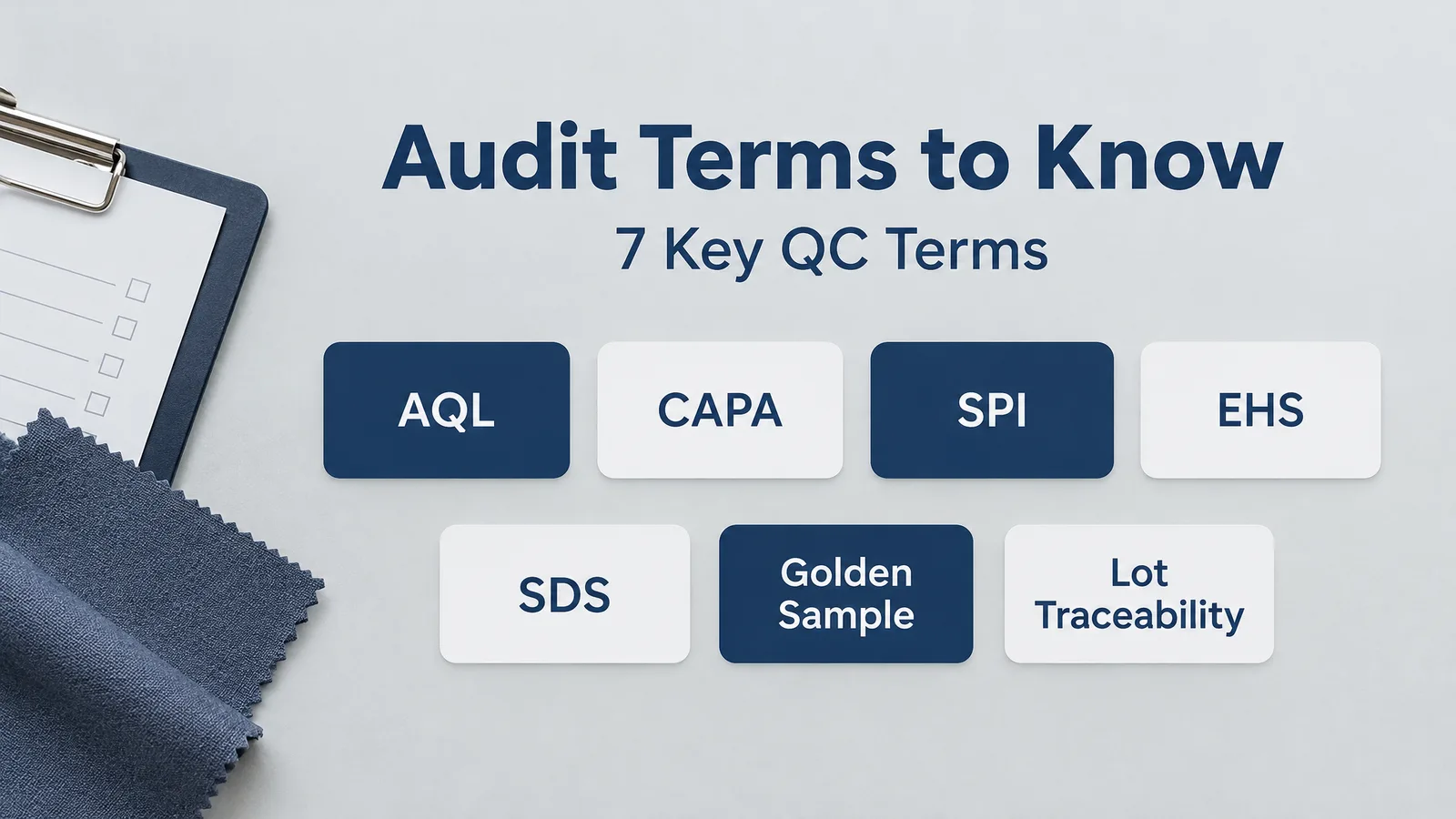
Half of a bad audit is a vocabulary problem. These seven terms mean different things to a buyer, a QC manager, and a factory owner.
- AQL — Acceptable Quality Limit: the defect level a sampling plan accepts before a lot is rejected.
- CAPA — Corrective and Preventive Action: the dated, owned, evidence-backed fix for a finding.
- SPI — Stitches per inch: workwear typically targets 10–12 on main seams.
- EHS — Environment, Health and Safety: exits, guards, ventilation, chemical storage, and training records.
- SDS — Safety Data Sheet: the chemical supplier’s hazard and handling document.
- Golden sample — the signed, approved reference garment every bulk comparison is measured against.
- Lot traceability — the chain from a finished garment back to the fabric roll, dye lot, and mill certificate.
Document Review, On-Site, or Video: Choosing the Audit Method
Every method proves something different. Mixing them up is how buyers pay for a tour and call it an audit.
| Method | What it proves | What it cannot prove | Use it when |
|---|---|---|---|
| Document review (desk) | Legal identity, certificate validity, report scope, lot references | That the floor matches the file | Always, as pre-work before booking |
| On-site audit | Records, floor, workers, and live challenges in one visit | Nothing about batches produced after the visit | First order or a new supplier |
| Live video audit | The current state of a named area, on demand | Access beyond the requested area | Travel is blocked, or re-verification is needed |
| Third-party inspection | Independent sampling at a defined production stage | Supplier systems and capability | Pre-shipment on repeat orders |
For a first order, default to on-site; use video only with a local spot check attached.
What Does a Workwear Factory Audit Cost?
Audits are priced as auditor-days plus travel, not as a fixed product. Five things move the number.
- Auditor-days — documents only, quality only, or social + quality + EHS in one visit.
- Travel and location — city, distance from the firm’s base, overnight stays.
- Report type — accredited third-party report versus an internal summary.
- Follow-up verification — whether CAPA closure needs a second visit.
- Your team’s time — sourcing, QA, and compliance staff for a full day.
The audit fee is rarely the expensive part. Rework, air freight, and field returns on a batch approved without one cost more.
Sampling and AQL: Decide Before Arrival
No buyer can inspect every unit, so decide the sample before arrival. Most buyers use ISO 2859-1, General Inspection Level II, and an AQL of 2.5 or 4.0 for major defects.
| Lot size | Code letter | Sample size | AQL 2.5 accept / reject |
|---|---|---|---|
| 501–1,200 | J | 80 | 5 / 6 |
| 1,201–3,200 | K | 125 | 7 / 8 |
| 3,201–10,000 | L | 200 | 10 / 11 |
| 10,001–35,000 | M | 315 | 14 / 15 |
Critical defects do not enter this table. Broken needle fragments, failed FR thread, missing reflective tape, and wrong compliance labels are zero tolerance at any sample size. Confirm the level and AQL against the buyer’s inspection manual, because higher-risk garments often use a tighter plan than 2.5.
Social Compliance Standards Compared
Quality and social records are separate audits. Buyers often name a standard without knowing what it delivers.
| Standard | Run by | What it is | What it provides | Limitation |
|---|---|---|---|---|
| BSCI | amfori | Social audit protocol used by European retailers | A widely accepted audit report | An audit, not a certification |
| SMETA | Sedex | Four-pillar ethical trade audit | The report most UK and EU buyers request | A report, not a certification |
| SA8000 | Social Accountability International | Certifiable social accountability standard | The strongest third-party social signal | Fewer factories hold it |
| WRAP | Worldwide Responsible Accredited Production | Apparel-focused production compliance certification | Recognition across apparel supply chains | Focused on production compliance |
| SLCP | Social & Labor Convergence Program | Converged assessment framework | Less audit fatigue, one shared data set | Not pass/fail and not a certificate |
Ask which standard the supplier holds, then verify it at the issuing registry. A logo proves nothing.
How to Run a Workwear Factory Audit? 8 Steps from Prep to CAPA
https://www.youtube.com/watch?v=pemiE6D_p84
The eight steps below run in order. Each one produces a record needed in the closing meeting.
Step 1: Define Audit Criteria Before You Book the Visit
In my last three program setups, the audit failed before arrival. The supplier could not restate the scope. Start by converting the order into hard audit criteria.
List garment category, end-use risk, wash frequency, climate, standards, and replenishment cadence. During LantaoWork pre-audit calls with client teams, I split the scorecard into four blocks: legal/compliance, material traceability, process capability, and worker/social/EHS controls.
Set non-negotiables: exact standard match, traceable materials, no unauthorized subcontracting, zero critical safety defects, and evidence-backed QC controls. Score each finding Critical (automatic fail), Major (conditional pass with CAPA), or Minor (approve with monitoring).
In our tests, the criteria that mattered shifted by product: hi-vis on fluorescent and retroreflective performance, FR on fiber and thread integrity, rainwear on seam sealing and waterproof testing. A serious supplier response is specific and asks about wash cycles, tape brands, and standard versions.
Ask the supplier to restate the audit scope in its own words and name the records it will show. Use text labels — Pass, Conditional Pass, Fail — never color alone. Use this construction workwear checklist to prep the criteria.
⚠️ Experience Warning: I have seen suppliers agree to “hi-vis” without naming ANSI/ISEA 107 or EN ISO 20471. Force the exact standard version into the scorecard before booking.
Step 2: Verify Legal Identity and Live Certification Paperwork

Document review starts at reception, not in a showroom. Ask for the business license original and the export license. Check that the legal entity name matches the contract, invoice header, and bank beneficiary. I reject personal bank accounts.
In my last audit, a “factory” sent a scan with a different company seal. That ended the visit.
Next, request two customer references and call them. Ask whether the PO name matches the bank beneficiary. Then request current third-party reports for your exact order: hi-vis, FR, waterproof, colorfastness, shrinkage, and wash durability.
A clean supplier pulls originals in minutes, and the lot numbers match the tech pack.
Compare document names, issue dates, report IDs, style references, and material lot references. An old passing report is not enough: fabric lots, trims, seam tape, and standard versions change. Require proof for the exact standard in scope, not a generic certificate folder.
Red Flags on the Document Table. Pause or reject when documents are screenshots rather than originals. Reject reports that do not match the fabric lot. Reject audit reports with another company name. Ask about unexplained gaps in export history.
A supplier that changes explanations under gentle questioning is a trading layer, not a controlled factory.
The supplier should map each certification to the product family, not hand over a random folder. Ask the lab for its ISO/IEC 17025 accreditation scope.
Accessibility note: quote the exact document title or field being checked, not “the green certificate.”
🧠 Author’s Take: I will delay an audit for missing originals. A factory with clean records retrieves them fast. Slow, blurry scans usually signal a broker.
Step 3: Test Physical Traceability from Warehouse to Cutting Room
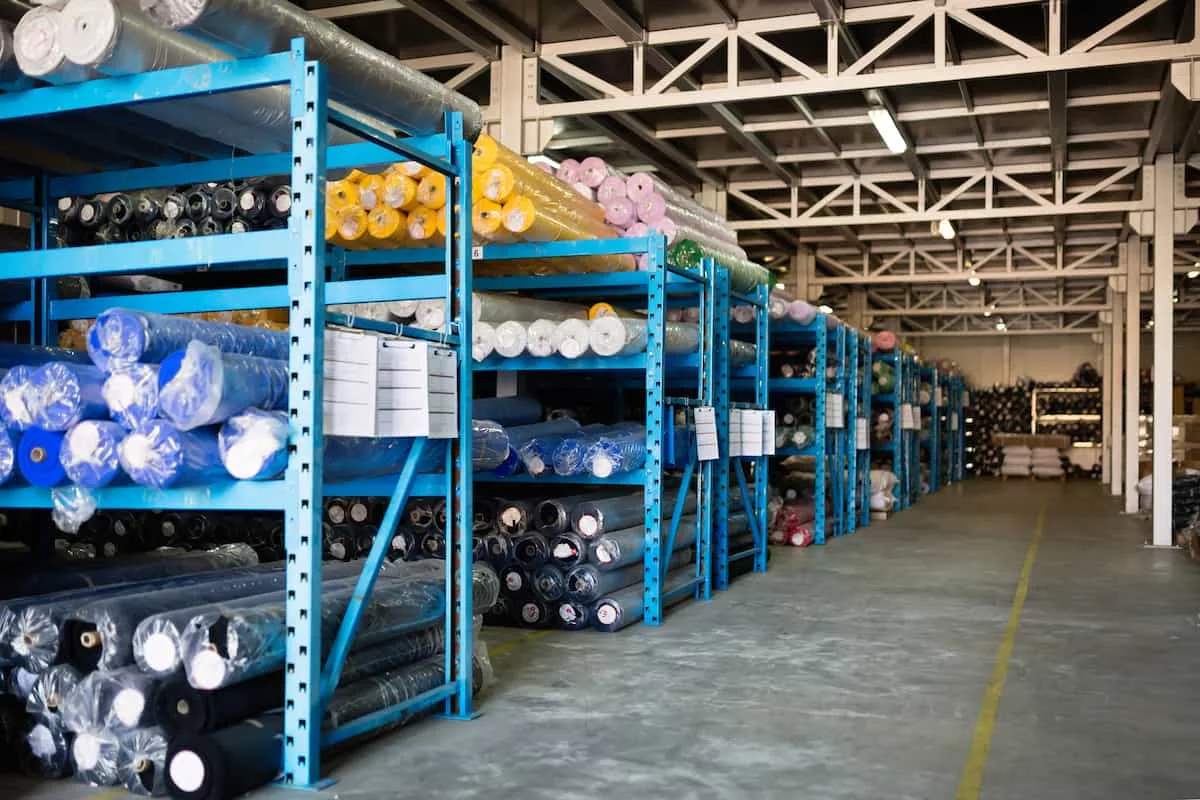
The audit starts in the raw-material warehouse, not the sample room. The warehouse tells the truth.
Pull one random fabric roll and ask the floor manager for five records: supplier name, lot number, incoming inspection report, test report, and current order allocation. If the clerk hesitates, that’s a warning.
For workwear, expand the check. Ask for the reflective tape brand and lot number. Verify FR fabric and thread composition against the tech pack. Check seam tape or waterproof membrane IDs, trims, zippers, labels, and care-marking materials. Each item must have a traceable lot.
In the cutting room, watch fabric resting time and spread discipline. Ask for marker approval and check grain line, stripe or reflective alignment, and shrinkage allowance. Pick one bundle ticket and follow it back to the roll.
Chemical compliance is next. Request SDS for adhesives and solvents. Check controlled storage. If dyeing or finishing is outsourced, ask for REACH or restricted-substance controls and ZDHC-style checks. If the order includes printed packaging, EU PPWR workwear packaging covers the labeling and material rules.
Example of a Traceability Break. Last month, I found a hi-vis roll with a lot sticker that did not match the incoming inspection log. The test report was for a different dye lot. That is a critical finding.
The auditor should trace one garment back to its mill certificate and dye lot without guesswork.
Accessibility note: quote the exact text on lot cards, bundle tickets, and shelves. Do not rely on color coding.
⚠️ Experience Warning: Handwritten lot numbers once led to a missing test report, a major finding, and a two-week production hold. Always verify the physical label against the digital record.
Step 4: Walk the Production Line from Cutting to Packing
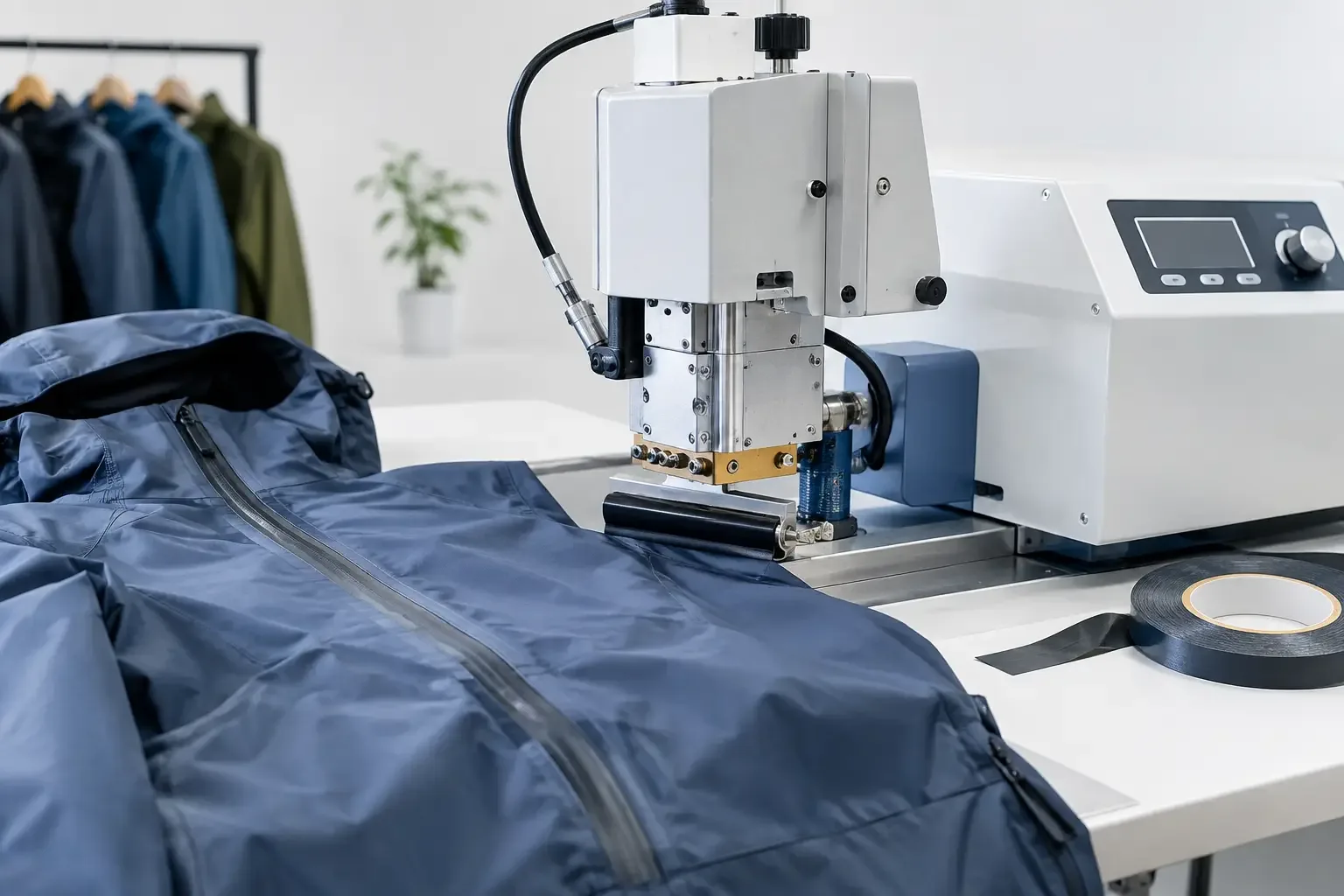
After paperwork, move to the floor. In our audits, we follow the physical flow: cutting, sewing, reinforcement, seam sealing, finishing, packing. Do not accept isolated cells. Walk the actual production order.
Check equipment against promised capability. Look for bartack, seam-sealing, hydrostatic-head, needle-detection, and pressing equipment. Ask for maintenance and calibration logs. Verify them against physical machine tags and recent use dates.
In one audit, a needle detector log showed daily checks, but the machine tag had a calibration date two years old. That is a critical finding.
Inspect garments in process. Check SPI consistency (target 10–12 per inch for workwear). Check seam allowance control, skipped stitches, tape placement, pocket reinforcements, zipper installation, cuff and hem construction, and reflective panel symmetry.
Pull a seam to feel thread tension. For FR orders, verify thread and trim suitability. For rainwear, test seam-seal integrity. For hi-vis, confirm tape placement and fluorescent panel continuity.
Run one live needle-detector challenge and watch the operator run the test.
For seam sealing, request a seam-seal parameter check: heat, speed, and pressure. In our tests, a 30-second delay in heat-up caused tape delamination. Remote alternative: require a continuous, unedited video walk-through, close-ups on demand, and timestamped machine logs.
If the line cannot run a live challenge, treat production capability as unproven. The same logic applies to lead-time claims, which we break down in custom workwear production time.
⚠️ Experience Warning: I once watched a needle detector challenge test where the operator passed the test piece around the detector head, not through it. The alarm never sounded. We failed the audit on the spot. Always watch the full test path.
🛡️ Prevention: Time the seam-sealing machine at cold start to set temperature. If it takes longer than the manual claims, batch consistency will suffer.
Step 5: Audit EHS, Labor Records, and Subcontracting on the Floor

EHS starts in the first 30 seconds. Look at exits, extinguishers, alarms, evacuation maps, machine guards, eyewash stations, ventilation, chemical storage, and SDS access. Note PPE actually worn or ignored.
Solvent smell is a red flag. Watch for blocked exits, missing guards, unexpected unlabeled bundles, and workers who hesitate when asked where a line normally runs.
For social compliance, request working hours, overtime, wages, grievance channel, child and forced labor controls, and dormitory conditions. Ask about freedom of association.
Pull one worker’s attendance card and match it to the line’s production output for the same day. In our tests, a 4-hour gap between the gate log and payroll triggered a major finding.
The most revealing workwear red flag is unauthorized subcontracting. It breaks chain-of-custody for certified garments. Look for unmatched bundle cards, styles not in the production plan, workers unsure of style names, freshly relabeled cartons, and capacity claims that do not match headcount and line speed.
To spot falsified hours, compare attendance, payroll, production output, and gate or line-assignment records. The numbers must agree.
Senior QA Manager Michael Ge, who runs LantaoWork’s inline inspection SOP, puts it this way: “Ghost lines show up in the gaps. A payroll list longer than the gate log, or a bundle card with no matching line assignment, means one of the two records is wrong.”
⚠️ Experience Warning: In one audit, a worker paused five seconds before pointing to a line. That pause led us to an unlisted subcontractor. I now time those hesitations.
Step 6: Validate QC Records and Physical Product Against Claims
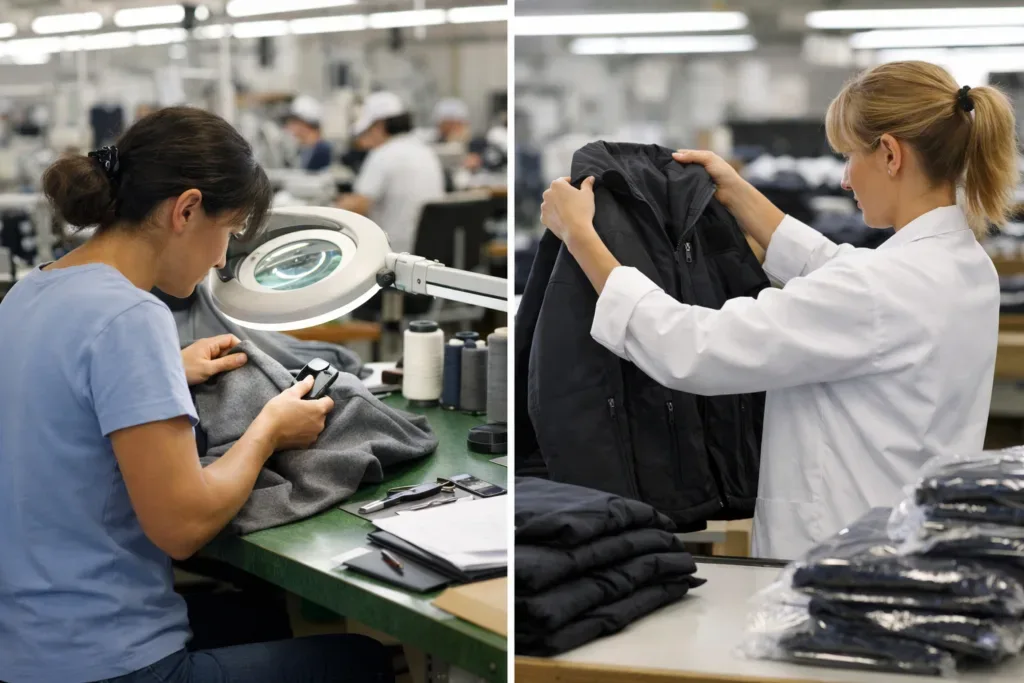
QC verification starts at the defect board, not the sales pitch. In our audits, I ask the QC manager to walk me through three levels: incoming, inline, and final/pre-shipment. Each level needs its own records. Do not accept a single “quality report” that covers everything.
Confirm the default AQL standard (usually 2.5 or 4.0). Ask how they classify Critical, Major, and Minor defects. Critical safety failures (broken needle fragments, failed FR thread, missing reflective tape) must have zero tolerance. I reject any factory that treats critical defects as “major.”
Request recent inline reports, measurement sheets, defect boards, rework logs, and final inspection records. Look for real defect codes like “broken stitch,” “seam slippage,” or “tape delamination.” In my last audit, the defect board listed only “other.” That is a red flag.
Then run a live sample review. Pull three random garments off the line. Measure chest, length, and sleeve. Flex the seam tape and listen for thread pops.
Check bartack density (target 8–10 stitches per bartack). Verify reflective placement against the approved sample. Check label accuracy (fiber content, care claims, country of origin). For waterproof garments, test seam integrity with a water spray. Compare overall workmanship to your golden sample.
Require proof the order is in the stage the factory claims. Factories call for inspection before 100% completion and hide unfinished bundles behind finished ones. Ask for a live carton pull and match carton labels to the request.
Floor observations, garments, and paperwork must reconcile without special preparation time. If the QC manager needs ten minutes to find records, that is a finding.
Findings Across 12 Workwear Factory Audits (Anonymized). Across the 12 audits behind this guide, five categories accounted for most findings. The counts are self-reported, so treat them as a starting benchmark, not a market statistic.
| Non-Compliance Category | Audits affected (of 12) | Most Common Record-Control Failure |
|---|---|---|
| Stitching defects (skipped stitches, seam slippage) | 9 | Inline reports missing operator signatures |
| Reflective tape application (placement, adhesion) | 7 | No tape lot traceability to test report |
| Seam sealing failures (rainwear) | 6 | Rework logs not linked to final inspection |
| Labeling errors (fiber content, care claims) | 5 | No approved label artwork on file |
| Final inspection before 100% completion | 4 | Carton pull refused or delayed |
Use these findings to benchmark the supplier, and compare category-specific defect codes in our construction workwear checklist.
🧠 Author’s Take: A factory that shows a clean, code-specific defect board and pulls random cartons without hesitation earns trust. A factory that shows a pretty heat-map with no numbers does not.
Step 7: Convert Findings into CAPA Actions and Closure Evidence

Leave the closing meeting with a one-page CAPA log. Verbal promises are useless. In LantaoWork closure reviews, I insist on dated photo evidence, named owners, and signed action items.
Classify every finding on the Step 1 scorecard before you leave the meeting.
The CAPA protocol is simple: 14-day deadlines for document gaps, 30 days for system corrections.
Any Critical finding or repeated Major issue triggers an automatic re-audit. As my QC lead at a hi-vis plant told me: “If you don’t date it and name it, it never gets fixed.”
Require specific evidence for closure: revised SOPs, training logs, dated photos, replacement certificates, new calibration records, or repeat test reports. Do not accept a promise to “fix it soon.”
Every finding needs an owner, a due date, and a proof requirement before releasing the PO.
Tie CAPA performance to bulk wholesale workwear pricing to see true total cost, not just unit price.
⚠️ Experience Warning: I once saw a supplier submit a “closed” CAPA with a photo of a different factory line. The owner name was fake. Now I verify every photo against a dated newspaper or GPS tag.
Step 8: Lock Contract Controls Before You Scale
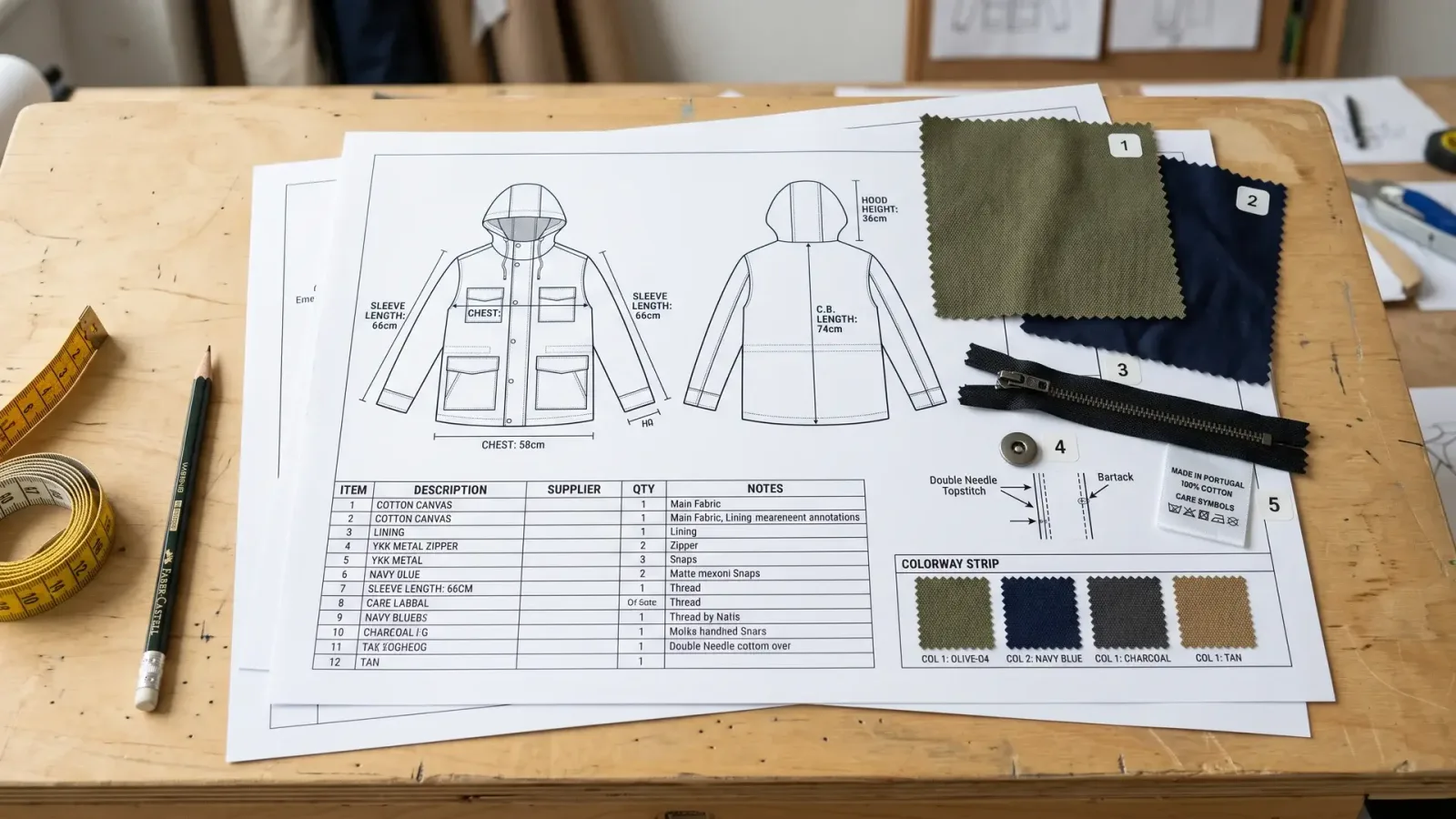
Close every audit with a contract review. In my experience, a supplier that says “we’ll manage it later” is a margin risk. Before releasing bulk, move the audit file into enforceable terms.
Lock these items into writing: approved spec pack, golden sample reference, material substitution policy, inspection regime, test-report cadence, shipment hold rights, and remedy process for late or defective delivery. Add a clause prohibiting unauthorized subcontracting. Add buyer audit and re-audit rights, including access to records and production lines.
For repeat programs, add replenishment controls: batch consistency, color continuity, labeling version control, and wash-life retention.
Confirm custom workwear MOQ, pilot-order performance, and capacity before signing.
🧠 Author’s Take: I will not release a scale-up PO without a golden sample reference and hold rights. Those two controls saved one client from a 40,000-unit color mismatch.
Troubleshooting: What Goes Wrong and When to Walk Away?

Each failure below comes with the decision threshold I use.
Test Report Exists but Doesn’t Match the Active Fabric Lot. Diagnosis: The mill swapped lots and reused an old passing report. Fix: Quarantine the lot. Demand mill-to-lot traceability. Re-test the actual roll. No production release. Decision: Walk away if traceability is missing. Conditional Pass if the re-test passes.
Desk Audit Passes but Floor Controls Fail. Diagnosis: Clean paperwork, rough floor. Fix: Run live challenge tests. Compare machine logs to physical machine tags. Escalate to conditional pass or fail. Decision: Conditional Pass only if live tests pass. Fail if critical controls are bypassed.
Labor Records Look Clean but Capacity Suggests Ghost Lines. Diagnosis: Logs that line up too perfectly usually hide off-book subcontracting. In one plant, attendance, output, and bundle flow contradicted each other.
Fix: Cross-check attendance and working hours against output, bundle flow, and worker answers. Re-audit if visibility breaks. Decision: Immediate Fail if visibility breaks. Conditional Pass if minor gaps close.
Safety Paperwork Is Complete but Exits, Guards, or Chemical Controls Fail. Diagnosis: Forms don’t stop fires. I’ve found blocked exits, missing guards, and unlabeled solvent drums.
Fix: Classify as major or critical by risk. Hold the PO until the physical control is verified against OSHA exit route requirements. Decision: Fail for any critical safety finding. Conditional Pass for major items with a dated CAPA.
⚠️ Experience Warning: Time the needle detector challenge. If the alarm stays silent when the test piece passes through, fail the audit on the spot.
🧠 Author’s Take: Most audit failures trace to one root cause: records that don’t match the floor. Trust physical evidence first.
Frequently Asked Questions About Workwear Factory Audits
1. How long does a workwear factory audit take?
Plan one full day onsite per factory, plus pre-audit document review and post-audit CAPA verification.
2. Can I audit a workwear supplier remotely?
Yes, as a conditional method: live unedited video, random document pulls on camera, and a local spot check before shipment. Pre-recorded clips prove nothing.
3. What is the difference between approve, conditionally approve, and walk away?
Approve means no critical or major findings. Conditionally approve means major findings with a dated CAPA. Walk away means any critical safety, certificate, subcontracting, or traceability failure.
4. Which standards should I check for hi-vis and FR workwear?
Match the market standard before booking: ANSI/ISEA 107 in the US, EN ISO 20471 in the EU, and the relevant FR standard for the hazard. Map each certificate to the product family and fabric lot.
5. What should an audit quote include?
Quotes are auditor-days plus travel, and the fee moves with firm, city, scope, and report type. Ask for the man-day rate and what the report covers before comparing.
6. How many units should I inspect during a workwear factory audit?
Use the table above: 3,201–10,000 units at Level II is code L, sample 200, accepting 10 major defects at AQL 2.5. Critical defects are zero tolerance.
Conclusion
You now have a repeatable audit workflow: approve, conditionally approve with a dated CAPA, or walk away. Turn this checklist into a live scorecard, or send it to technical and compliance teams.
For supplier selection, start with how to choose a custom workwear manufacturer.
If you need audit support or supplier validation, contact LantaoWork. Our process and product scope are covered in our services.
Trust disclaimer: I built this checklist from field practice, not supplier promotion, and I am not paid by any factory to promote these findings.
A good audit ends with verified evidence in hand, a clear disposition, and no vague optimism.

Leave a Comment
Your email address will not be published. Required fields are marked *