Table of Contents
The short answer Most custom workwear orders collapse at three gates: unclear specs, verbal approvals, and late-stage fabric changes. Freeze the spec first, then wash the pre-production sample before releasing bulk.
Most custom workwear failures are not fabric problems. They are process-control failures, and they cluster at the same three gates.
This guide maps the custom workwear ordering process end to end, from intake brief to final distribution, drawing on LantaoWork order records and what a workwear manufacturer sees on the factory floor.
It is written for procurement directors and operations heads running multi-site uniform programs. Stocked-logo programs move fast; proprietary fabrics, compliance garments, or multiple sites extend the runway.
Prerequisites: Decide These Eight Inputs Before You Quote
This checklist was vetted against 12 multi-site RFQs that stalled at quoting in 2025. It is first-party factory experience, not paid placement.
| Input | What goes wrong without it |
|---|---|
| Headcount by role, location, and gender/fit category | A missing size curve forces recuts and a re-quote later |
| Garment list by job function | Suppliers price the wrong garment class and the comparison breaks |
| Target in-service date and rollout window | No date means no freight mode, and freight mode sets the whole schedule |
| Annual replacement forecast and new-hire estimate | Turns a one-off order into a program, which changes the unit price |
| Budget range and MOQ tolerance | Sets the unit price; the MOQ guide covers what moves it |
| Current pain points — shrinkage, logo peeling, color mismatch, sizing complaints | Tells the supplier which test reports and tolerances to plan for |
| Editable brand assets and logo ownership confirmation | Without vector source, the artwork stops at the sample stage |
| ERP, PunchOut, or employee portal requirements | Decides whether this is a purchase order or an ongoing catalog feed |
Map stakeholders next — procurement, operations, HR, safety/EHS, brand, finance, site managers — and name one approval owner per document.
⚠️ Safety First: Do not approve PPE on looks alone. Verify hi-vis against EN ISO 20471 and laundering durability against EN ISO 15797 before sign-off.
For US programs, keep current OSHA PPE guidance in the brief, and request OEKO-TEX or GRS documents where your market needs them.
🧠 Author’s Take: A missing PPE test report stalls sampling more than any design issue. One absent safety sign-off can cost six weeks, and locked approvals prevent most RFQ derailments.
How to Take a Uniform Order to Site Rollout in 7 Steps?
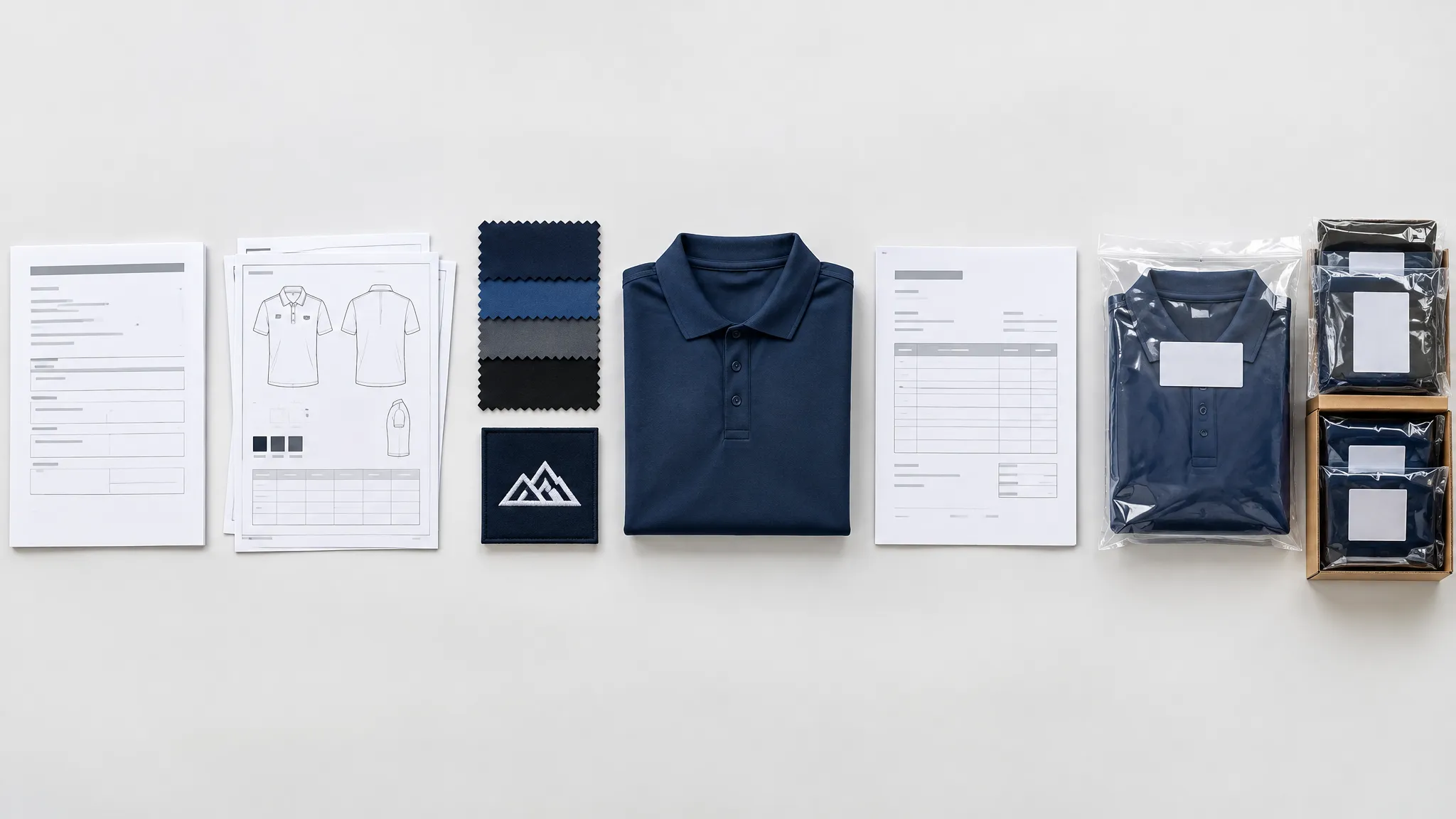
Each step leaves one working document: an intake brief, a tech pack, a locked fabric-and-decoration pairing, an approved washed sample, a binding PO, a milestone log, and a distribution plan.
Step 1: Build the Uniform Intake Brief
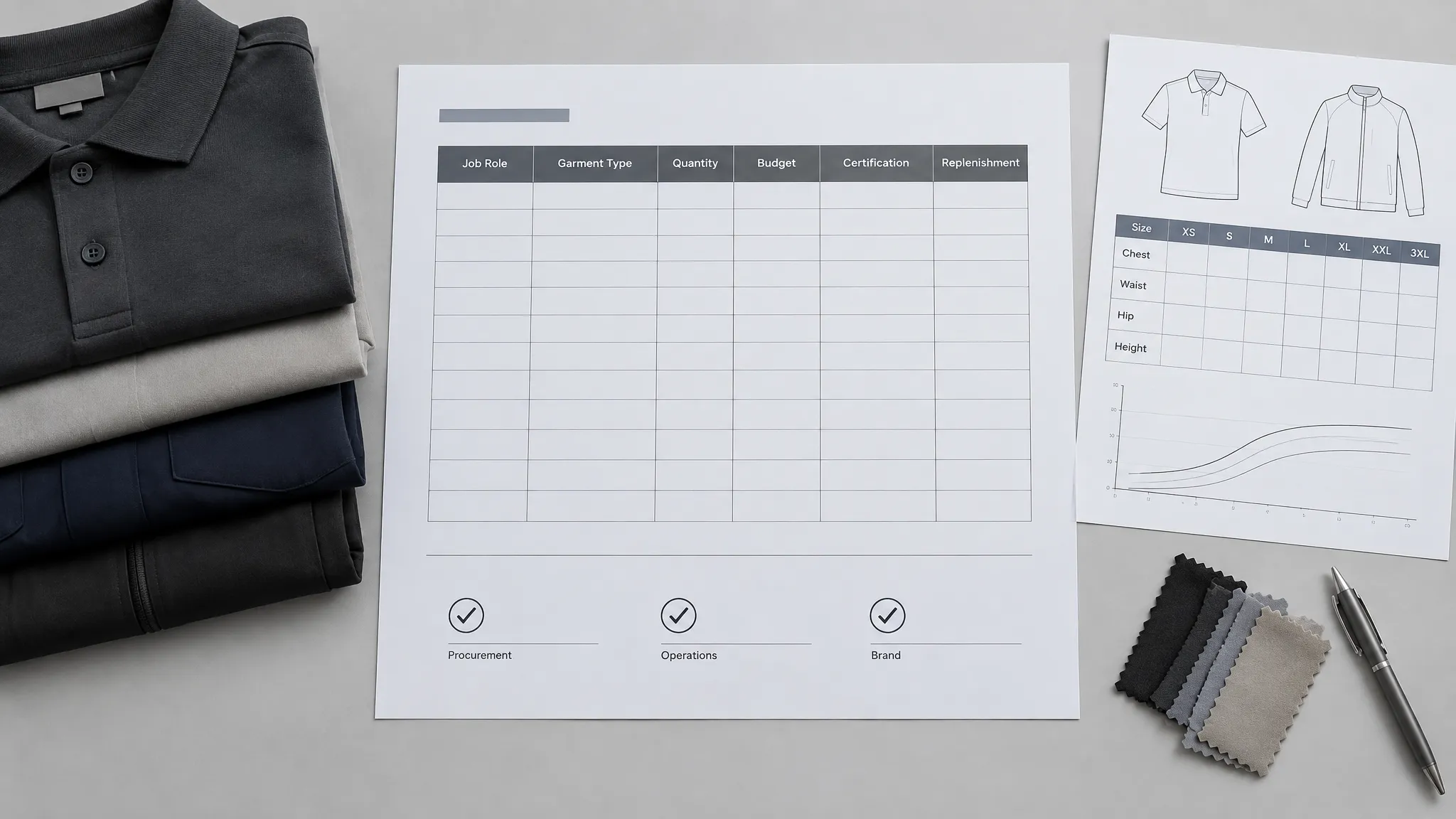
One row per role, and every row decided before the brief goes out. Verbal scope consistently fails, and suppliers quote differently once roles, garments, and quantities are locked.
- Job role and environment: patrol officer, outdoor, high-vis.
- Garment type and use frequency: security shirt, five days per week.
- Climate and movement needs: hot and humid, side-stretch panels.
- Certification or wash resistance: EN ISO 20471, 50 industrial washes.
- Quantity and location: 40 units, Dallas DC, pre-approved size curve.
- Budget ceiling and replenishment: $18 per unit, new-hire kit auto-replenished.
Do not keep any SKU marked “TBD.” Unresolved sizes have stalled a 700-garment order for weeks. The brief is ready when procurement, operations, and brand sign the same version, and one quote sheet is what lets a security uniform program and a construction rollout be compared line for line.
⚠️ Experience Warning: Suppliers quietly assume colorways and fabric weights when fields stay TBD. That destroys quote comparability.
Step 2: Build the Production-Ready Tech Pack
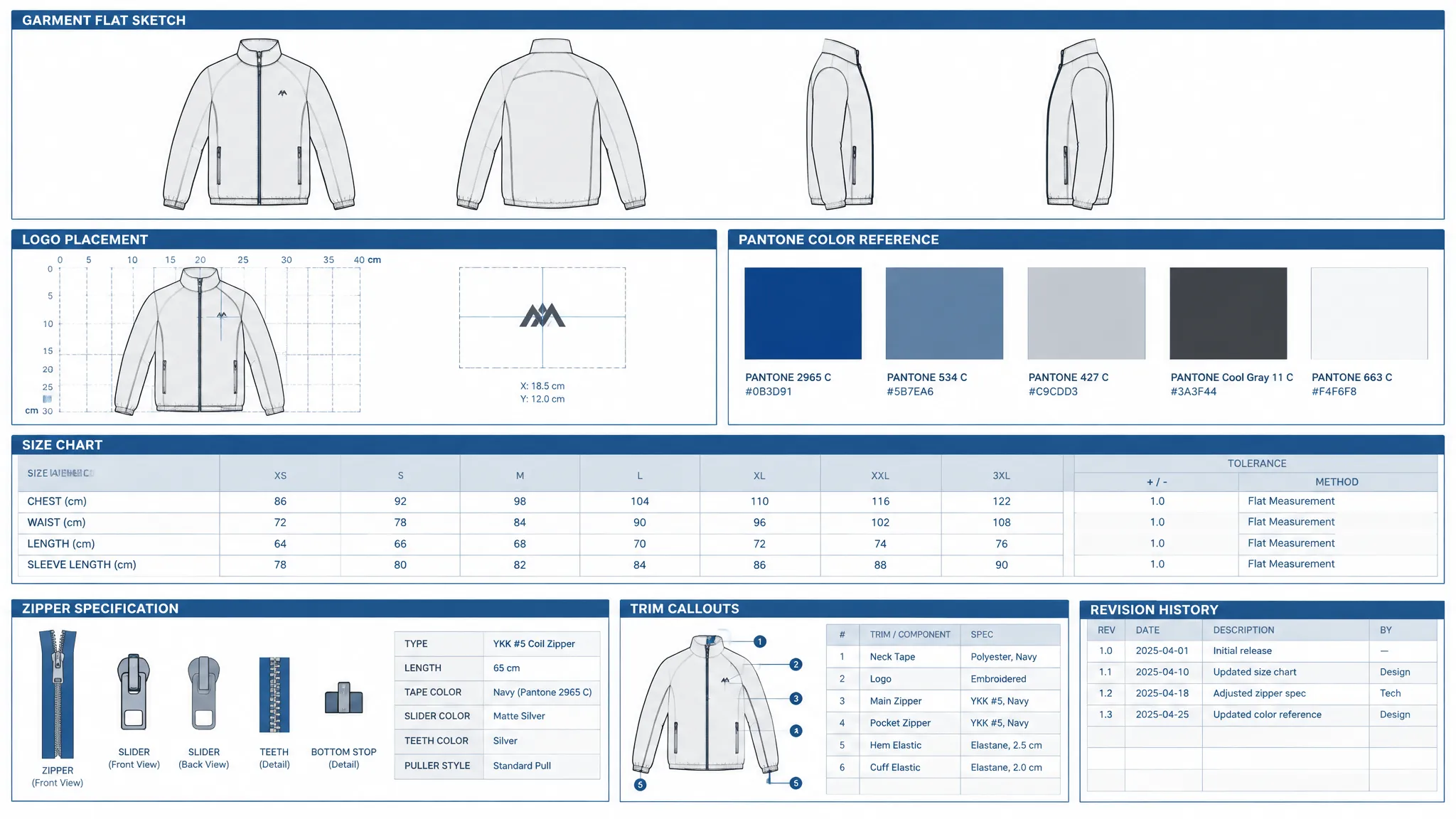
Do not send the intake brief yet. Convert it into one factory-usable instruction set; suppliers quote wildly when this step is skipped. The document pack table below lists the seven sections it has to carry.
Run the digital verification SOP before sending:
- Confirm vector artwork or high-resolution source files.
- Verify Pantone or PMS (Pantone Matching System) references where required.
- Check logo placement against pockets, plackets, seam lines, and reflective panels.
- Confirm stitch and seam choices fit the end use.
- Validate naming, revision date, and approval owner on each file.
A production-ready pack looks calm: flats separate, placement boxes carrying coordinates, POM tolerances beside each size, trim callouts listing exact zipper lengths, and a revision history showing who changed what and when.
Crowded notes, missing measurements, and artwork callouts sitting on top of seam lines are red flags — a pack was once rejected because the logo crossed the reflective tape edge by 2 mm.
The pack is ready when the supplier can price, sample, and inspect against the same document without basic clarification questions. If they ask “Where does the logo go?” or “What zipper length?” the pack failed.
🧠 Author’s Take: The biggest sample-phase confusion is missing revision ownership. Every file needs a dated approval owner, or the factory follows the latest email attachment instead of the audited pack.
Step 3: Lock Fabric Specification and Decoration Method Together
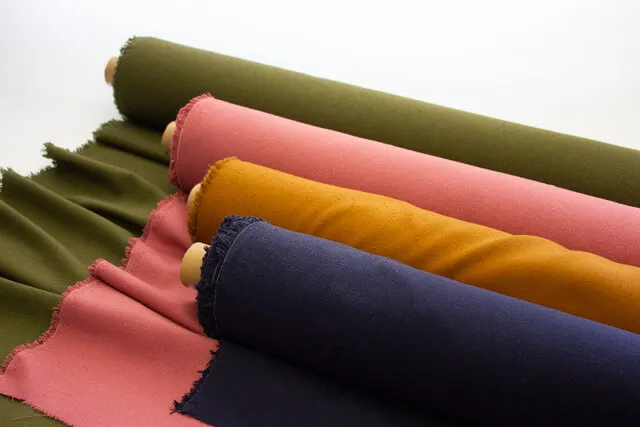
Make one approval decision, not two. Suppliers treat fabric and branding as connected only when the buyer forces that pairing early — a 600-unit polo order can clear fabric approval and still lose two weeks because the embroidery backing is too rigid for the selected pique.
The textile side covers fiber content and blend, GSM (grams per square meter), abrasion, tear, and laundering demands, climate and mobility needs, safety features such as FR (flame-resistant), anti-static, antimicrobial, and high-vis, and eco or compliance preferences. The decoration method is chosen by garment class:
- Embroidery: durable, professional branding on polos, outerwear, and caps.
- Screen printing: larger graphics on flatter surfaces.
- Heat transfer: complex art or smaller runs, but weaker in harsh wash environments.
Accept the pairing only when you can name the tradeoff out loud: “We accepted a slightly heavier hand-feel because embroidery is the only option that survives 50 industrial washes.”
🧠 Author’s Take: Lock the wash protocol here. The same sample can pass at first touch and fail after five washes, so a washed sample is now required before any bulk approval.
Step 4: Approve the Sample and Run Pre-Production Tests
https://www.youtube.com/watch?v=Y4ItmPzz8OQ
This is the approval gate, and the last cheap place to catch an expensive mistake. Approve a sample by eye and you pay for a full run of the wrong garment.
1. Approve the digital proof by measurement. Check logo position against the tech pack with a ruler, not your eye. Confirm spelling, scale, and contrast, then write the approval date and owner on the file.
2. Review the fit sample on real wearers. Fit each size across at least three wearers. Check seam strength, puckering, and hardware function.
3. Review the pre-production sample if anything changed. A pocket-width change after proto approval creates a new garment, and the bulk order inherits it unchecked.
4. Run wash, shrinkage, and wear tests before authorizing bulk. Wash one full set per color. Measure shrinkage and torque against ISO 5077 or the equivalent AATCC TM135 home-laundry test, then check colorfastness and decoration integrity.
Our Head of Production Operations sees those same three failures every season: approving by eye instead of a written sign-off, skipping the recheck after a change, and testing the swatch instead of the sewn garment.
Validation: Bulk starts only after the final approved sample, test outcome, and revision code match the PO. If they do not match, stop.
🧠 Author’s Take: The washed pre-production sample is the real approval. Sign off only after the garment survives your actual laundering protocol.
Step 5: Convert the Approved Sample into a Binding Commercial File
Beautiful samples still fail rollout when the PO skips replenishment, liability, or packaging rules. Open one centralized enterprise PO, attach the approved sample, tech pack, and washed test result as contract appendices, and name the SKU, style, and revision number on every page.
The second table below covers the terms your PO has to name.
Four controls competitors usually omit: buffer stock of 3–5% extra units for damage and new hires; a vendor-managed inventory (VMI) or core-stock clause if the program runs continuously; price review triggers tied to raw material index moves; and an employee allowance portal or PunchOut feed.
Validation: Procurement traces every line item back to an approved technical document and a named operational owner. If not, stop the PO.
🧠 Author’s Take: We once approved a 500-unit order without a remake SLA. Six logo misplacements became a four-week email chain that a two-sentence clause would have fixed in days.
Step 6: Monitor Production to Final Packing Release
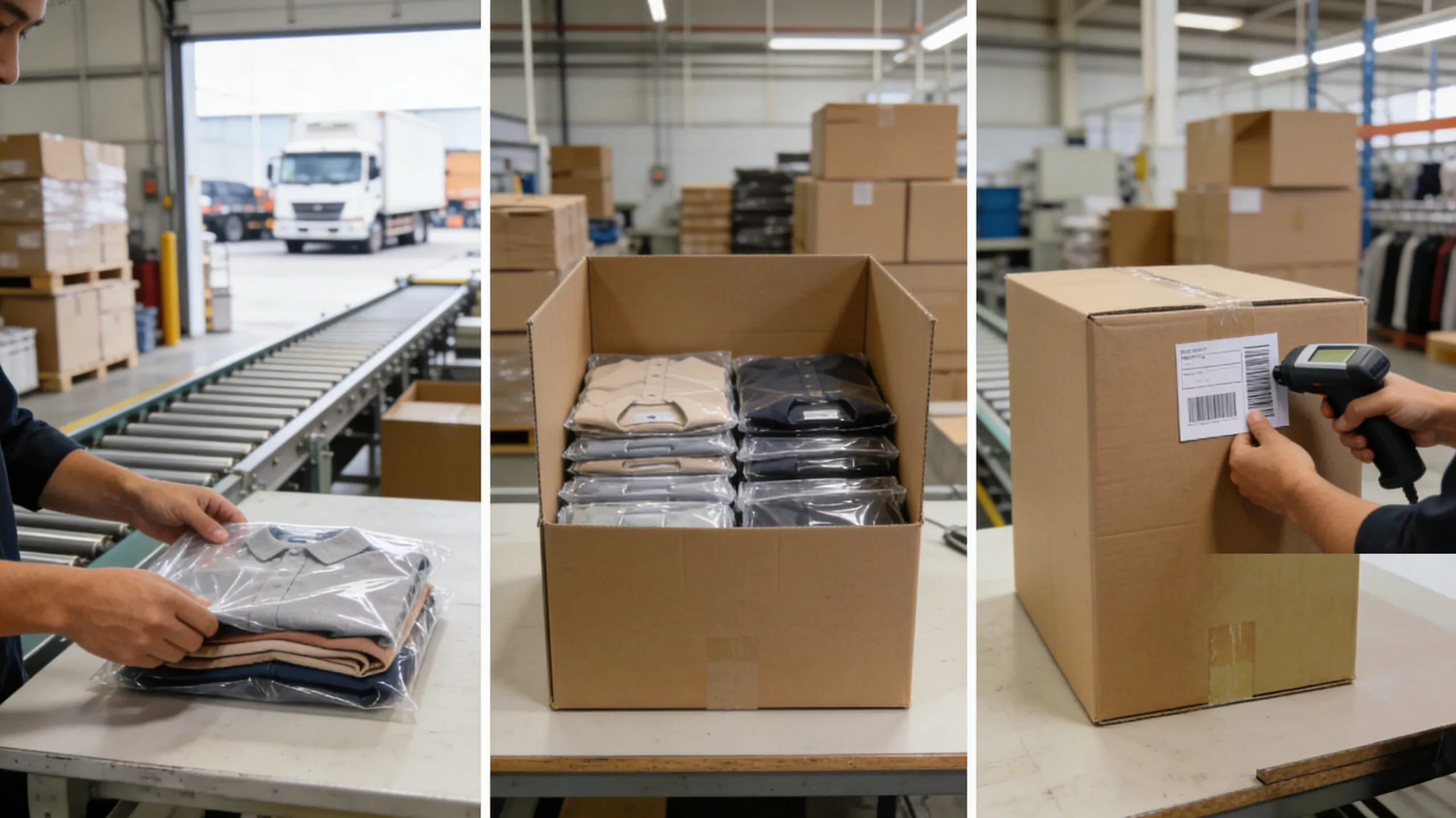
After the PO is live, walk the factory floor in this order. Suppliers that skip early checks lose the most time later.
- Raw material verification: match fabric lot cards against the PO before cutting.
- Cutting and panel control: confirm markers, ply height, and shade grouping.
- Sewing line setup: watch first-piece sewing. Check seam allowances and needle type.
- Decoration application: confirm logo placement against the sealed sample, not the artwork email.
- Inline QC and first-off approval: sign the first-off garment before full decoration runs.
- Final inspection and packing release: inspect finished goods by carton before sealing.
Final inspection applies AQL 2.5 for major defects, 4.0 for minor defects, and zero tolerance for critical defects, sampled under ISO 2859-1. Inline checks flag placement drift above 3 mm, seam width variation beyond 2 mm, and shade differences visible under the lightbox.
Validation: Production is on track when milestone reports map to the approved timeline and any deviation is escalated before final packing. If a report says “sewing 60% complete” while the sample revision window is still open, stop and ask.
🧠 Author’s Take: We catch more defects at first-off than at final inspection. Approve the first piece, then let the line run.
Step 7: Execute the Rollout and Distribute Kits

Factory release is not delivery. Last-mile errors erase a year of fabric, fit, and approval work, so decide the freight mode first — the air vs sea freight comparison covers lead time, cost, and risk.
Before shipment, confirm four documents: commercial invoice, packing list, bill of lading, and country-of-origin certificate. A packing list without carton-level SKU counts is how shipments get held at customs.
The usual route is centralized receiving plus controlled site distribution: pallets ship from the factory to one depot, and site managers receive labeled kits rather than mixed cartons. Direct-to-employee packout suits dispersed teams.
Either way, build a reorder pack — style numbers, logo files, approval history, and size curves — so future orders do not restart the program.
On arrival, check what you received against the shipping documents, open one random carton to verify each inner pack list, and refuse boxes with missing PO references. The program is operational when receiving counts match the shipping documents, kits match roster needs, and replenishment rules are documented.
⚠️ Experience Warning: We once watched a 400-unit rollout stall because two cartons had no PO reference, and every box had to be opened and manually identified. Label cartons with SKU, size, and employee name before they leave the factory.
The Document Pack, Field by Field
Two artifacts carry the program; everything else is a conversation until these exist on paper. The first is the tech pack, in seven sections.
| Tech pack section | What it must contain |
|---|---|
| Cover page | Style name, version, end use, and target market |
| Technical flats | Front, back, and inside views |
| Bill of materials (BOM) | Fabric, lining, thread, zipper, buttons, labels, reflective tape, packaging, and branding |
| Points of measure (POM) sheet | Measurements with tolerances, by size |
| Seam and construction notes | Stitch type, seam allowance, and hardware |
| Artwork page | Placement coordinates, with nothing crossing a seam line |
| Care label and packaging instructions | Care wording, folding, and the polybag or kitting spec |
The second is the purchase order.
| PO term group | What it must name |
|---|---|
| Quantity and size | Bands and size breakdown by location, role, color, and fit |
| Price | Unit pricing plus setup and digitizing charges, set against the bulk pricing guide; and MOQ per style, color, and logo combination |
| Payment | Deposit timing tied to fabric cutting, not sample approval |
| Trade | Incoterms or shipping responsibility, named explicitly rather than implied |
| Packaging and kitting | Branded packaging, barcodes, and individual employee sets, specified against the branded packaging format and the EU packaging rules |
| Quality and remake | Approved tolerance and defect language with an AQL reference; a replacement or remake SLA with response time and freight liability; and the reorder process and stockholding expectations |
Benchmarks: Branding Methods, Defect Risk, and Production Windows
These figures draw on our sample and bulk production logs covering 2025–2026, and on the durability testing we run on every fabric lot. Use the branding row before prototype approval, not after bulk cutting.
| Branding method | Sample lead time | Common defect | Rework trigger | Wash/durability outcome |
|---|---|---|---|---|
| Direct embroidery | 7–10 days | Thread breaks, puckering | Logo detail below threshold or backing too stiff | Holds 50 industrial washes |
| Screen printing | 5–7 days | Ink cracking, pinholes | Large solid areas over seams | Strong, but heavy layers can stiffen after washing |
| Heat transfer | 4–6 days | Edge peeling, color shift | High-wash chemicals or dryer heat | Shortest life in harsh laundering |
Operations limits to verify before approval: artwork arrives as vector AI or PDF with Pantone references where print color matters, and no embroidery text drops below 6 mm cap height or screen print line below 1.5 mm stroke.
Chest logos never cross side seams or pocket edges, and backing, thread, or ink systems are chosen per substrate.
The same logs give our internal lead-time breakdown rather than generic averages. These windows run partly in parallel, so their total overstates the calendar.
| Production window | Working days |
|---|---|
| Material readiness | 7–12 |
| Sample revision | 7–10 |
| Bulk sewing | 10–18 |
| Decoration | 3–6 |
| Final QC | 2–4 |
| Packing and dispatch | 2–5 |
Frequently Asked Questions About Custom Workwear Ordering Process
1. How long does custom workwear manufacturing take end-to-end?
Budget 45 to 65 working days from approved brief to dispatch, from internal production logs for 2025. The numbers we quote match the production time guide: approved sample to in-hand runs 45 to 60 days on expedited freight, roughly a month longer by sea.
2. What is the minimum order quantity for custom workwear?
Quoted floor: 100 units per style. On a fully custom program the effective minimum often lands at 200–300 units once dye-lot and trim minimums are added, because setup costs spread across the run. The custom workwear MOQ guide covers which minimum applies before you lock the budget.
3. How do I prevent logo placement errors in bulk production?
Freeze measurements, not eyeballs. Placement gets checked against the sealed sample with a ruler, not visual memory, and no logo crosses a seam line, pocket edge, or reflective tape by even a millimeter. Inline QC flags any drift above 3 mm.
4. What is AQL and why does it matter for workwear production?
AQL stands for Acceptable Quality Level — the maximum share of defective pieces tolerated in an inspected batch, sampled under ISO 2859-1. Final inspection applies AQL 2.5 for major defects, 4.0 for minor defects, and zero tolerance for critical defects.
Conclusion: Freeze the Spec, Then Let the Factory Run
Hold a complete intake brief, a sealed tech pack, an approved washed sample, and a locked PO, and the hardest part of the program is already under control.
Failed orders unravel for the same three reasons: a spec that was never frozen, an approval that was never written down, or a fabric change that arrived too late to wash-test.
Build the document pack this guide describes, and if a supplier cannot work from it, you walk away.
Contact LantaoWork to review your workwear brief.
Transparency note: This article is first-party factory experience on LantaoWork’s own production floor, not an independent review. The figures draw on our own order logs, reviewed by our Head of Production Operations; the author leads fabric and wash-test qualification. No factory paid us to shape these findings.

Leave a Comment
Your email address will not be published. Required fields are marked *