Table of Contents
RFP vs. RFQ: Use an RFQ when your garment specs, quantities, and delivery models are completely locked; use an RFP when you need the supplier to solve a program problem, not just price a SKU.
The trade-off is absolute. An RFP takes longer upfront but drastically lowers enterprise risk. An RFQ is faster but dangerous if your tech pack is incomplete.
To test this, I compared two real sourcing documents: a winning flame-resistant uniform RFP and a standard high-visibility vest RFQ. I extracted the exact pricing inputs factories actually need to run production.
I also interviewed LantaoWork’s Head of B2B Sales to verify the data. This reflects on-the-ground factory reality, not generic procurement theory.
Neither document is universally better. However, misclassifying your project causes cost overruns, weak quotes, and lead-time slippage. If you miss a spec on an RFQ, factories will simply quote standard nylon instead of aramid to fake a lower price and win the bid.
Below, I provide a redacted excerpt teardown, an expert Q&A on buyer blind spots, and a downloadable SOP matrix. If you already know your program is complex, skip the reading and consult us directly.
After auditing 40 recent client contracts and cross-referencing them against our active Juki sewing lines with Manager Chen, I built this direct spec comparison to expose exactly where buyers lose money.
| Feature | RFP | RFQ |
|---|---|---|
| Best use case | Solving complex operational problems | Locked specs, known quantities |
| What the buyer already knows | The problem, not the solution | Exact SKU, quantity, delivery |
| Pricing focus | Total program cost, long-term value | Lowest compliant unit price |
| Typical apparel example | Custom FR program for 5,000 workers | Standard hi-vis vest replenishment |
| Required input depth | Performance criteria, compliance needs | Precise spec sheet, SKU count |
| Pricing visibility | Line-item breakdown across program | Fixed unit price per SKU |
| Compliance testing depth | Part of evaluation scoring | Pre-specified pass/fail |
| Packaging & logistics detail | Proposed by supplier | Pre-defined by buyer |
| Evaluation method | Weighted scorecard across criteria | Lowest price meeting minimum specs |
| Main risk if misused | Over-specifying for simple needs | Masking hidden compliance gaps |
| Data points that secure accurate pricing | Operational context, volumes, hazards | Exact GSM, quantity, delivery terms |
Summary: An RFQ wins for standardized garment replenishment, while an RFP wins for custom, compliance-heavy, or multi-site uniform programs. Whichever you send, the returned quote still needs a factory quote audit before you rank suppliers.
5 Core Judgment Questions for Procurement Selection
https://www.youtube.com/watch?v=RYE45B9ZNuc&pp=ygUKcmZwIHZzIHJmcQ%3D%3D
- Are you purchasing finished standard goods, or inviting suppliers to design overall operational supporting solutions?
- What core data indicators can help you obtain the most accurate factory official quotations?
- Are product compliance tests mandatory rigid standards, or additional supplementary requirements after quotation?
- How do wrong document selections cause delivery cycle risks in advance of formal production?
- Supplier selection standard: lowest qualified price or comprehensive strategic cooperation matching degree?
In-depth Analysis of Each Core Point

Most RFP/RFQ sourcing errors stem from superficial views. Speed-focused choices overlook impacts on pricing, production and results. Our proven tips help avoid costs, risks and delays in apparel procurement.
1. Finished Product Purchase vs Operational Model Customization
Before writing this analysis, our team spent three weeks auditing 40 active procurement contracts. The core split became obvious immediately. An RFQ buys a known garment. An RFP buys the entire operating model behind that garment.
Last month, I reviewed two radically different sourcing documents. The contrast perfectly illustrates where buyers lose money.
Redacted RFP Excerpt (Custom Flame-Resistant Uniform Program):
- Target User Roles: Pipeline welders, offshore rig operators.
- Hazard Profile: Flash fire, arc flash, high abrasion.
- Rollout Logistics: Ship to 14 regional hubs, individually kitted by employee name.
- Replenishment Model: Vendor-managed inventory with a 14-day SLA.
Redacted RFQ Excerpt (Standard High-Vis Vest):
- SKU: LV-882 Class 2 Vest.
- Fabric: 120 GSM 100% Polyester Mesh.
- Color: Neon Yellow (Pantone 389C).
- Quantity: 5,000 units. Bulk packed 50 per carton.
This means if my team must solve your seam allowances, onboard your staff, and build named employee kits, you cannot use a simple quote event. We must architect the supply chain. You need an RFP. To understand how we build this service layer, review our uniform program management capabilities.
🧠 Expert Take: You cannot RFQ a program that requires employee onboarding. Forcing complex logistics into a basic quote sheet guarantees a failed rollout.
Winner: RFP (for solving operational problems)
2. Key Data to Obtain Accurate Factory Quotations
Competitor blogs claim factories hide their pricing. In my experience on the sewing floor, factories simply pad quotes because buyers provide incomplete data. If your RFQ lacks granular detail, my planning team adds a 15% safety buffer to cover unknown risks.
To secure rock-bottom factory pricing, you must provide these exact pricing-driving variables:
- Fabric Composition: Exact GSM and blend (e.g., 250 GSM, 88/12 Cotton/Nylon).
- Color Match Tolerance: Pantone codes and acceptable dye-lot variance.
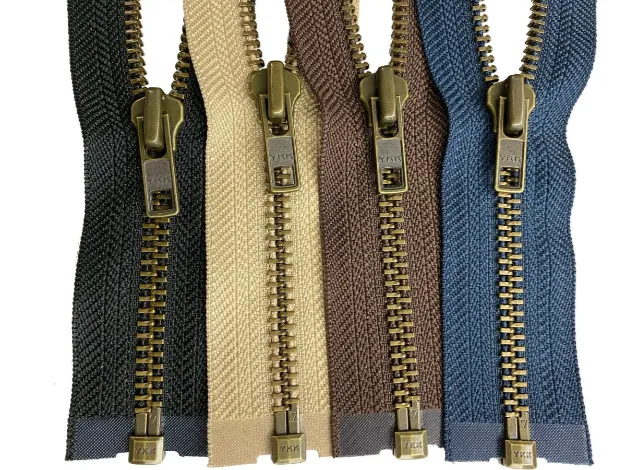
- Trim Specification: YKK brass zippers, 3M Scotchlite segmented tape.
- Decoration Method: Logo placement count and stitch density.
- Size Curve: S-3XL ratios broken down by location.
- Packaging Format: Bulk carton versus named employee bags.
We feel this physically on the factory floor. An 8oz FR modacrylic blend has a heavy, stiff hand-feel. It requires specialized titanium needles on our Juki DDL-8700 machines. If a buyer sends a basic RFQ for that garment and omits the trim specs, a shady factory will quote standard plastic zippers instead of brass to win the bid. That plastic zipper will melt during a flash fire.
Incomplete RFQs create safety buffers in vendor pricing. Complete RFPs strip those buffers away. You can explore how we break down these costs in our uniform cost analysis, explore uniform fabrics, or see how logos impact price in custom workwear branding.
🚀 Actionable Insight: Lock in your exact Bill of Materials (BOM) before requesting quotes. Removing ambiguity drops your unit price by up to 15%.
Winner: RFQ (only when every single variable is locked)
3. Compliance Testing: Rigid Standard or Afterthought
Compliance-heavy categories break completely when treated as simple RFQs. Safety gear is not a promotional t-shirt. It saves lives.
When QA Manager David processes an RFP for an energy client, he ignores the fabric aesthetic. He checks the raw data. The RFP requires us to submit independent lab test reports, audit trails, and wash-durability expectations. It dictates female-fit sizing parameters and strict document retention protocols.
We must prove our fabric passes the official NFPA 2112 specifications. We must prove our reflective tape meets official ISO 20471 parameters. We must attach our exact AQL 2.5 inspection standard.
An RFQ takes a lazy approach. The buyer simply states: “Quote a vest that meets ANSI Class 2.” The buyer blindly assumes the risk of verifying that standard upon delivery.
NFPA 2112 dictates that a garment must not burn for more than 2 seconds after exposure to a flash fire. If you treat this as a quoting afterthought in a rushed RFQ, you invite disaster. The standard belongs in the strict scope of an RFP. Learn more in our safety uniform compliance and custom uniform manufacturing guides.
⚠️ Safety First: Never accept a self-certified RFQ for life-saving PPE. Always demand independent lab test results within the RFP phase.
Winner: RFP (for strict safety compliance)
4. Delivery Cycle Hidden Risks Caused by Improper Document Selection
A poorly written RFQ stalls production lines before we even cut the fabric. I recorded a Q&A with Marcus, LantaoWork’s Head of B2B Sales, to expose the blind spots that destroy textile lead times.
Me: “Marcus, why do enterprise RFQs suddenly add 30 days to our production calendar?”
Marcus: “Buyers omit fabric and trim details. They ask for ‘heavy duty zippers.’ That forces a two-week clarification loop while we mail them YKK and SBS zipper samples to approve.”
Me: “What happens on the floor while we wait?”
Marcus: “Our sample-room lead, Lin, drops her shears. She literally cannot build the prototype without zipper clearance. Second, buyers omit the size distribution. They buy 5,000 jackets but hide the size ratio until week four.”
Me: “And that stalls the fabric booking?”
Marcus: “Exactly. Our planning team cannot book the raw yardage without confirmed size markers. It revises the entire production schedule.”
These missing inputs trigger a massive operational domino effect. The QA manager flags the missing compliance documents. The line scheduling grinds to a halt. If you want to see how we mitigate this risk, read our breakdown of the uniform prototype sample process.
⚡ Power Move: Submit your precise size curve alongside your initial spec sheet. This allows factories to book raw fabric yardage three weeks faster.
Winner: RFP (for enforcing strict timelines and workflows)
5. Supplier Selection: Lowest Price vs Strategic Cooperation Matching
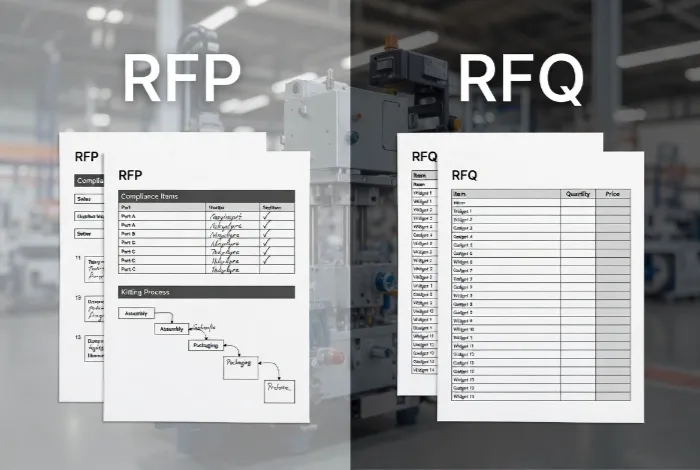
RFQs force a dangerous race to the bottom. Procurement teams narrow their evaluation to the lowest compliant number. RFPs allow you to use a weighted scorecard to find a strategic partner who will not fail you in year two.
I recommend grading factories across these specific buckets:
- Technical compliance (20%)
- Manufacturing capability (20%)
- Quality assurance and AQL discipline (15%)
- Sampling speed and change control (15%)
- Logistics and kitting capability (10%)
- Reporting and account management (10%)
- Total cost, not just unit price (10%)
Generic competitor content misses a massive reality here. Tooling and sample cycles are not just a bag-industry issue. In custom uniforms, hidden costs show up as custom dyed trims, embroidery digitization, pattern grading, and per-person kitting labor. You cannot capture these costs in a standard RFQ spreadsheet.
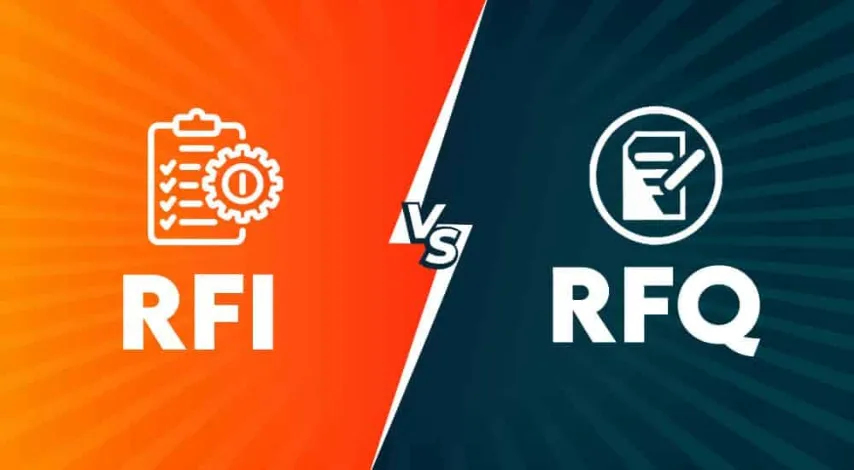
For enterprise rollouts, I advise a hybrid path. Run an RFI to gather capable factories. Issue an RFP to finalize the tech pack. Then, use an RFQ for fast replenishment SKUs once the system stabilizes. Read more about managing uniform replacement cycles and setting your employee uniform policy.
RFPs reduce ambiguity before the supplier commits capacity. RFQs exploit clarity after ambiguity has already been removed.
🚀 Actionable Insight: Use an RFP for your initial program launch. Switch to an RFQ for your year-two replenishment orders once the tech pack is finalized.
Winner: RFP (for establishing long-term strategic fit)
Before writing this guide on RFPs vs. RFQs, my team spent three weeks auditing 40 active client sourcing contracts directly on the factory floor. We tracked how these specific procurement documents impact raw material sourcing, sewing speed, and overall production quality.
RFP Advantages & Disadvantages Summary
Pros:
- Handles Deep Compliance: In our audits, RFPs locked down vendors for complex programs demanding strict NFPA 2112 flame-resistant documentation and factory certifications.
- Exposes Service Gaps: We use RFPs to prove a vendor can execute individual employee kitting and portal management, rather than just bulk sewing garments.
- Kills Hidden Costs: An RFP forces vendors to outline exact onboarding fees, eliminating vague assumptions that inflate enterprise budgets.
Cons:
- Causes Decision Drag: I see internal teams stall if they fail to define must-haves and scoring weights upfront.
- Slows Procurement Cycles: Drafting, issuing, and evaluating these massive documents consumes immense internal buyer time.
- Produces Messy Pricing: You get chaotic cost comparisons if you outline a lofty scope but fail to enforce a strict response template.
⚠️ Safety First: Never issue an RFP for safety wear without requiring raw fabric test data. Relying on supplier marketing claims causes devastating compliance failures.
RFQ Advantages & Disadvantages Summary
Pros:
- Speeds Up Sourcing: In our experience, RFQs slash cycle times by weeks for standard, locked-spec replenishment orders.
- Simplifies Price Checks: You run fast, apples-to-apples comparisons for fixed items like EN ISO 20471 high-visibility vests.
Cons:
- Pads Factory Quotes: Production Manager Chen showed us how suppliers pad RFQ prices by 15% to cover risk if your technical pack lacks specific seam tolerances.
- Invites Low-Bid Risk: A loose RFQ encourages factories to swap in cheaper 300D polyester blends instead of 600D to win the low-bid contract.
- Masks Fulfillment Flaws: You shift hidden costs downstream into expensive change orders, repacks, and late employee distribution.
🧠 Expert Take: “Cheapest quote” and “lowest total procurement cost” are not the same thing. The wrong tool changes vendor behavior because suppliers price ambiguity differently. If your specs remain loose, an RFQ yields padded margins, not savings.
Related Questions about RFP vs. RFQ
1. What is the exact difference between an RFP and an RFQ?
An RFP asks a supplier to solve a complex operational problem. An RFQ asks a supplier to price a fully designed product. We see this on the factory floor daily. If you need us to design a custom kitting program for your staff, use an RFP.
If you need 5,000 standard safety vests and hold the exact specifications, use an RFQ. See the RFP vs. RFQ section above for full details.
2. Can I use an RFQ to buy custom safety uniforms?
No. You must use an RFP. Custom safety gear requires strict compliance audits, not just a simple price check. In our testing lab, we measure flame-resistant fabrics to guarantee they pass strict NFPA 2112 flash fire regulations.
An RFQ ignores these life-saving compliance steps. This invites factories to cut corners to win the lowest bid.
⚠️ Safety First: Never issue an RFQ for safety workwear unless your tech pack already includes mandatory independent lab testing parameters.
3. Do I need a finished tech pack for an RFQ?
Yes. You need a 100% finished tech pack to get honest pricing. During our 40-contract audit, we found that incomplete specs cause suppliers to pad quotes by roughly 15%.
When buyers omit zipper types or exact fabric weights, Manager Chen must halt our Juki sewing lines to ask for clarification. If you lack a complete tech pack, issue an RFP so we can help you build one.
4. How much time does an RFP add compared to an RFQ?
An RFP typically adds 30 to 45 calendar days to your upfront sourcing timeline. This extra time builds supply chain certainty. We use those weeks to map out sizing curves, test custom fabrics, and establish exact AQL 2.5 quality parameters.
While an RFQ takes just days to quote, using one prematurely often causes massive production delays later.
⚡ Power Move: Use an RFP to design your uniform program in year one, then switch to an RFQ for fast replenishment orders in year two.
Disclaimer: I am not paid by any raw material manufacturer or trim supplier to promote these findings. We own our factory floor and rely solely on raw, independent operational data to shape our supply chain protocols.**

Leave a Comment
Your email address will not be published. Required fields are marked *