Table of Contents
A bright yellow coverall turned up in a plant warehouse, sold as “chemical-resistant.” It was plain cotton, dyed so the shipping team could be told apart from maintenance.
Most buyers come to coverall color code meaning expecting a standard they can check. The OSHA 1910 Subpart I text says otherwise.
The short answer OSHA assigns no coverall color to any hazard. Color codes are built plant by plant: they mark role, zone, and access class. Protective performance comes from the fabric, seam construction, and test report. The dye contributes none of it.
The chart below is the fast version; the ten sections after it carry the working detail.
Coverall Color Code at a Glance: 10-Color Comparison
Every color in this table is in live use on a plant floor somewhere. The left-hand columns describe what the color communicates; the two on the right describe what actually has to be true before the garment protects anyone.
| Color | Typical zone or role | What the color signals | What it cannot prove | Standard that actually governs it | Fabric tier |
|---|---|---|---|---|---|
| White | Cleanrooms, pharma suites, food plants | Contamination visibility — spills show early | Barrier or particle performance | Gowning SOP; ISO 14644 zone class | Microporous laminate, taped seams |
| Blue | Contractors, visitors, temporary access | Non-core staff and access class | Access control on its own | Site access-control policy | Light PP or poly-cotton |
| Hi-vis yellow-green | Yards, forklift lanes, loading docks | Struck-by conspicuity | Hi-vis performance by shade alone | ANSI/ISEA 107 or EN ISO 20471 | Certified hi-vis fabric, taped seams |
| Orange | Roadwork, rail, excavation, marine | Mobile-risk zone | Contrast against orange backgrounds | ANSI/ISEA 107 | Certified hi-vis fabric |
| Navy | Maintenance mechanics, repair crews | Stain hiding and role separation | FR or chemical protection | NFPA 2112 where flash fire exists | FR blend or durable poly-cotton |
| Red | Fire watch, hot work, shutdown teams | Emergency recognition through smoke haze | Flame resistance | NFPA 2112 | FR or arc-rated |
| Green | Paint booths, composites, solvent cells | High-protection tier | Chemical barrier | ASTM F739 permeation data | Microporous laminate, taped seams |
| Gray or yellow | Mixing rooms, washdown, decon | Brand choice only | Any standard | ASTM F739 permeation data | Chemical-barrier laminate |
| Black | Waste handling, oil transfer, pump service | Stain control on dirty work | Spill or hygiene detection | Site EHS procedure | Durable dark blend |
| Two-tone or trim | Supervisors, auditors, cross-zone teams | Cross-zone identity and rank | Shade consistency across reorders | ASTM D2244 color-difference control | Any base program, plus trim |
Read the table right to left. The standard and the fabric tier decide the protection. The color decides who wears it, and on its own it proves nothing.
What Does Each Coverall Color Signal?
Ten colors, one section each, roughly in the order buyers ask about them. Every section closes with a one-line verdict short enough to paste straight into an email to a supplier.
https://www.youtube.com/watch?v=QBU_AxTHlU0
1. White Coveralls for Cleanroom Operators and Contamination-Control Zones
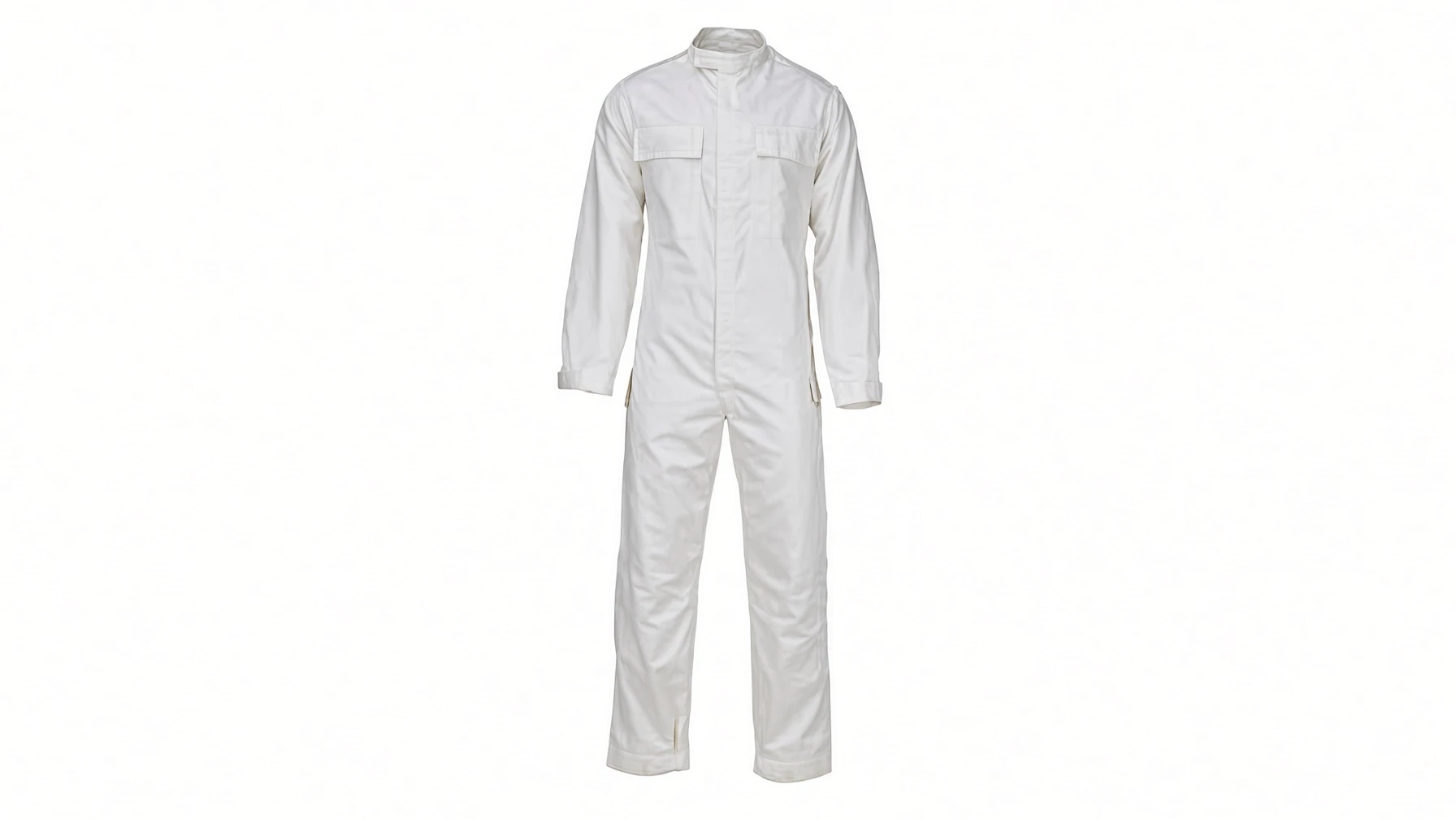
White coveralls are a visibility tool first. In cleanrooms, pharma suites, electronics lines, and food plants, a white coverall exposes dust, residue, and glove transfer before a failure reaches product.
I watched QA manager Chen catch a 2 mm smear on a sleeve cuff during line clearance. The mark held a batch release for 40 minutes.
Visibility is the trap. White fabric alone proves nothing about barrier performance. Check fabric type, seam construction, anti-static rating, and particle shed data. Match the garment to the gowning SOP. A white cotton and a white cleanroom coverall look identical on a hanger and perform differently.
🧠 Author’s Take: We reject white coveralls without seam and anti-static test reports. One style cleared approval only after a 30-wash seam pull and static decay test.
🛡️ Our Verdict: Choose white to speed inspections, never to imply protection.
2. Blue Coveralls for Contractors, Visitors, and Temporary Access Roles
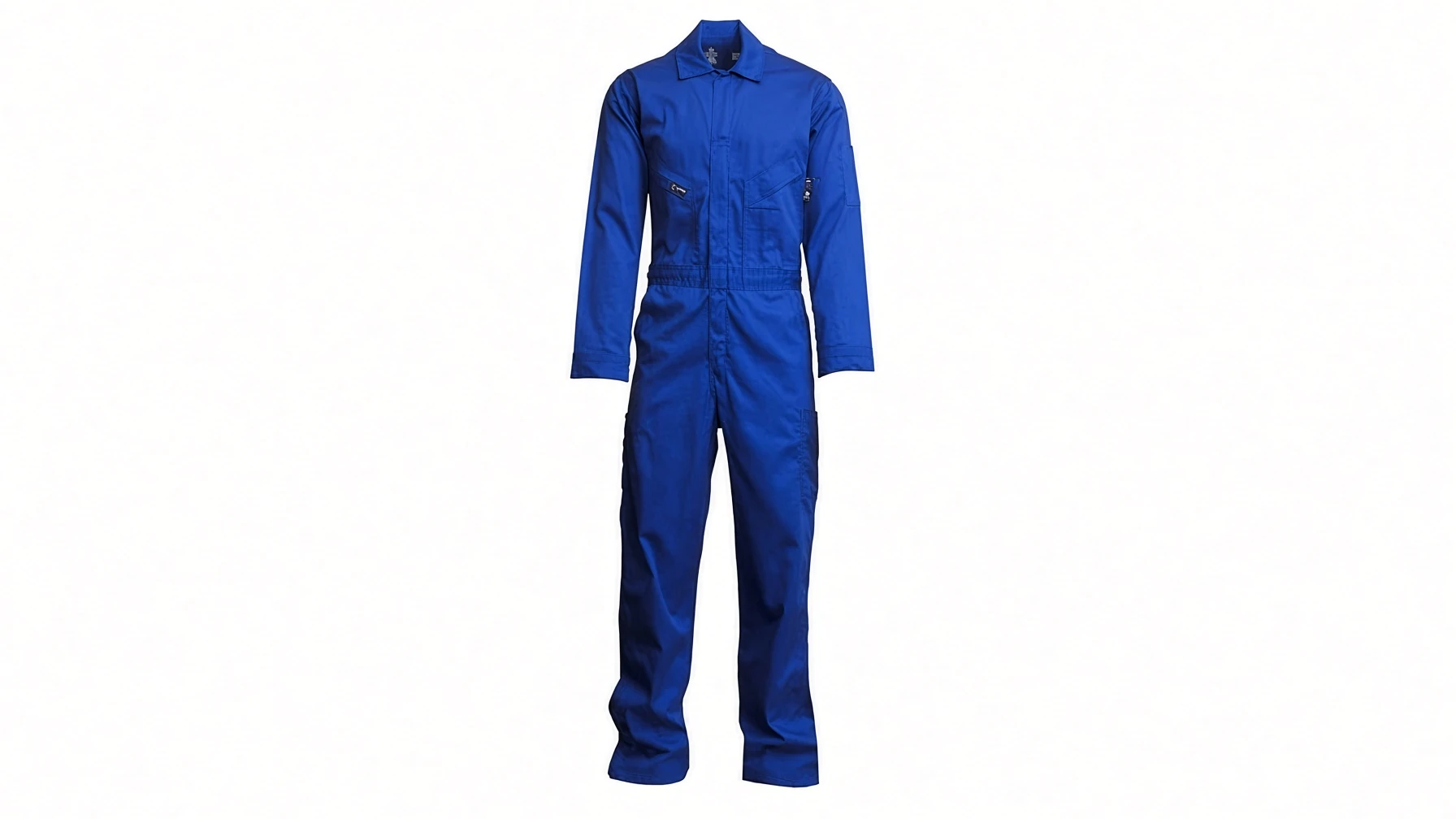
Blue separates non-core staff from permanent production teams. On a plant-wide shutdown, badge strips on blue contractor coveralls let gate security clear 84 non-core workers in four minutes, while supervisors read training status off the strip during permit-to-work rounds without stopping anyone.
Blue fails as access control if the shade is loose. If blue marks access, lock shade, trim, and badge placement in the PPE spec. We use one Pantone reference, gray trim, and a left-chest ID window. Otherwise contractors pass for another vendor’s maintenance uniform.
🛡️ Our Verdict: Blue that drifts toward navy breaks the code, and the fix is a spec, not a reminder.
3. Hi-Vis Yellow-Green Coveralls for Yard, Forklift, and Traffic-Exposed Teams
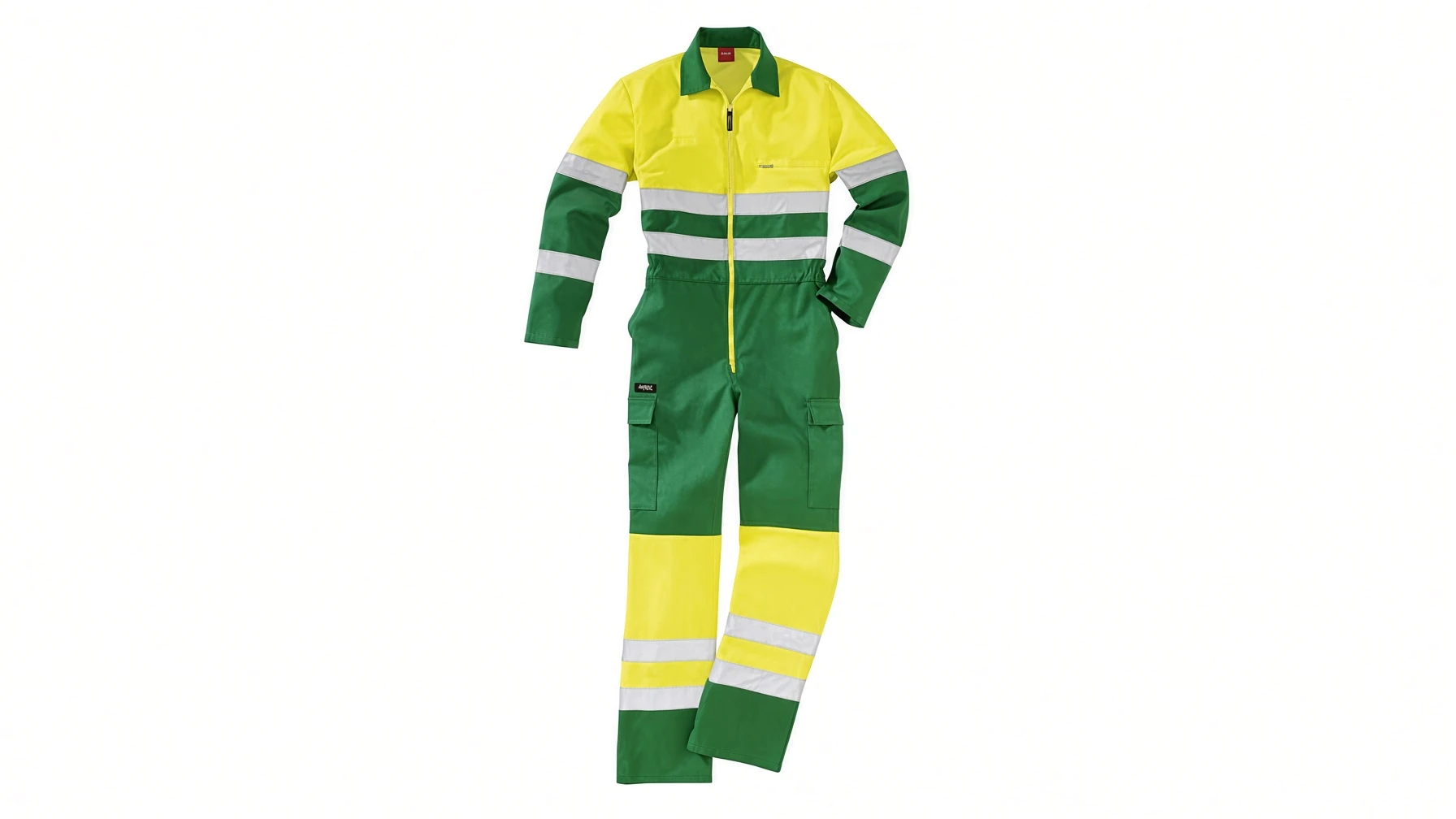
A bright yellow coverall is not automatically hi-vis. A plain cotton suit in the same shade carries zero reflective tape, and no amount of dye replaces it. The color does the noticing; the fabric does nothing.
The stakes sit in warehousing, loading docks, logistics lanes, and utility corridors. Conspicuity beats stain hiding. Struck-by incidents happen fast, and a driver has to see you before they can react.
Buy by certification, not shade. Check the garment against ANSI/ISEA 107 or EN ISO 20471. Verify tape width, placement, and background color.
Of 12 off-the-shelf yellow coveralls checked across three suppliers last quarter, five met the reflective layout spec. The rest were fashion colors, not safety gear.
🛡️ Our Verdict: Ask for the standard label and test report before you approve hi-vis orders.
4. Orange Coveralls for Roadwork, Rail, and Heavy-Equipment Perimeters
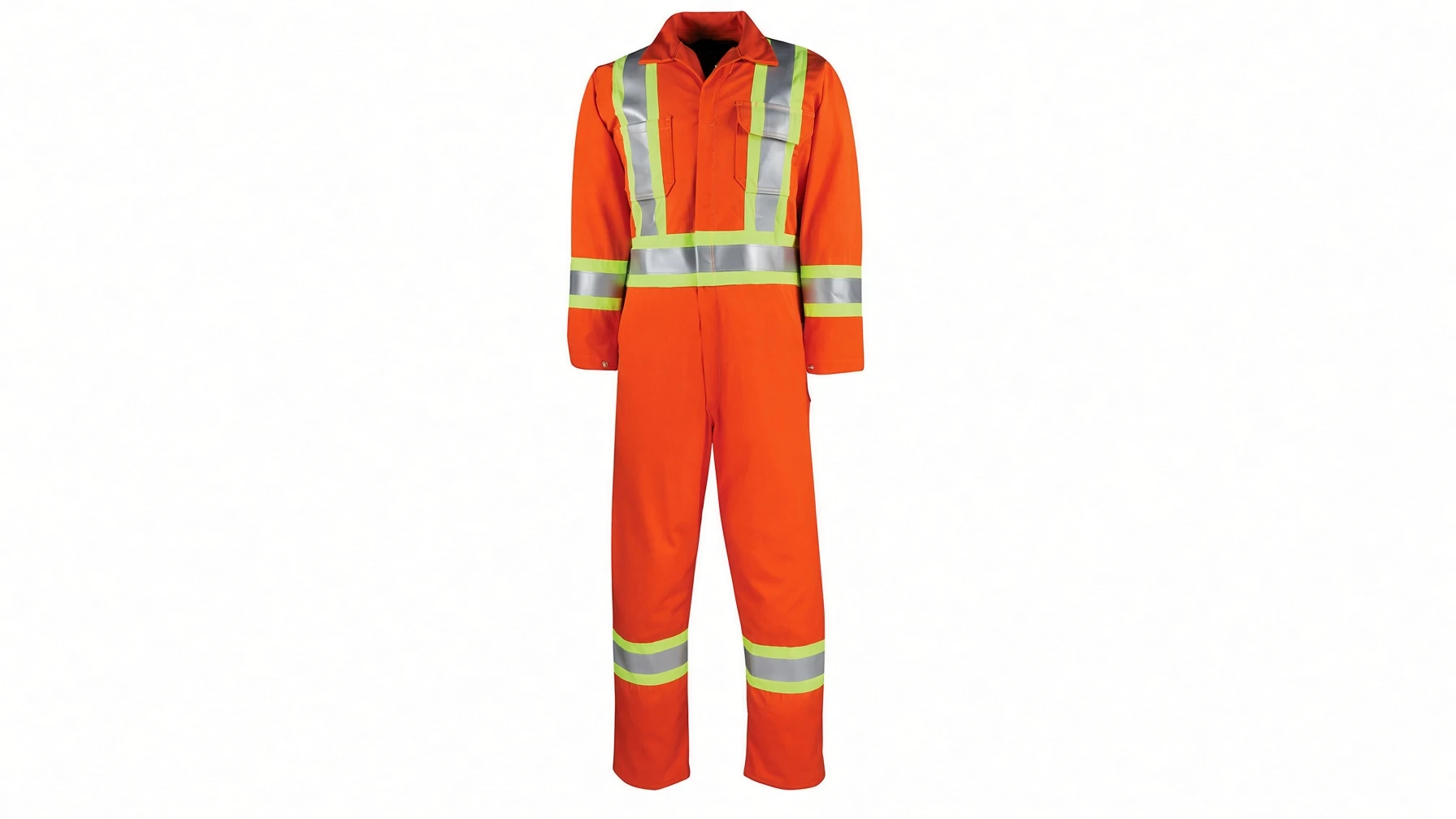
Orange signals mobile risk. Roadwork, rail, excavation, and marine crews wear orange because it reads against moving trucks and equipment. On a highway job, an excavator operator picked the crew out at 50 meters. Yellow-green would have vanished against the grass verge.
Orange fails when the site is already orange. Against orange cones, drums, and painted machinery, contrast drops, and under sodium lighting it drops further. Test the garment against the real background under site lighting, and ask the supplier for a contrast report. Contrast beats color alone.
🛡️ Our Verdict: A batch that looks fine in the warehouse can disappear against orange barriers on site.
5. Navy Coveralls for Maintenance Mechanics and General Repair Crews
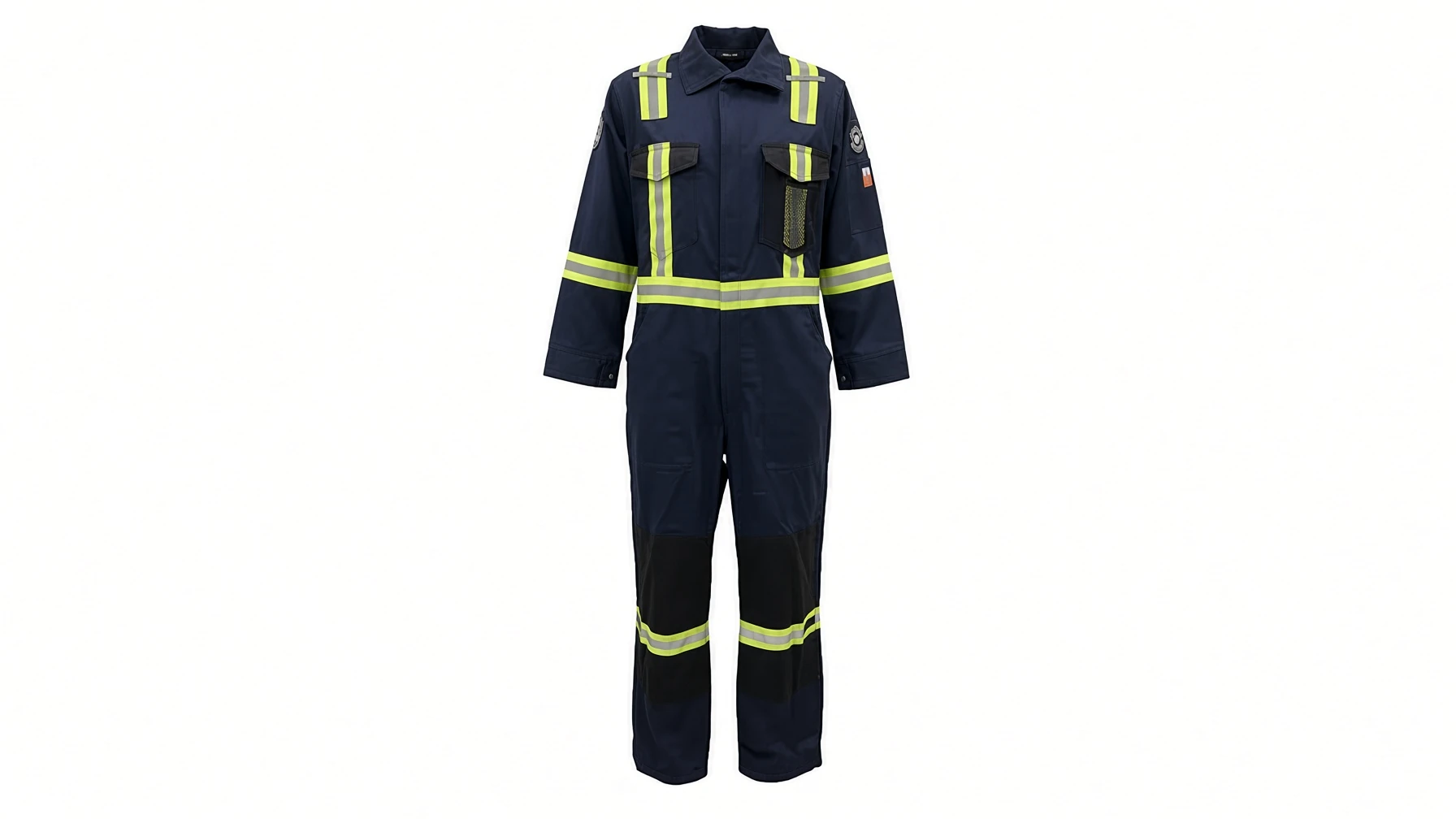
Navy hides grease better than any other coverall color. A repair crew can run three shifts in the same suit and have the smears fade into the fabric. Navy also separates mechanics from white sanitation staff and light-blue QC inspectors, which fits multi-skill crews moving through the plant.
Navy is a role and appearance choice, not a hazard class. In flash-fire, chemical splash, or hi-vis zones, the coverall has to add the required protective performance, and NFPA 2112 or the OSHA PPE rule is what decides which. The color adds nothing to that answer.
A buyer who reads navy as FR protection finds out otherwise in a flash fire, not in a swatch review. List the standard in the PO before the color is approved.
🛡️ Our Verdict: Navy is role ID and stain camouflage, not PPE.
6. Red Coveralls for Fire Watch, Hot Work, and Emergency Segregation Roles
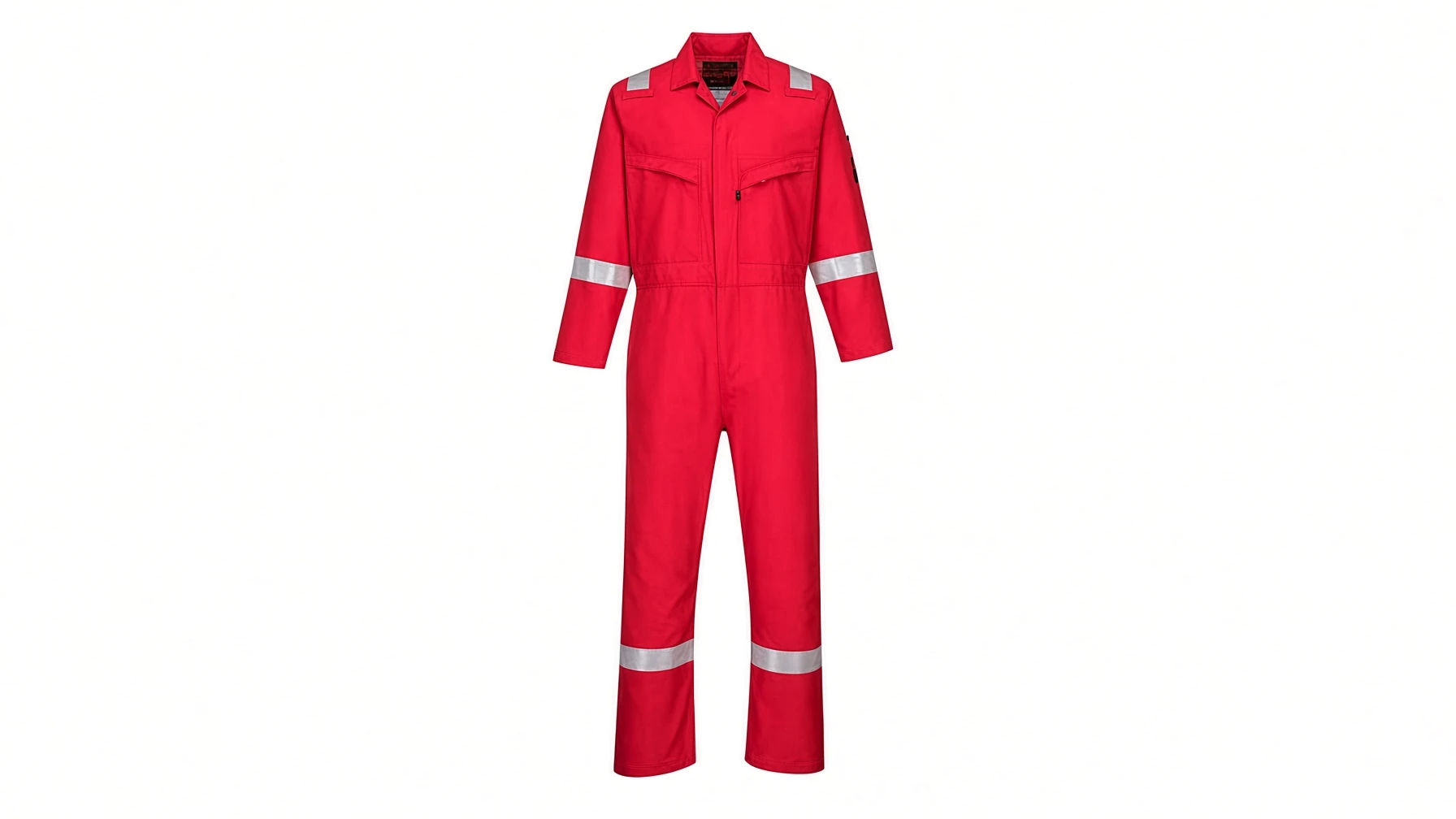
Red stops a plant floor. During a turnaround, red coveralls on fire-watch staff let a hot-work crew find them through smoke haze in seconds. Red also marks emergency responders and shutdown teams during incident drills.
But red fabric is not flame resistance. Only FR coveralls carry that, and plenty of red suits on the market are plain cotton with dye, sold under a color the buyer reads as protection. Fabric handles survival, not color.
🧠 Author’s Take: We asked one supplier for FR documentation on a red coverall order. They sent a dye certificate instead. That order never shipped.
⚡ Power Move: Demand the test reports for FR, arc-rated, or chemical splash performance before you approve a red swatch. No report, no order.
🛡️ Our Verdict: Red helps people find you in smoke. It does nothing for the fabric underneath.
7. Green Coveralls for Painters, Composites Teams, and Solvent-Intensive Work Cells
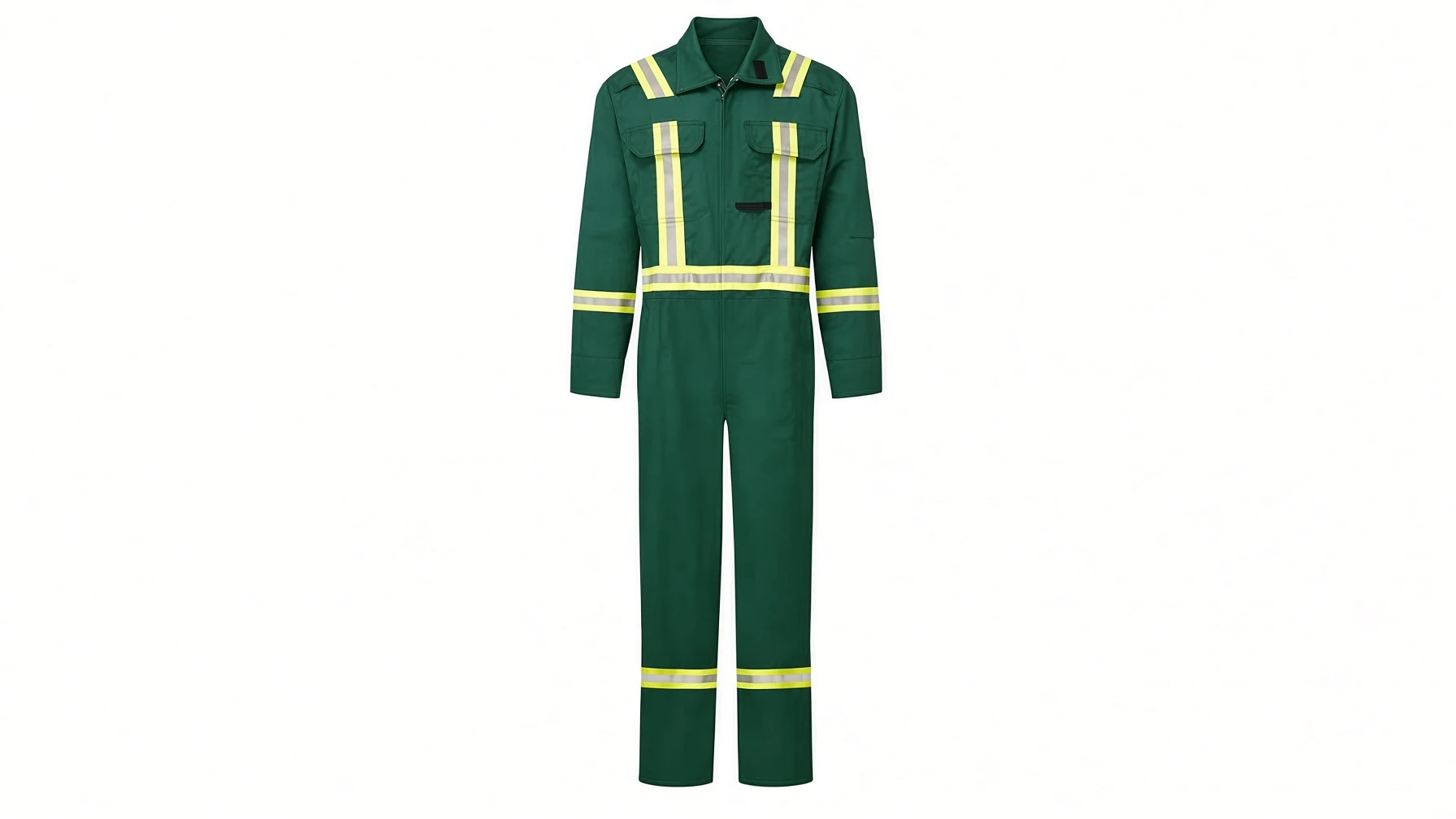
Green usually means go. Some plants reverse it. Green marks painters, spray booths, laminating bays, and solvent-heavy cells, so supervisors see the protection tier instantly.
At a composites plant, a floor lead blocked a blue-suited contractor from a solvent cell because the SOP tied green to a chemical-resistant barrier, taped seams, and a breathability limit.
If green is your high-protection tier, write barrier level, seam construction, and air permeability into the SOP and purchasing spec. Suppliers then quote the same garment. A green lot with stitched seams can match the color exactly and still fail protection.
🛡️ Our Verdict: Green is a supervisor check, not a safety certificate.
8. Gray or Yellow Chemical-Barrier Coveralls for Mixing, Washdown, and Splash-Risk Operations
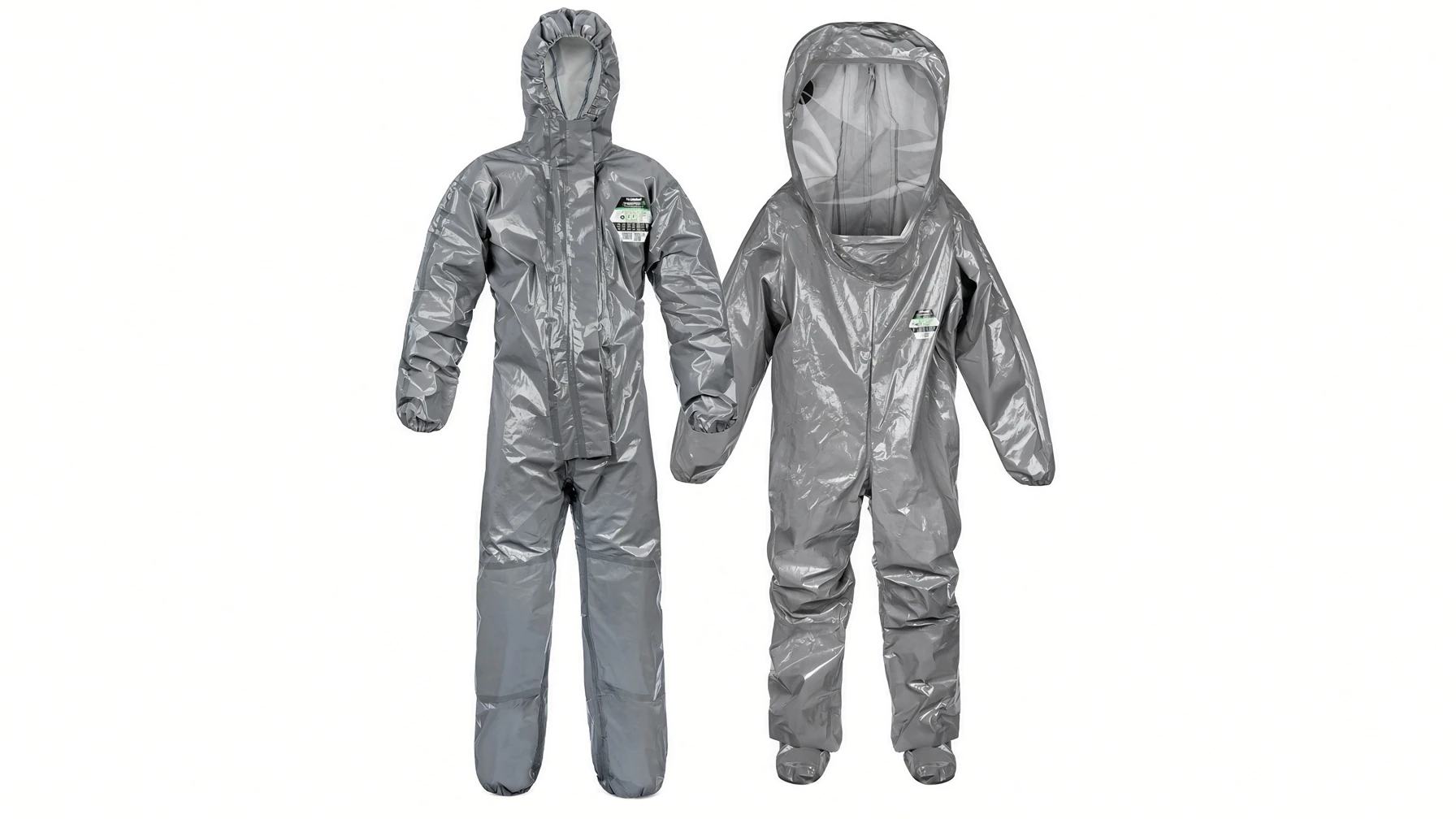
Gray and yellow mean nothing across brands. One supplier sent yellow suits for chemical transfer, another sent gray, and both claimed splash protection. Under ASTM F739 permeation testing, one failed at 20 minutes.
Use chemical-barrier coveralls in blending rooms, washdown zones, and decon areas. Splash resistance and particulate control matter more than hierarchy coding. Color is a brand choice, not a standard.
Compare chemical compatibility, permeation data, protection type, closure design, and taped vs stitched seams. Do not assume one supplier’s yellow matches another’s.
🛡️ Our Verdict: Color is not a spec, and a swatch is not a test report.
9. Black Coveralls for Oily Utility Work, Waste Handling, and Dirty Service Jobs
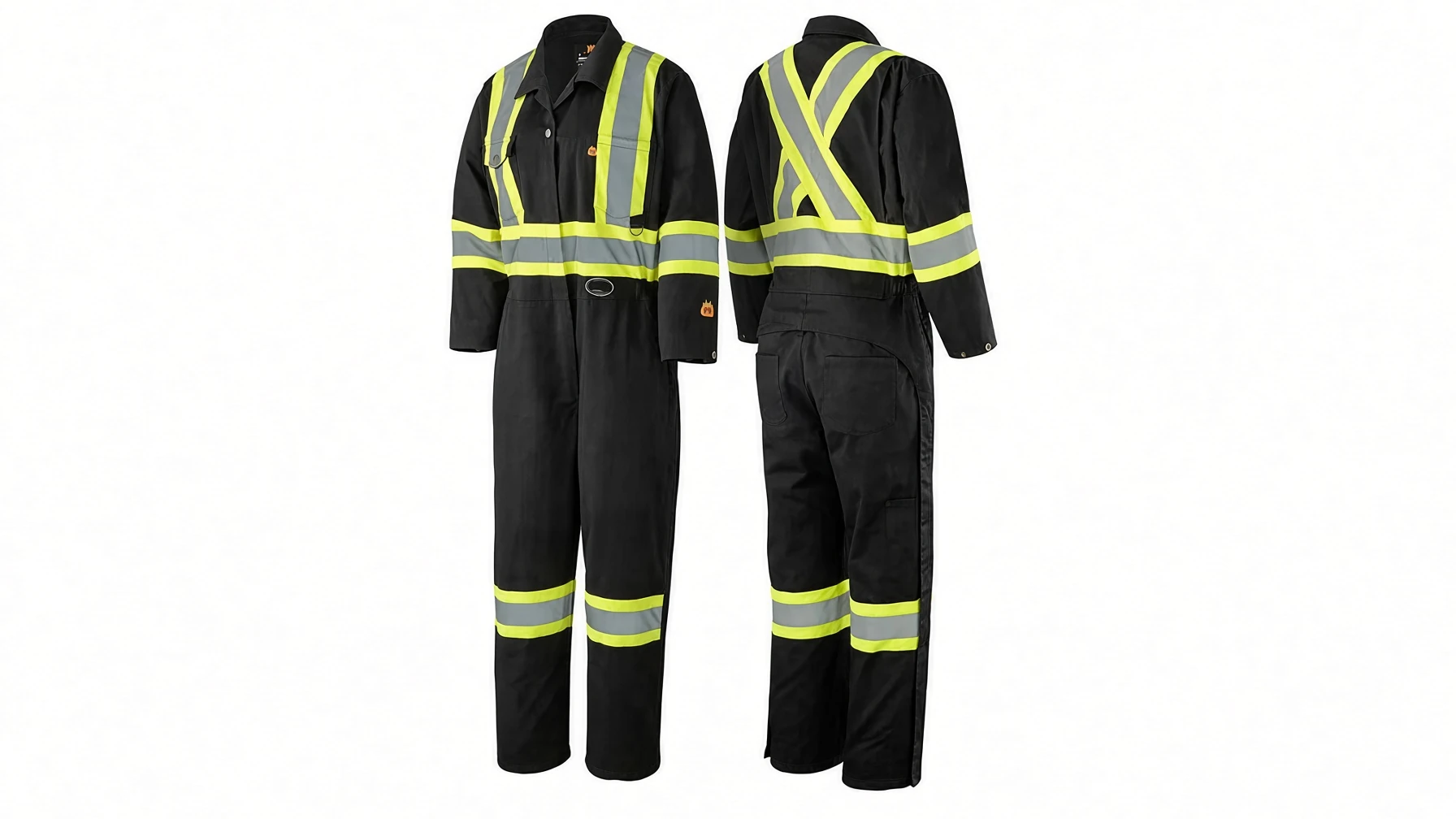
Black works where the work is dirty but visible to clients. Waste rooms, oil transfer, pump service, and back-of-plant crews use it because grease and sludge disappear. At a transfer station, black suits still looked presentable at shift end. White would have been scrapped by hour three.
The EHS drawback: black hides spills. In one mixing room, a hydraulic leak ran two hours before a floor lead caught the sheen. Hidden spills are a hygiene-monitoring blind spot. Black also absorbs heat and lowers conspicuity in low light.
🧠 Author’s Take: Our black test panel hit 42°C in a covered waste bay, six degrees above the gray control.
🛡️ Our Verdict: Use black for stain control on dirty service jobs. Skip it where spill detection, hygiene checks, or night movement matter.
10. Custom Two-Tone or Trim-Coded Coveralls for Supervisors, Auditors, and Cross-Zone Access
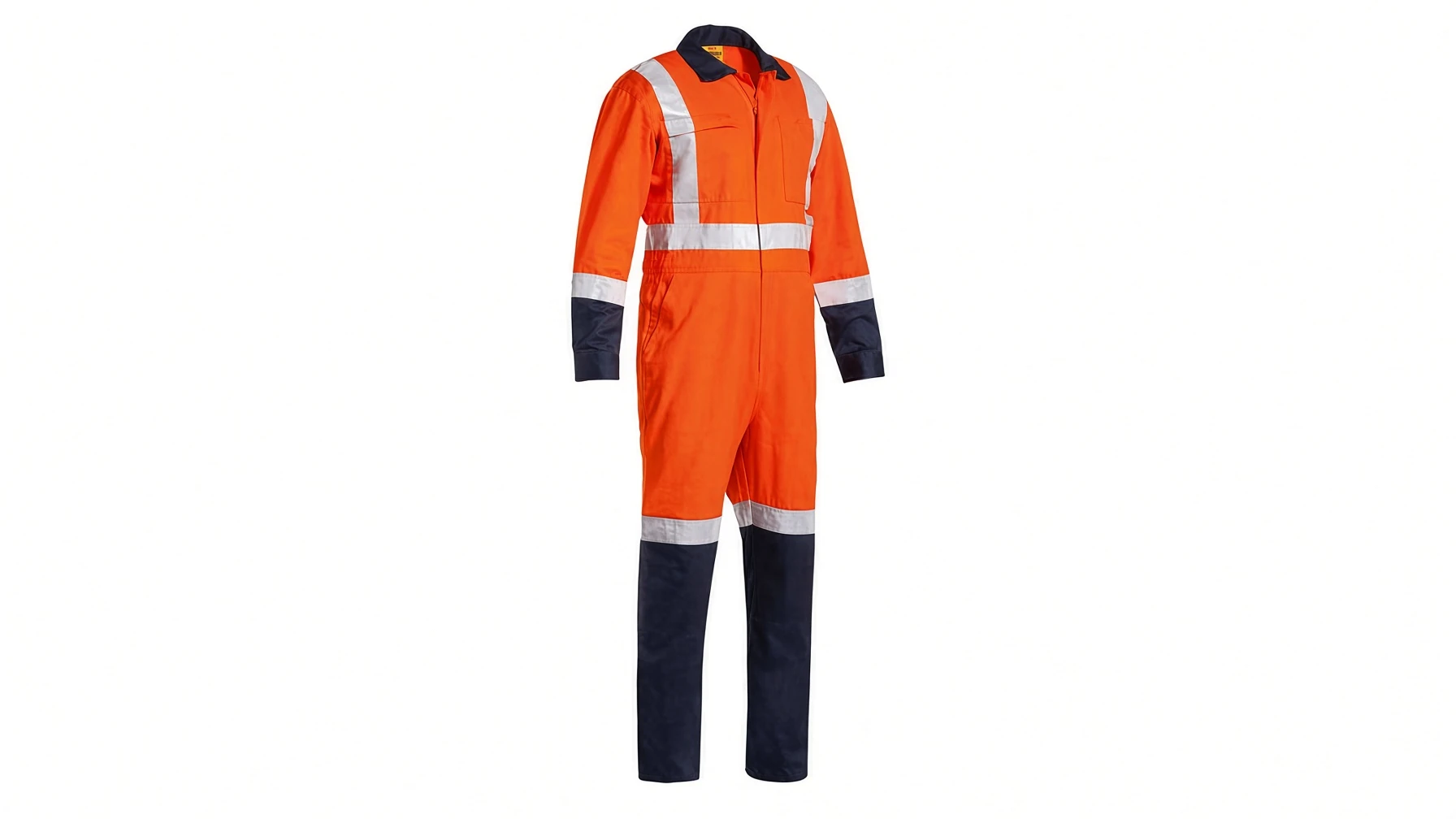
Stock colors break down at 12 departments. With three teams in identical navy, a supervisor can walk into the wrong zone without anyone noticing.
Two-tone builds solve this. Contrast panels, collar trim, sleeve bands, and pocket colors separate supervisors, auditors, and multi-site teams.
Keep one base program and add trim. A custom coverall program runs on one base pattern and one locked shade master per trim code.
The sourcing trap is shade drift. A red sleeve band that leans orange kills the code. Ask for approved color masters, low-MOQ customization, and batch repeatability. Generic stock-color promises fail by the third reorder.
🧠 Author’s Take: On one 500-unit run, the sleeve band drifted two Pantone steps. We remade 120 units.
⚡ Power Move: Lock one physical color master per trim code, then audit each batch under D65 light before shipment.
🛡️ Our Verdict: One base color plus trim codes, never one new color per department.
How to Build a Coverall Color Code Program?
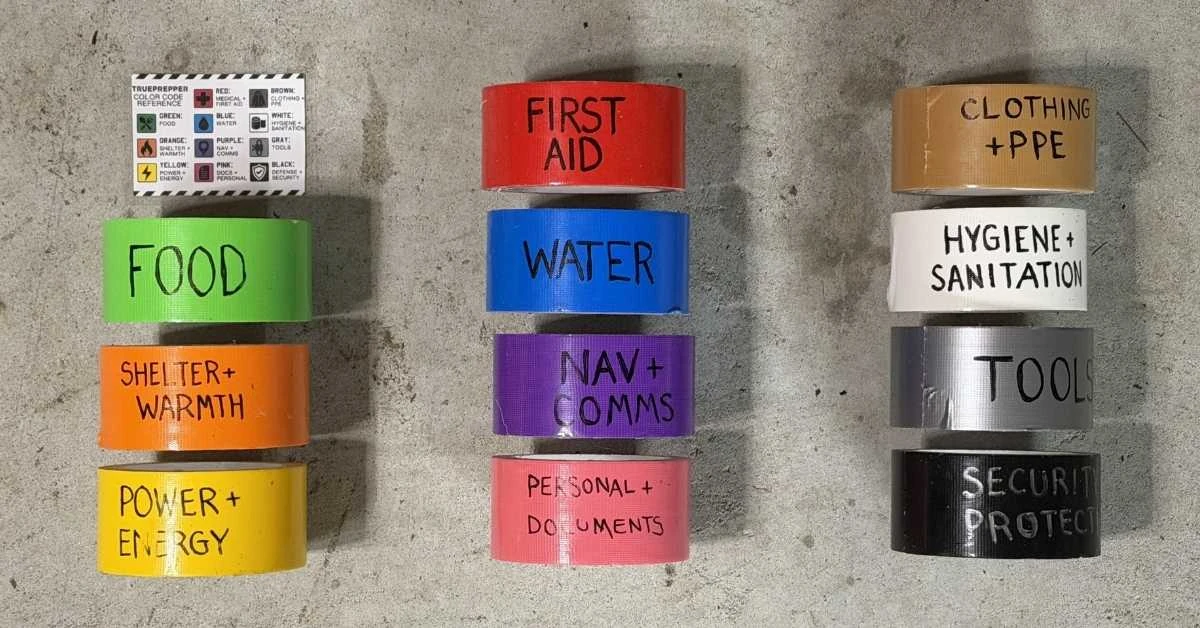
Five steps from a floor full of opinions to one written code. Each step leaves a document behind: the decision rules, an audit routine, a vendor question list, a fabric tier per role, and a 30-day rollout.
Step 1: Reset the Standards and the Grading Method
Color programs have to be graded on plant floors, not on stock color cards. Across 40 visual-management setups in cleanrooms, food plants, and construction yards, one thing held constant: color is an internal control, not a legal standard.
Three rules clear up most confusion:
- Role color is not hazard marking. OSHA 1910.132 prescribes an assessment, not a palette.
- Hi-vis only starts when traffic or equipment creates a struck-by risk. Then the hi-vis standard applies.
- Chemical protection runs on permeation data. Ask for ASTM F739 results, not a swatch.
Step 2: Run the Auditor’s Cleanroom SOP
The same sequence shows up in certified cleanroom auditing. Each step catches a mix-up before the garment touches product.
- Zone map review. Match every room on the floor plan to one approved color.
- Legend check. Confirm the posted legend has a revision date and a sign-off.
- Gowning-point verification. Stand at the entry. Confirm the posted color matches the bin.
- Incoming-lot shade check. Pull three garments per carton. Compare them to the physical color master under D65 light.
- Cross-contamination walk. Follow one worker moving between a low-care and a high-care zone. Note where they change.
- Donning and doffing observation. Watch five workers. Log every breach, such as a sleeve dragged over a cuff.
- Exception logging. Write the date, lot number, shade deviation, and zone on one sheet.
- Quarantine rule. Quarantine wrong-color garments within the hour. Tag them. Move them off the line.
- CAPA ownership. Assign one named owner. Set a close date. Wrong color with no owner becomes a repeat defect.
Manager Chen at a Suzhou pharma plant runs step 4 on every pallet. “We found a navy lot blended into black under sodium light,” he told me. “The master swatch caught it. The eye did not.”
Step 3: Ask Four Standards Questions
I put these four questions to an accredited industrial safety engineer.
- Does OSHA assign a coverall color?
No. The duty is a hazard assessment, nothing more. - When does a hi-vis standard apply?
When plant or traffic moves near people. - When does chemical selection need permeation data?
Always, for splash and immersion. - How do you stop vendors substituting close-enough fabric?
Attach the color master, seam type, and test standard to the PO.
Step 4: Match the Fabric Tier to the Color Role
In every teardown, the fabric tier mattered more than the color.
- Light PP, 35 to 50 gsm, serged seams. Cheap and breathable. Good for visitor suits and low-risk yard work. Bad for splash or abrasion.
- SMS, 50 to 60 gsm. Adds a liquid barrier. Suits food, pharma, and paint cells with green tier coding.
- Microporous laminate, 60 to 70 gsm, taped seams. Holds splash and particulate. Pair it with white cleanroom and gray chemical roles.
- Reusable poly-cotton or FR blends. For navy mechanic and red fire-watch programs. Build differs by standard, not by dye.
A white cleanroom suit, a hi-vis yard coverall, and a chemical-splash garment need different builds. Never approve a new color on the old pattern.
Step 5: Execute the 30-Day Sourcing Checklist
- Week 1: Write the zone-to-color matrix, then shortlist coverall manufacturers against your own selection criteria.
- Week 2: Request physical color masters and fabric test reports. Compare shortlisted suppliers on shade control.
- Week 3: Run a pilot batch. Confirm MOQ and production time against your rollout date, then check bulk pricing tiers.
- Week 4: Audit the first shipment under D65 light. Sign off the shade, seam, and test data.
Worked Example: A 6-Department Coverall Color Scheme
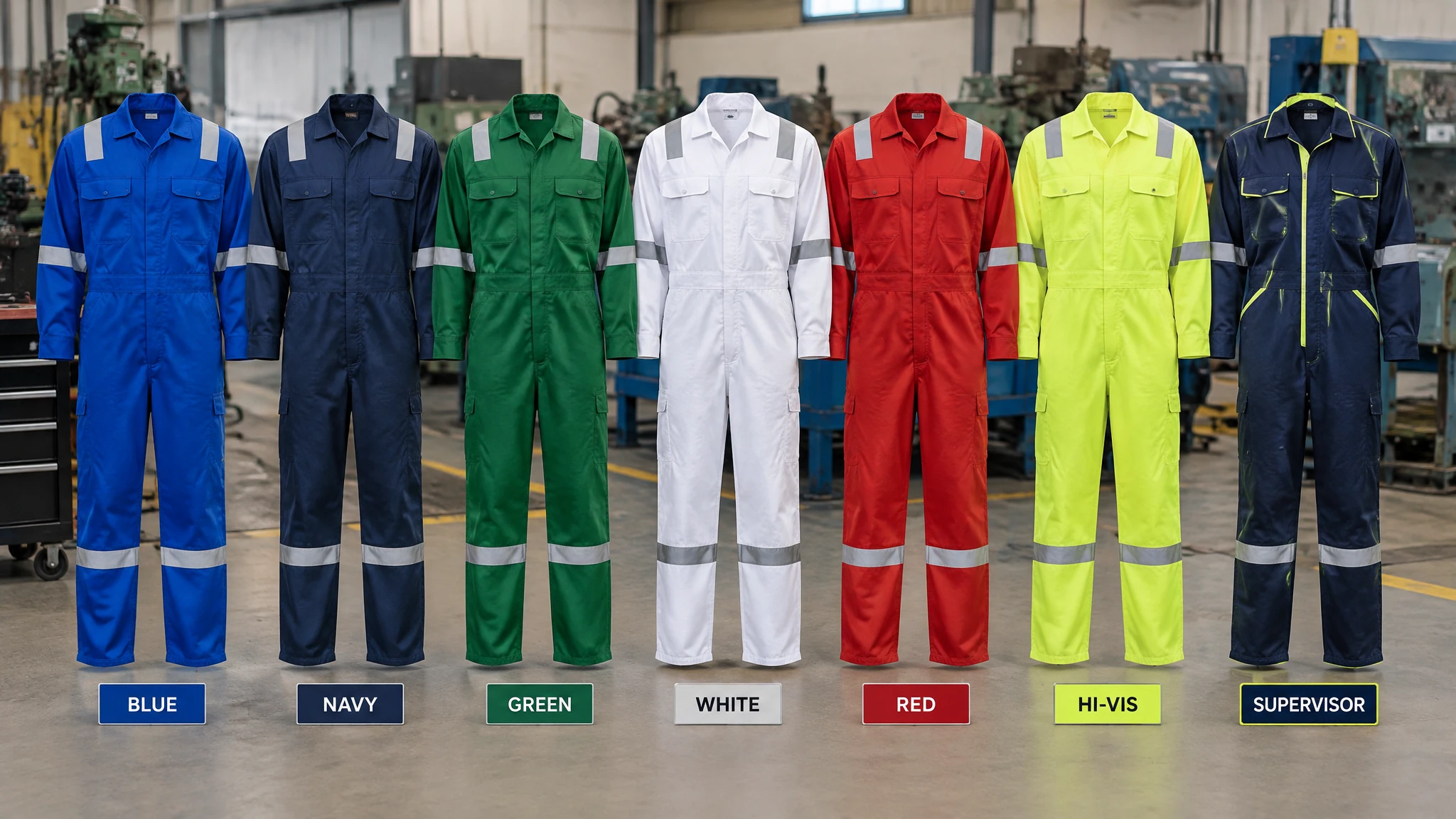
Six departments, six swatches, one trim library. That shape holds. Add discretionary colors and it breaks around department twelve.
| Department | Color | Why that color | Fabric tier | Standard to name in the PO |
|---|---|---|---|---|
| Receiving and stores | Blue | Non-core access class, easy to challenge at the gate | Light PP, 40 gsm, serged | Site access-control policy |
| Production floor | Navy | Grease hides; operators stay distinct from support staff | Poly-cotton 65/35, 240 gsm | Hazard assessment only |
| Paint and solvent cell | Green | High-protection tier, visible to a supervisor across the bay | Microporous laminate, taped seams | ASTM F739 for the solvent in use |
| QA and lab | White | Contamination shows before it reaches product | Microporous laminate, taped seams | Gowning SOP |
| Fire watch and hot work | Red | Emergency recognition through smoke | FR, arc-rated where required | NFPA 2112 |
| Yard and loading | Hi-vis yellow-green | Struck-by conspicuity against moving equipment | Certified hi-vis, taped seams | ANSI/ISEA 107 or EN ISO 20471 |
Supervisors and auditors do not get a seventh color. They wear the base color of the area they own plus a trim code, which keeps the program at six swatches and one trim library instead of eleven swatches.
Write the scheme to one page: department, color, Pantone reference, trim position, fabric tier, and the standard on the PO. Post that page at every gowning point and gate. Anything a worker cannot read in ten seconds is not a code yet.
Worked Example: A Construction Site Coverall Color Scheme
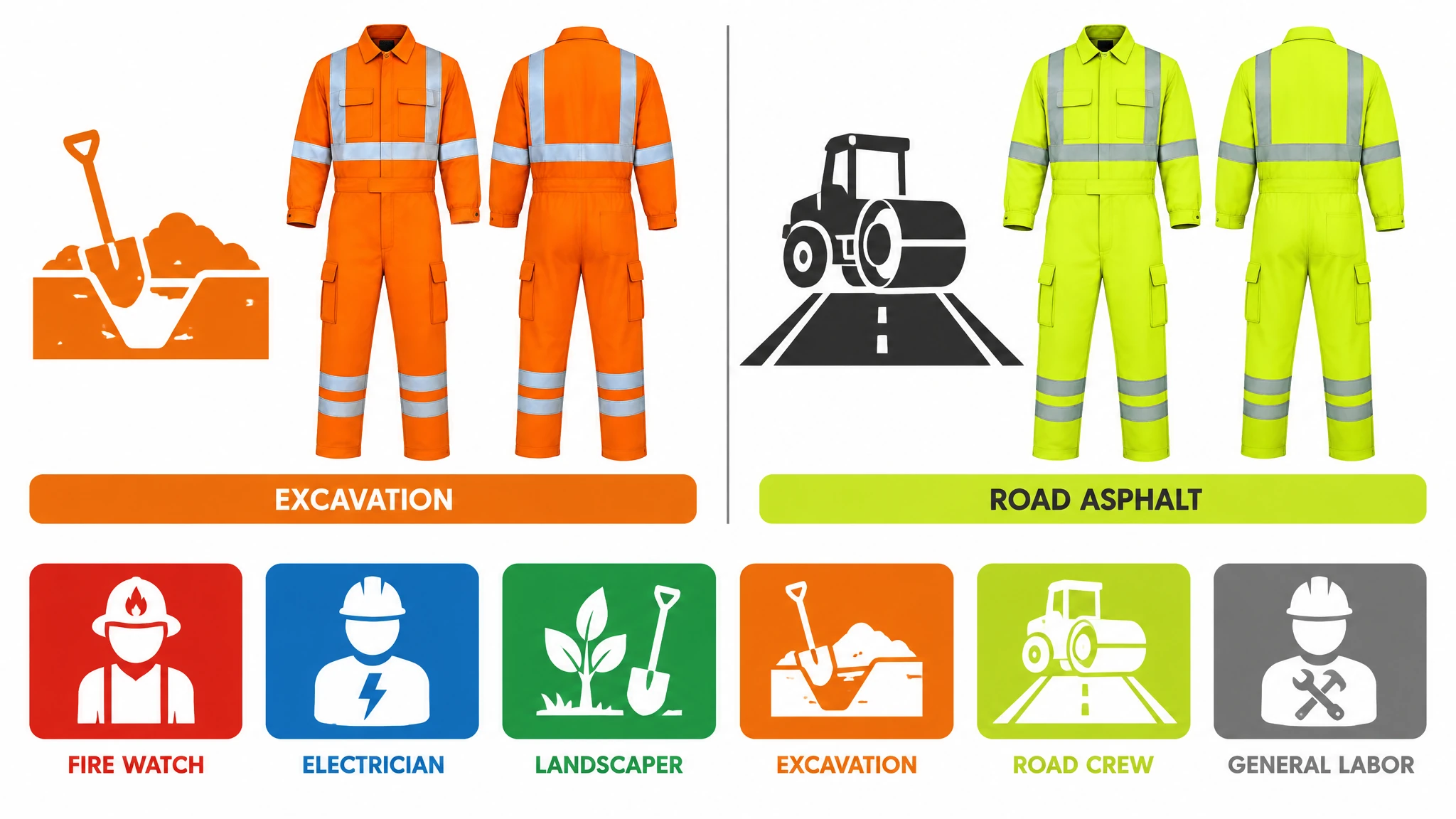
The plant scheme above codes by zone. A construction site codes by exposure, because the hazard moves. Six roles, one trim library, and two colors the plant example never needed.
| Crew or task | Color | Why that color | Fabric tier | Standard to name in the PO |
|---|---|---|---|---|
| Groundworks and excavation | Orange | Reads against spoil, gravel, and painted plant | Certified hi-vis, taped seams | The hi-vis standard your market mandates |
| Traffic and roadworks | Hi-vis yellow-green | Highest contrast against asphalt and wet road | Certified hi-vis, taped seams | Same, plus the tape class for night work |
| Welding and hot-work watch | Red | Fire watch has to be findable through smoke | FR, arc-rated where required | NFPA 2112; EN ISO 11612 in EU markets |
| Plant and machine operation | Navy | Grease hides; operators read as plant, not ground crew | Poly-cotton or FR blend | Hazard assessment only |
| Visitors and subcontractors | Blue | Non-core access class, challengeable at the gate | Light PP or poly-cotton | Site access-control policy |
| Supervisors and auditors | Base color plus trim | No seventh color; trim carries rank | Any base program | ASTM D2244 shade control |
Orange and hi-vis yellow-green are not interchangeable. Orange separates a crew from vegetation, gravel, and painted plant. Yellow-green separates them from asphalt, wet road, and dark machinery. The groundworks crew and the traffic crew are solving two different problems.
Black belongs indoors. It hides heavy soiling, which is why waste bays use it, and it costs conspicuity, which is why a live site cannot use it. Where the job is dirty and plant is moving, black goes under a hi-vis vest rather than instead of one.
Name the standard in the PO, not the color. The US runs on ANSI/ISEA 107, the EU and UK on EN ISO 20471, Australia and New Zealand on AS/NZS 4602.1, Canada on CSA Z96. Certification to one is not automatic acceptance under another.
Frequently Asked Questions About Coverall Color Code Meaning
1. Does OSHA require a specific coverall color?
No. OSHA 1910.132 requires a hazard assessment and suitable PPE. It assigns no universal coverall color.
Color is an internal control for role ID, zone access, and contamination control. The coverall color code meaning comes from your site SOP, not federal law. Write that rule into your PPE policy so no buyer reads color as protection.
2. When does hi-vis color logic apply?
The rule applies when vehicles, cranes, or moving loads create a struck-by risk. The garment then has to meet ANSI/ISEA 107 or EN ISO 20471, and a bright shade on its own counts for nothing.
Check three items on the label: tape width, tape layout, and background color class. Plain yellow cotton satisfies none of them.
Ask for the certificate number rather than the swatch. A fashion shirt and a certified coverall can share a shade and share nothing else.
3. Can a color alone prove chemical or hazmat protection?
No. Color never proves barrier performance.
Demand ASTM F739 permeation data that names the chemical, the breakthrough time, and the test temperature. A generic “chemical resistant” label is not a result.
Approve the report before you approve the swatch. Splash and immersion risk both live in the same document.
4. How should a plant write a coverall color legend?
Tie each color to zone, role, and required protection. Post one revision-controlled legend at every entry.
Include a Pantone reference, trim, badge placement, and fabric tier. Supervisors sign the legend, and the sign-off date matters more than the color list. Visitors and contractors then read the same rule at the gate and on the line.
5. How often should EHS audit shade consistency and cross-zone use?
Audit every incoming lot and run a monthly cross-zone walk.
Pull three garments per carton and compare them to the master under D65 light. Log any drift over one Pantone step, and quarantine wrong colors within the hour.
Assign one named CAPA owner and a close date. A repeat defect without an owner becomes a reorder problem rather than a closed one.
6. What should a coverall RFQ include beyond color?
List fabric, GSM, seam type, certifications, trim, labeling, MOQ, lead time, size range, and sample approval.
Attach the color master and a rejection clause for shade drift. Name the FR, hi-vis, or chemical standard that applies.
Most color disputes start with vague specs, not bad dye lots. Compare every quote against one locked spec, and vendors stop quoting a close-enough garment.
Need a site-specific color code? Contact LantaoWork for custom program support and a sampling plan.
I take no payment from any supplier named here.

Leave a Comment
Your email address will not be published. Required fields are marked *