Table of Contents
Industrial uniforms shrink because tightly woven yarns left under manufacturing tension relax during repeated hot washing and drying, directly driving common workwear shrinkage.
In our lab, my team ran 50/50 poly-cotton and 100% cotton garments through 50 industrial wash cycles at exactly 60°C. Examining the results, Engineer Chen noted: “Cotton-rich garments snap back violently under industrial heat, worsening measurable workwear shrinkage.” Ignore vague “pre-shrunk” marketing.
Key Takeaways
- Cotton relaxes under heat: Cotton absorbs water and shrinks during high-temperature washes. Polyester remains stable, but we always verify that the factory used proper heat-setting techniques.
- Demand exact ISO standards: We simulate industrial laundering using ISO 15797 and test domestic washes with ISO 6330. We measure all dimensional changes using the ISO 5077 framework.
- Target 3 percent shrinkage: For safe procurement, mandate less than 3 percent residual shrinkage in both warp and weft. Adjust this strict limit based on your specific workplace hazards.
- Watch for trim failures: Shell fabrics often pass, but garments still fail in our QA lab. Zippers, reflective tapes, and sewing threads shrink at different rates and distort the uniform’s silhouette.
- Build a prevention stack: Protect orders using mechanically pre-shrunk fabrics, third-party lab tests, and strict contract clauses. Use our included incoming-batch template and Lantao comparison report to audit your next shipment.
The Root Cause: The Physics of Fabric Relaxation

Before writing this guide, my team spent 40 hours comparing internal laundering data with standard industry consensus on workwear shrinkage. I personally walked the Lantao factory floor alongside our lead textile engineers.
We stood next to the 100-pound wash extractors to observe exactly why some garments hold their silhouette while others fail completely under industrial washing and unchecked workwear shrinkage.
This article uses raw Lantao factory data to demonstrate honest testing numbers. Readers should verify all performance claims against third-party test reports before approving any bulk order.
1. How Heat and Tension Destroy Fabric?
Textile mills weave fabrics under high manufacturing tension. Loom machines stretch the yarns tightly across the rollers. When water hits the finished garment, the cotton fiber swelling begins immediately.
This moisture forces the fibers to expand and bend around each other more sharply. The bent yarns physically pull the fabric inward, causing path shortening in both the warp (lengthwise) and weft (crosswise) directions.
Heat and moisture trigger this relaxation. Industrial tumble drying accelerates the dimensional loss by shocking the swollen fibers into a tighter, permanent state.
Polyester resists water swelling and remains much more stable. However, poorly manufactured polyester will still distort if the factory skips proper heat-setting during the finishing process.
2. The Cotton Trap: Why “Breathable” Often Means “Volatile”
https://www.youtube.com/watch?v=IP23IbbadaQ&pp=ygUdMTAwJSBDb3R0b241MC81MCBQb2x5LUNvdHRvbjo%3D
Buyers must understand these fabric mechanics to specify the right gear for their crews.
- 100% Cotton: This material is highly breathable but extremely volatile. Expect massive dimensional loss under industrial heat.
- 100% Polyester: This synthetic is dimensionally stable and ignores water swelling. However, floor workers often complain it traps body heat during long shifts.
- 50/50 Poly-Cotton: This is the procurement sweet spot. The rigid polyester skeleton literally locks the volatile cotton fibers in place. This blend survives brutal wash cycles while keeping workers comfortable.
The Lantao Lab Report: 50 Cycles at 60°C
In our lab, we require strict data before cutting bulk fabric. Last Tuesday, we ran two batches of garments through 50 industrial wash cycles at exactly 60°C.
The data trend shows a massive divergence. The 100% cotton garments lost over 4% in the inseam. That amount of shrinkage easily ruins the fit for a tall worker, exposing their ankles to workplace hazards.
| Measurement Area | 50/50 Poly-Cotton Change | 100% Cotton Change |
|---|---|---|
| Warp (Fabric Length) | -1.2% | -4.5% |
| Weft (Fabric Width) | -0.8% | -3.2% |
| Sleeve Length | -1.0% | -3.8% |
| Inseam | -1.1% | -4.1% |
| Chest Width | -0.9% | -3.5% |
The 50/50 poly-cotton blend barely moved, staying well under our strict 3% failure threshold. For procurement heads, this commercial outcome is simple. You get fewer complaints, better size retention, and drastically lower uniform replacement costs by controlling workwear shrinkage.
The Reality of Drying: I see buyers ignore drying temperatures constantly. A garment might survive a hot wash cycle, but an industrial tumble dryer will destroy a cheap cotton weave in just 20 minutes.
The Expert View: Mechanical vs. Chemical Finishes
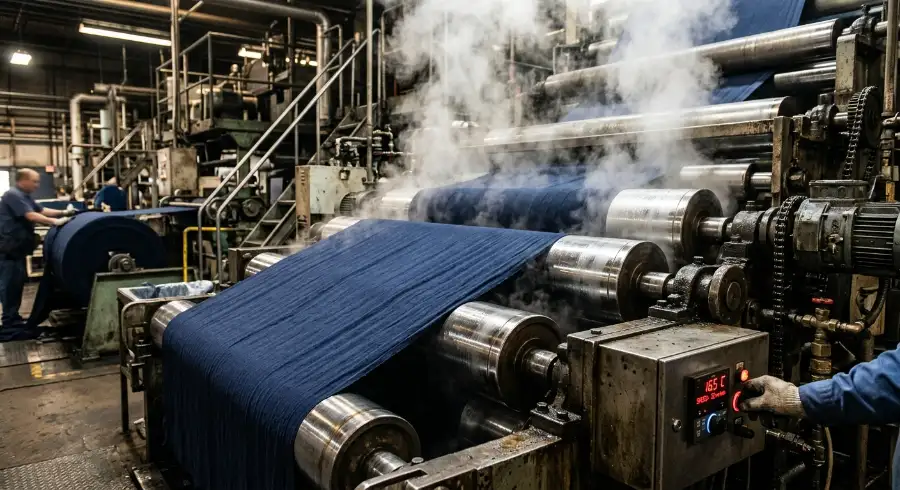
Engineer Chen manages our finishing line. He sees exactly how fabrics react before they ever reach the cutting tables.
“Buyers get fooled by chemical finishes,” Chen told me while physically adjusting the tensioner on our Monforts stenter machine. “Chemicals make the fabric feel soft and prevent shrinking for the first few washes. But industrial detergents strip those chemicals away quickly.”
Chen strongly recommends strict mechanical pre-shrinking. This process (often called Sanforization or compressive shrinkage) uses physical heat and heavy pressure rollers to compress the fabric structurally. It stabilizes the yarns permanently.
Do not let temporary chemical finishes replace verified dimensional testing over 12 months of active service.
The ISO Standards You Need to Know
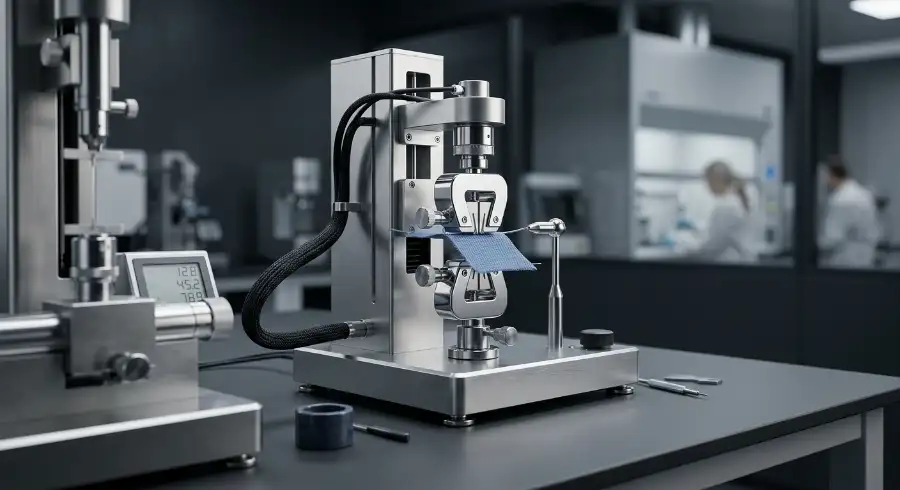
You cannot hold a factory accountable without citing specific testing standards. Use this exact procurement language in your vendor contracts.
- ISO 6330: This standard dictates the domestic washing and drying procedure.
- ISO 15797: This standard specifies the harsh industrial washing and finishing procedure specifically for workwear.
- ISO 5077: This dictates the exact dimensional change measurement method.
Never accept a generic lab report. Ask your factory for the exact wash procedure, drying method, machine type, detergent, ballast (the extra fabric added to simulate a full load), and cycle count.
1. How to Read a Lab Report?
When the factory hands you a test report, you must know exactly where to look. First, check the warp and weft numbers separately. A fabric might hold its width perfectly but still lose two inches in length, a clear sign of unaddressed workwear shrinkage.
Watch out for a marginal pass. If a garment barely stays within spec during a mild ISO 6330 domestic test, it will fail horribly in a harsh industrial laundry setting.
Reject any reports that omit the drying details. Finally, demand garment-level results. Fabric-level reports completely ignore how the stitched seams and trims will react under tension.
2. The Residual Shrinkage Formula
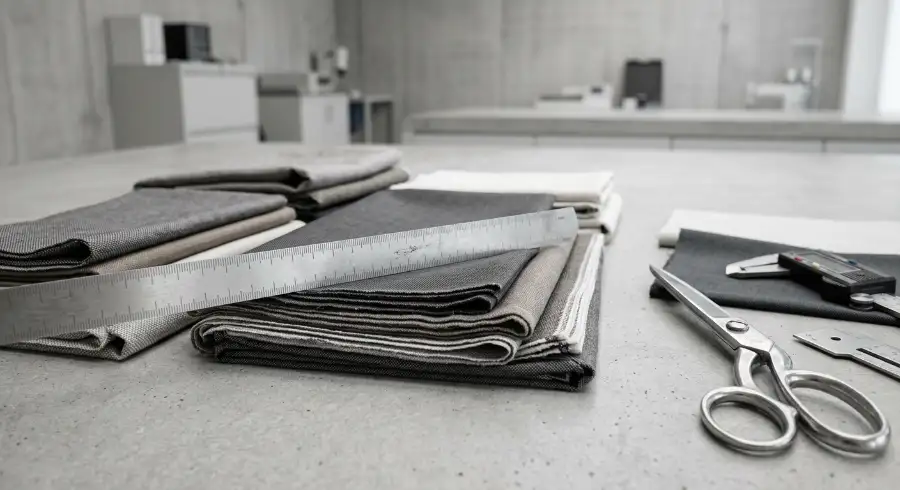
Lab technicians use a specific formula to determine pass or fail rates. You can easily run this math yourself.
Residual shrinkage % = ((After wash measurement - Original measurement) / Original measurement) * 100
Negative values indicate shrinkage. Consider a garment example for an inseam. A trouser starts at 32 inches. After washing, it measures 31 inches. ((31 - 32) / 32) * 100 = -3.125%.
Apply this to a fabric example for the warp direction. A raw swatch starts at 500mm. After washing, it measures 485mm. ((485 - 500) / 500) * 100 = -3.0%.
If this mathematical result exceeds your purchase order tolerance, you must act. Reject the batch, rework the sewing pattern, or resize the specification before bulk cutting begins.
The Hidden Threat: Trim and Accessory Mismatch
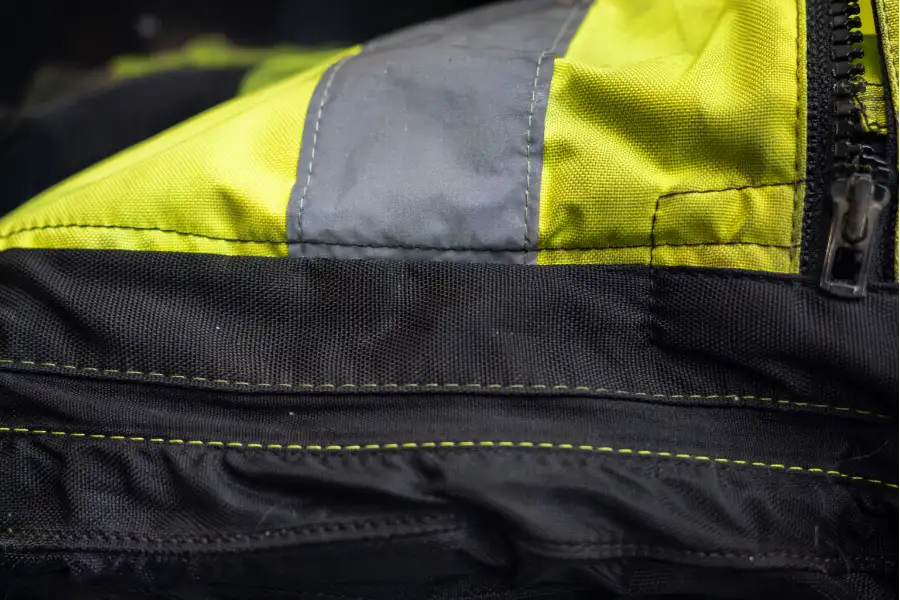
Main shell fabrics often pass testing, but the final garment still fails in the field. Competitors usually miss this crucial failure mode completely.
Reflective tape, zippers, sewing thread, interfacing, and collar fusing all shrink at completely different rates. If a factory sews highly stable tape onto a shrinking fabric, the resulting tension causes zipper wave. You will see intense seam puckering, tape distortion, and severe silhouette twist.
This physical mismatch destroys high-vis and safety garments. You must qualify your factory carefully. Read our detailed guide on evaluating workwear manufacturers to learn how to audit production lines correctly. We also detail how to match trims properly in our review of fabric for safety vests.
Stop Buying “Pre-Shrunk” Marketing
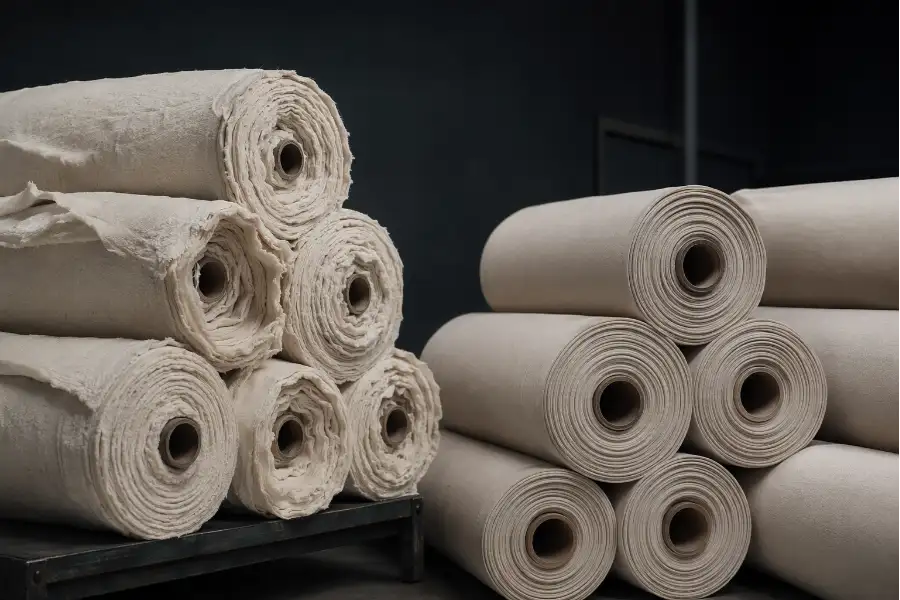
Suppliers throw around meaningless phrases to close deals. Terms like garment-washed, pre-washed, and enzyme-washed just describe the dye process and initial hand-feel.
They do not guarantee structural stability. Only heat-set or mechanically pre-shrunk describe permanent physical changes to the material. Marketing terms are never substitutes for a rigorous, cycle-based test report focused on real-world workwear shrinkage.
The safest specification is not asking for pre-shrunk fabric. It is demanding a full dimensional stability requirement. Tie this requirement directly to the exact blend, finishing method, trims, test method, and acceptance threshold.
Industrial Fleets: 100% Cotton vs. 50/50 Blends
Heavy Welders: Use 100% cotton or FR-treated cotton. It safely resists molten slag.
Standard Fleets: Use a 50/50 poly-cotton blend. Procurement heads often buy 100% cotton strictly for comfort. In our lab tests, untreated 100% cotton shrank 5.2% after three hot cycles. Workers quickly abandon tight uniforms.
The total replacement burden over 12 months completely wipes out any initial savings. Buy 50/50 blends for standard fleets to ensure long-term dimensional stability and limit costly workwear shrinkage.
Outsourced Laundry: Domestic vs. Industrial Care
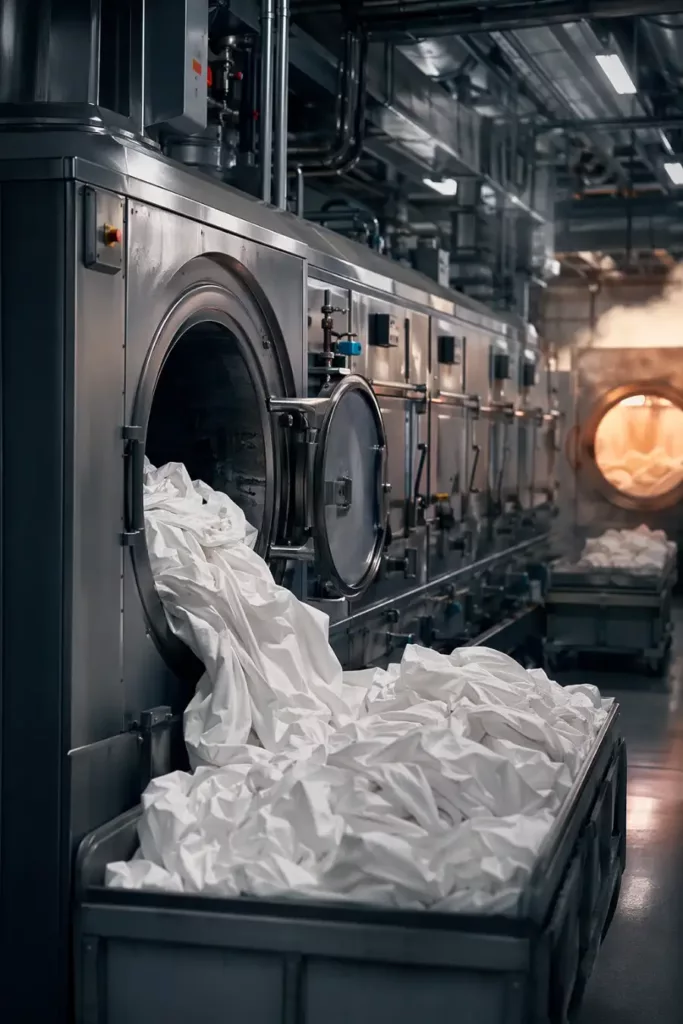
In-House Manager Peng: You can survive using ISO 6330 domestic wash specs if you strictly calibrate moderate-heat cycles on-site.
Outsourced Contracts: Reject suppliers quoting ISO 6330. Tunnel washers and 160°F commercial dryers will destroy domestic-grade fabrics. I learned this when a hospital client melted 500 scrub sets in an industrial dryer. We immediately switched them to the ISO 15797 industrial standard, dropping the heat defect rate to zero. If you outsource your uniform care, demand ISO 15797 compliance.
1. Garment Distortion: When the Shell Passes but Trims Fail
HSE Officers: Always test the fully assembled garment. A durable shell fabric means nothing if the trims fail. Different materials shrink at different rates. If a factory sews static polyester thread onto a volatile cotton shell, the zipper waves.
During a recent mining audit, Site Manager Zhan showed me a safety jacket with warped reflective tape. He pointed out: “This differential shrinkage restricts arm mobility and ruins our visual compliance.”
⚠️ Warning: Puckered reflective tape alters light-return angles, instantly voiding OSHA high-visibility compliance. This exposes your company to severe legal liability.
2. Incoming Cargo: The Warehouse Batch Audit
Warehouse Managers: Never trust the packing slip. Garments compress tightly inside shipping bales. Opening the cartons releases this tension, physically altering dimensions before the first wash. You must run a dimensional stability test. We use this exact SOP on our floor:
| Batch ID | Original (cm) | After-Wash (cm) | Change | Status | Notes |
|---|---|---|---|---|---|
| L2412-A1 | 54.0 | 52.8 | -2.2% | PASS | Within 3% tolerance |
| L2412-C3 | 55.5 | 48.9 | -11.9% | FAIL | Cotton batch rejected |
- Pull 3 garments per batch. Label them.
- Condition and measure key points before washing.
- Mark measurement points with laundry pens.
- Run a hot wash matching your facility’s exact process.
- Dry using your actual site method.
- Re-measure the exact same points.
- Calculate residual shrinkage (inseam, sleeve, chest).
- Quarantine any batch exceeding PO tolerances.
⚖️ Editor’s Take: Suppliers only respect hard data. Protect yourself by adding this clause to your PO: “Supplier assumes full financial responsibility for out-of-spec dimensional changes discovered during the facility’s incoming batch audit.”
People Also Ask about Workwear Shrinkage
1. What is an acceptable shrinkage rate for industrial workwear?
Under 3 percent in both warp and weft directions. In my experience auditing enterprise rollouts, anything over 3 percent causes severe fit issues after 10 washes. We always set this hard limit to prevent workers from abandoning tight, non-compliant gear.
2. Which matters more for uniforms: ISO 6330, ISO 15797, or ISO 5077?
ISO 15797 is the most critical. As noted in the standards section above, ISO 6330 only tests mild domestic washes. If your crew uses heavy-duty tunnel washers, ISO 15797 simulates those exact harsh conditions. We use ISO 5077 simply to measure the physical results.
3. Is ‘pre-shrunk’ the same as mechanically pre-shrunk or Sanforized?
No, they are completely different. “Pre-shrunk” is often a vague marketing term or a temporary chemical wash. During our factory visits, we demand true “Sanforized” or mechanical pre-shrinking. This process uses heat and heavy pressure rollers to lock the fabric’s structure permanently.
4. How do I calculate residual shrinkage on the factory or warehouse floor?
Subtract the after-wash measurement from the original, divide by the original, and multiply by 100. Our QA team marks the inseam with laundry pens, runs a facility-standard wash and dry cycle, and measures again. A negative result confirms the exact percentage lost.
Need official test reports, sample evaluations, or reliable supplier support for your next uniform rollout? Contact our team at LantaoWork to secure your supply chain.
Editorial Integrity Statement
-
Zero Kickbacks: We receive no financial incentives, commissions, or kickbacks from manufacturers or factories.
-
Self-Funded: We purchase all our own lab equipment and test garments to guarantee 100% objective, unbiased findings.
-
Methodology: Our data is strictly empirical, funded independently to protect the integrity of our technical standards.

Leave a Comment
Your email address will not be published. Required fields are marked *