Table of Contents
A restaurant uniform fails long before the fabric tears. It fails when line cooks overheat, servers wrinkle mid-shift, or aprons fade by week three.
Selecting the best fabric for restaurant uniforms is a critical operational requirement. The material you pick has to withstand high heat, oil and sauce stains, continuous movement, and rigorous industrial laundering.
I visited a hot kitchen in Texas last summer. The head chef wore a thick cotton coat, sweated constantly, and looked exhausted; our vented poplin coat changed that.
The Occupational Safety and Health Administration (OSHA) warns that heavy, non-breathable clothing exacerbates heat stress in commercial kitchens.
There is no single miracle fiber. The smartest approach is a role-specific strategy. Poly-cotton blends serve as the practical default, while we reserve high-performance fabrics for hot kitchens and premium front-of-house roles.
This guide gives owners, procurement managers, and executive chefs a decision framework, backed by a real-world 50-cycle wash test. Here is how you evaluate the options.
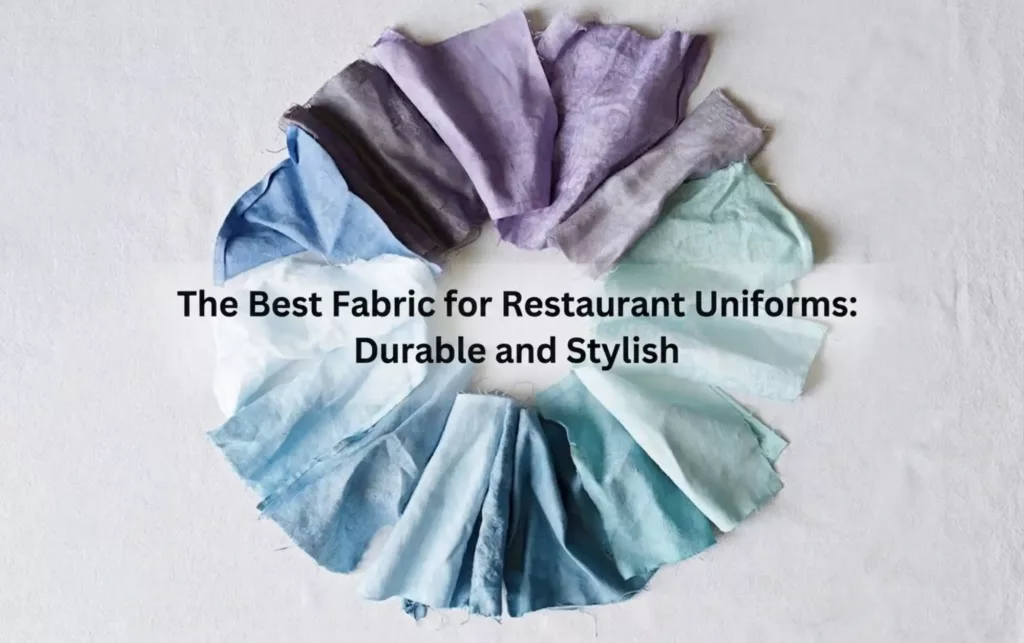
Quick Answer: There is no single best fabric. Default to a 65/35 poly-cotton twill at 200–240 GSM for kitchen staff, a lighter 60/40 poplin (120–160 GSM) for front-of-house shirts, and a heavy 240–300 GSM soil-release twill for aprons. Cap elastane at 2% or less.
What is the Best Restaurant Uniform Fabric?
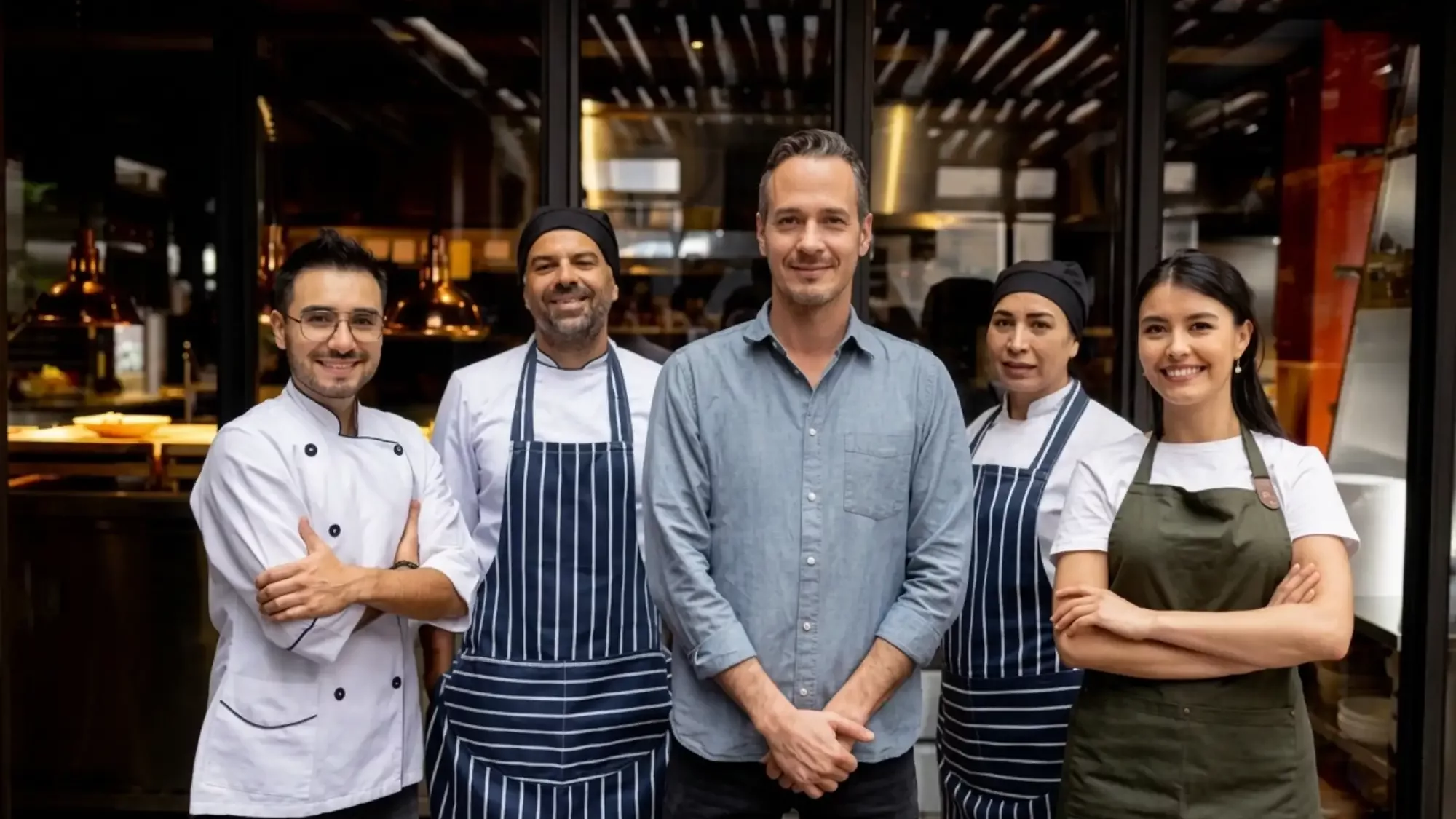
The best fabric for restaurant uniforms is the specific material that balances comfort, durability, stain resistance, and cost for a distinct job role.
Think of uniform fabrics like building materials. Nobody would put heavy roof shingles on a living room floor.
Across thousands of hospitality staff, front-of-house shirts, heavy-duty chef coats, and fast-paced server uniforms cannot share the same baseline standard.
Here are the core fabric families:
- 100% Cotton: Delivers maximum softness and natural airflow.
- Polyester: Locks in color and requires very low maintenance.
- Poly-Cotton Blends: The industry workhorse. It balances durability with breathable comfort, so a coat survives a 12-hour shift without feeling like a sauna.
- Stretch Blends: A little spandex woven into the base lets the fabric flex with the staff instead of binding during a busy shift.
- Performance Fabrics: These synthetics pull sweat away from the body, so they work well in hot kitchens. They also hold up as aprons that take constant liquid splashes.
To discuss specs confidently with suppliers, professionals define four core terms:
- Fiber: The raw material.
- Weave: How the factory interlaces those yarns.
- GSM (Grams per Square Meter): The international standard metric for measuring fabric weight and thickness.
- Finish: Chemical treatments added for stain or moisture resistance.
Fabric Recommendation by Role
| Role | Weave & Finish | Blend | GSM | Why |
|---|---|---|---|---|
| Chef coats (hot kitchen) | Twill + moisture-wicking, shrink-controlled | 65/35 or 50/50 | 200–240 | Survives industrial wash without shrinking |
| Chef pants | Twill / ripstop | 65/35 | 220–280 | Handles grease while staying flexible |
| Kitchen aprons | Heavy twill + oil-repellent finish | 65/35 or coated | 240–300 | Blocks splashes and abrasion |
| Front-of-house shirts | Poplin + wrinkle-free | 60/40 + up to 2% elastane | 120–160 | Stays crisp and breathable on the floor |
| Servers / outdoor staff | Performance polyester, moisture-wicking | High polyester | 130–180 | Dries fast and manages sweat |
Author’s Take: Clients often request 100% cotton because they assume all polyester feels cheap. That is false. A heavy 100% cotton canvas traps heat, while modern performance polyester breathes beautifully. True comfort depends on the blend, weave, weight, and finish.
💡 Key Insight: These building blocks are what let a garment survive real restaurant conditions.
Copy this spec to brief a supplier: Blend 65/35 poly-cotton · Weave 2/1 or 3/1 twill in the kitchen, poplin front-of-house · GSM jackets 200–240, aprons 240–300 · Elastane ≤2% if tumble-dried · Finish soil-release + moisture-wicking · Test ISO 15797, 50 cycles, shrinkage <2%.
Need it matched to your actual laundry? Send wash temperature, dryer heat, and daily load count and the shortlist comes back within two business days.
A restaurant uniform relies on three structural layers: raw fibers, a woven grid, and a chemical protective finish.
We run these materials through extreme heat and abrasion tests in our facility to verify performance. Understanding this sequence changes how you evaluate the best fabric for restaurant uniforms.
Technical Fabric Specifications
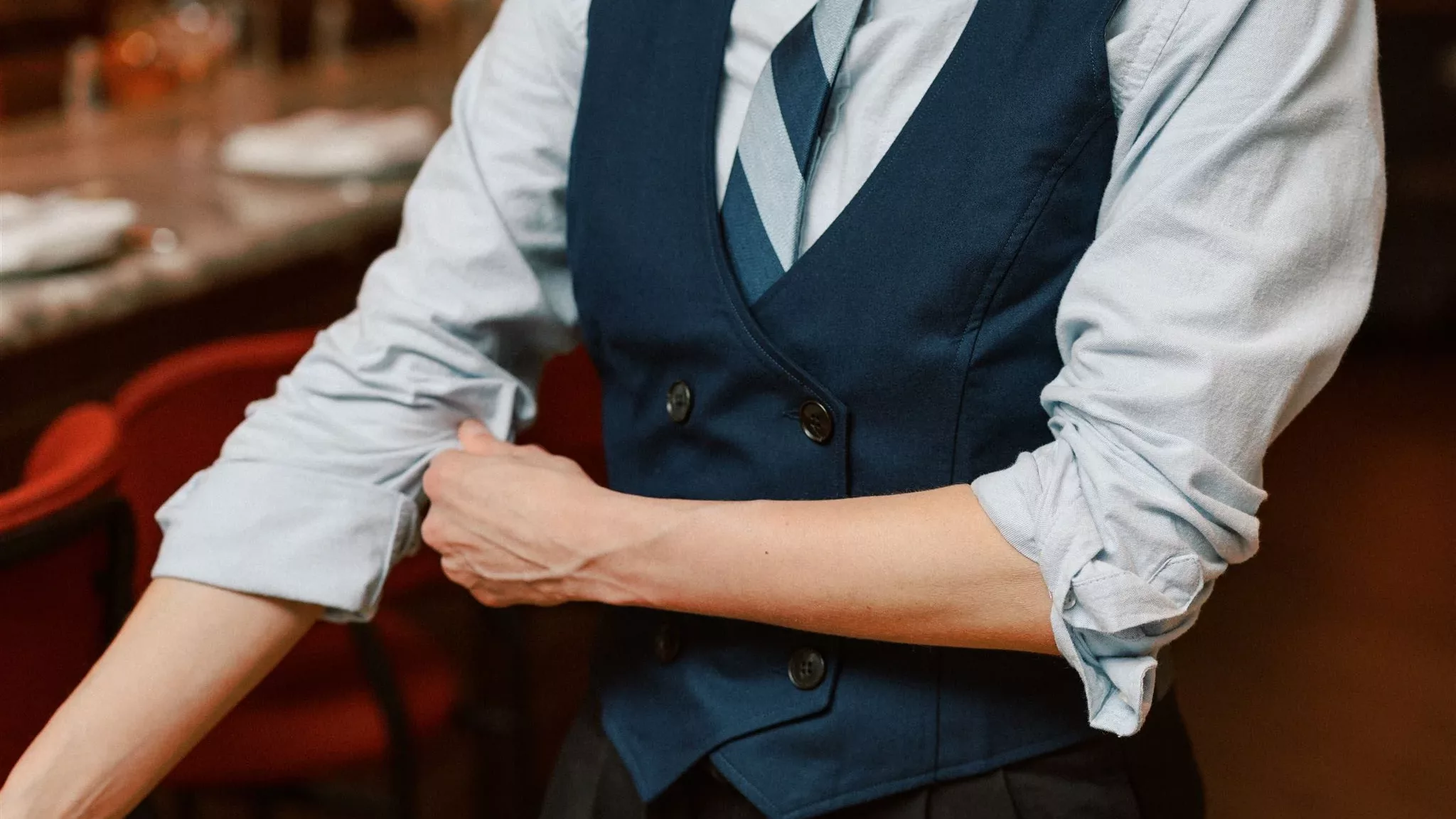
This section breaks down the performance of common fabric blends and the optimal ratios for hospitality environments.
1. Fiber Content and Blend Ratios
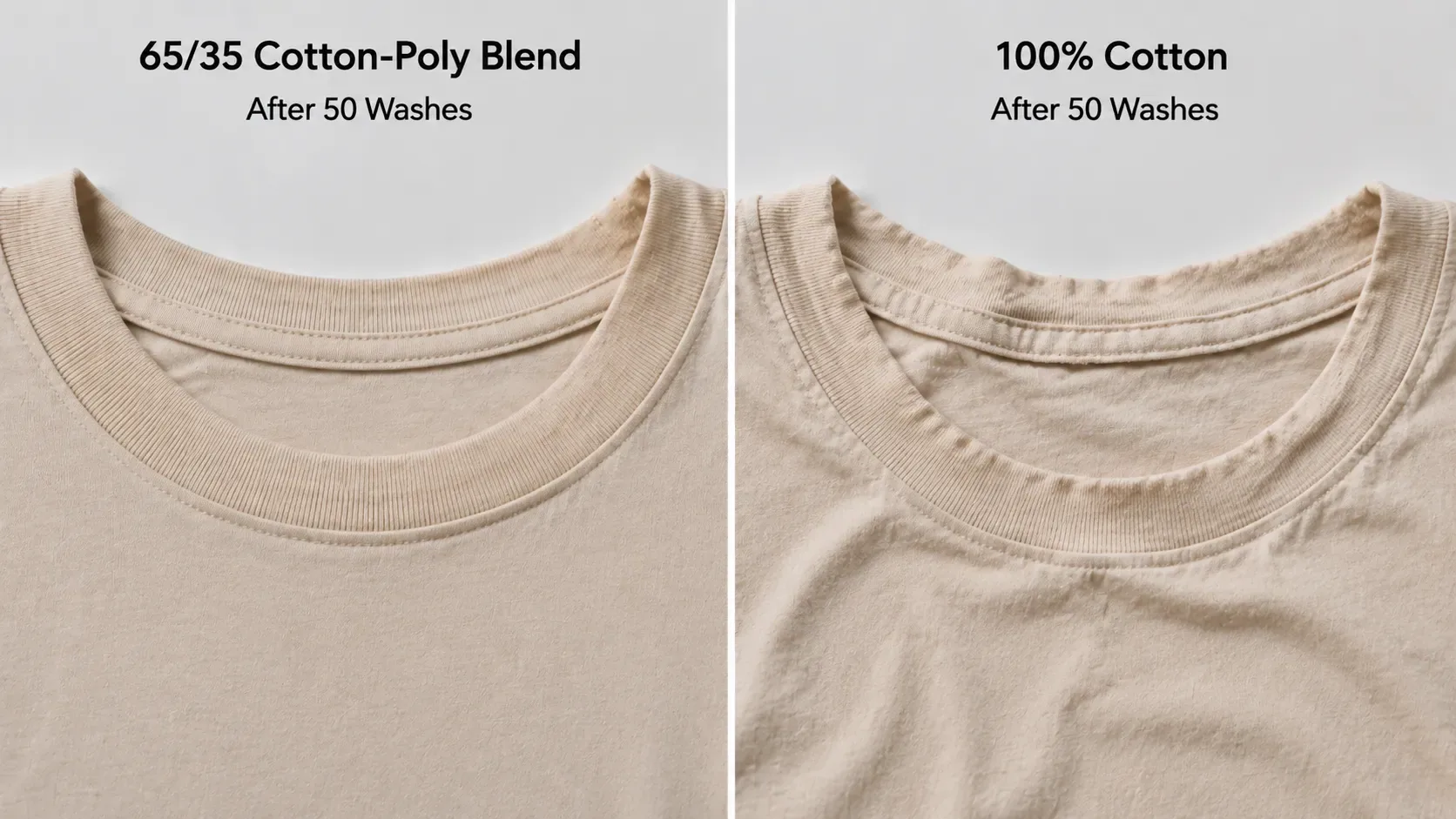
The Fibers act as the foundation of the garment. Cotton absorbs moisture and allows air to flow; polyester resists stretching and locks in color, so the blend ratios decide the outcome.
100% cotton feels soft but wrinkles and loses shape under heavy laundering. Polyester-rich weaves hold their crease but trap body heat.
A 60/40 or 65/35 poly-cotton split balances comfort with low-maintenance care, and a touch of spandex — about 2% — gives servers room to move during a long shift.
⚙️ Technical Detail: Recent wash tests in our facility confirmed it. After 50 industrial cycles, cotton-rich garments felt softer but showed wrinkling, shape drift, and color dulling, while a stable poly-cotton blend held a clean, crisp silhouette.
2. Weave Types: Twill vs. Poplin
The weave dictates how the horizontal and vertical threads interlock, and the same fiber blend at a different weave density creates a completely different fabric.
Twill’s diagonal rib hides stains and resists abrasion, so it suits chef coats and aprons. Poplin’s plain over-under weave gives a smooth, light, crisp surface for polished front-of-house shirts.
Matching the weave to the job role matters. A tight twill traps hot air and blocks hot oil splashes in the kitchen, while a loose poplin lets hot air escape, keeping front-of-house staff cool during busy dinner shifts.
3. Fabric Weight (GSM) and Finishing Treatments
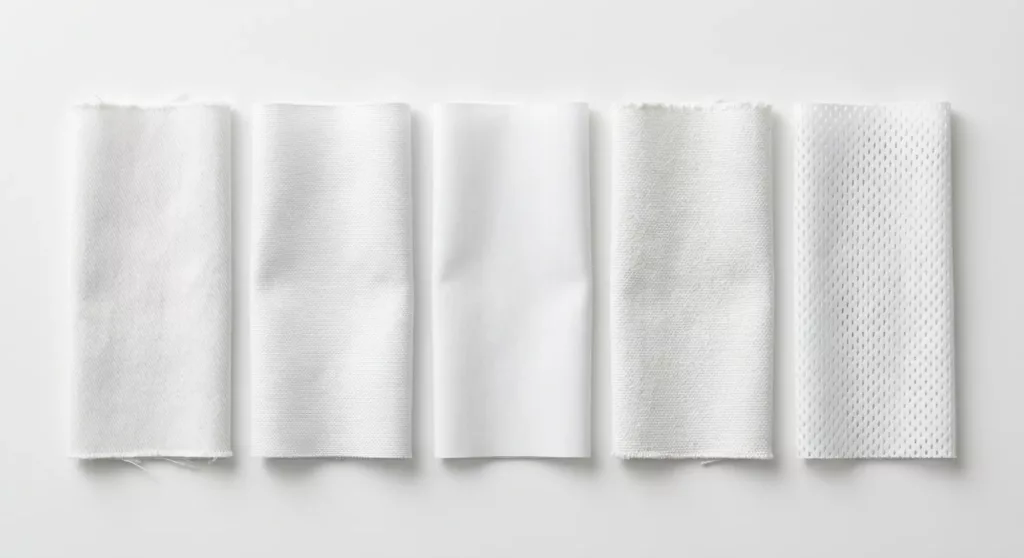
The final manufacturing step dials in the fabric weight and applies surface treatments. Weight is measured in GSM (Grams per Square Meter), and it’s the bridge between comfort and durability.
Lighter fabrics suit front-of-house shirting, midweights build chef coats, and heavier fabrics handle aprons where coverage and abrasion matter most.
Next, chemical treatments alter the fabric’s behavior. Specialized coatings wick moisture, soil-release formulas let staff brush off sauce and wine marks, and wrinkle-resistant finishes keep garments sharp right out of the wash.
We validate these systems under strict protocols. The ISO 15797 standard dictates how workwear holds up under simulated industrial laundering, tracking dimensional stability, color retention, and pilling.
The AATCC 118 test measures oil-repellency on high-risk apron fabrics, and we advise buyers to run a real-process validation with their laundry provider.
This engineering methodology works across diverse settings. We outfit urban fine dining front-of-house teams, fast-casual chains with high wash volumes, outdoor patio staff in hot climates, and hotel restaurants needing premium presentation.
Buyers should spec fabric by job role, laundering reality, and wear conditions, never by the fiber label alone.
Finding the best fabric for restaurant uniforms is an exercise in financial return, not aesthetics. Upgrading the materials solves immediate operational bottlenecks.
Key Benefits & Value of The Best Fabric for Restaurant Uniforms
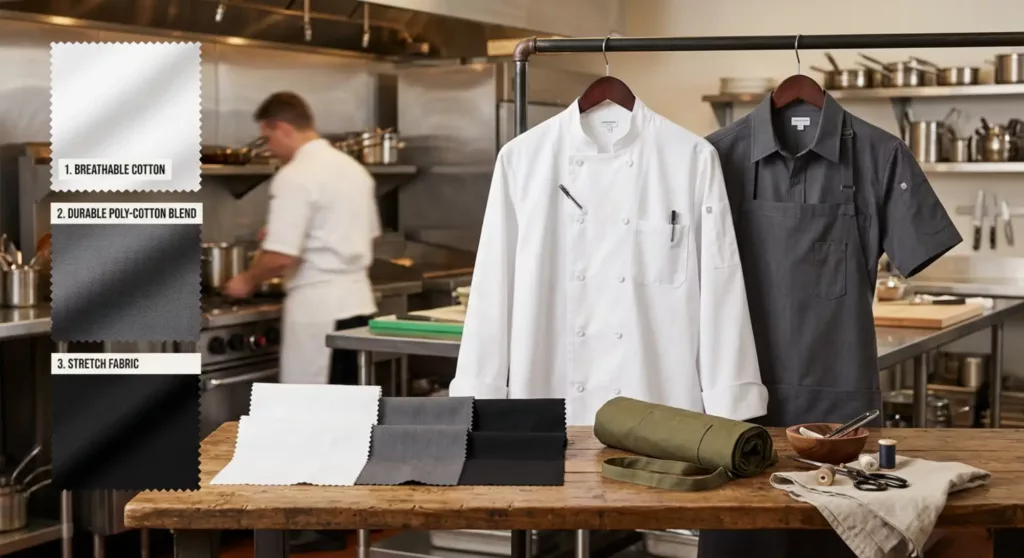
The right restaurant uniform fabric delivers tangible value — from cost savings to better staff performance. Here are the core benefits of choosing the best materials.
1. Lowers Replacement Costs
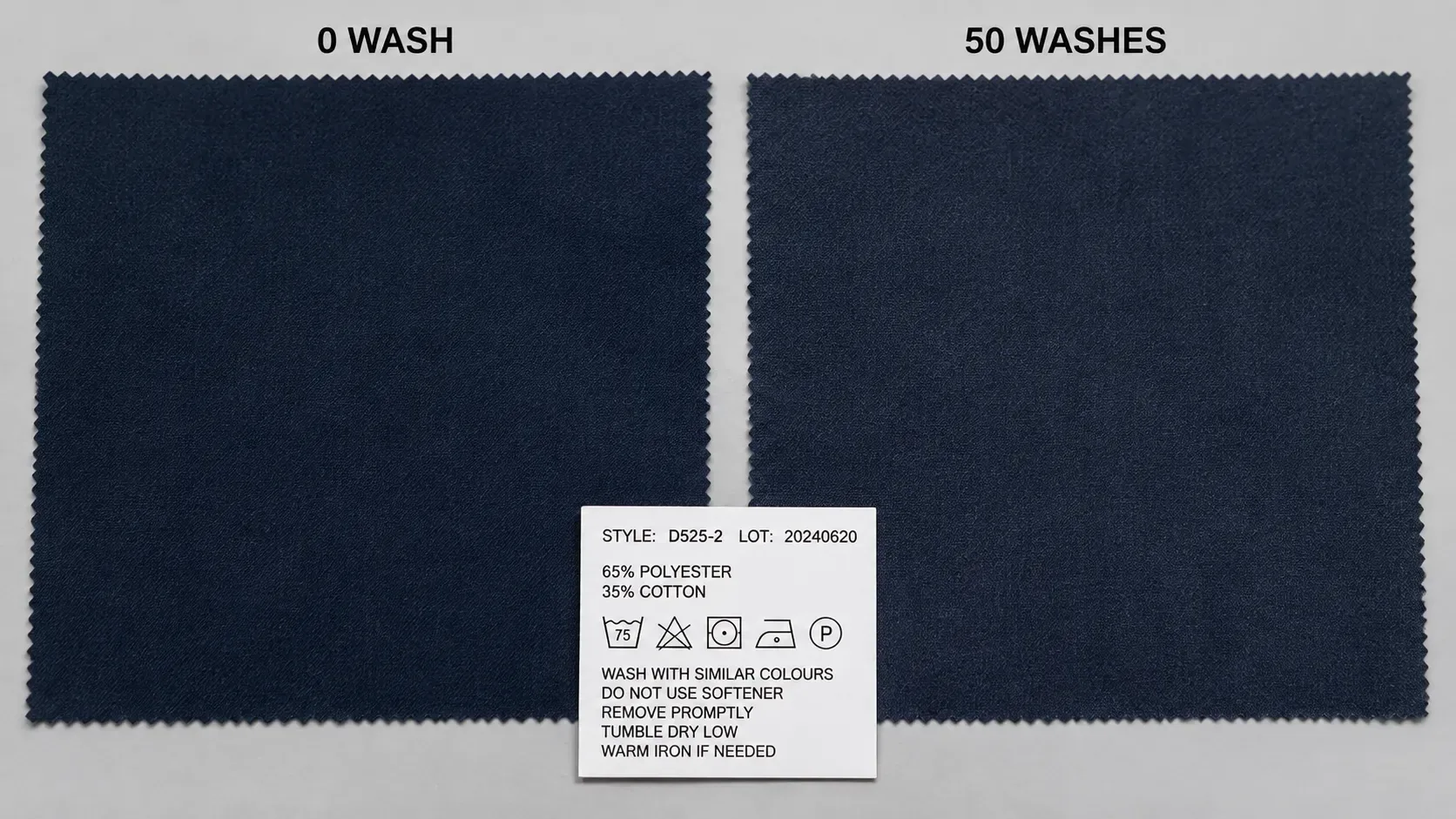
Upgrading to a durable hospitality fabric slows the shape loss and fading that force replacements. Tighter weaves resist seam stress and hold their structure through a 50-cycle ISO 15797 wash test; premium twills are rated for 100+.
For our clients, that typically stretches a jacket’s working life from three months to six or more, trimming the annual replacement spend.
📈 ROI Check: Track your uniform replacement rate. If staff request new shirts before the six-month mark, poor durability is actively draining your budget.
2. Improves Focus and Shift Performance
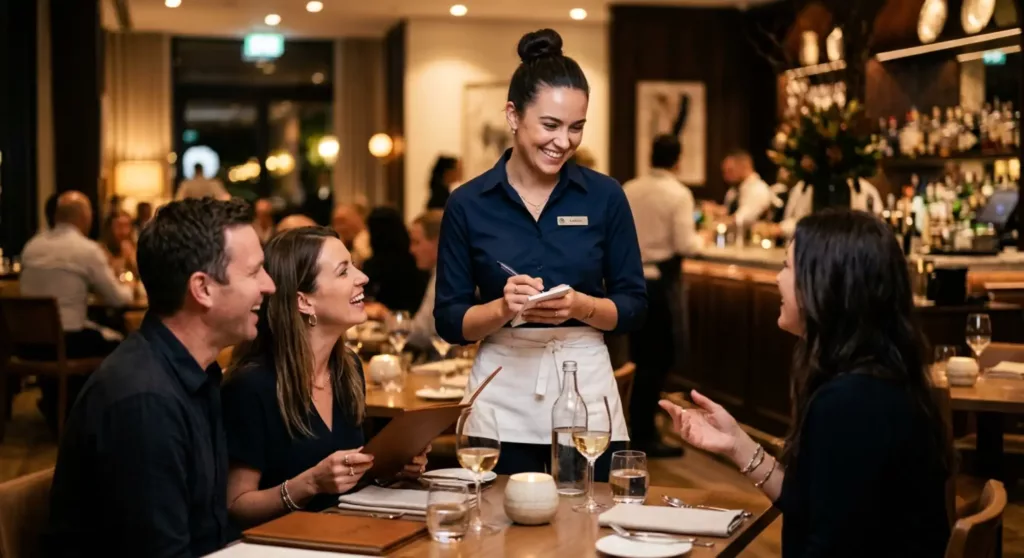
Comfort functions as a hard operational metric. Moisture-wicking textiles pull sweat away from the body, preventing heat stress near 95°C cooking stations.
When staff stay cool, they wear their protective gear correctly and maintain focus. According to the Textile Rental Services Association (TRSA), quality textiles directly reinforce workplace safety and consistency.
3. Maintains a Crisp Front-of-House Image
Cheap polyester pills and sags, damaging the brand image. Wrinkle-resistant fabrics lock in color and hold a structured drape through a double shift, and they repel liquid spills, so front-of-house staff look as sharp at closing as they did at clock-in.
A front-of-house uniform carries your brand, so color has to hold. Dye-transfer-resistant polyester in the blend keeps a navy shirt navy after 50 washes instead of going grey.
Logo embroidery sits flat on a poplin with enough body to take a stitch without puckering, and the drape stays structured through the last seating — no limp collars.
4. Supports Strict Hygiene Programs
The FDA frames HACCP as a comprehensive hazard-control system, and textiles are a critical variable in that chain. Fabrics engineered to release heavy soils guarantee a hygienic clean.
Aligning with TRSA hygiene standards simplifies compliance audits with a verifiable standard of cleanliness. A technical hospitality uniform manufacturer builds apparel that supports strict food-safety protocols.
When sourcing the best fabric for restaurant uniforms, one hard truth emerges: no material wins on every metric. Procurement teams fail by over-prioritizing price or visual appeal.
Different body types, hot climates, and long shifts demand tailored solutions. Catering crews require different gear than luxury hotel staff.
Common Pitfalls & Performance Trade-offs
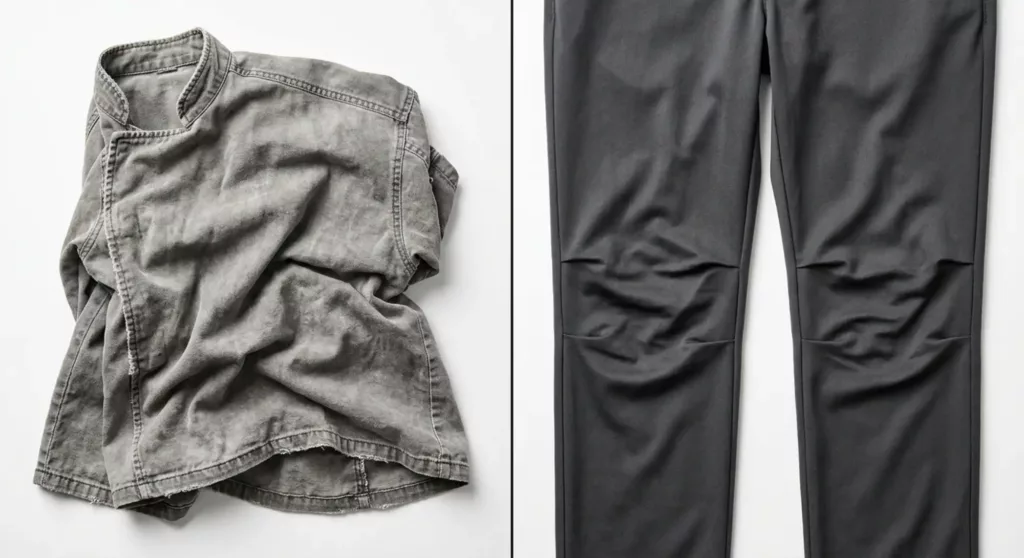
Choosing the right restaurant uniform fabric isn’t just about comfort—it’s about avoiding costly trade-offs. Here are the two biggest pitfalls to watch for when evaluating materials for commercial kitchens:
1. The 100% Cotton Maintenance Trap
Staff love 100% cotton on day one. However, natural fibers demand intense ironing. In our stress tests, cotton lost its crispness after 15 washes. It breaks down rapidly under heavy industrial laundering.
⚖️ The Trade-off: Comfort comes at the cost of long-term maintenance.
2. The Breathability and Stretch Tax
Polyester-rich blends resist wrinkles and last years, but dense weaves trap heat, punishing kitchen staff in humid regions.
Stretch fabrics improve mobility for servers of all body types, yet high heat ruins stretchy pants. Commercial dryers melt the tiny spandex fibers, so the pants lose their shape and sag badly.
Buy blends with very little stretch material for hot wash routines.
🛡️ Mitigation: Source blends with no more than 2% elastane for better commercial heat resistance.
3. Fading Stain Resistance
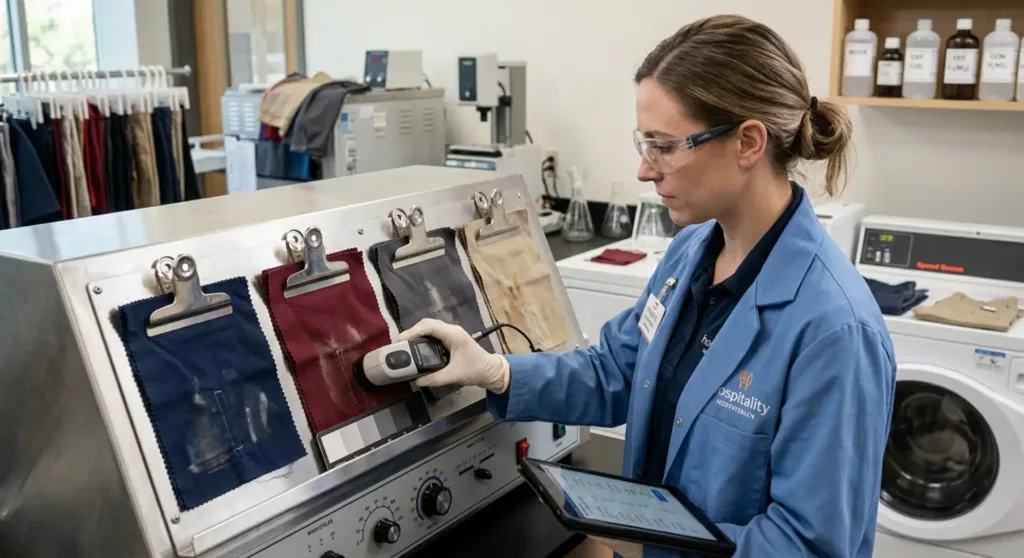
Many brands overstate their stain coatings. A cheap chemical sprayed on the shirt washes away after one month, proven in independent lab tests.
Always ask vendors for long-term test results. Buyers struggle when they ignore post-laundry performance.
Specialized fabrics do not replace hygiene discipline. The FDA strictly notes that retail food safety requires active managerial control over operational systems.
⚠️ Critical Warning: Procurement Blind Spots. Do not accept vague marketing. Request written wash-test evidence after 50 cycles, and confirm suppliers document GSM, blend ratio, and weave type against ISO 15797.
These structural limitations point to exactly what to ask suppliers next.
Frequently Asked Questions About Restaurant Uniform Fabric
1. What is the best fabric for restaurant uniforms?
A 65/35 poly-cotton twill at 200–240 GSM is the safest default for kitchen roles. It keeps its shape through industrial washing, resists oil splashes, and breathes better than heavy 100% cotton or a dense all-polyester coat.
You can choose a lighter 60/40 poplin for front-of-house and a heavier oil-repellent twill for aprons.
2. Is 100% cotton or poly-cotton better for chef coats?
Poly-cotton. Staff love 100% cotton on day one, but it wrinkles, drifts out of shape, and dulls in color under heavy industrial laundering. A 65/35 poly-cotton blend holds a clean silhouette through 50+ wash cycles without turning the coat into a heat trap.
3. What GSM should restaurant uniforms be?
Kitchen chef coats 200–240 GSM, chef pants 220–280 GSM, aprons 240–300 GSM, and front-of-house shirts 120–160 GSM. Lighter fabrics keep the front of house cool; heavier fabrics protect the kitchen from heat and splashes.
4. Do stretch uniforms survive industrial dryers?
Only with a low elastane content. Commercial dryers melt spandex above roughly 3%, so the pants sag and lose shape. Cap elastane at 2% or less for any garment that runs through a hot tumble-dry cycle.
5. How many wash cycles should hospitality fabric last?
A well-built poly-cotton should keep its color, shape, and finish through at least 50 industrial cycles, and 100+ for premium twills. Ask for third-party test evidence against ISO 15797 before you commit.
6. Twill or poplin — which weave is better for which role?
Twill for anything that takes abuse: chef coats, pants, and aprons. Its diagonal rib hides stains and resists abrasion. Poplin for polished front-of-house shirts, where a smooth, crisp surface and airflow matter more than heavy-duty protection.
Final Verdict: Engineering the Perfect Uniform Program
Stop guessing which uniform works best. Pick the exact fabric that matches your kitchen’s heat and daily laundry routine.
After extensive testing, one targeted approach holds. Use poly-cotton blends as the default all-rounder, choosing breathable cotton-rich options where high heat and skin comfort dominate.
Deploy hard-wearing twill for chef coats and aprons, lighter poplin for sharp front-of-house presentation. When mobility and sweat control matter most, rely on stretch or moisture-managing fabrics.
Change the procurement mindset. Demand proof, not adjectives. Specify the exact GSM, blend ratio, weave, finish, and laundry performance before signing any contract.
Explore the technical uniform fabrics range, or request a role-based fabric spec and a working sample arrives within two business days.

Leave a Comment
Your email address will not be published. Required fields are marked *