Table of Contents
The short answer: Australian school uniform supply splits three ways. In-country manufacturers are Devon, FCW and Tara. Uniform-programme operators are Midford, School Uniform Solutions, Mr Charles and Uniform Group.
Wholesale and retail suppliers are School Uniforms Australia, Trutex and Academy Uniforms. For Term 1, order by early September and require AS/NZS 4399 test reports plus Modern Slavery Act documentation.
One failed zipper can generate hundreds of parent complaints inside a single term. A school is not just buying garments. It is buying size consistency, AS/NZS 4399 sun protection, and restock certainty.
Disclosure: LantaoWork is a custom workwear manufacturer and competes with some companies on this list. No supplier paid for inclusion or ranking.
Supplier facts below were checked against the supplier’s own published website on 28 October 2026, or against an official register. We have not independently lab-tested third-party garments; where a performance claim cannot be verified publicly, we say so.
Quick Picks: Which Supplier Fits Which Job?
| If you need… | Start with | Why |
|---|---|---|
| Australian-made production | FCW | Melbourne factory, in-house embroidery and screen printing |
| National multi-campus coverage | Midford or Uniform Group | Made-to-order range plus school-shop operations |
| The uniform shop outsourced | School Uniform Solutions | Parent and school portals, local embroidery in SA |
| Parent retail convenience | Academy Uniforms | Store network and click-and-collect |
| WA-based local support | Tara Uniforms | Osborne Park, in-house embroidery, local manufacturing options |
How This List Was Built
This is a desk review, not a lab test. In October 2026 we checked each supplier’s own website and the public registers linked below, then sorted the ten by business type.
We did not rank on price or test garments. Where a supplier publishes no MOQ or lead time, the table says “Not published” instead of guessing.
Six things were checked:
- Business type — in-country manufacturer, wholesale or retail supplier, or uniform-programme operator.
- Production location — Australian or offshore, as stated by the supplier.
- Certification evidence — Ethical Clothing Australia, WRAP, ISO 9001, SMETA, or none published.
- Sun protection — a UPF test report to AS/NZS 4399.
- Term 1 readiness — sample approval window and peak-season cut-off.
- Parent ordering — online shop, store network, exchange policy.
The 10 Suppliers Compared
The most useful distinction is not fabric weight. It is which kind of business stands behind the garment: an in-country manufacturer, a wholesale or retail supplier, or a uniform-programme operator.
That decides who controls the lead time, the MOQ and the replacement stock. A local supplier controls the shop; a factory-direct programme controls the specification.
| Supplier | Type | Base / since | MOQ and lead time | Certifications published | Best for |
|---|---|---|---|---|---|
| School Uniforms Australia | Wholesale supplier | Australia, online | Not published | Not published | Ready-made stock ranges |
| Trutex | Schoolwear brand, partner programme | UK brand, Australian stock | MOQ not published; same-day dispatch on stock before 1pm AEST | Not published | Repeat restocks and colour consistency |
| Midford | Supplier and uniform-shop operator | Australia, since 1946 | Not published | Not published | Multi-category national programmes |
| School Uniform Solutions | Managed programme, offshore manufacturing | South Australia | Not published | Not published | Outsourced uniform shop |
| Devon Clothing | Designer, manufacturer, supplier | Adelaide, 35+ years | Not published | Not published | Cohesive custom range |
| Academy Uniforms | Retail chain, part of Uniform Group | Australia | MOQ not published; retail delivery 1–4 days | Not published | Parent convenience |
| Tara Uniforms | Manufacturer and uniform-shop operator | Perth (Osborne Park), 40+ years | Not published | Suppliers WRAP certified (site claim) | WA schools wanting local support |
| Mr Charles | Designer, manufacturer, uniform-shop operator | Australia, since 1972 | Not published | Not published | Private-school formalwear |
| Uniform Group (PSW) | Group supplier, uniform-shop operator | New Zealand and Australia, 130 years combined | Not published | Not published | Large multi-campus |
| FCW (Fashion Clubwear) | Australian manufacturer | Melbourne (Nunawading), since 1980 | Not published | Australian Made (site display) | Australian-made custom runs |
Not published = not stated on the supplier’s public website as of 28 October 2026. Only two of the ten publish a certification there; for the rest, the absence is the finding — ask for the certificate rather than accepting a claim.
Three more Australian suppliers worth a quote: Lowes (national wholesale schoolwear), Noone (uniform programmes), and The Uniform Company (Brisbane, manufacturing since 1969). They are not ranked above because this list is capped at ten.
Supplier Profiles: What Each One Is Actually Good At
Procurement teams need durable fabrics, consistent colour, child-safe garments, custom branding and reliable restocks. What separates these ten is how they deliver those things, and whether each one makes the garment or buys it.
Where a number is missing below, that is deliberate: an unverifiable lab result is worse than no number at all.
1. School Uniforms Australia
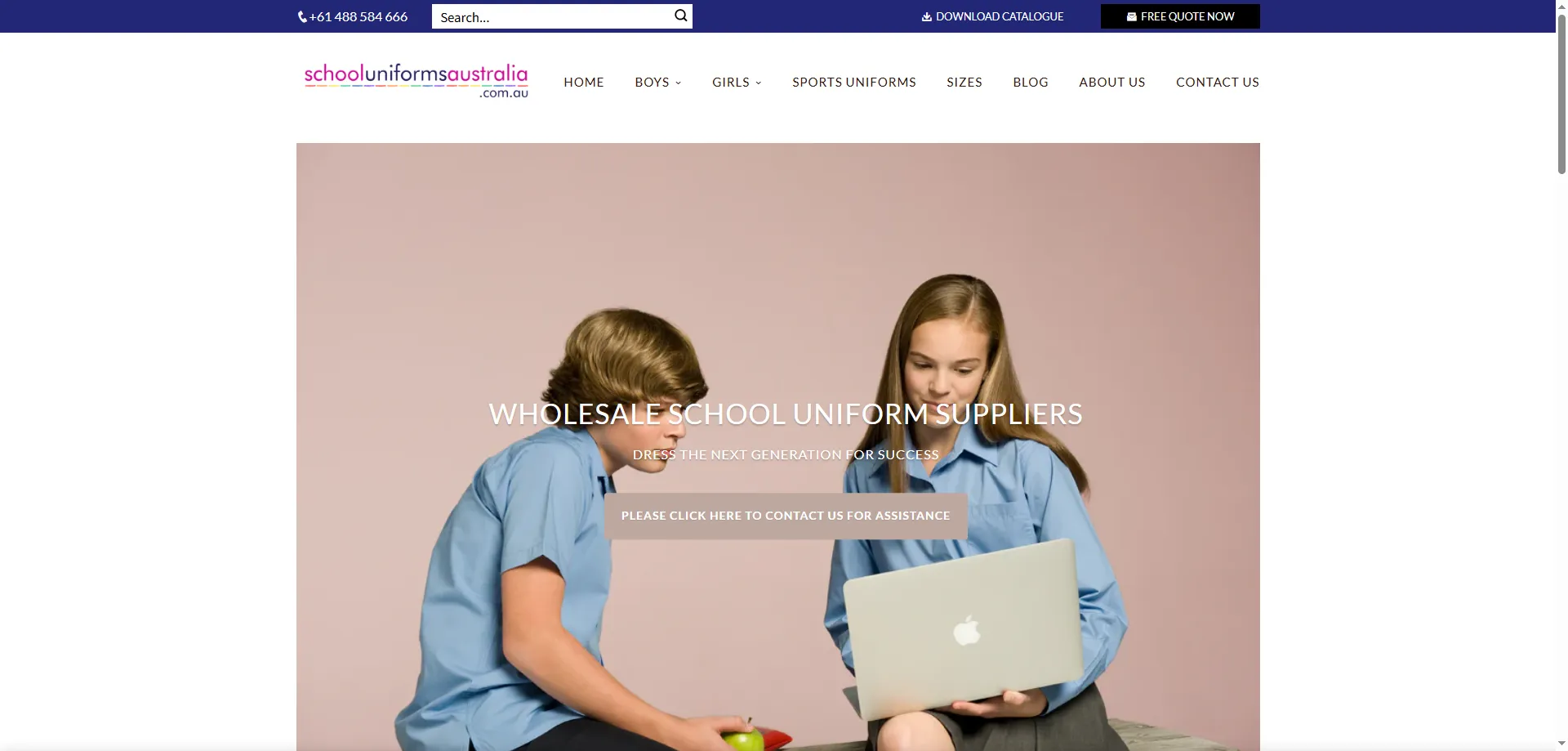
School Uniforms Australia runs a wholesale catalogue of polos, shirts, skirts, dresses, shorts and sports uniforms, plus a separate wholesale division for bulk pricing. Its published product pages list garment descriptions and sizes; samples are requested by email rather than through a self-serve checkout.
Then there is manufacturing. The site presents itself as a wholesale supplier, not an in-house cut-and-sew operation, so ask directly where each style is produced. That answer sets the lead time and decides whether a spec can still be changed.
Sizing needs managing up front. Order a physical size set before a bulk run, and get reorder dates in writing rather than assuming stock will be there mid-year.
🛡️ Our Verdict: A practical option for ready-made stock ranges and fast top-ups. The weak point is ownership: the reorder calendar stays with the supplier, not the school.
2. Trutex
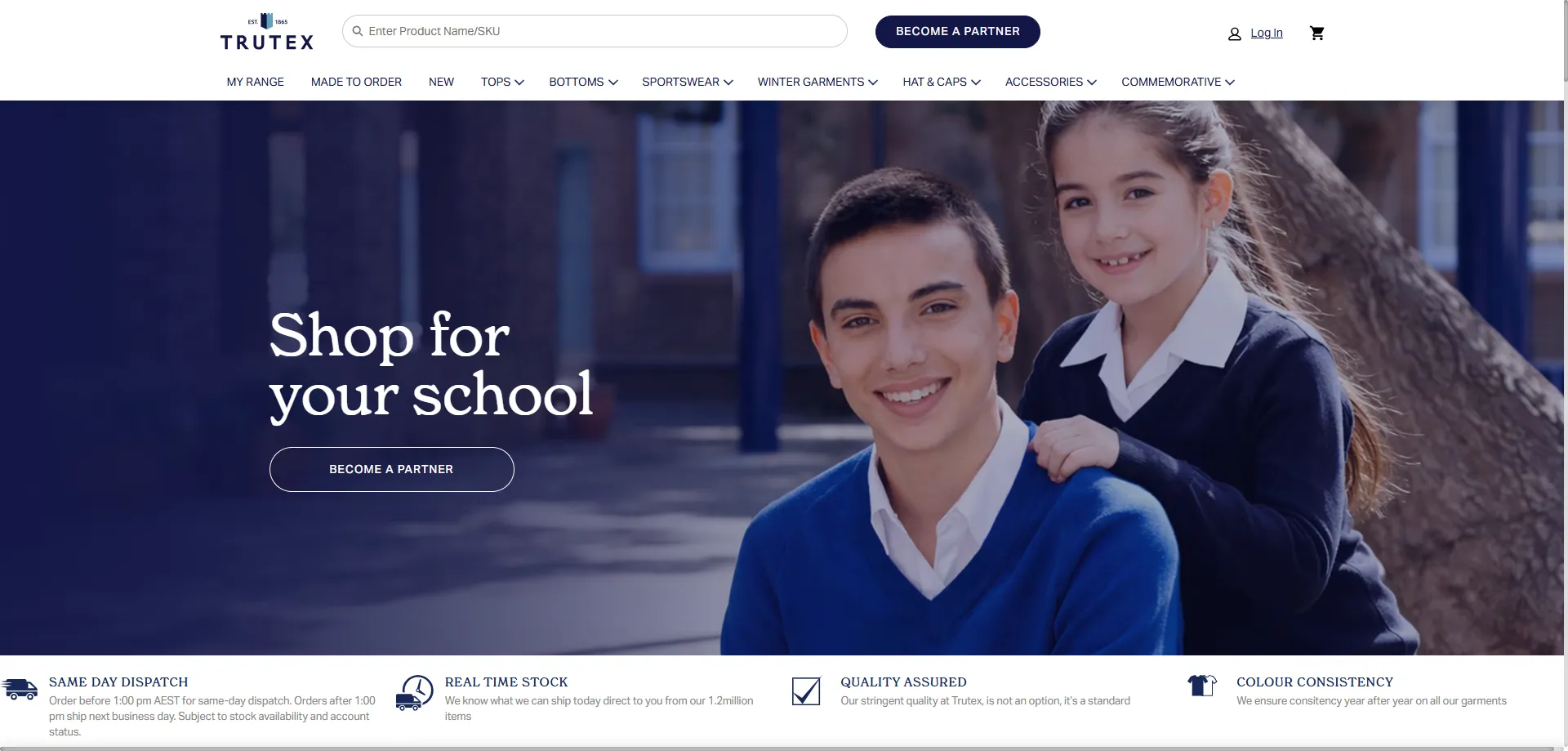
Trutex is a schoolwear brand established in 1865, operating in Australia through a partner model rather than a direct factory contract. Its site advertises same-day dispatch for orders placed before 1pm AEST, real-time stock across roughly 1.2 million items, and colour consistency across repeat orders.
That stock position is the real selling point: a mid-year replenishment gap closes faster than an offshore factory can quote one.
Customisation is where it gives ground. The range is fixed, and anything made to order stays inside their existing styles, so extensive school-specific tailoring may not be available. Settle two things early: which garments accept a custom crest, and what the partner terms look like.
🛡️ Our Verdict: A supply solution, not a design partner. If the uniform is already settled, this is the least friction.
3. Midford
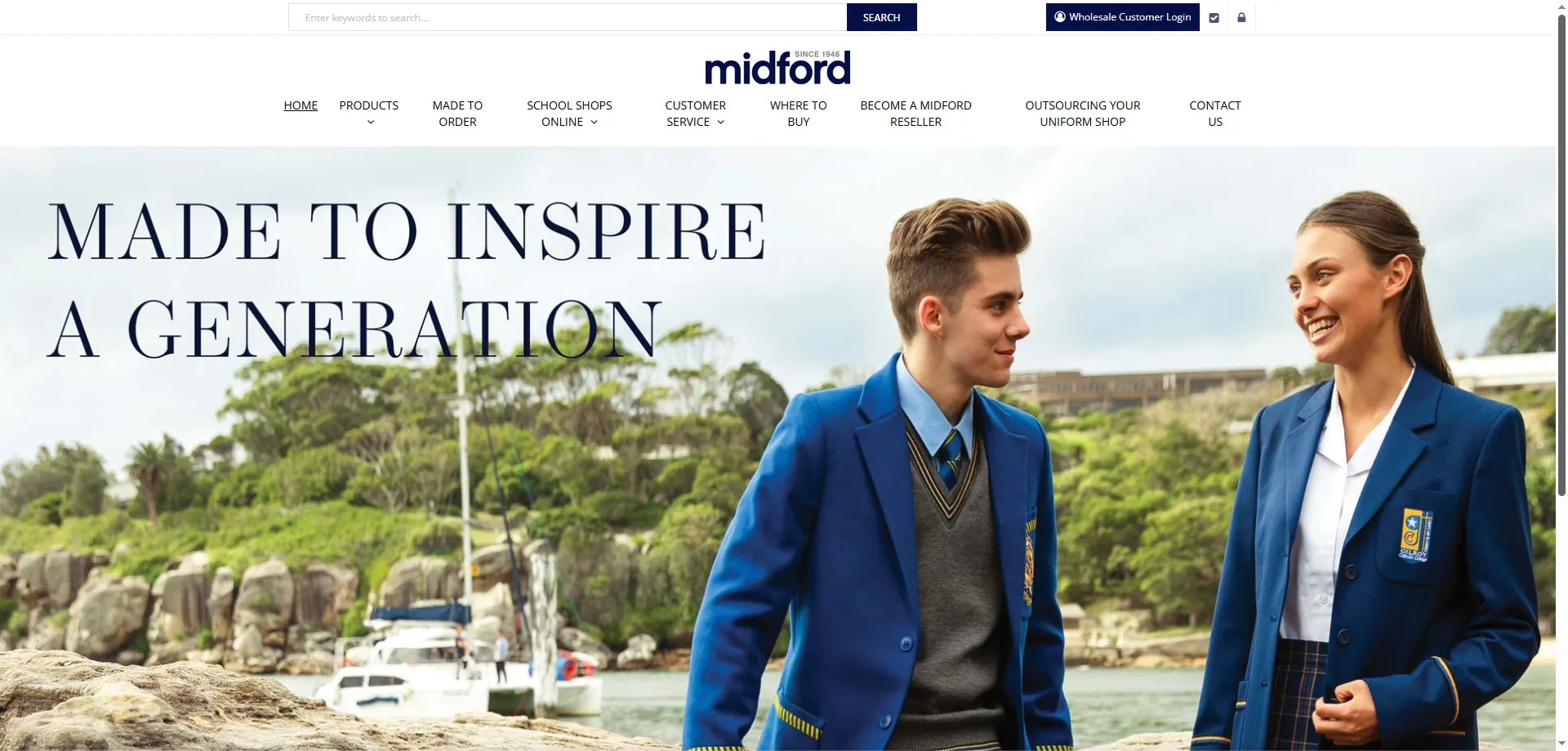
Midford has supplied Australian schools since 1946 and describes itself as one of the country’s longest-running schoolwear designers and suppliers. The range covers polos, blazers, knitwear, skirts and more, with made-to-order options, online school shops and a wholesale customer login.
Coverage is the draw. A school can run several garment categories through one supplier, with school-shop administration handled inside the same system.
The calendar is the risk. Sample approval, made-to-order runs and Term 1 delivery compete for the same factory slots. Get the cut-off dates in writing, confirm whether your programme runs direct or through a reseller, and keep the approval trail.
🛡️ Our Verdict: Comfortable at scale. The range is rarely where it goes wrong.
4. School Uniform Solutions
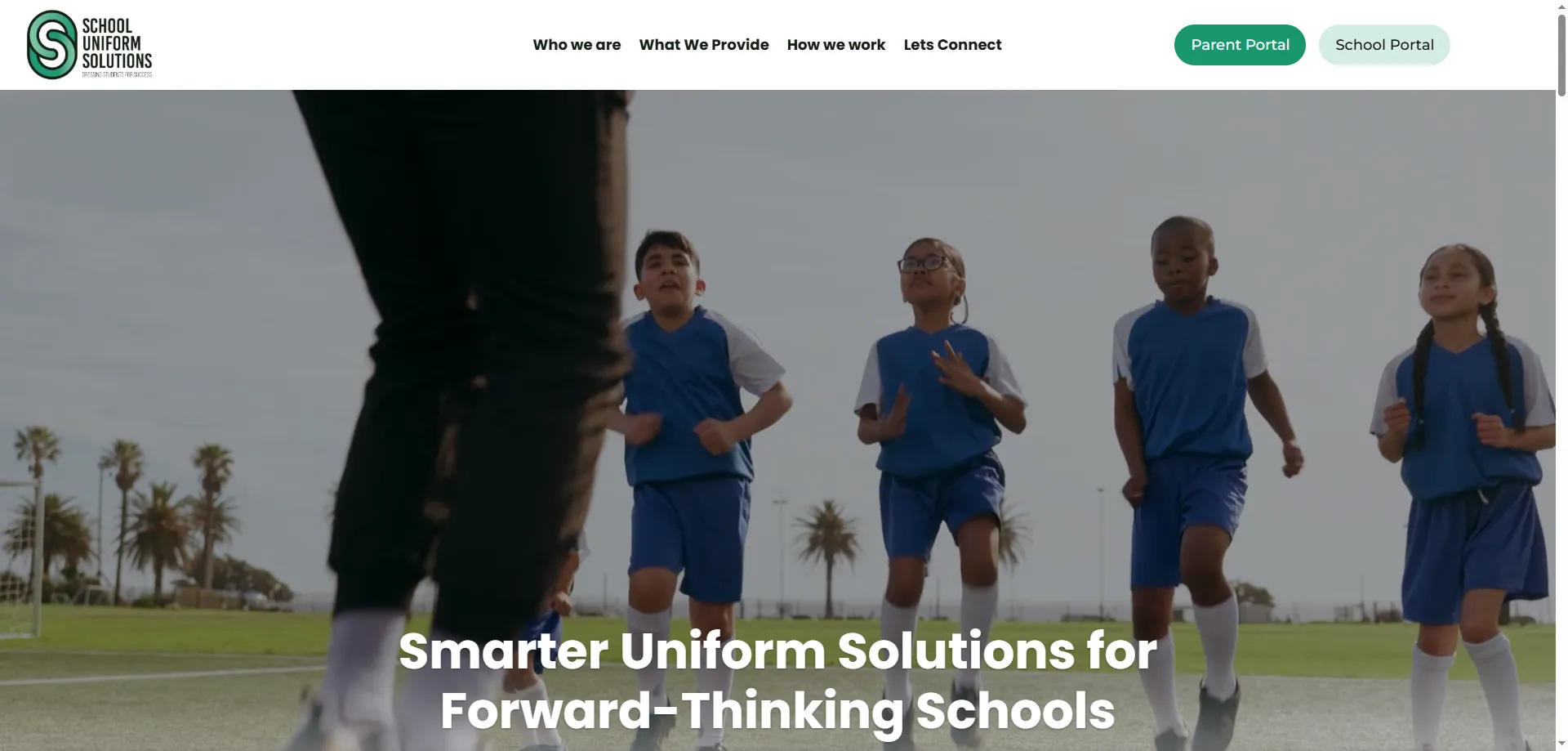
School Uniform Solutions is South Australian and positions itself around managed uniform programmes: a parent portal, a school portal, local embroidery in South Australia, and its own manufacturing facility overseas.
The combination is unusual: administration is local, production is offshore, and the school runs neither.
Both halves of that split belong in the contract: which garments are embroidered locally, which are made overseas, and how batch-level safety documentation is supplied. Formalise reorder schedules and service levels rather than relying on the portal alone.
🛡️ Our Verdict: Takes the uniform shop off the school’s hands. The administrative saving is real; the production risk is not visible from the portal.
5. Devon Clothing
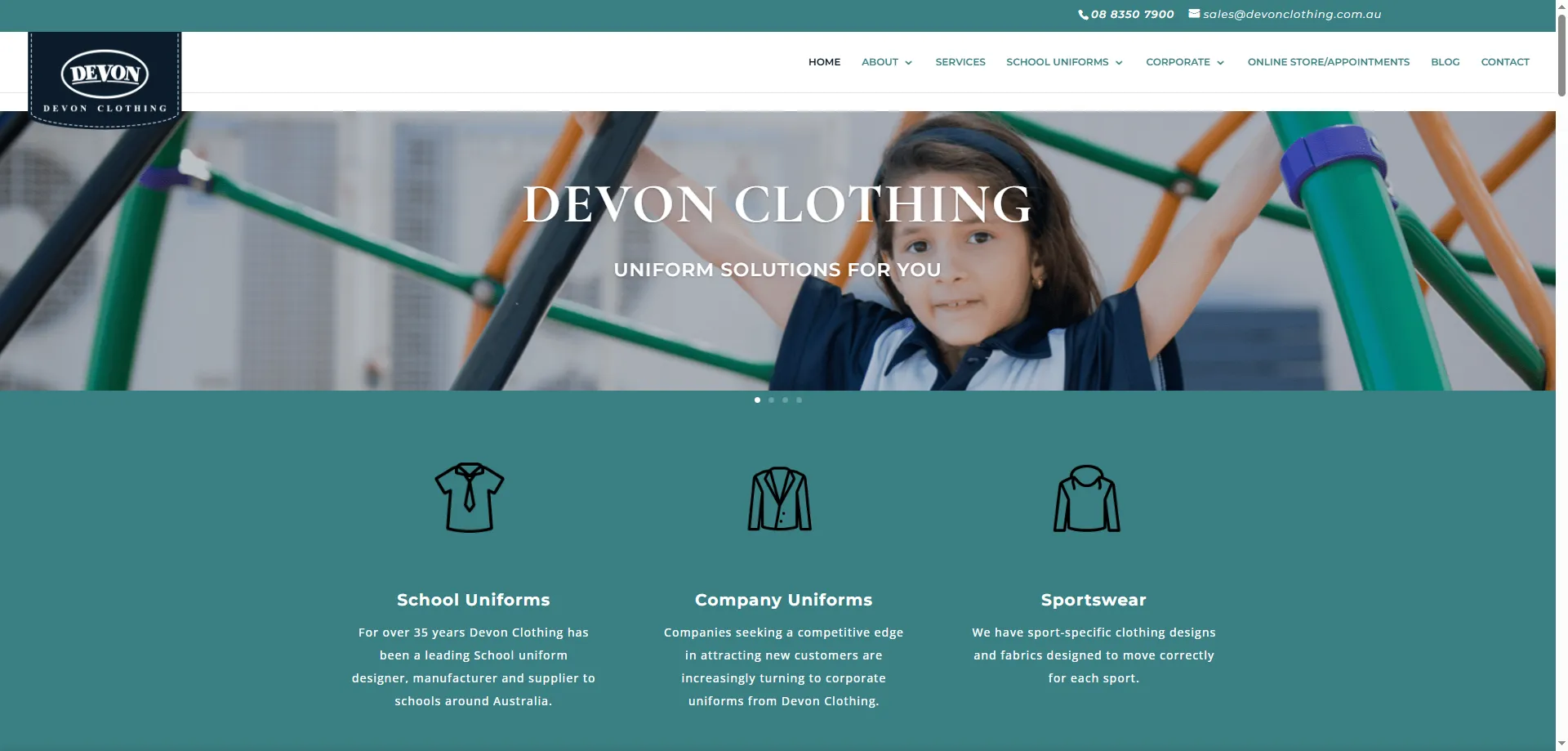
Devon Clothing has operated for more than 35 years as a school uniform designer, manufacturer and supplier, based in Adelaide. The same business also produces corporate uniforms and sportswear.
A single supplier controlling the palette reduces the mismatch risk that comes from splitting the programme across two or three vendors.
Scope is what to verify: which lines are cut and sewn in-house versus sourced, fabric options suited to the local climate, and dye-lot approval for every revision before bulk.
🛡️ Our Verdict: One palette across school, sport and staff uniforms is the reason to pick it. Worth the effort of seeing where the sewing happens.
6. Academy Uniforms
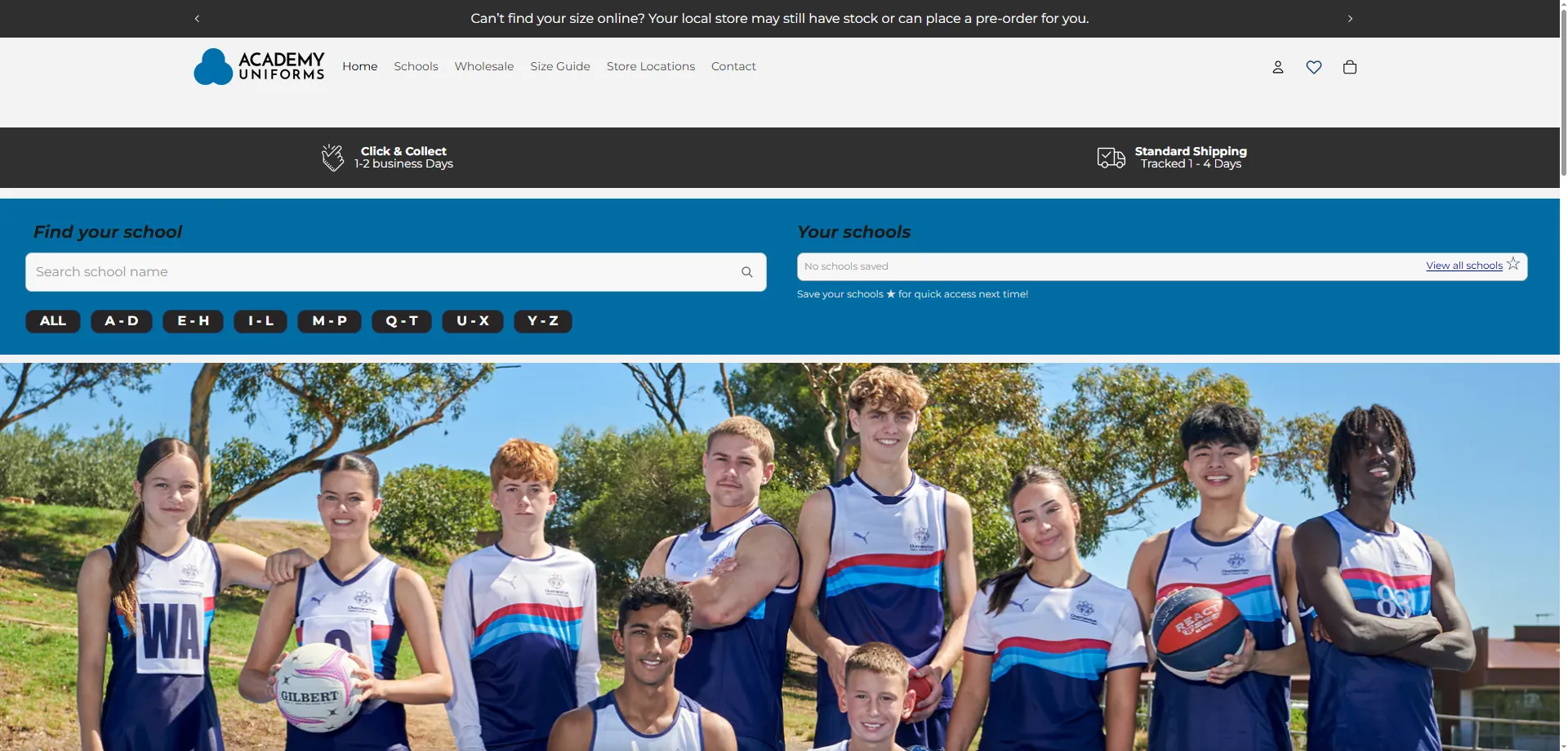
Academy Uniforms is a school uniform retailer with a store network, click-and-collect, a size guide and a wholesale channel. It is part of Uniform Group, which matters when you compare the two entries on this list.
Families can buy in store or online, exchange sizes locally, and skip a school-run shop. For a school without the staff to operate its own outlet, that removes real administration.
Customisation runs shallower. Find out whether your school is serviced directly or through a store, confirm stock depth for mid-year top-ups, and read the return policy before the store is published as the official channel.
🛡️ Our Verdict: The easiest option for parents. Not built for a school that wants tight control of the specification.
7. Tara Uniforms
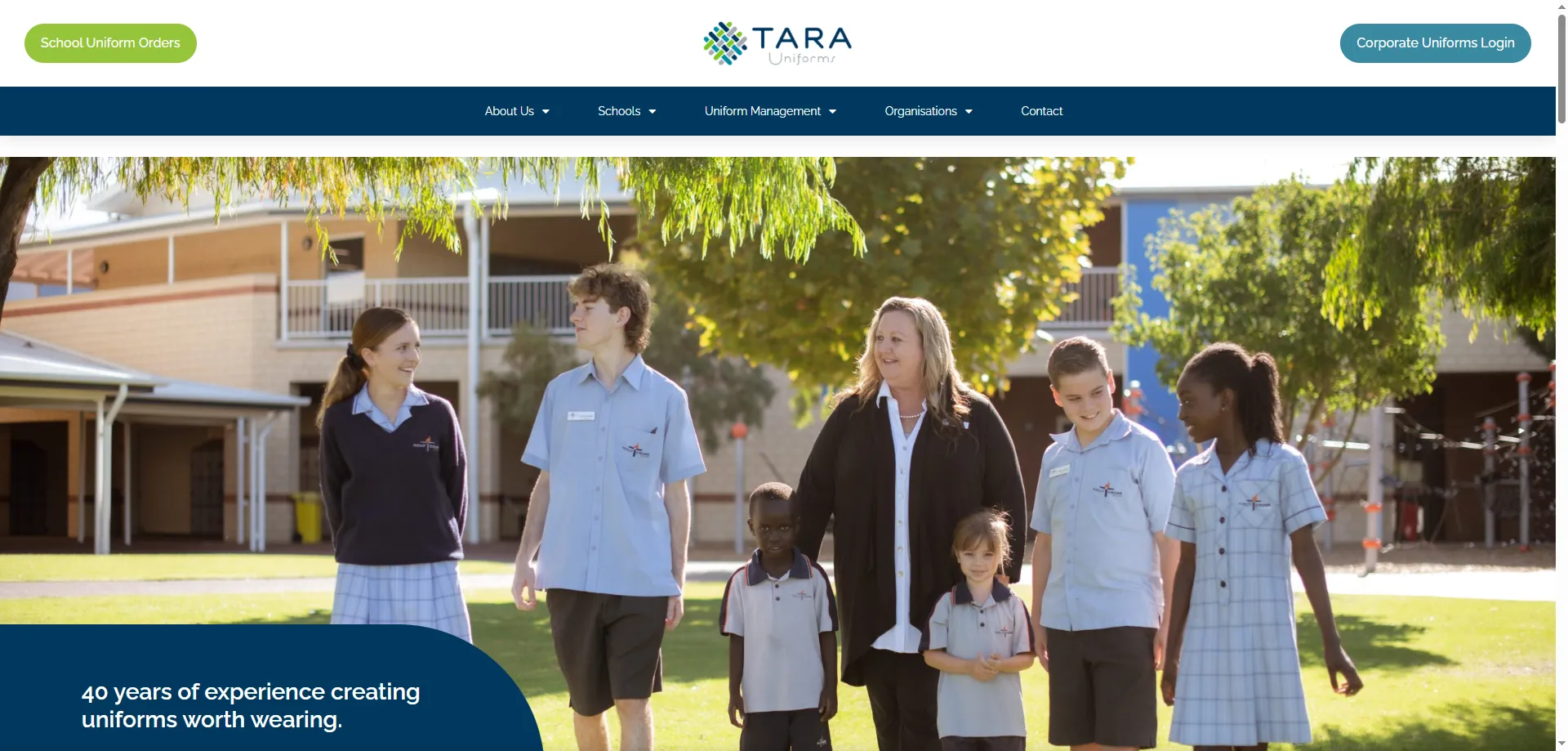
Tara Uniforms is WA-owned and operated from Osborne Park, with more than 40 years in clothing manufacturing. The business offers in-house embroidery, local manufacturing options, multiple offshore suppliers, uniform shop management and wholesale.
Most of this list manufactures offshore or resells; Tara claims local production alongside a diversified offshore supplier base, so no single factory carries all the risk.
Verify the split: which lines are made locally, how peak-season capacity is reserved, and how fit consistency is controlled across winter fleece. Put mid-year replenishment dates into the agreement.
🛡️ Our Verdict: The strongest option for a WA school that wants local support with real manufacturing behind it. Whether it holds in a busy year is the question.
8. Mr Charles
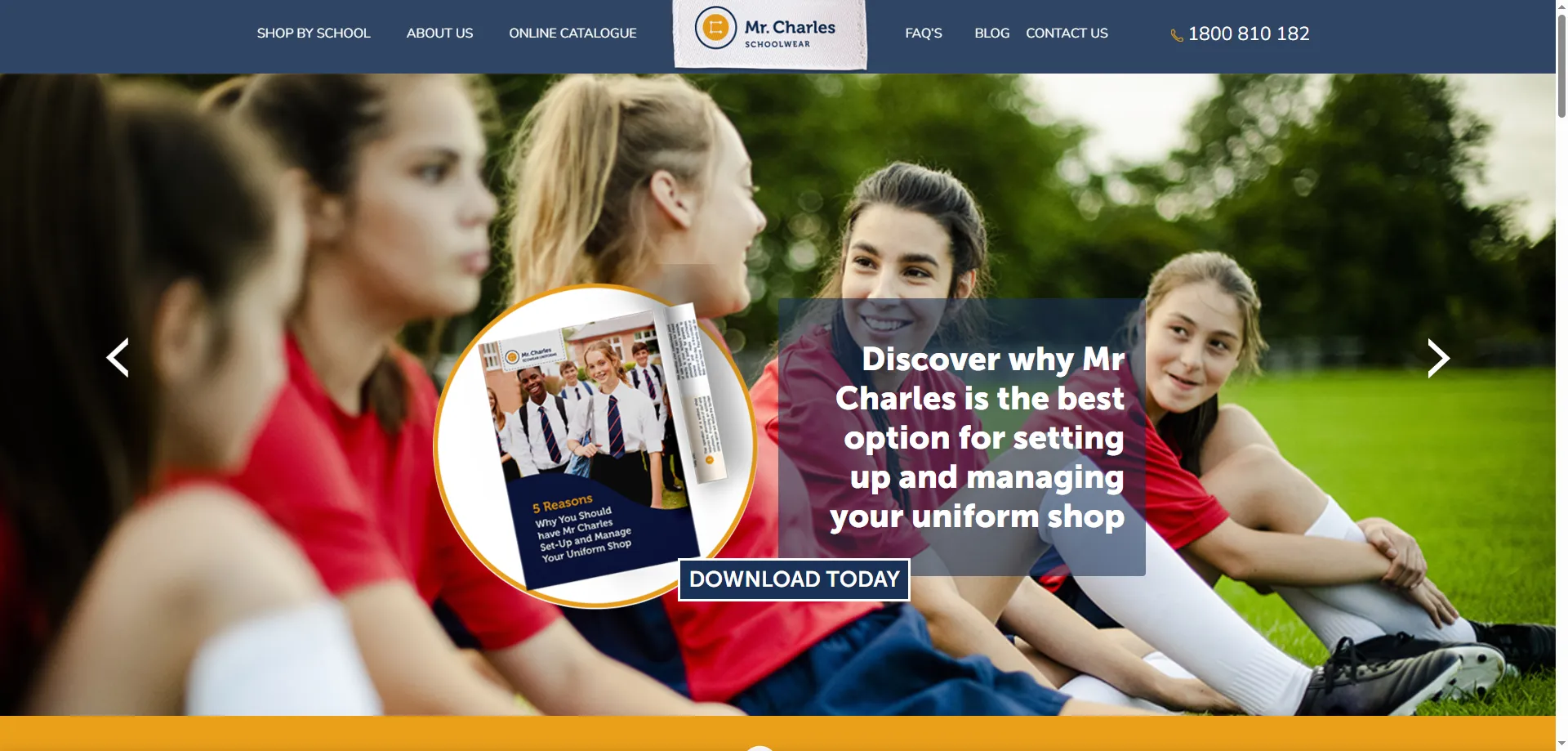
Mr Charles has supplied school uniforms since 1972 and describes itself as an Australian-owned designer, manufacturer and supplier of private-school wear, sportswear and accessories. The business also runs online uniform shops for schools.
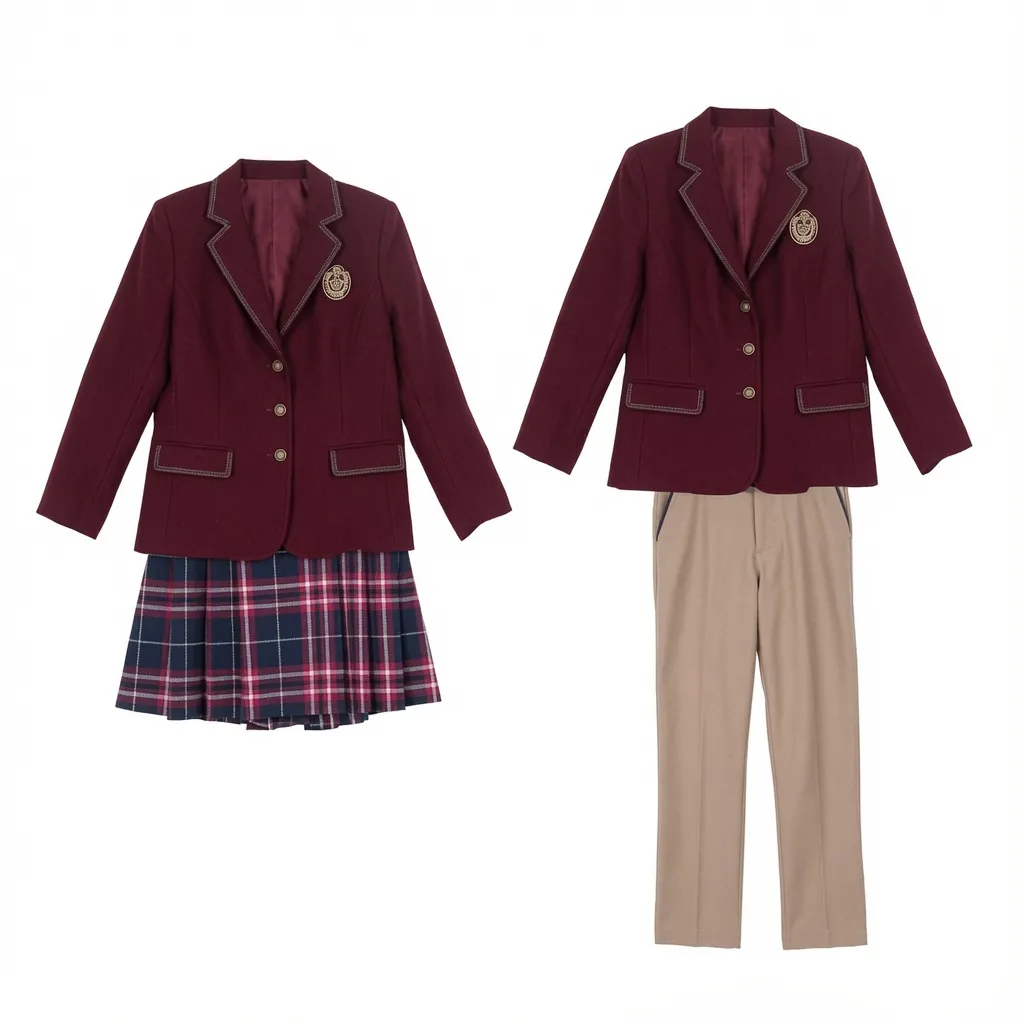
Formalwear is where the detail matters. Get the blazer construction and lining spec, the care instructions in writing, and a physical sample before bulk. Confirm formalwear lead times separately from stock items.
🛡️ Our Verdict: Best when formalwear and an online shop have to come from one place. The inside of a finished blazer tells you more than the catalogue does.
9. Uniform Group (PSW)
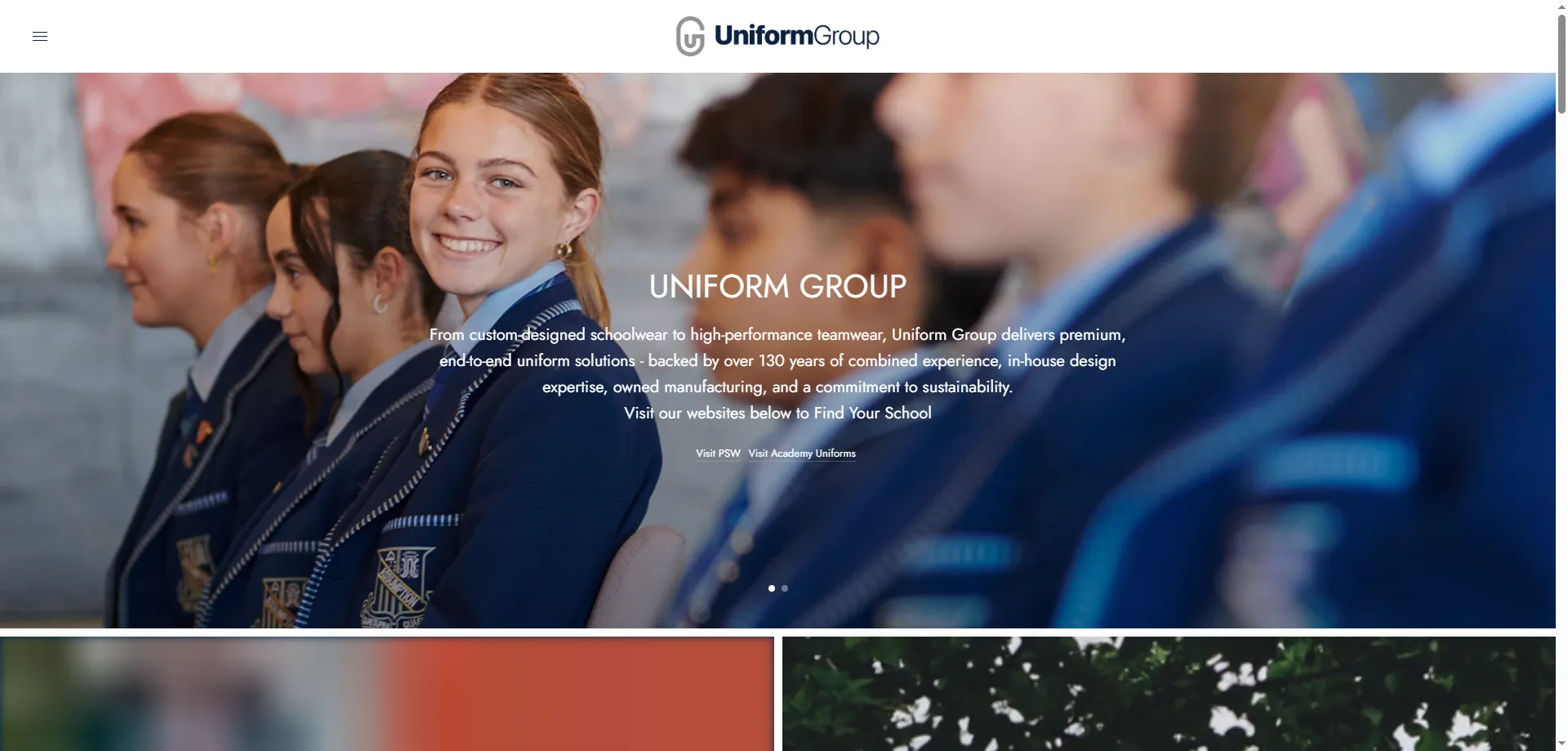
Uniform Group is a New Zealand-based supplier operating in Australia through PSW and Academy Uniforms. It describes owned manufacturing, in-house design and more than 130 years of combined experience, covering schoolwear and high-performance teamwear.
Control of the group changed in August 2026, when Dishang Group announced its purchase of UG Group. Confirm the acquisition has completed and which entity will sit on your contract before you plan beyond the current season — ownership of the manufacturing arm is not the same as ownership of the Australian retail network.
If you need thousands of units tracked across multiple campuses, a group with owned manufacturing and established logistics is built for that scale.
Focus is the trade-off. A group serving schools, corporates and sports bodies may not prioritise a small custom programme. Find out which legal entity contracts the school, where the garments are made, and what group-level compliance documentation comes with the order.
🛡️ Our Verdict: The enterprise choice, and overkill for one small school.
10. FCW (Fashion Clubwear)
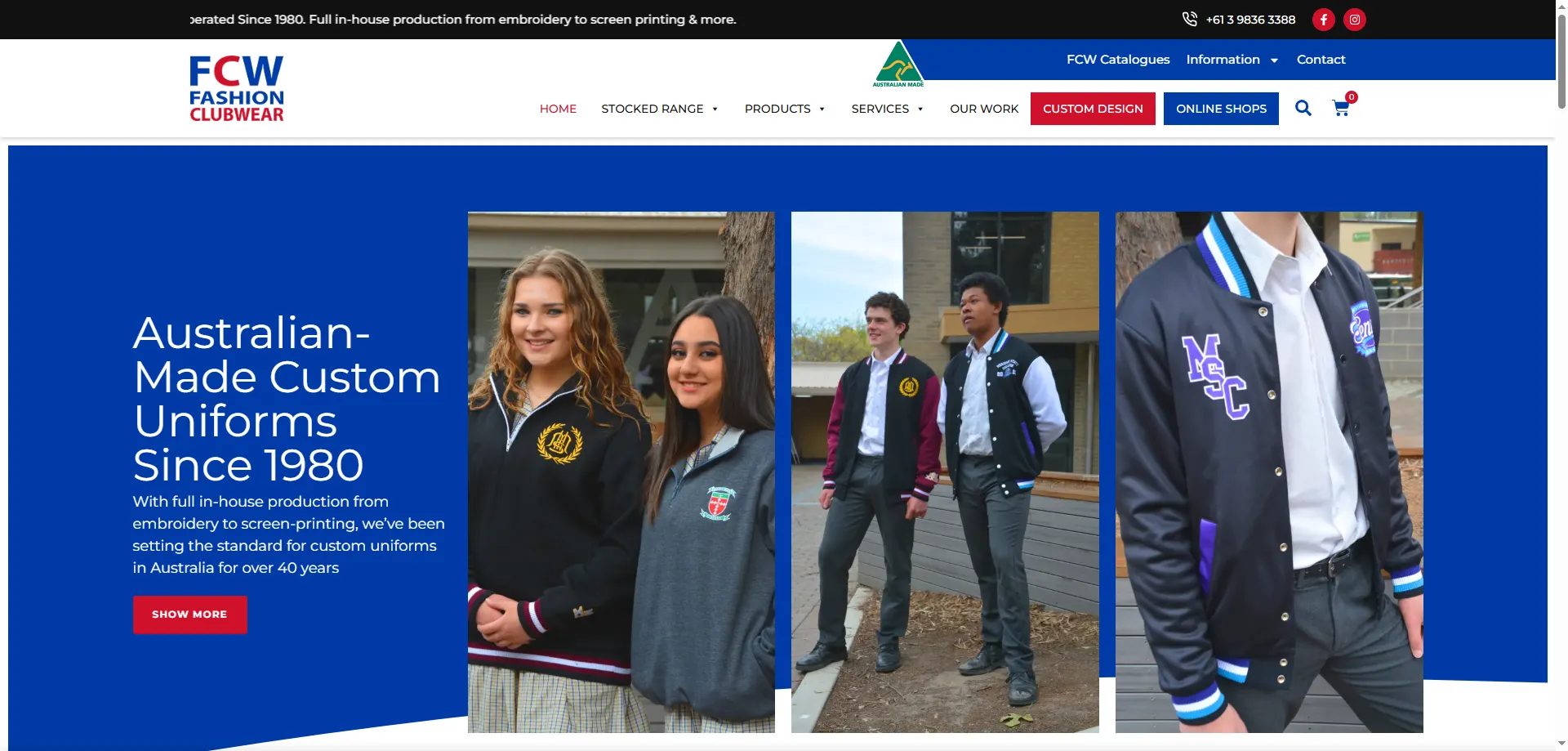
FCW, trading as Fashion Clubwear, is an Australian-owned manufacturer in Nunawading, Melbourne, operating since 1980. The company states that it handles embroidery, screen printing and sublimation in-house and manufactures school uniforms, leavers tops, sportswear and workwear in Australia.
Peak timing decides this one. Get the per-style Australian-made content confirmed, and ask what the Melbourne facility can absorb inside your delivery window rather than in a quiet quarter.
🛡️ Our Verdict: The first entry to test if Australian manufacture is a board requirement. Its limit is volume, not capability.
What Drives the Price, and Why None of the Ten Publishes It?
None of the ten publishes a per-unit price, and that is normal in this market, not evasion: the same polo lands at different prices depending on four variables.
Fabric. 180gsm and 240gsm cotton are different products, and composition matters as much as weight. Poly-cotton holds colour longer, cotton breathes better, and a UPF 50+ result depends on the weave and the dye rather than the fibre name alone.
Construction. A lined blazer, a twin-needle hem, a grown-on placket and a pocket bag all cost money. Get it into the tech pack, then price two suppliers against the same spec, not two different garments.
Decoration. Embroidery is priced on stitch count; screen printing is priced on the number of colours. A crest needing 12,000 stitches and four print colours is a different order from a one-colour transfer.
Quantity and timing. Volume sets the unit cost. Timing sets the risk premium, and a Term 1 order placed in October competes for capacity with every other school in the country.
Then there is landed cost, which is the number worth comparing. FOB is the factory-gate price; landed cost adds freight, duty, GST, port and handling, and the school’s own administration. Get it in AUD, and check whether the supplier can provide a China–Australia FTA certificate of origin for eligible goods.
The last layer is the uniform shop. Buying through one means paying its margin and funding its stock. Factory-direct removes the margin but moves sizing exchange, parent support and stock risk back to the school. Neither is free — price both against your own garment list.
Australian Compliance and Verification: What to Require
Nothing in this section depends on which of the ten you choose. Every one of these documents does the same job: it separates a supplier who can answer a board from one who cannot.
Before You Start: The Four Documents
- Modern Slavery statement. Entities with consolidated revenue of A$100 million or more must publish one annually under the Modern Slavery Act 2018 (Cth). Ask which legal entity the statement covers, and check that it appears on the public register.
- Ethical Clothing Australia accreditation. Voluntary, and limited to Australian-based textile and garment businesses. Accredited suppliers appear in the public manufacturer directory. Absence is not proof of poor practice, but accreditation is evidence a school board can file.
- An AS/NZS 4399 test report. This is the standard behind a UPF 50+ claim in Australia. Ask for the report itself, the rating and the edition used; AS/NZS 4399:2020 is the current edition. A badge without a report is not evidence.
- Care-label artwork and origin substantiation. Care labelling for clothing and textiles is a mandatory standard: garments sold in Australia must carry care instructions. “Made in Australia” claims are governed by the ACCC country-of-origin rules. Get both before approving bulk.
Start with those four, then audit in three steps. Every item below produces a document worth filing.
Step 1: Demand Hard Lab Data
- Check the scope of the UPF report. Confirm the garment was tested to AS/NZS 4399, rated UPF 50+, and that the report covers the fabric and colour actually ordered. A report for a similar style is not a report for this one.
- Request pilling results. Ask for ISO 12945-2 reports; grade 4 or better is the common target. Pilling is not colourfastness, so request ISO 105-C06 for wash fastness separately.
- Review fabric weight. Match gsm to the garment type. Heavy 240gsm cotton traps heat, so heavier is not automatically better for an Australian summer.
- Audit hardware. Confirm chemical-safety claims cover trims, prints, labels and fasteners; zipper and snap coatings are a common failure point.
Step 2: Control the Production Timeline
- Require documentation. Mandate tech packs, physical samples and an exact size guide before bulk approval.
- Map the calendar. Plan the school uniform programme around the Australian back-to-school window. If the supplier’s production is in China, allow for the Chinese New Year shutdown, which typically removes two to three weeks of production in January or February.
- Lock in custom details. Finalise the embroidery codes early. A logo change after sampling restarts the approval cycle.
Step 3: Audit the First Bulk
- Hold the first delivery against the approved sample. Check gsm, colour against the approved dye lot, and embroidery placement before the balance of the order ships.
- Record the failure rate. Keep the AQL 2.5 inspection report and a photo log. That evidence is what gets a reorder fixed, or a supplier replaced.
Guessing is not a procurement method. Contact us with the garment list and the Term 1 date.
Frequently Asked Questions About School Uniform Manufacturers in Australia
1. What quality-control standards should Australian schools ask a uniform manufacturer to prove?
These are the documents that carry weight:
| Standard | What it proves |
|---|---|
| AS/NZS 4399:2020 | The UPF rating was measured on the fabric being bought, not estimated from the fibre type |
| ISO 12945-2 | Resistance to pilling and fuzzing on the actual fabric |
| ISO 105-C06 · 105-B02 · 105-X12 | Colourfastness to washing, light and rubbing |
| AQL 2.5 inspection report | A defined sample was inspected against a defect list, with a 2.5% acceptance threshold |
| ISO 9001 | The factory runs a documented quality system, not just an end-of-line check |
Verbal assurance is not evidence, and colour fading is the most common complaint after a first wash cycle.
2. Is local manufacturing always better than overseas clothing production for Australian schools?
Local production offers faster communication and shorter lead times for urgent top-ups, and usually costs more per unit. Offshore factories offer scale and a wider fabric range.
The trade-off is rarely clear-cut. Offshore school uniform manufacturers can produce anti-pill fleece at a lower unit cost, but freight, duty and the Chinese New Year shutdown change the landed cost and the calendar. Enforce ethical audits and documented QC either way.
3. How early should schools place orders for Term 1 delivery?
Term 1 orders should be finalised by early September. Procurement teams that wait until November usually miss their delivery dates. You need roughly four weeks for sample approvals and physical fit sets before production even starts.
Peak-season congestion slows every factory in the fourth quarter, and an offshore programme adds the Chinese New Year closure on top. Secure the manufacturing slot early rather than assuming capacity will be there.
4. Do schools have to run their own uniform shop?
No. Three models appear on this list. The school runs the shop and carries the stock risk. A supplier operates it on the school’s behalf, which is how Midford, School Uniform Solutions and Mr Charles work. Or families buy through a retail network, which is the Academy Uniforms model.
It decides who holds inventory, handles exchanges and takes the margin, but not what the garment is, so it can be settled after the supplier is chosen.
5. What is the difference between Ethical Clothing Australia accreditation and WRAP?
They cover different things. ECA checks labour practices across the Australian part of the supply chain, outworkers included. WRAP certifies individual manufacturing facilities, usually offshore, against a social-compliance standard.
A supplier with Australian workers needs ECA. A supplier with offshore production needs WRAP or an equivalent social audit such as SMETA. A group operating in both places should have both.
Shortlist two. Send both the same five-style spec sheet, ask for landed cost in AUD, and set a date for the test reports to arrive. The supplier whose paperwork turns up without being chased is usually the better bet.
This list is reviewed quarterly against each supplier’s published information. Next review: January 2027. If a supplier has changed ownership, closed a factory or dropped a range, tell us and we will correct the entry.

Leave a Comment
Your email address will not be published. Required fields are marked *