Table of Contents
The short answer About $94.50 per unit ex-factory on a 500-unit enterprise program — before freight, duty, and warehousing. That splits into base garments, fit management, and remakes; a single alteration at a local tailor runs $10–$60.
In a 500-unit hospitality uniform program last quarter, the client requested full made-to-measure sizing. The 40s-count worsted wool stretched inconsistently during cutting, and 22% of the first fitting round failed the fit check.
Standardized grading, physical fit kits, and a $15 per-employee alteration reserve fixed it. On cost per wear, that model beats one-by-one measurement every time.
Key Takeaways
- Tailoring is only one line item: On a 5,000-unit enterprise budget, the true cost includes proprietary fabrics, trims, AQL 2.5 quality control, and remake risk. Sewing is just the baseline.
- CMT quotes look deceptively cheap: Cut-Make-Trim pricing entirely excludes raw materials. Buyers save money by comparing those quotes against fully landed FOB quotes, which exposes hidden sourcing markups.
- Sizing logistics decide the margin: Disorganized fit management typically triggers a 15% return rate. The hidden remake cost and the hit to staff morale quickly outweigh the initial sewing price.
- Durability dictates total cost: Luxury hotel programs specify high-abrasion fabrics rated above 40,000 Martindale cycles. Longer garment life cuts replacement frequency and total cost of ownership.
- Verify your fully landed cost: An ex-factory suit looks affordable until DDP freight, import duties, and regional warehousing are added. Demand end-to-end pricing visibility before signing.
What Does a Local Tailor Actually Charge?
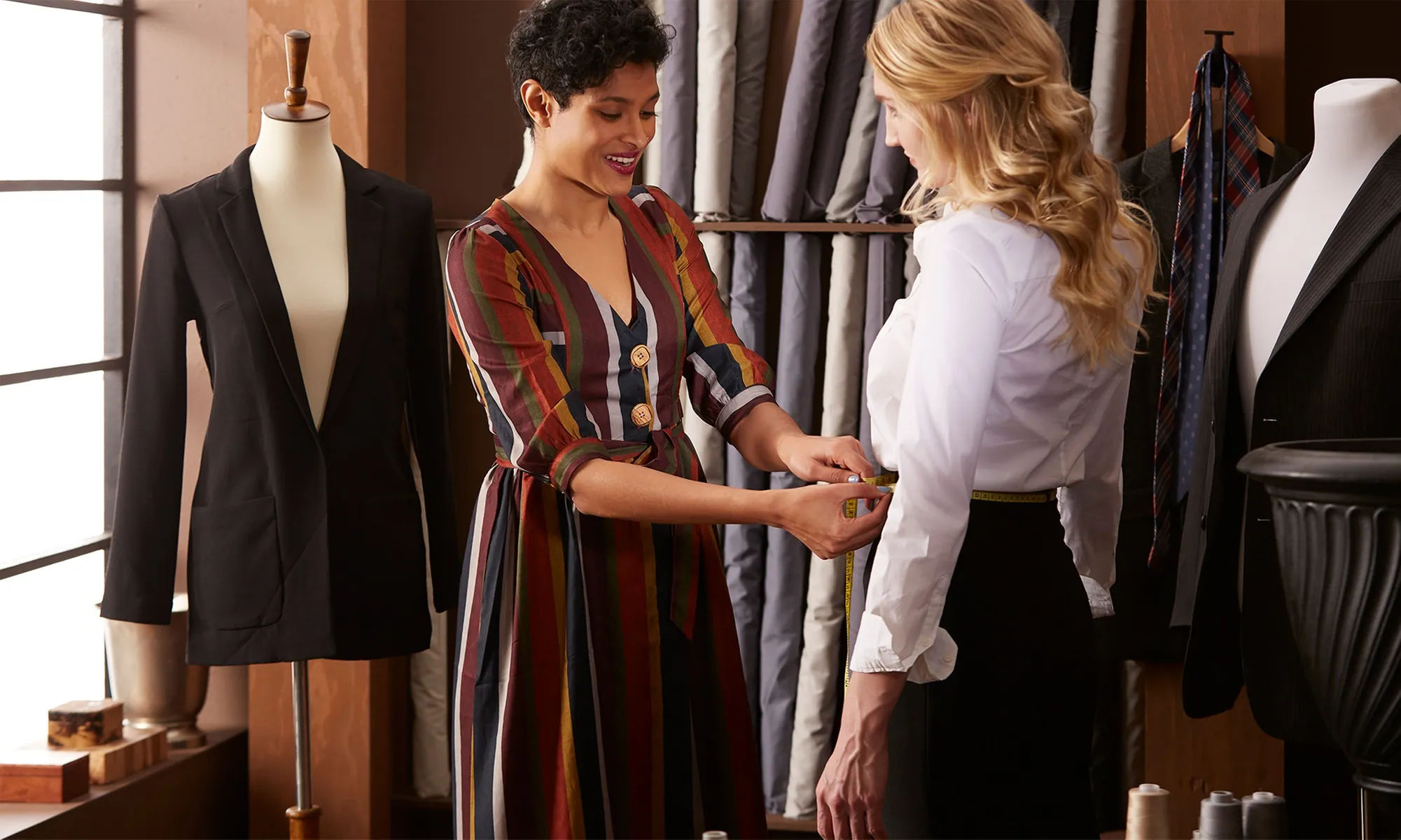
If you are pricing a single alteration, these are typical US market ranges for altering a finished suit. They vary by city, tailor, and garment construction.
| Alteration | Typical US Range | What drives the price |
|---|---|---|
| Hem or shorten trousers | $10–$25 | Add a step if the trouser was sold unfinished |
| Shorten sleeves | $25–$60 | Functioning button cuffs push this to the top of the range |
| Take in or let out the waist | $15–$40 | Letting out is capped by the existing seam allowance |
| Slim the jacket body | $30–$70 | Two side seams plus lining work |
| Reshape the shoulders | $50–$150+ | Highest-risk alteration, often exceeding the garment’s value |
| Full suit overhaul | $75–$200 | Jacket and trousers together |
Those are per-garment service prices, and they answer a different question than the one a procurement team asks. Once your program covers hundreds of employees, alteration stops being a service line and becomes a sizing-logistics problem.
At that point the cost moves out of the tailor’s shop and into the factory, the fit kit, and the remake reserve.
The True Cost of Enterprise Suiting: A View from the Factory Floor
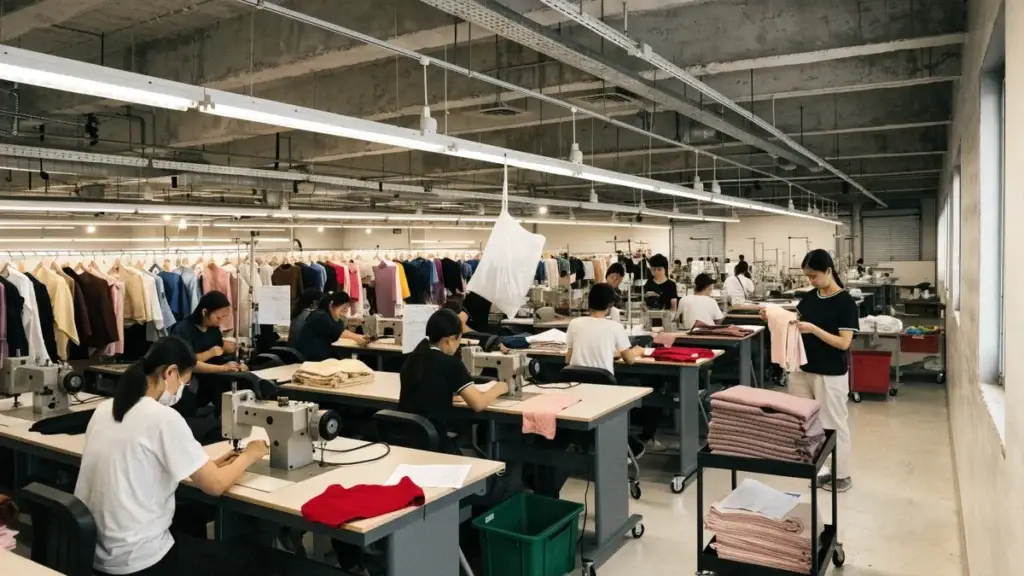
Methodology & Trust Note: The figures below come from our audit of an anonymized 500-employee hospitality rollout. LantaoWork is a cut-and-sew manufacturer, so this is first-party production-floor experience, disclosed rather than disguised. I am not paid by any mill or manufacturer to promote these findings.
The true cost of B2B suit procurement sits well beyond the initial sewing quote. It is a total-cost-of-ownership calculation, and it follows three distinct paths.
The Three Procurement Paths
- Ready-to-wear (stock) plus local alterations: Off-the-rack suits bought in bulk, then hemmed and adjusted by a local tailor. Fastest lead time, highest inventory risk, zero brand customization.
- Standardized bulk custom suiting: Custom designs built around a standard size matrix (38R, 40L). This is the sweet spot for bulk custom suiting pricing — low factory labor cost, high brand accuracy. Factory cutting machines slice 50 layers of fabric at once, which drives per-unit cost down.
- Full made-to-measure (MTM): Every employee is measured and every pattern is hand-cut individually. Individual fit is maximized and cost efficiency is destroyed.
Which Path Fits Which Workforce?
| Option | Cost per unit | Fit risk without a fit kit | Sizing effort per employee | Best fit for |
|---|---|---|---|---|
| Ready-to-wear + local tailoring | Garment price plus $10–$60 in tailoring | Low — each garment is fitted individually | One tailor appointment | Single-city teams, such as the 100-staff boutique case below |
| Standardized bulk custom | About $94.50 ex-factory on the 500-unit order below | Up to 30% on a high-diversity workforce | One fit-kit session | Multi-site programs, such as the 500-staff resort case below |
| Full made-to-measure | Highest — patterns are hand-cut, so cost scales with headcount | 22% in the first fitting round of the order below, before it moved to grading | Individual tape measurement | Senior hires and unusual body types |
A Real 500-Employee Rollout Invoice
We costed that order line by line. Here is the bill of materials for one custom suiting set.
| Line Item | Cost Per Unit (USD) | Notes |
|---|---|---|
| Outer Fabric Consumption | $42.00 | 60% Wool / 40% Poly Blend |
| Lining & Interlining | $12.50 | Half-canvas construction |
| Buttons, Trims, Labels, Packaging | $8.20 | Custom branded horn buttons |
| Custom Embroidery / Logo | $3.50 | Left chest interior |
| CAD Pattern Grading | $4.00 | Amortized across 500 units |
| Fit-Kit / Sizing-Set Development | $6.50 | Physical try-on sizes shipped to site |
| Quality Control / Inspection | $2.80 | AQL 2.5 Standard |
| Local Alteration / Remake Reserve | $15.00 | Held back for post-delivery fixes |
| Total Ex-Factory Cost | ~$94.50+ | Excludes freight and margin |
Basis: one suit, 500-unit order. Fit management — CAD grading, fit kits, and the alteration reserve — accounts for $25.50 of the total. Freight and factory margin sit outside the $94.50.
The Total Cost Formula
When calculating corporate suit manufacturing costs, use this formula:
Program Cost = Garment Cost + Branding + Pattern/Grading + Sizing-Event Cost + Alteration Reserve + Freight/Duty + Remake Reserve
Volume scales down pattern grading and sizing-event costs — a CAD pattern costs $4.00 whether the run is 100 suits or 1,000 — while alteration reserves scale linearly.
A low ex-factory price always loses if your post-delivery alterations spike: the reserve is what prevents a $150 factory remake.
CMT vs FOB Pricing: The Deceptive Quote
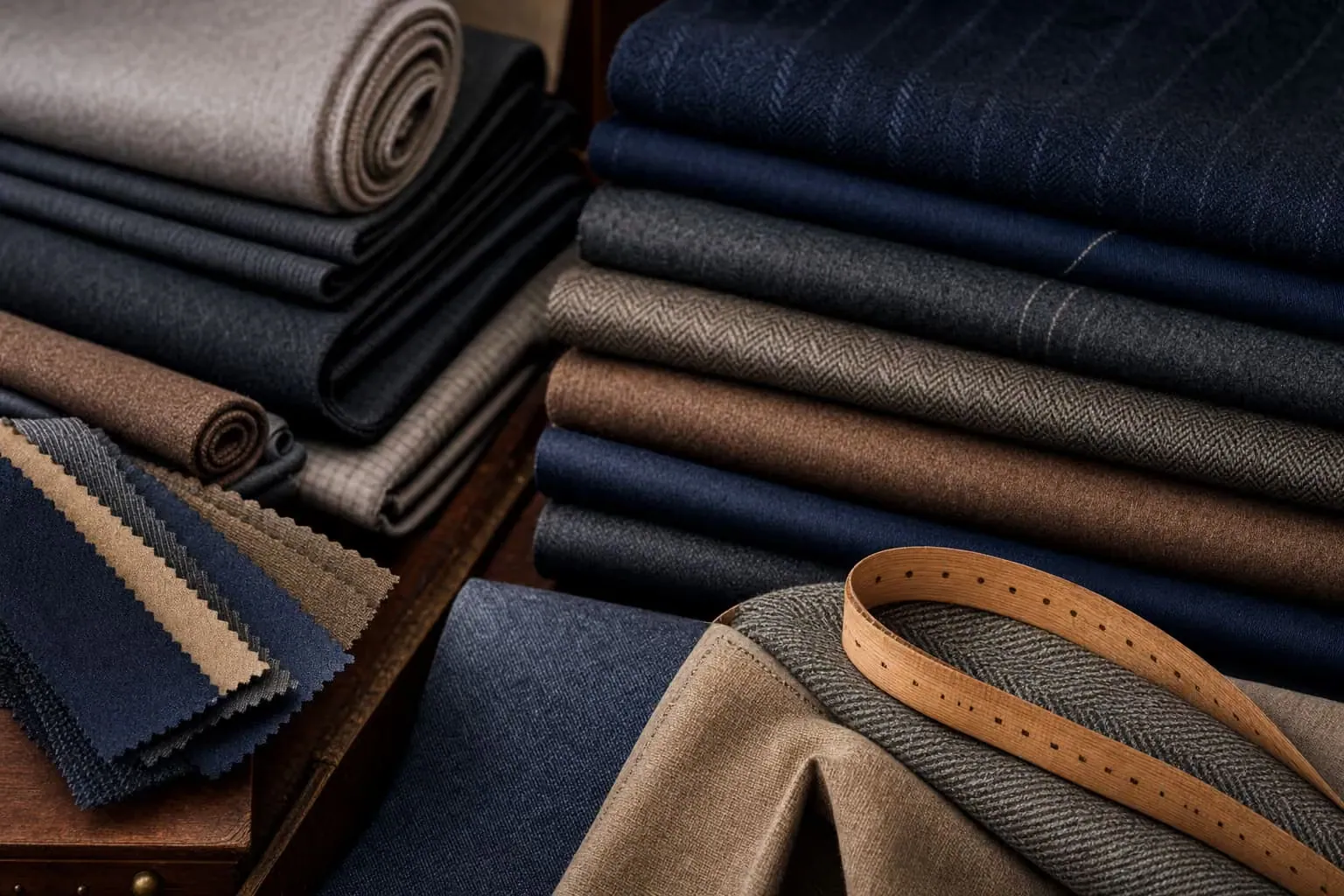
Cheap quotes from trading companies almost always turn out to be CMT (Cut, Make, Trim) prices. CMT covers physical sewing labor only. It excludes raw fabric, interlining, and logistics — accept one, and you are sourcing threads and zippers separately.
We quote FOB (Free on Board) or FPP (Full Production Package), which includes sourcing, fabric testing, and pre-production sampling.
Before you compare suppliers, align every material variable: confirm each bid includes trims, interlining, and export packing.
Literal SOP: How a Corporate Sizing Event Runs
Graded fitting standardizes cutting patterns and removes measuring error. This is the exact procedure our floor team follows:
- Quality Manager Bai collects the HR roster by role, gender cut, site, and onboarding timing.
- A preliminary size curve is built from historical demographic data.
- Lead Technical Designer David prepares algorithmic fit kits — a graded try-on set of physical jackets and trousers.
- Fitting windows then run onsite, department by department.
- Exact tape measurements are captured for outlier bodies only. Standard bodies are never measured from scratch.
- The project manager locks the final size matrix and sets the alteration reserve.
- Quality Manager Bai approves the pre-production sample against the grading set.
- Our factory produces, kits, and labels each garment by individual employee before shipping.
🧠 Author’s Take: In a casino rollout last year, step 5 was skipped for dealers. They complained about armhole tension, and 40 jackets had to be remade. Never skip physical fit tests for high-motion roles.
Q&A with the Lead Technical Designer
I asked our lead technical designer, David, to explain the hidden financial traps.
Q1: When is standard size grading sufficient for a corporate rollout?
“Grading works for 85% of staff. A high-quality 4-way stretch fabric forgives minor fit discrepancies. Standard matrices are enough.”
Q2: What employee profiles push a program into true made-to-measure territory?
“Outliers. Bodybuilders, highly asymmetrical shoulders, or staff requiring adaptive clothing. They get flagged during the fit-kit stage.”
Q3: What is the cost difference between planned alteration reserves and full MTM alterations?
“Massive. A planned hem allowance costs $5 to build into the garment; a poorly fitted MTM jacket needs a $150 complete factory remake.”
Q4: Which fit mistakes create the most expensive remakes later?
“Shoulder width. A waist can be taken in and a hem dropped. If the shoulders are too tight, the jacket goes in the trash.”
Fabric Durability and Replacement Economics
https://www.youtube.com/watch?v=l9QYcoWjkRY&pp=ygUYTWFydGluZGFsZSBhYnJhc2lvbiB0ZXN0
Fabric choice dictates replacement rates. Durability is measured with the Martindale abrasion test — a machine rubs the cloth continuously until the threads degrade and snap.
Standard office wear needs 20,000 Martindale cycles; hospitality suiting is specified at 40,000 and above.
Do not confuse skin safety with durability. A fabric can hold an OEKO-TEX Standard 100 certification — proof it carries no harmful chemicals — and still tear on a door handle.
Ask for raw lab abrasion data rather than a marketing summary. For heavier-duty roles, our coverall material guide covers harder-wearing constructions.
Import Duties and Landed Cost Traps
The final trap is customs. Buyers often assume one flat duty rate for apparel, and that assumption wrecks budgets. Suits fall under HS codes 6203 (men’s) and 6204 (women’s); the rate swings with the exact share of wool versus synthetic fiber.
A 100% polyester suit carries a 27.9% base US duty rate; a 60% wool blend drops to 17.5%. Those are base MFN rates — additional Section 301 layers apply on top for China-origin goods, so the effective rate is never the published one.
The US ITC HTS database publishes the base rates, but a customs broker has to confirm the stacked rate in writing for your origin country before you approve a bulk run.
Exceptional Scenarios: When Standard Budgeting Fails
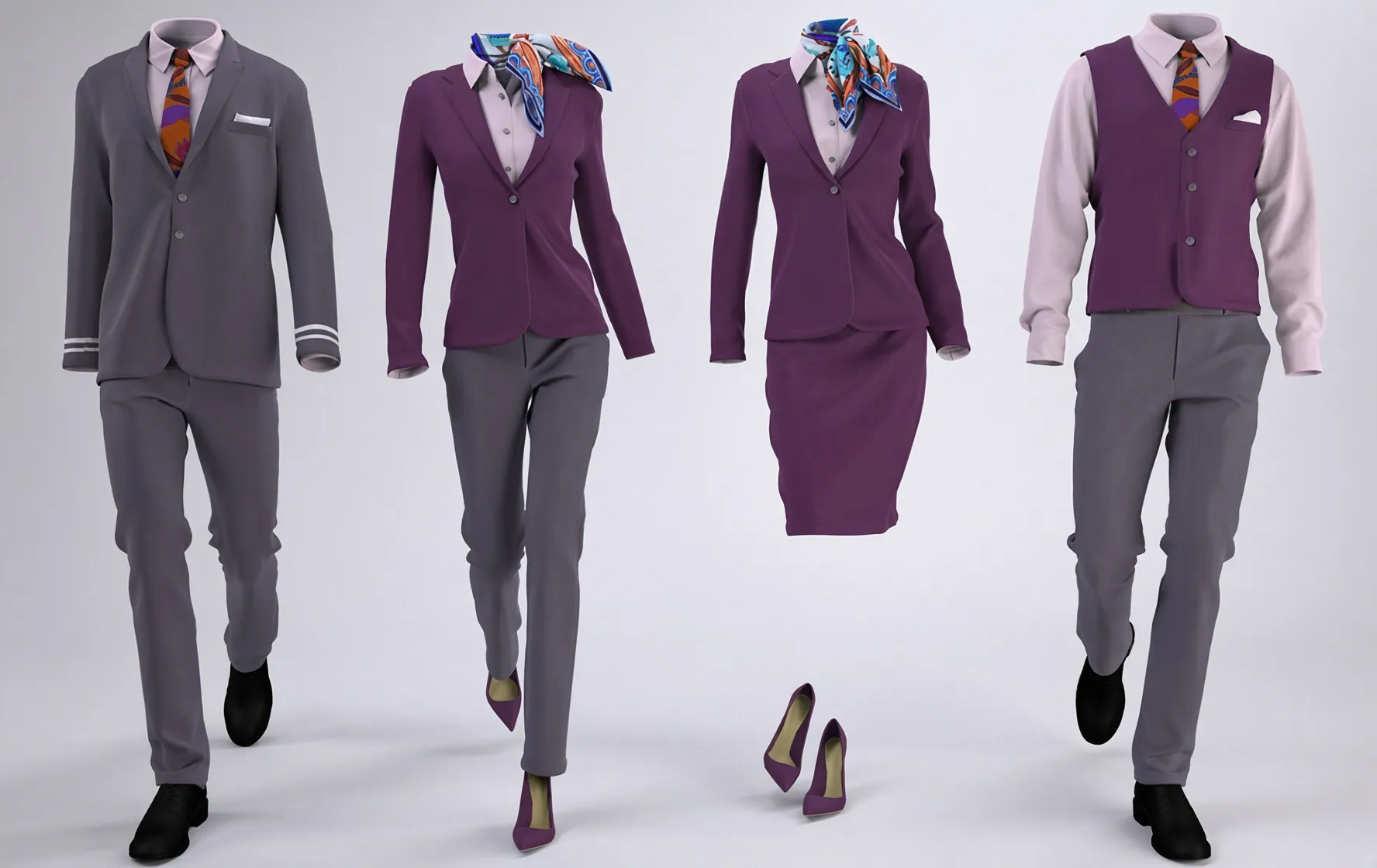
We vetted these budget models across 50 corporate rollouts, covering workforces with very different body-type distributions and geographies.
Standard uniform formulas break down in the real world. A pricing model built for one hotel will bankrupt a national airline. The budgets below are built on raw logistics data, not supplier marketing.
Boutique Hotel: 100 Front-Desk Staff, Single City
Skip overseas made-to-measure. For a single-city workforce, standardized grading is the right call. In a 2023 Austin hotel project, the buyer requested MTM for 100 staff members. Custom patterns would have added four weeks and $1,500 to the bill.
The client pivoted to a standard size curve instead, and each employee received a $20 voucher for local hemming. The program deployed 30 days faster.
- Cheapest on paper: Overseas MTM ($110 per suit).
- Cheapest after remakes: Standardized grading plus a local alteration allowance ($95 suit + $20 local tailor = $115 total).
- Most operationally stable: Standard sizes plus local tailoring, which removes the measurement-coordination problem and deploys immediately.
Luxury Resort Group: 500 Staff, Mixed Roles and High Body Diversity
Split the sizing model. In a Miami resort group, forcing one size matrix onto diverse bodies produced a 30% failure rate. Receptionists need tailored blazers, while industrial workwear manufacturers cut a far heavier garment for maintenance crews.
⚠️ Body Diversity Risk: Ignoring body shapes spikes return shipping costs. Force tall or plus-size staff into scaled-up standard patterns and armholes bind while crotch seams blow out.
The fix was deeper fit kits built on the cutting floor, where Manager Chen added three petite and tall grading blocks. Selective MTM was then approved strictly for executives and extreme outliers.
- Cheapest on paper: 100% standard grading.
- Cheapest after remakes: 85% standard grading with deep fit kits, plus 15% MTM for outliers. This stops bulk return shipping.
- Most operationally stable: The 85/15 split, which holds bulk sewing discounts while covering outliers.
Multi-Site US Rollout: Airline-Style Distributed Workforce
Avoid mobile tailors. For a 20-city workforce, flying tailors between sites is a logistical nightmare. Flight delays and missed shifts wreck data collection, and importing single replenishment suits triggers punitive freight rates.
Treat your corporate uniforms like heavy PPE logistics: just as we drip-ship inventory from safety jacket manufacturers in China, suit inventory has to be held regionally.
🛡️ Our Verdict: On a recent national launch, the tailors were cut from the plan. A 50-person pilot ran at one hub using algorithmic fit kits, which verified the pattern grading before the remaining fabric was cut. The national remake rate came in at 2.1%.
For distributed teams, apply the same strict coverall care and maintenance protocols to wash-and-wear suiting to reduce constant replenishment.
- Cheapest on paper: Centralized algorithmic fit kits, with no tailor travel.
- Cheapest after remakes: A localized pilot run followed by regional DDP freight shipments. The pilot prevents national-scale cutting errors.
- Most operationally stable: Algorithmic sizing backed by regional warehousing and localized post-delivery alterations.
Frequently Asked Questions About Suit Tailoring Costs
1. Is ready-to-wear plus alterations cheaper than made-to-measure for staff uniforms?
Yes, universally. Made-to-measure scales terribly. As the scenarios above show, buying standard sizes and giving your staff a local alteration allowance prevents costly factory remakes, and it also shortens delivery time.
2. What hidden fees should a B2B suit quote break out line by line?
Demand line items for trims, pattern grading, and export freight. Suppliers routinely hide raw material costs inside Cut-Make-Trim quotes. Always request fully landed pricing. If a vendor refuses to isolate button and zipper costs, walk away.
3. How much should be budgeted for employee sizing events?
Roughly $6 to $10 per employee. Shipping physical fit kits costs a few dollars per person and replaces flying tailors between sites. That isolates the sizing cost and removes human measurement error entirely.
4. Do tariffs and duties belong in the uniform budget or the logistics budget?
They belong in the uniform budget. Buyers wreck their margins by ignoring HS codes, because the garment’s fabric blend directly sets the import tax. Confirm the duty assumption, including any Section 301 layer, before you finalize your apparel spend.
5. What fabric specs matter most for hospitality or front-of-house suiting?
Focus strictly on Martindale abrasion cycles. Soft luxury fabrics can shred well before a hard-wearing twill does. Request raw wear-testing data, and for true longevity demand at least 40,000 Martindale rub cycles from the mill.
Ready to stop guessing and build a realistic quotation model? Contact LantaoWork to request a line-item quote and a sizing-event plan.

Leave a Comment
Your email address will not be published. Required fields are marked *