Table of Contents
The short answer: Buy direct when staff keep uniforms for 18 months or more and the site controls laundry; rent when turnover is high or laundry staff are thin. The table below shows which of the seven sell direct.
This list covers industrial uniform manufacturers in the USA for direct purchase: five that sell direct and two rental services kept as benchmarks. It checks the seven suppliers first, then walks through the three-step decision behind them — the buy-versus-rent math, the FR document stack, and the cut-and-sew workflow.
Not every name on the list cuts and sews in the United States, so check the origin language before any Made in USA claim.
Disclosure: LantaoWork is a China-based contract factory making private-label workwear from a 100-piece minimum, so we may compete with some names here. No brand paid for placement or a kickback; this is a commercial guide, not an independent lab report, and not a substitute for a site-specific hazard assessment.
The Seven Industrial Uniform Manufacturers at a Glance
How this list was built. Each supplier was scored on six points: direct-purchase access, private-label work, FR depth, laundry performance, reorder reliability, and origin transparency. Apparel Sourcing lead David Yan checked each entry against public company material on 25 November 2026.
Where a claim could not be confirmed — Sigma’s cut-and-sew location, REED’s current FR range — the entry says so rather than filling the gap.
| Company | Model | Production | FR depth | Entry | Best for |
|---|---|---|---|---|---|
| The Sigma Apparel | Private-label cut and sew | Verify cut-and-sew location | FR-positioned garments | 100 pieces | Small-batch private label |
| Bulwark | Brand catalog | Verify per fabric platform | NFPA 2112 and arc-rated | Quote per program | Flash-fire and arc-rated crews |
| REED Manufacturing | Brand, laundry programs | Verify per SKU | Core workwear; confirm FR line | Quote per program | Laundered core programs |
| LAPCO FR | Brand, owned plant | Morgan City HQ; Mexico production | NFPA 2112, arc-rated, hi-vis | Quote per program | Gulf-South FR programs |
| OneAim Apparel | US cut-and-sew placement | Los Angeles, New York, Carolinas | References 2112 and 107 | 100 units per style | US sample room and small runs |
| Swiss Uniform Services | Rental and laundry | Southern New England | Rental line; verify FR | Service contract | Rental benchmark |
| UniFirst | National rental | National | NFPA 2112 line | Service contract | National rental benchmark |
1. The Sigma Apparel: Best for Private-Label Industrial Uniforms and Low-MOQ Cut-and-Sew
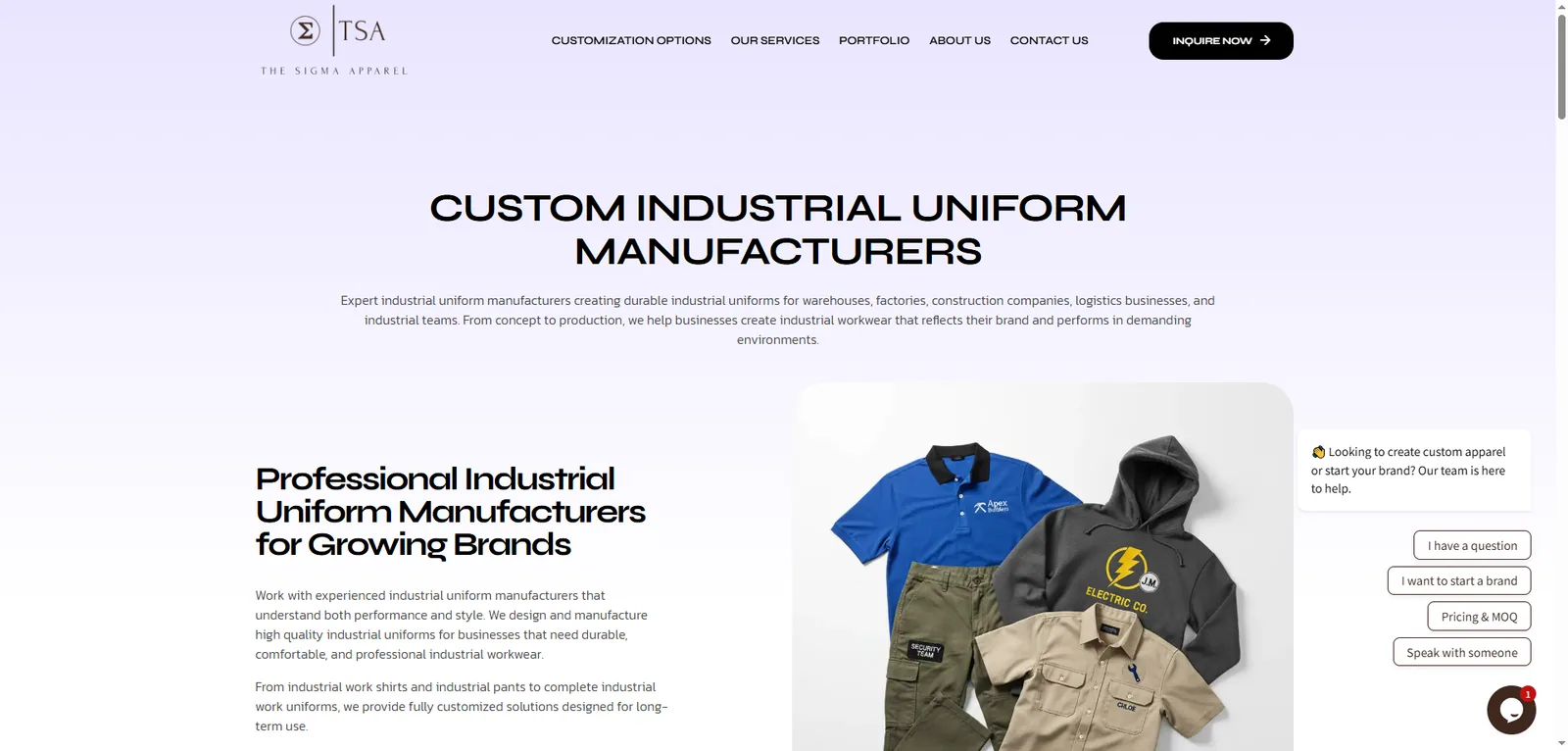
Sigma Apparel sits first because of one number: 100 pieces. That is the minimum the company publishes on its own site, and it is rare among US-facing industrial suppliers, where bulk cut-and-sew lines commonly quote 500 pieces or more and then push stock sizes and colors. OneAim, later in this list, is the only other entry with a comparable floor.
The claim says nothing about where the goods are cut and sewn: confirm the location and fabric origin in writing before treating the quote as domestic.
What it is: Custom industrial work uniforms, safety apparel, and FR-positioned garments. Coveralls, work shirts, trousers, and hi-vis builds, plus private labeling, embroidery, and logo support.
Who it suits: Distributors, promo agencies, and regional accounts that need a logo program or a small crew rollout before a container commitment.
Watch the size set. Ask for a full size set, not one sample, and run it through the plant’s own wash cycle before the bulk order.
For FR garments, demand certification documents (NFPA 2112 or EN ISO 11612) and test only within their care limits; an invented wash cycle proves nothing. Ask whether the specs hold on a reorder 12 months out.
2. Bulwark: Best for NFPA 2112 FR Programs and Arc-Rated PPE Depth
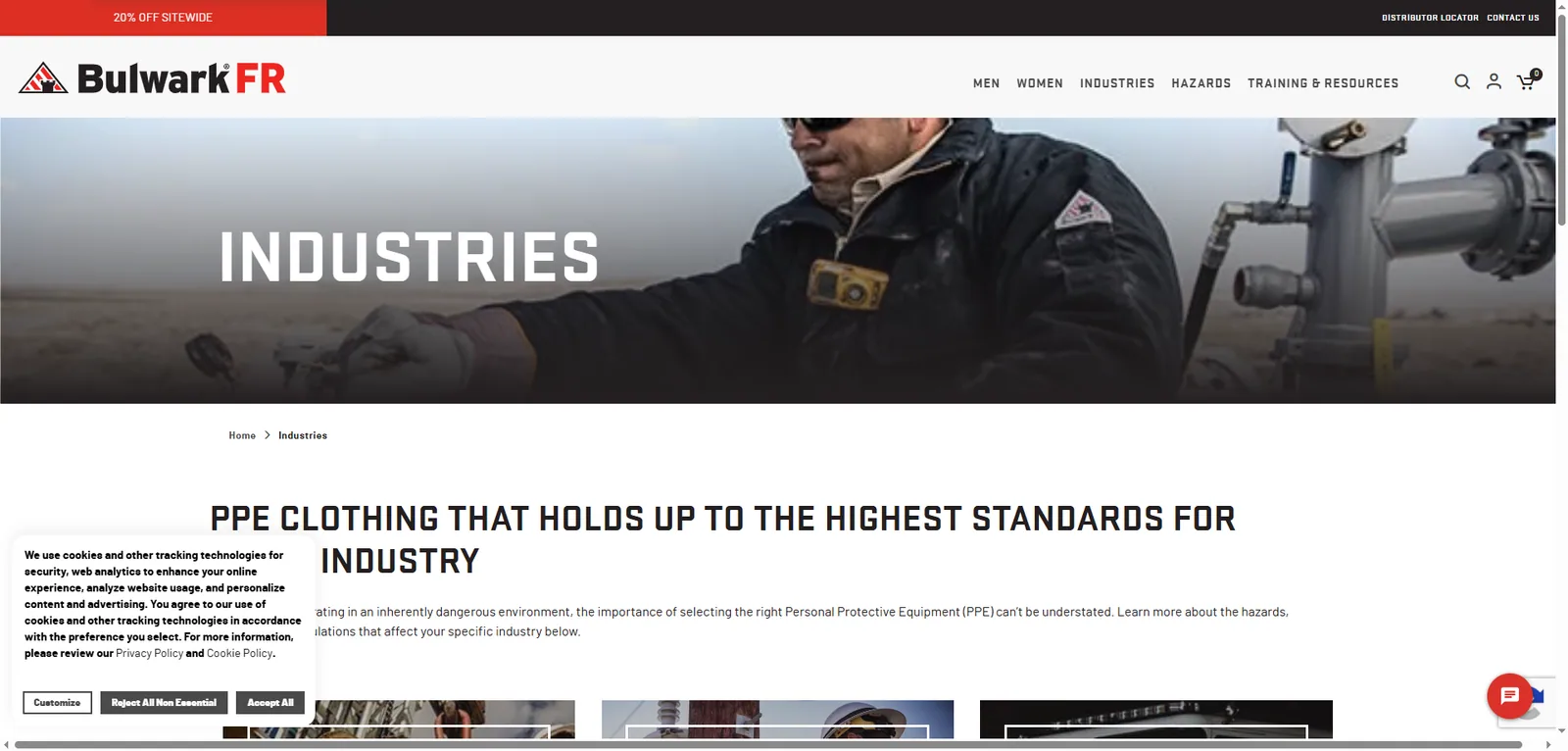
For electricians, utility crews, or petrochemical workers, Bulwark belongs near the top of the FR shortlist. What earns the slot is FR depth, not general workwear width.
What it is: Bulwark focuses on flash-fire and arc-rated PPE. It sells NFPA 2112-compliant garments, arc-rated outerwear, and customized FR programs.
Sales support covers large orders and wear trials, and training resources help safety teams explain garment care and compliance to crews.
Who it suits: Programs on hazardous sites where one supplier has to cover the whole protective set. A program that also needs hospitality and office wear should split the award.
Watch the fabric platform. Verified platforms, consistent FR performance after washing, and arc ratings that match the NFPA 70E hazard category matter more than catalog breadth.
Arc-rated kits fail OSHA-aligned site audits when the shirt rating does not match the coverall, so check the set as a system.
Evidence should be per platform, not a blanket certificate; confirm the exact code, wash cycle limits, and replenishment channel in writing before signing.
3. REED Manufacturing: Best for Industrial-Laundry-Ready Core Workwear
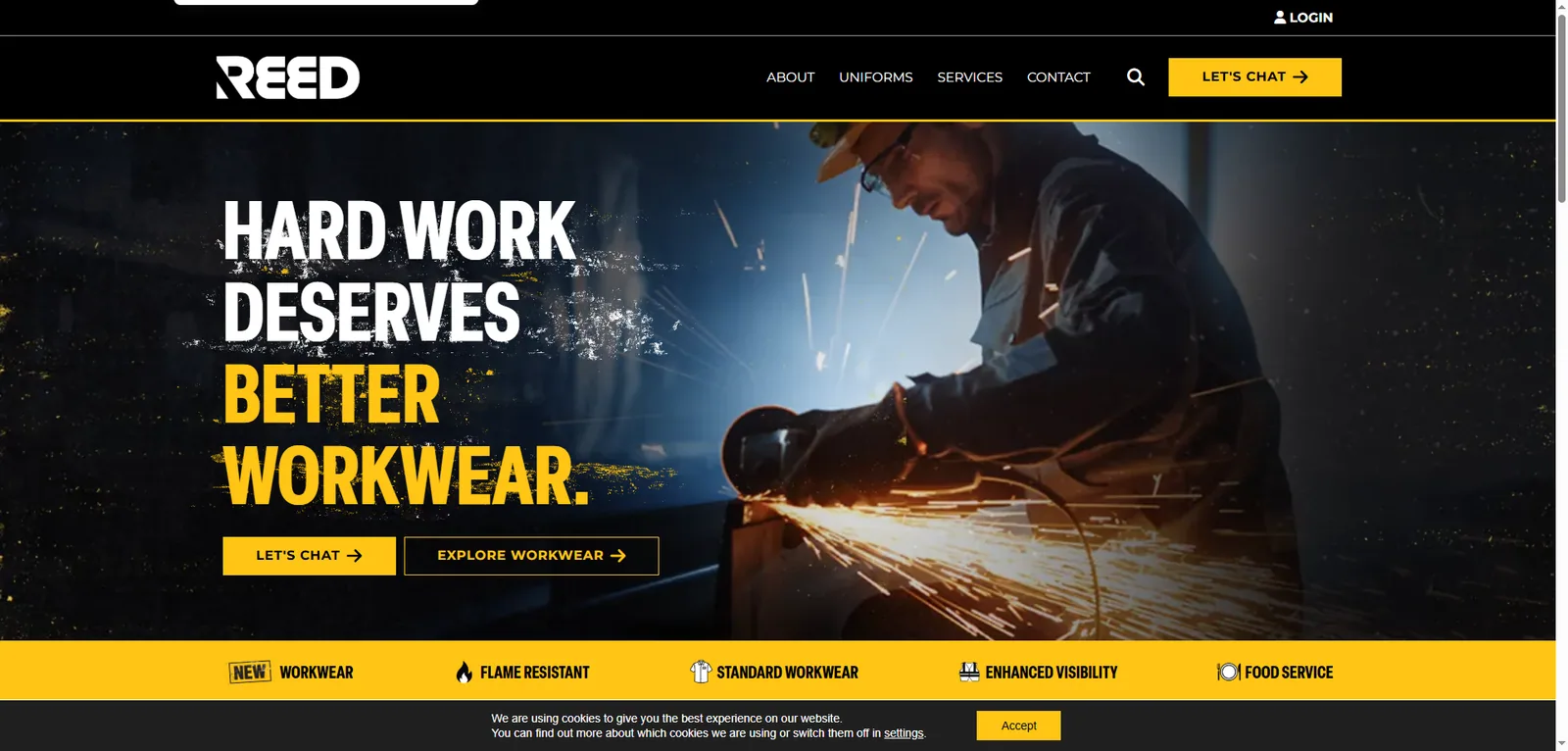
For programs that run through commercial laundry, REED is the practical industrial-program pick. Its official site says the company has served this category since 1919.
Treat that history as background, not proof of current wash performance: the garments delivered still have to pass the laundry’s real formula.
What it is: Breadth plus basics. Dependable coverall construction, standard work shirts and pants, enhanced-visibility options, and inventory consistency for consignment-style programs.
Who it suits: Stable core programs with a fixed laundry route. Not complex fashion or mixed hospitality lines.
Watch the wash formula. Heat, chemicals, and repeated cycles expose weak seams, poor colorfastness, and shrinkage, so a home-wash claim proves little.
Run the size set through the laundry vendor’s actual formula; ISO 15797 is the reference test for industrial wash cycles. Check seam failure, color shift, and patch adhesion, then compare the result with the care instructions you plan to issue.
If food plants are in scope, ask whether the laundry holds TRSA Hygienically Clean Food Safety certification; that is a hygiene audit program, not a universal processing standard.
Keep an approved spec sheet per color and size, audit one laundry-cycle batch before scaling, and keep the written wash-test report on file for the reorder.
Procurement cautions: confirm fabric weight, stain-release performance, and reorder lead times. Use the AATCC test method for stain release, not vendor marketing.
Ask whether the vendor supports the exact emblem or patch workflow, document the answers, then re-audit every 12 months.
4. LAPCO FR: Best for Gulf-South FR Expertise and Customization Support
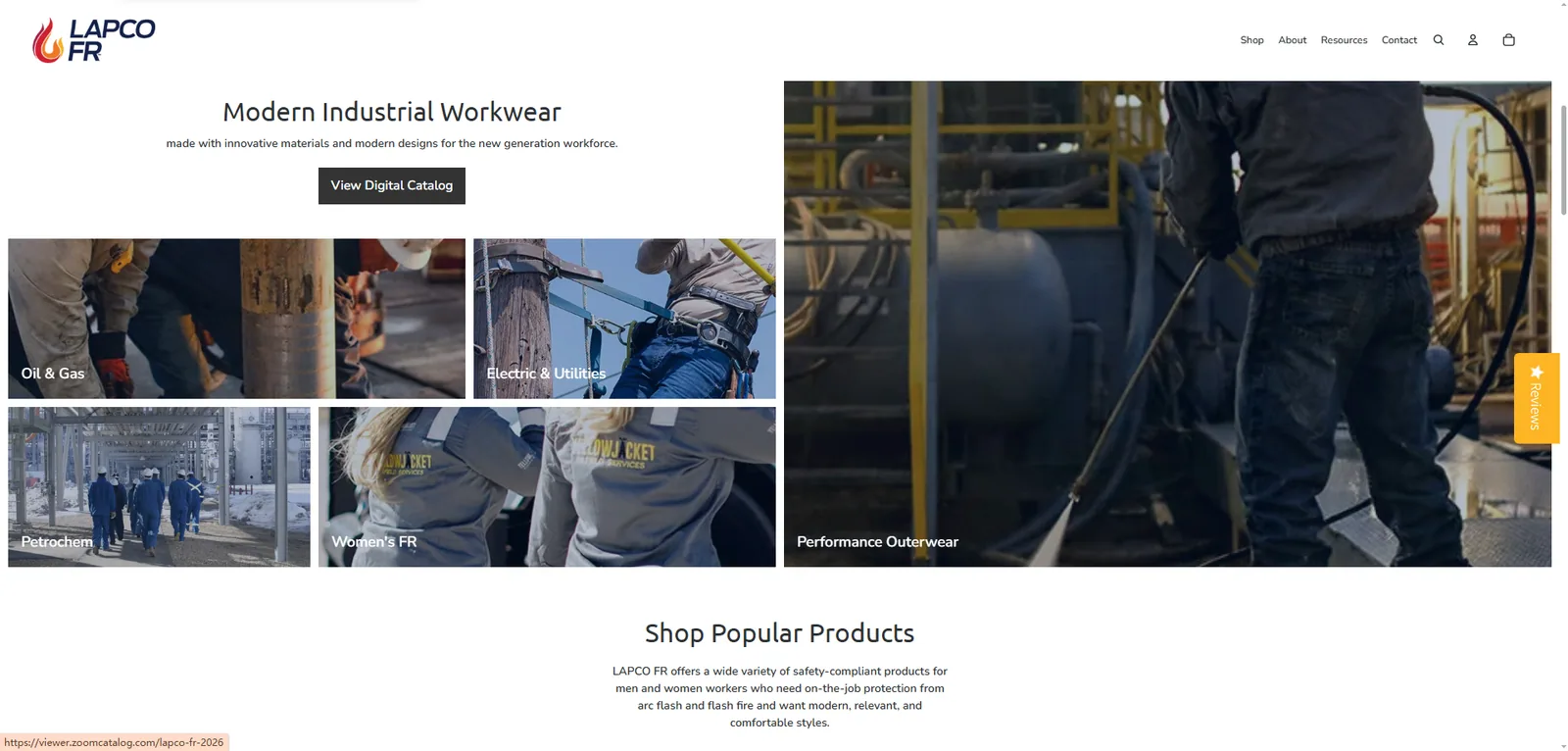
For Gulf-South industrial programs needing FR expertise and customization, LAPCO FR belongs on the shortlist.
Utility, petrochemical, and heavy manufacturing crews fit the brand’s Louisiana roots, and its public materials describe an FR-focused line with Morgan City customization.
What it is: FR coveralls, shirts, and hi-vis, with embroidery and reflective tape options; base layers, mid-layers, and outerwear. Specs vary by fabric platform, so compare FR coverall construction across the line instead of trusting one catalog page, and confirm how each layer is meant to stack on a heavy-industry site.
Who it suits: Gulf-South programs that want one FR-focused brand rather than a mixed catalog.
Do not assume every LAPCO garment is US-made. LAPCO’s official materials describe a Louisiana-based, family-owned brand with headquarters in Morgan City, where customization is handled.
A company guide says production runs through its privately owned Mexico facility. That owned-manufacturing model keeps costs competitive and gives LAPCO control over quality and lead times.
Decision criteria for the bid:
- Request current NFPA 2112 certification per flash-fire fabric platform, plus the ASTM F1506 report and label arc rating for arc-rated work.
- Verify embroidery and reflective-tape options before approving a program.
- Ask how distributor ordering works, including reorder windows.
- Pin down the country of origin before any bid that carries a Made in USA claim.
- Check shrinkage, color, and seams on a washed production sample, following the certificate’s care limits for FR; ask for the fabric platform codes with it so reorders match.
LAPCO is a credible FR choice if certifications, customization, distributor terms, and origin claims are verified before bidding.
5. OneAim Apparel: Best for US Cut-and-Sew Placement, Tech Packs, and Small-to-Mid Runs
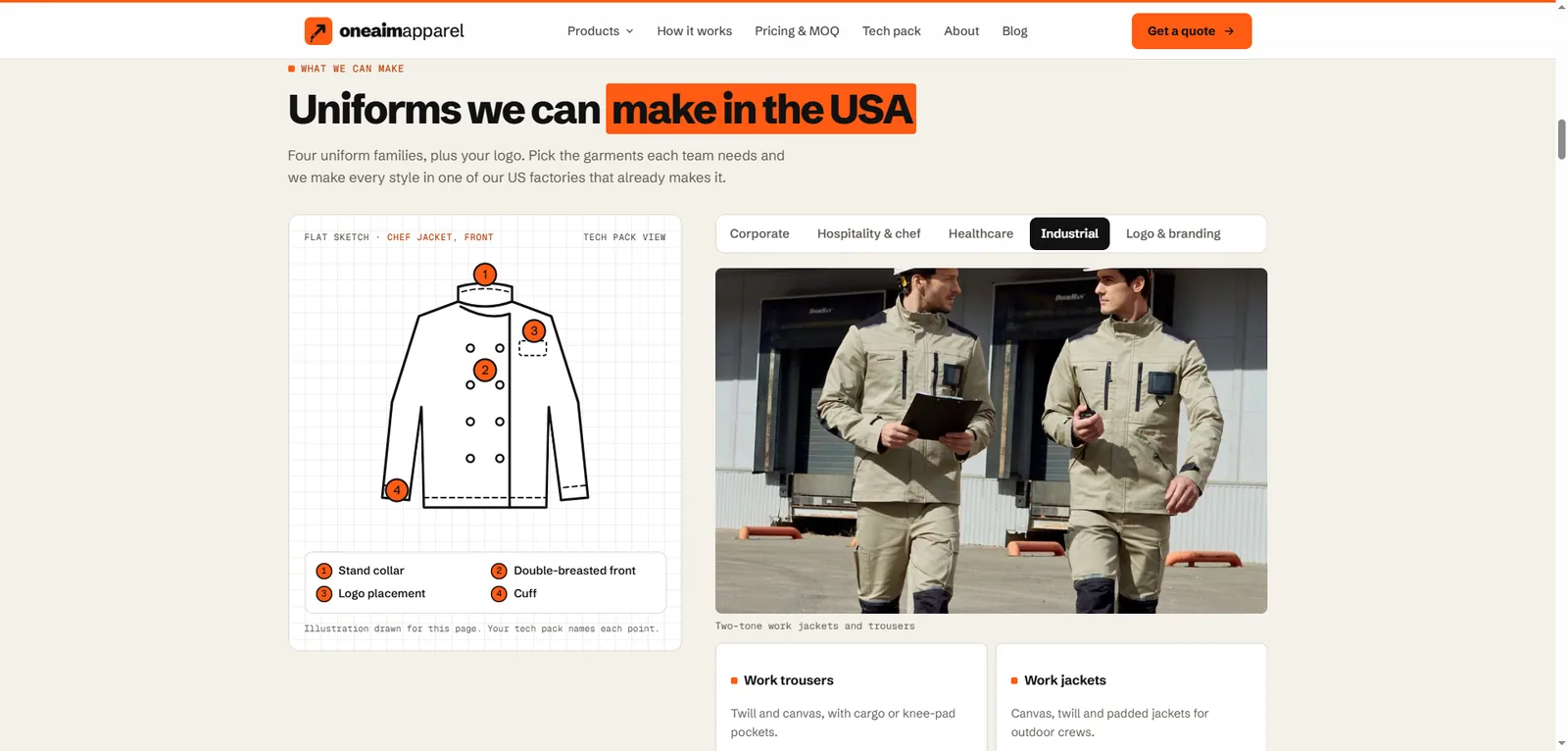
OneAim fits a US cut-and-sew route, sample-room help, and a practical bridge from brief to approved bulk run. It is not a stocked national uniform catalog.
What it is: OneAim places production in US factories across Los Angeles, New York, and the Carolinas, from 100 units per style. It offers a tech-pack service listed at $89 per style, plus sampling support and factory placement.
Its uniform page references ANSI/ISEA 107 and NFPA 2112 standards. The route suits a domestic first order without building a factory network.
Who it suits: Distributors and buyers with a clear brief, logo program, or small-to-mid rollout. The cut-and-sew step is where the sample room earns its fee, so budget it before the bulk quote, not after.
A tech pack is cheap only if it prevents a far larger bulk mistake. Confirm the current fee and get the factory name, capacity, and reorder terms in writing before paying.
Get the bulk quote before sample approval, and test a size set before the bulk run. Domestic placement shortens communication, not QA.
It is not the right fit for ultra-low-cost global sourcing, rental programs, or commodity stocked uniforms with no development work.
6. Swiss Uniform Services: Best as a New England Rental-and-Laundry Comparison Benchmark
Swiss Uniform Services is here because Southern New England buyers often weigh direct purchase against an outsourced rental and laundry program. It gives a clean benchmark for that comparison, not a shortcut to ownership.
What it is: Uniform rental, weekly service, logo apparel, industrial and manufacturing uniforms, and a TRSA food-safety hygiene certification.
Who it suits: Southern New England plants weighing the two models.
Route density drives pickup and delivery reliability, service discipline shows whether repairs hit schedule, and hygiene controls protect the brand and the audit trail.
Treat Swiss as a rental benchmark only. Rental pricing bundles laundry, route service, and replacements, so separate garment cost from service cost before building a direct-purchase business case.
7. UniFirst: Best as a National Rental-vs-Purchase Benchmark for Program Buyers
UniFirst belongs in the comparison whether the program rents or buys; it is the national benchmark here.
What it is: A national managed uniform rental model. Industrial laundering, repairs, inspections, and delivery sit inside the service. UniFirst also states lease and purchase programs are available.
Its FR lines are described as NFPA 2112-compliant, with arc-rated options; check any arc rating against the PPE category in the NFPA 70E hazard assessment. That mix helps program buyers weigh outsourced admin against owned inventory.
Who it suits: Teams without laundry staff or vendor managers, for whom delivery reliability and documented inspections have to stand in for work nobody on site has time to run.
Not for programs that need private-label control or a fixed per-unit cost: rental bundles garment cost with service cost, and contract terms, fee escalators, and replacement rules can hide the true per-wear cost.
Benchmark UniFirst by asking harder questions. What is the contract term? How do fees escalate? What triggers replacement charges? Who owns usable garments when the contract ends?
Before signing, request the full fee schedule and exit terms in writing, then price the same garments direct.
How to Buy Workwear Direct?
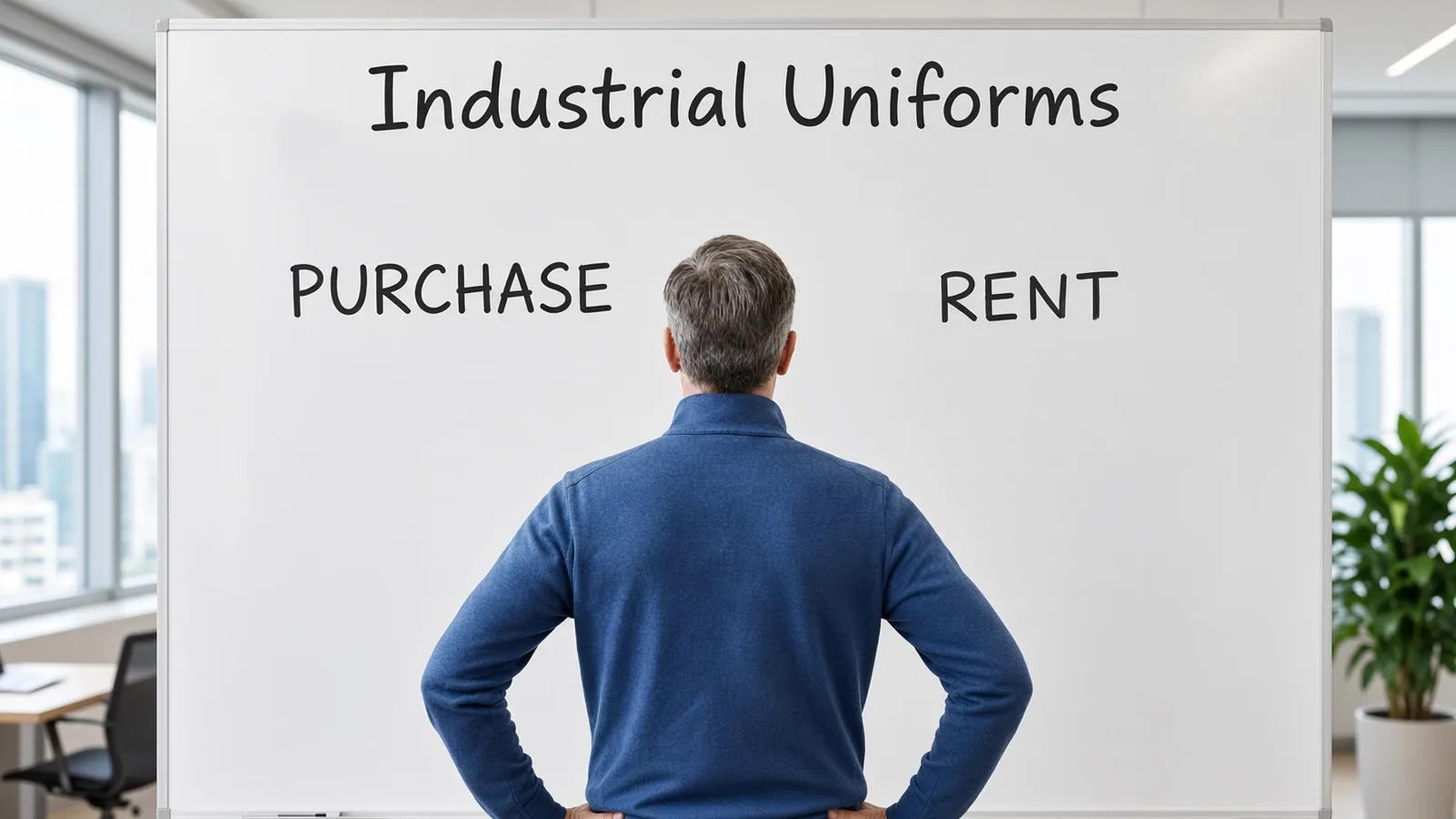
The list above gives names. The plan below turns them into a buying decision you can defend.
Step 1: Model Rental vs Purchase Over 3 Years
Do not compare a weekly rental line to a garment price. Build a 3-year model you can defend line by line. Add garment, laundry, replacement, repair, admin, and exit fees.
Use this checklist:
- Workforce stability: High turnover favors rental. Long tenure favors purchase.
- Reissue value: Count reissues. Rental wins on short-cycle churn. Purchase wins when staff keep sets for 18+ months.
- Laundering control: Can the site control wash formulas? If yes, purchase plus local laundry may cut cost. If no, rental buys control.
- Service overhead: Track pickup, repair, and replacement admin. No vendor manager? Rental may look cleaner.
- Hidden fees: Model route charges, replacement surcharges, lost-garment fees, escalators, and exit penalties.
- Inventory at exit: Ask who keeps the garments when an employee leaves. Rental keeps the asset; purchase transfers it.
Output: A 3-year cost per wear and a written list of hidden fees. With the model in place, the next comparison is the supplier field — direct-purchase suppliers first, then the broader workwear manufacturers set they compete against.
Step 2: Build the FR and Safety Document Stack
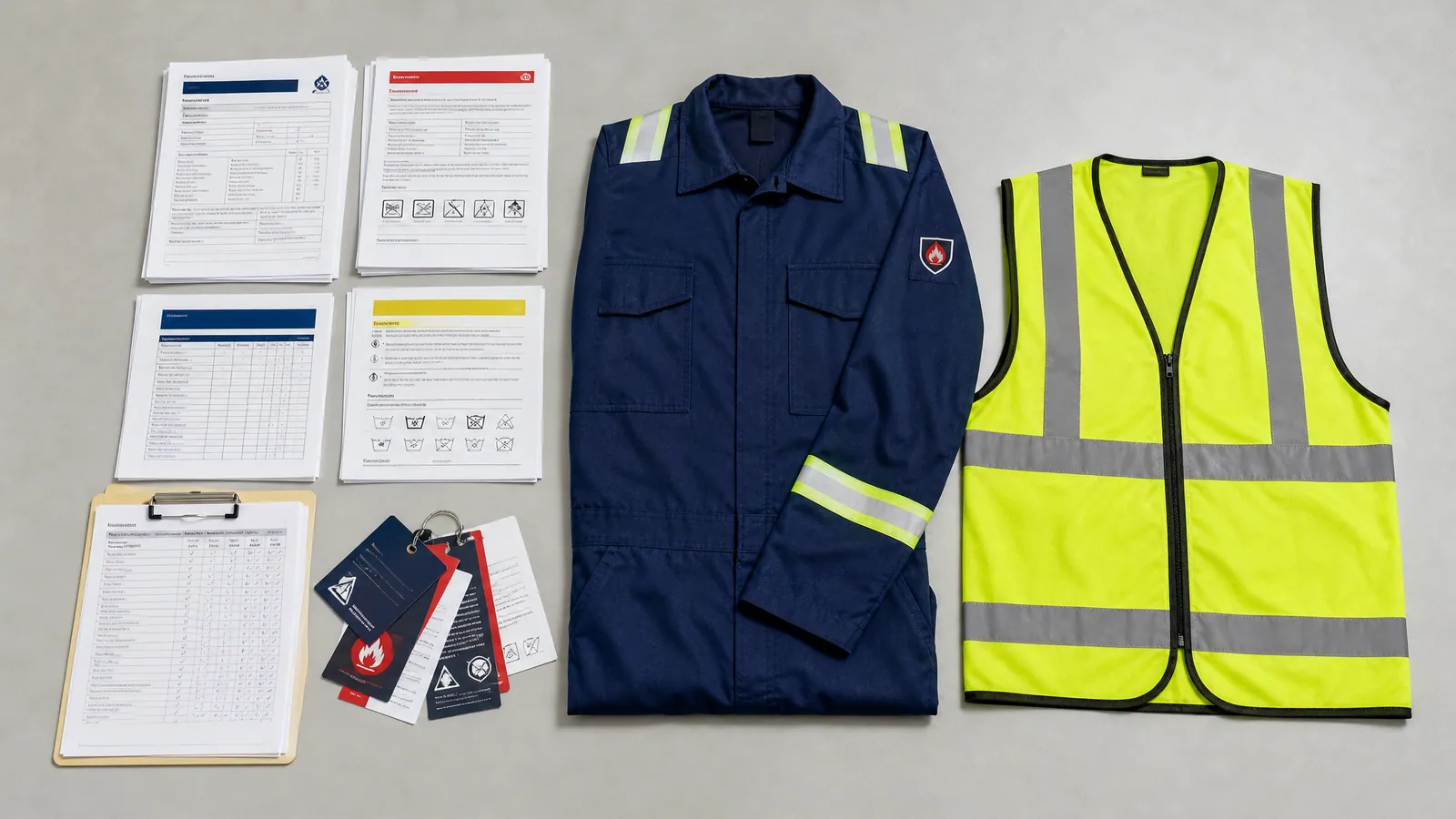
Do not approve a purchase order on a logo or a sales claim. Build a document stack you can hand to an auditor, with each item tied to the hazard it answers — flash fire, arc flash, or traffic visibility.
Senior EHS Expert Mark Pu reviewed this step against the hazard categories below.
Request this stack before the purchase order:
- Written compliance evidence for NFPA 2112 (flash fire), ASTM F1506 plus the label arc rating (arc-rated work), and ANSI/ISEA 107 (hi-vis) where relevant.
- Certificates matched to the garment. Match the certificate to the exact fabric code and garment style, since the standard behind it changes with the hazard. NFPA 70E is the workplace electrical-safety standard that rating is checked against; it does not issue garment certificates.
- Care and laundry instructions. Confirm wash temperature, cycle limits, detergent rules, and dry conditions; NFPA 2113 is the laundering guidance for FR garments.
- Field-wear pilot plan. Agree the crew, the number of sets, and what gets logged — heat stress, fit complaints, seam wear — before the first bulk shipment.
- Logo and alteration limits. Ask where embroidery, patches, and reflective tape can go. Ask what post-purchase alterations void the FR claim.
A certificate that names a different fabric code than the garment tag is not proof; resolve the mismatch before you cut.
Output: A signed compliance checklist and a pilot log template. The same stack applies whether you buy FR coveralls or hi-vis vests; only the documents change.
Step 3: Run the Custom Cut-and-Sew Workflow
Use a gated workflow so a factory cannot skip brief-to-bulk sign-off without you seeing it.
Follow this sequence:
- Buyer brief: Write use case, headcount, size range, and budget.
- Tech pack: Lock materials, measurements, stitch types, and logo placement. The cut-and-sew brief and the pilot sample are where those decisions get tested before bulk.
- Fabric approval: Confirm weight, colorfastness, shrinkage, and FR code on a custom coverall build, and record the mill and shade alongside them.
- Sample round: Approve one sample, then a full size set before bulk.
- Pre-production sign-off: Sign the size set, wash test, fabric code, and reorder spec.
- Bulk run and inspection: Use AQL 2.5/4.0 and the factory audit checklist. Check seams, zippers, and logo placement.
- Packing and reorder controls: Finalize branded packaging, private labeling, embroidery, screen printing, and dye sublimation details. Store approved specs for the next order.
Output: A signed pre-production sheet, an approved size set, and a reorder spec a new factory can match.
Walk if the documents do not arrive. If the factory cannot send the FR document, the wash test, and the size set before deposit, walk. A size set that skips the small or the large end of the range is not ready for bulk.
Release the deposit only against signed documents. That signed stack is what an auditor checks against the garment on the floor, and what a reorder is built from — not the sales deck that started the conversation.
Frequently Asked Questions About Industrial Uniform Manufacturers in the USA
1. Which companies on this list are direct-purchase manufacturers or sourcing partners, and which are rental benchmarks?
Sigma Apparel, Bulwark, REED Manufacturing, LAPCO FR, and OneAim Apparel sell direct rather than through a trading company. Swiss Uniform Services and UniFirst are rental services, kept because buyers need a clean baseline.
2. When does direct purchase beat uniform rental for an industrial workforce?
Run a three-year cost-per-wear model. Rental adds route, replacement and exit fees to the garment price; purchase carries the garment and the laundry bill directly.
The crossover usually sits where sets stay with staff long enough to amortize and the site controls wash quality. Private-label control and owned inventory shift the math further toward purchase.
3. What proof should I ask for before buying NFPA 2112 FR uniforms?
Ask for a current NFPA 2112 certificate that names the same fabric code as the garment tag, plus its test report, care instructions and wash results. A logo sheet is not proof.
4. Is Made in USA the same as cut and sewn in the USA from imported fabric?
No. Made in USA means all or virtually all content and labor are US-based; the second claim covers only the sewing. Ask for fabric origin, cut-and-sew location, and support for any FTC Made in USA claim. Put the exact origin language in the bid and reorder spec.
5. What should I test before approving a custom coverall or multi-site rollout?
Test the approved size set in the plant’s laundry formula, then check seam strength, shrinkage, color shift, trim adhesion, zippers, embroidery and logo placement.
For FR garments, stay within the care limits on the certificate, then lock the spec sheet, fabric code and size set in writing.

Leave a Comment
Your email address will not be published. Required fields are marked *