Table of Contents
After producing over 500,000 medical uniforms, we learned a hard truth. Choosing gear based solely on trending styles is a costly mistake. Many clinics treat all uniforms as interchangeable. This results in thin 150-GSM fabrics trapping sweat or degrading under industrial laundering guidelines set by the CDC.
You must classify the types of medical scrubs by work setting, movement demands, and uniform policy. This breakdown compares modern categories by fabric blend, breathability, stretch, and antimicrobial claims.

7 Types of Medical Scrubs
Discover the 7 essential types of medical scrubs, with a quick-reference guide to their use cases, fabrics, and benefits, to find the ideal uniform for every healthcare role.
| Category | Core Use Case | Key Fabric | Ideal For | Key Benefits |
|---|---|---|---|---|
| Classic Clinical | General nursing & patient care | Poly-Cotton Blend | Hospitals, clinics | Durability, easy care |
| Surgical Scrubs | Operating room procedures | 100% Cotton or Poly | OR teams, surgeons | Lint-free, sterile environment |
| Fashion Scrubs | Style-conscious clinicians | Poly-Spandex blends | Private practice, dental | Modern fit, color variety |
| Performance Scrubs | High-mobility roles | Poly-Spandex with moisture-wicking | ER, ICU, active roles | Stretch, breathability |
| Eco-Friendly Scrubs | Sustainability-focused facilities | Recycled polyester, organic cotton | Green hospitals | Reduced environmental impact |
| Unisex Scrubs | Standardized uniform programs | Poly-Cotton Blend | Large health systems | Consistent sizing, bulk ordering |
| Maternity Scrubs | Expectant healthcare workers | Stretch poly-cotton | All departments | Comfort, adjustable fit |
1. Classic Clinical Scrubs

Sizing thousands of employees across locations causes massive return costs. Classic clinical scrubs solve this headache.
As the baseline among all types of medical scrubs, these are the workhorses for general wards, clinics, and students. Straightforward V-neck tops and drawstring pants make them the easiest category to standardize for bulk purchases.
This baseline ends where the operating room begins. While surgical gear remains strictly sterile and pocketless, classic scrubs prioritize daily utility. Our clients typically request standard three-pocket tops and cargo pants for everyday patient care.
We rely on a proven 65% polyester and 35% cotton poplin blend here. This mix hits the sweet spot for procurement teams. It maintains ISO 105 colorfastness standards across batches and withstands rigorous CDC guidelines for healthcare laundry. You get an inclusive size range without paying for specialized features.
🛡️ Our Verdict: When we produced 12,000 classic sets for a regional hospital last year, we used a 160-GSM poly-cotton blend. This specific weight minimized costs and ensured perfect color matching across five departments.
🚀 Actionable Insight: Outfit your core staff in classic poplin scrubs and reserve expensive performance fabrics for specialized roles.
2. Surgical Scrubs

Among all types of medical scrubs, surgical garments serve a strictly functional purpose. They strip away fashion to prioritize contamination control.
While clinical sets feature multiple pockets and tailored fits, surgical designs remain intentionally simple. Pockets and extra seams trap bacteria. True OR wear is basic, reversible, and featureless.
Hygiene workflow dictates every detail. Facilities issue these garments directly to staff and manage the industrial laundering in-house. This ensures the gear never leaves the sterile environment. Color discipline is also strict. Hospitals mandate ceil blue or surgical green to reduce eye fatigue under harsh operating lights.
Basic fabrics handle minor fluid exposure, but specialized operations require more protection. We will unpack strict AAMI liquid-barrier ratings later in this guide.
🛡️ Our Verdict: When a major hospital network asked us to overhaul their OR supply, we stripped out all chest pockets. We switched them to a reversible 150-GSM blend designed specifically for high-heat facility washing. This simple structural change immediately improved their sterile workflow compliance.
⚡ Power Move: Never allow staff to wear embroidered scrubs in the operating room. The extra thread creates microscopic pockets for bacteria.
3. Performance Stretch Scrubs

Fast rounds and heavy lifting demand garments that move with your staff. Among all types of medical scrubs, performance stretch models solve mobility issues through precise fabric engineering.
Standard uniforms rely on two-way stretch that only pulls horizontally. True performance gear uses four-way stretch weaves with higher elastane content. This multi-directional fabric reduces seam stress when clinicians bend over beds, supporting ergonomic movement guidelines. In our manufacturing experience, this remains the top choice for high-activity roles.
Source these fabrics carefully, because over-light materials cling to the body and look unprofessional. Do not buy cheap spandex scrubs. Cheap spandex breaks down in hot water. The fabric loses its shape. It creates baggy knees after ten washes.
We test all fabrics in our lab. We use strict AATCC standards. A good blend needs exactly 7% high-grade spandex. This guarantees a perfect fit every time. The industry benchmark is a robust polyester, rayon, and spandex blend. We evaluate this exact mix in the Wear-Test section below.
🛡️ Our Verdict: When sourcing uniforms, test stretch recovery first. For a 500-bed hospital, we tested many fabric blends and found 72% polyester, 21% rayon, 7% spandex ideal — offering great mobility and no baggy knees after 50 industrial washes.
4. Moisture-Wicking and Breathable Medical Scrub

When evaluating different types of medical scrubs, procurement teams often overlook heat management. Layering heavy PPE over standard uniforms traps heat and ruins staff focus.
Many buyers confuse a soft hand-feel with actual cooling performance. True moisture-wicking technology relies on capillary action to pull sweat from the skin and disperse it for rapid evaporation. When paired with a highly breathable weave, even fully synthetic blends feel noticeably cooler than basic cotton.
These scrubs excel in warm wards, high-output emergency rooms, and underneath isolation gowns. Beware of cheap or ultralight options.
The thinnest material is rarely the best choice. Low-quality lightweight fabrics turn transparent under bright clinical lights and cling unprofessionally to the body. You must compare actual fabric weight and weave structure rather than just chasing the lowest GSM.
🛡️ Our Verdict: When outfitting a 500-bed hospital network, our clients complained that standard synthetics trapped heat. We solved this by developing a 140-GSM textured micro-polyester. The structured knit prevented static cling and maintained full opacity, passing strict AATCC moisture management standards while keeping staff cool.
🚀 Actionable Insight: Request physical fabric swatches and test them under direct overhead lighting to guarantee opacity before approving a bulk order.
5. Antimicrobial Medical Scrubs
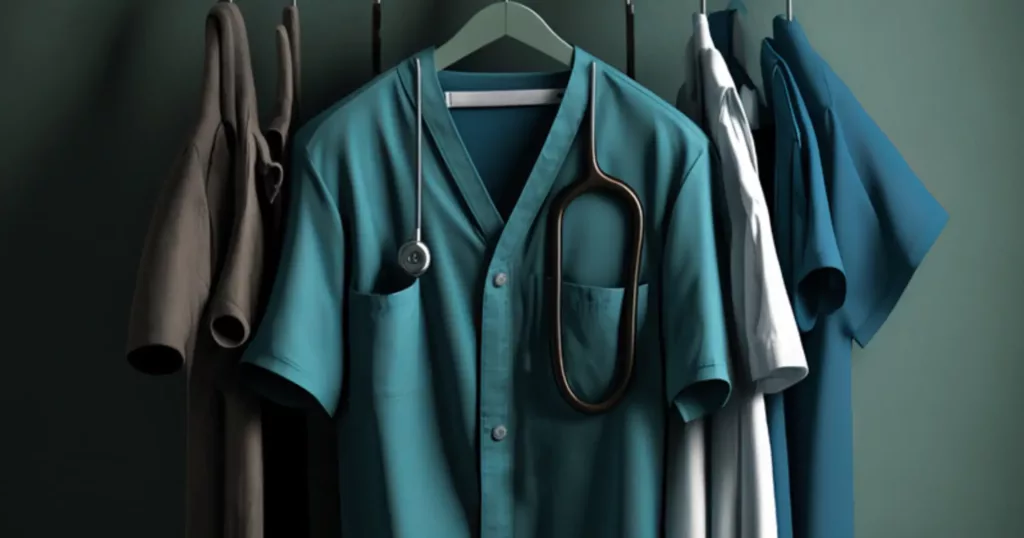
Procurement teams often pay a premium for antimicrobial claims, only to discover the protection washes out in months. Worse, staff sometimes treat these garments as a replacement for proper infection control protocols.
These misunderstood types of medical scrubs use specific technologies to inhibit bacteria, fungi, and odor-causing microbes. This is strictly an added performance layer. It never replaces standard facility laundering.
When is this upgrade worth the cost? High-contact roles like emergency responders benefit most. Ask your supplier for real proof. Tell them you want an AATCC 100 test report. Read the report carefully. Look for the wash-life rating. A cheap spray finish washes away fast.
The report must show embedded silver ions. This technology kills bacteria permanently. Verify if the claim relies on a temporary chemical finish or if the manufacturer builds the active agent directly into the fiber.
🛡️ Our Verdict: We recently tested a competitor’s fabric for a hospital client. It failed after just 20 washes due to a cheap topical spray. We shifted their order to a proprietary yarn featuring embedded silver ions. This maintained a 99% bacterial reduction rate across 50 industrial wash cycles.
🚀 Actionable Insight: Never accept a generic antimicrobial label. Ask your supplier explicitly if they use a temporary surface finish or permanent embedded yarn technology.
6. Jogger-Style Hospital Scrubs
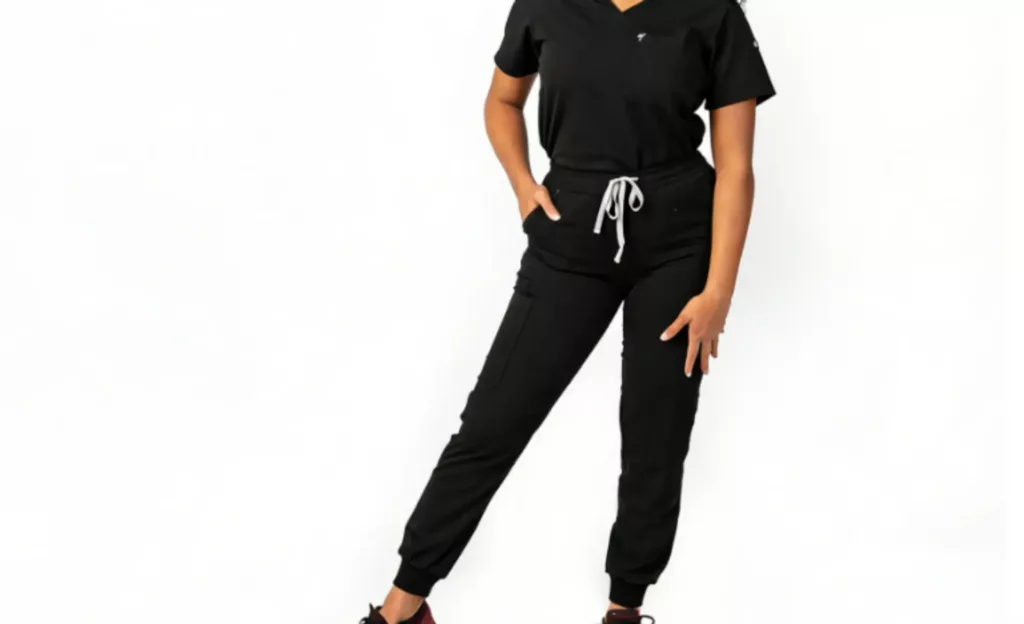
Frayed hems dragging across contaminated clinic floors violate standard infection control guidelines. Among modern types of medical scrubs, jogger styles solve this exact issue with tapered legs and elastic ankle cuffs. While younger staff appreciate the athletic fit, we view the real value as strictly functional. The tight ankle seal prevents hem drag and reduces snagging on medical carts.
These garments suit high-mobility roles like emergency room nurses well, but they often clash with conservative facility dress codes.
If you mix jogger and straight-leg styles across different departments, color consistency becomes a massive headache. Procurement teams need a centralized supply chain to guarantee a uniform look across all styles.
🛡️ Our Verdict: For a 3,000-unit urgent care order, their prior retail joggers failed fast—cheap knit cuffs lost shape after just 10 washes. We designed durable ribbed spandex cuffs that kept strong elasticity through 60 high-heat industrial washes while matching their existing stock.
🚀 Actionable Insight: Audit your facility dress code before ordering joggers. Require your vendor to exact color-match elastic cuffs to the main fabric.
7. Maternity Medical Scrubs
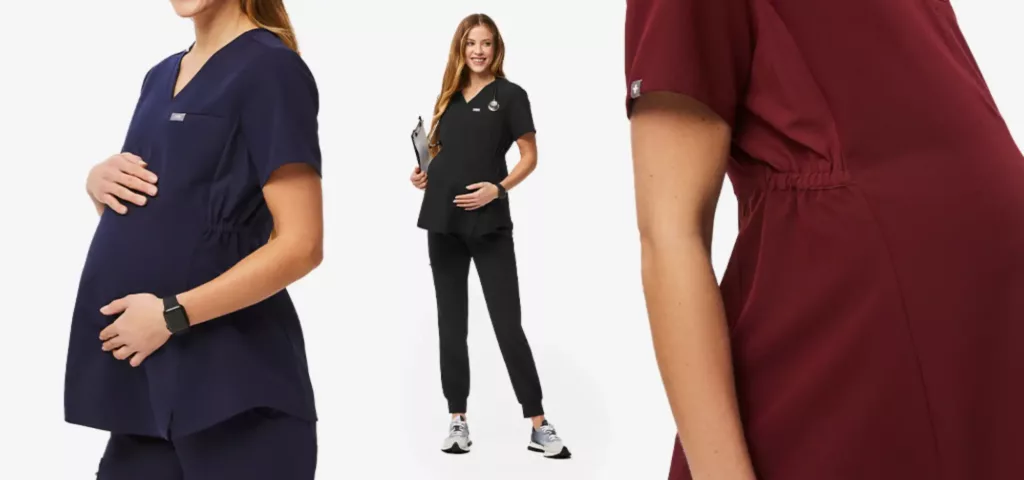
Sizing up standard garments fails pregnant clinicians because they lack proper fit engineering. Among specialized types of medical scrubs, maternity options require precise construction for 12-hour shift comfort.
We focus on three specific design elements. We integrate expandable waistbands, supportive knit belly panels, and extra room at the bust and hips. This adjustability ensures the garment stays useful through the entire pregnancy and early postpartum phases.
Many procurement teams treat maternity wear as an ad hoc exception. Avoid this mistake. The American Nurses Association emphasizes that ergonomic workplace support directly improves clinical staff retention. Plan maternity options into your core uniform programs upfront. This protects employee morale and maintains strict brand compliance across your facility.
🛡️ Our Verdict: During a hospital network audit, we found procurement buying retail maternity scrubs because their main vendor lacked flexible options. The colors never matched. We solved this by manufacturing a custom maternity line using the exact same 160-GSM antimicrobial poplin as their standard sets.
⚡ Power Move: Lock in your fabric dye lots across all uniform types to guarantee a seamless visual identity.
The 12-Hour Wear-Test and Fabric Sourcing Plan
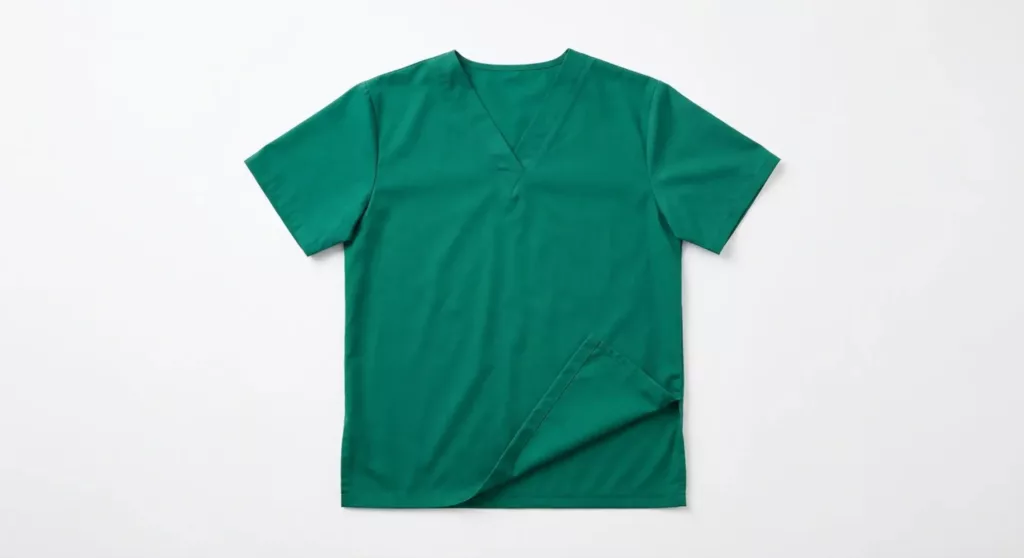
Run a rigorous 12-hour simulation on any new scrub fabric before buying. In my recent tests, a premium polyester, rayon, and spandex blend easily beat basic cotton-poly mixes. It recovered from wrinkles faster and dried much quicker. Put your samples through this exact checklist:
Step 1: Execute the Shift Stress Test
- Check heat buildup: Walk fast for one hour. Note any trapped sweat.
- Test range of motion: Squat down and check the rear opacity. If the fabric turns sheer, reject it.
- Monitor pocket load: Fill the pockets with phones and tools. Reject garments with sagging necklines.
- Check lint pickup: Drop the fabric on a clinical floor. Watch how much dust it attracts.
Step 2: Audit Your GSM Weight Bands
Many buyers make a big mistake. They buy heavy fabrics for everyone. They think heavy means high quality. This is false. A heavy 220-GSM fabric traps sweat. It ruins a fast shift. You must match the fabric weight to the job. Use light fabrics for hot rooms.
- Lightweight (150 to 180 GSM): Pick this for a cooler feel in hot environments.
- Midweight (180 to 200 GSM): Use this as your practical sweet spot. It balances airflow and opacity.
- Heavyweight (220+ GSM): Choose this for denser coverage and high durability when opacity matters most.
Step 3: Map Safety Standards to Your Workflow

Everyday clinical gear prioritizes comfort. Nurses face dangerous fluids every day. Standard cotton fails quickly. You must protect your staff. We follow strict AAMI standards. We are top uniform makers in the USA. We map specific AAMI barrier levels to each hospital department.
This keeps your team safe and legal. If a nurse faces heavy fluid exposure, standard material fails. As top medical uniform manufacturers and scrub manufacturers in the USA, we match AAMI ratings directly to department risk.
Next, apply your color policy to maintain department identity. If you add embroidery, verify your GSM can hold the thread weight without tearing. Finally, use our wholesale buying strategies to lock in the best bulk pricing.
Our Experience: During a recent ER sourcing project, I tested multiple types of medical scrubs. I selected a 190-GSM tri-blend. It passed the squat test perfectly and met necessary fluid resistance protocols.
The biggest challenge was finding a fabric that did not trap heat during 12-hour shifts. To build your own standardized or custom scrub program, contact us today.
Frequently Asked Questions about Types of Medical Scrubs
1. What is the difference between surgical and clinical scrubs?
Clinical uniforms feature pockets and tailored fits for daily ward use. Surgical uniforms strip away these features to maintain a sterile environment. As we noted earlier, extra seams trap bacteria. True operating room gear remains basic and pocketless to survive intense in-house sanitation cycles.
2. Does higher GSM mean better scrubs?
No. A higher Grams per Square Meter rating simply indicates a heavier fabric. Procurement teams often mistakenly buy heavy material for all staff. In our factory tests, 220 GSM fabric provides excellent opacity but traps sweat terribly. Pick 150 GSM for hot emergency rooms. Reserve heavier weights for cold surgical theaters.
3. Are antimicrobial scrubs worth it?
They add value only if the factory embeds the active agent directly into the yarn. Cheap alternatives use a temporary spray. Our clients frequently complain that these surface sprays vanish after 20 washes. Always demand official AATCC 100 test results before you approve any bulk purchase.
4. Are jogger scrubs allowed in hospitals?
This depends on your specific facility dress code. Functionally, elastic cuffs prevent hem drag on contaminated floors. This design feature supports strict CDC infection control guidelines. However, conservative networks often ban them to maintain a traditional look. Always review your internal uniform policy before placing a massive order.
5. What are the best scrubs for doctors versus general ward staff?
Doctors demand supreme mobility and a premium aesthetic during long shifts. We recommend a four-way stretch tri-blend for these roles. General ward staff require extreme durability to survive daily industrial washing. A classic poplin blend works best here. This strategy balances daily comfort with your tight procurement budget.
Stop treating employee uniforms as an afterthought. You need a reliable supply chain partner to lock in strict color standards, manage bulk sizing, and execute custom branding. Explore our network of medical uniform manufacturers. Do you need domestic fulfillment? Review our capabilities as scrub manufacturers in the USA. To prototype your new design, contact us today.

Leave a Comment
Your email address will not be published. Required fields are marked *