Table of Contents
The short answer Fire retardant fabric slows ignition and flame spread under defined test conditions; it does not make a garment fireproof. Protection is either a chemical finish on cotton or inherent fibers such as modacrylic and aramid, and the choice between them is decided by the laundry model as much as by the hazard.
A fabric can pass a brochure claim and still fail after industrial laundering, component substitution, or garment certification review.
I have seen a garment lose its certification because a zipper tape, thread, or reflective tape was changed after approval: the fabric passed, the assembly did not. The cost lands on procurement, which is why FR selection is a compliance decision, not a catalog pick.
Lock every component on the approved BOM — zipper, thread, reflective tape — and require written notice before any substitution.
Workwear-grade fire retardant fabric for industrial PPE programs is a different product from decorative FR textiles. Every lot at LantaoWork goes through a 7-point incoming inspection covering roll identity, shade, weight, shrinkage, construction, FR chemistry, and release status before it reaches cutting.
The evidence behind this article is an anonymized 100-wash stress-test matrix and an interview with the Chief Textile Chemist. I receive no supplier kickbacks; the audit trail is our own.
The Chief Textile Chemist puts the core problem simply: “The certificate is a starting point, not a guarantee.” That distinction matters most at spec approval, where a program either locks in a compliant route or locks in an audit problem.
Key Takeaways for FR Fabric Buyers
- Treated cotton is the cheapest route and the most dependent on laundry control.
- Aramid blends cost the most and hold the best after repeated industrial washing.
- Confirm the certificate covers the garment, not just the fabric.
- Ask for post-wash tear-retention data alongside the flame result.
What Is Fire Retardant Fabric?
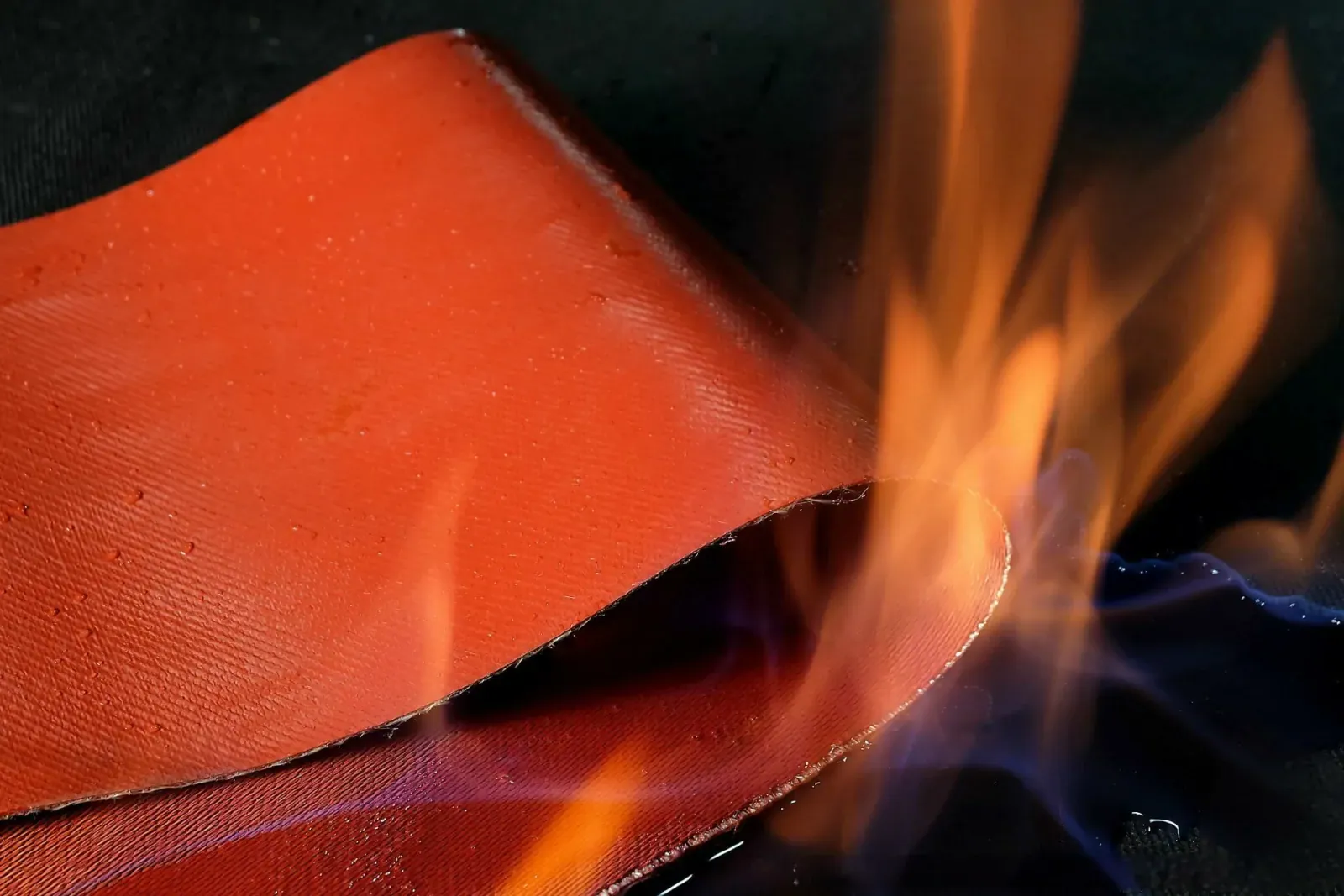
Fire retardant fabric is a textile engineered to reduce ignition, flame spread, or continued burning under specified test conditions; it is not fireproof. A useful comparison is a fire door, which slows fire long enough for escape without fireproofing the building.
Every claim then falls into one of four buckets — fiber chemistry, applied finish, fabric-level test, or garment-level certification — and knowing which bucket a supplier is describing is most of the battle.
The market treats fire retardant, flame resistant, and FR as loose synonyms, and some suppliers lean on that ambiguity: flame resistant gets used to imply inherent performance, fire retardant to imply a treated finish. The shorthand is unreliable, so ask for the test scope; the label alone proves little.
The core comparison is inherent fire retardant fabric vs treated. Inherent protection comes from the fiber or polymer matrix, while treated protection comes from a chemical finish applied during processing.
Both can pass the same tests, but they behave differently across a program, which is why both go through the same incoming inspection here.
Fabric test methods such as ASTM D6413 and ISO 15025 measure flammability response, while EN ISO 11612 specifies performance requirements for heat and flame workwear.
NFPA 2112-certified fire retardant fabric claims need more careful wording, because NFPA 2112 certifies a garment system, not a single fabric flame test. A fabric test pass is not a finished garment certification.
Arc-rated and FR are related but not interchangeable: arc rating measures thermal energy in an arc, while FR is a flammability claim.
Buyers also see LOI (the oxygen level needed to sustain burning), char length (damage length after flame), afterflame (seconds of burning after the ignition source is removed), arc rating, and industrial laundering.
Industrial laundering is a maintenance condition rather than a certification, and it changes the answer more often than the label does.
Last quarter, a supplier sent a datasheet marked “NFPA 2112 certified fabric.” I asked for the garment certificate and there was none; the report showed ASTM D6413 fabric data only. The wording sounded compliant, but the scope was wrong, and that single gap can turn a compliant purchase into a failed audit.
When a supplier claim comes in, I read the scope block first; the How to Choose a Custom Workwear Manufacturer guide applies the same test to the supplier itself.
🧠 Author’s Take: A datasheet that cannot name the standard edition and the garment model is not evidence yet.
How Does Fire Retardant Fabric Work?
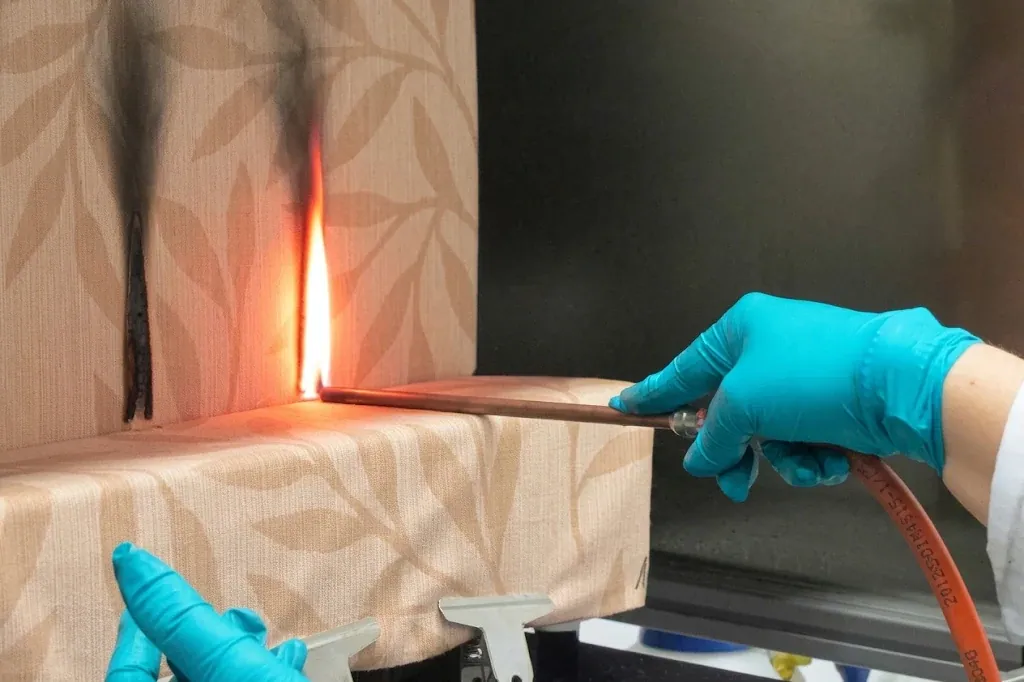
FR performance comes from one of two places: a chemical finish that changes how cellulose chars, or inherent fibers that carry protection inside the polymer. The difference is not visible on a datasheet; it shows up in how each route survives industrial laundering.
At LantaoWork, we reviewed incoming lots with the lab team and traced one treated cotton lot through 50 industrial wash cycles at 75°C against an aramid blend control.
The gap was not in the label but in the maintenance route, and this is the section Workwear Manufacturers review before approving a fire retardant fabric spec.
The Two Protection Routes: Finish vs Fiber
Treated FR does not simply coat a fabric; it changes how the cellulose fails under heat, which is the core of organophosphorus chemical finishes. Heat activates the finish, which promotes char formation and alters cellulose decomposition pathways.
The resulting char layer then helps suppress sustained burning. The fiber itself still burns under high heat, so the finish buys escape time rather than immunity.
Permanent inherent polymer matrices work differently: modacrylic/aramid/antistatic blends carry FR behavior inside the fiber structure, so protection is not a removable topcoat that washes away. That does not make inherent systems invincible, but it changes the failure mode and the maintenance dependency.
Treated cotton depends on finish retention, while inherent blends depend on blend integrity and garment construction, and tests such as ASTM D6413 measure the response rather than the route.
Wash Chemistry Decides the Maintenance Burden
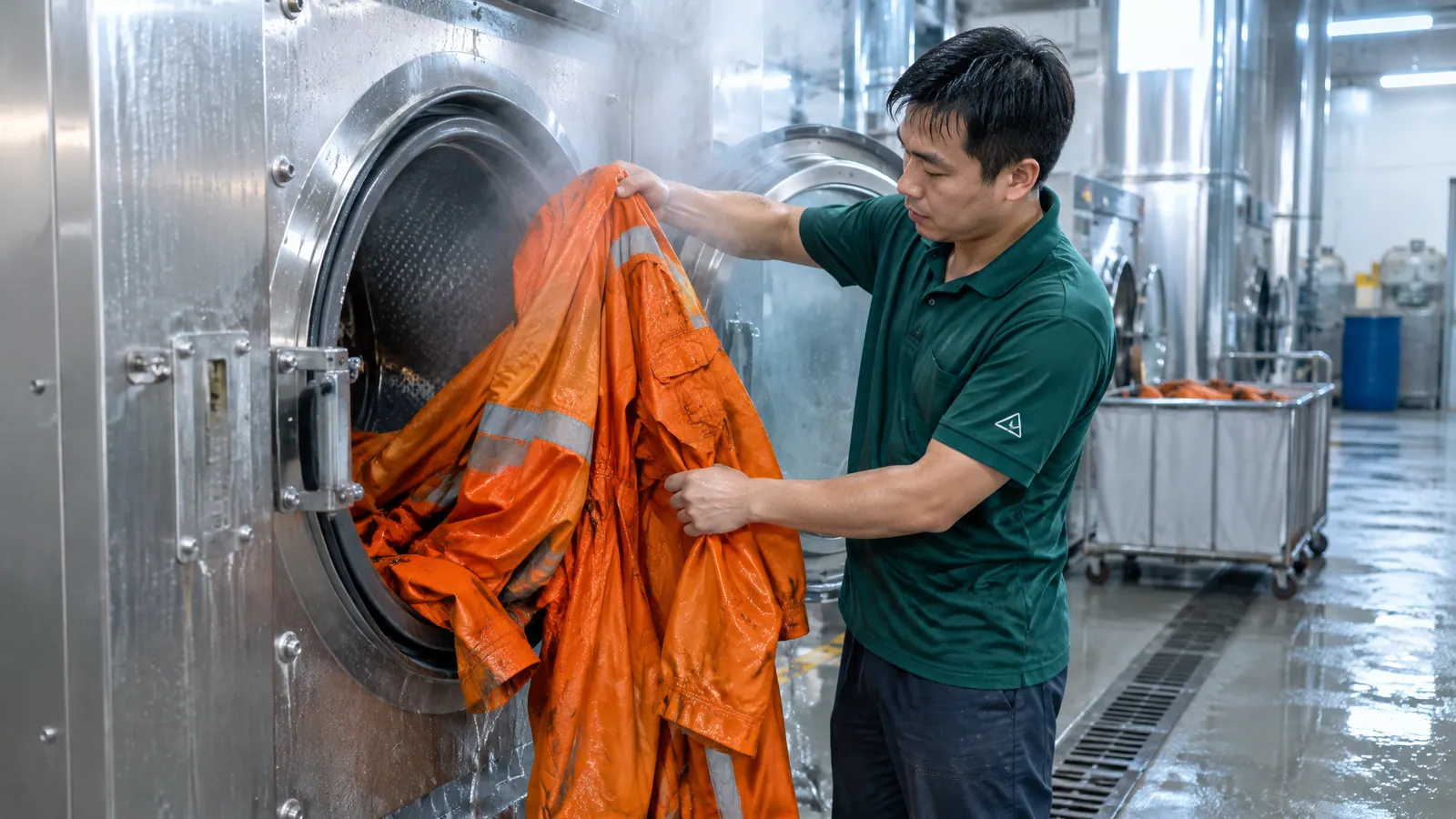
Many suppliers underplay wash chemistry, yet high-alkaline industrial detergents, chlorine exposure, optical brighteners, overdrying, and repeated 75°C industrial laundry stress treated systems differently from inherent ones. The lab manager calls chlorine “the second wash cycle no one specs.”
In a 50-cycle run at 75°C under ISO 15797, one treated cotton lot lost 18% of its original tear strength while the aramid control lost 5% — still inside the internal threshold, but with a narrower margin.
Chlorine is the quiet risk because it attacks finish chemistry and cellulose; optical brighteners can mask shade change while the finish degrades, and overdrying embrittles the hand and raises shrinkage.
Treated cotton programs need validated cycle limits and wash-room control, while inherent programs need care of a different kind. What you are buying is a protection route with a maintenance dependency attached.
🧠 Author’s Take: The wash room is part of the FR system. Spec the laundry protocol with the garment.
The 5 Types of Fire Retardant Fabric
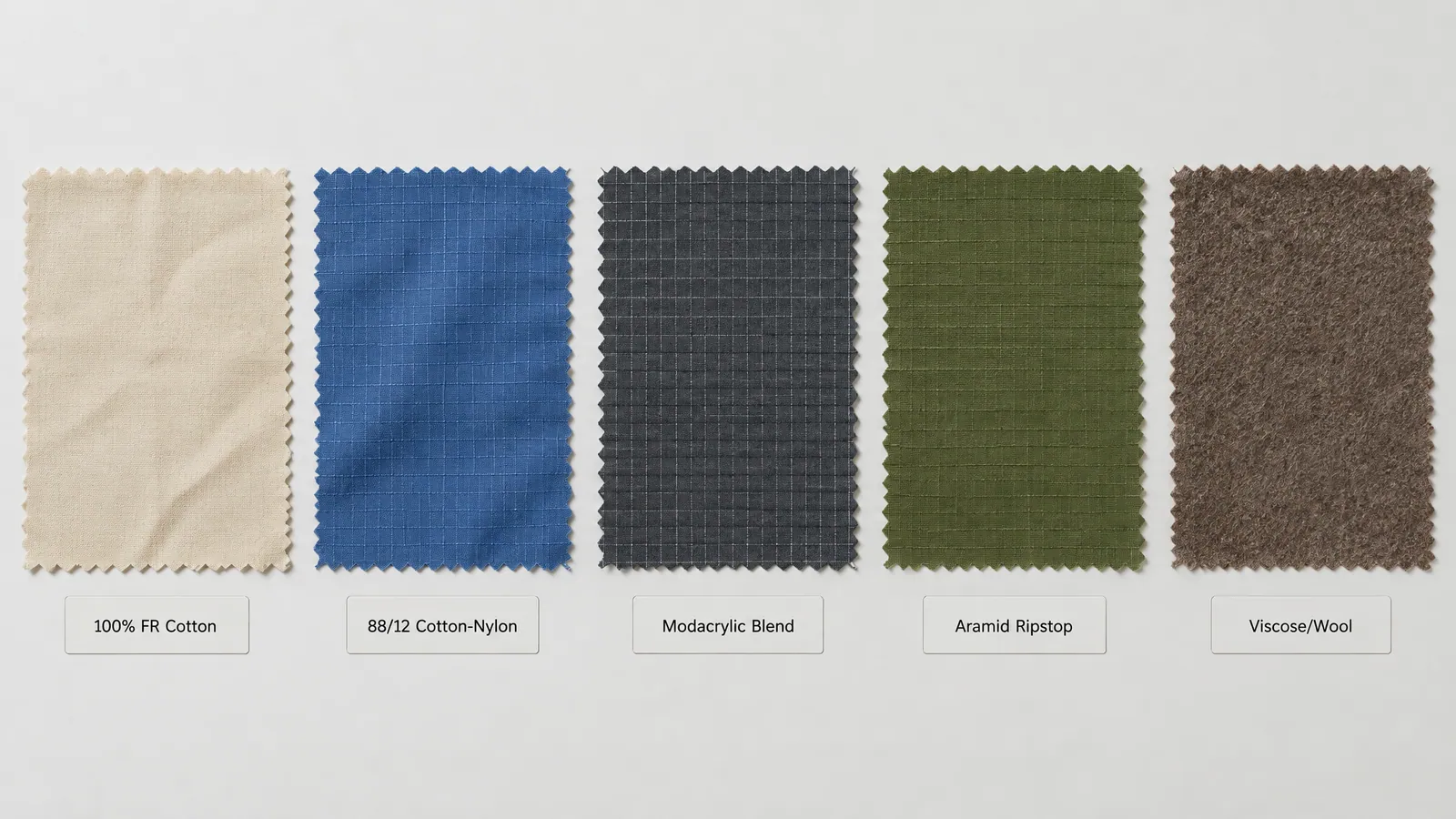
The table below sorts the five types by FR route, wash behavior, landed cost, and best fit; the notes under each type cover the failure mode a table cannot hold.
| Type | FR route | After industrial washing | Landed cost | Best fit |
|---|---|---|---|---|
| 100% FR treated cotton | Chemical finish | Depends on finish retention | Lowest | Controlled-laundry, price-led programs |
| 88/12 cotton-nylon | Chemical finish plus nylon strength | Better tear and abrasion, check melt-drip | Low to mid | Utilities, maintenance, construction |
| Modacrylic/cotton/antistatic | Inherent | Stable; conductive network needs verification | Mid | Petrochemical, oil and gas, utilities |
| Aramid ripstop or blend | Inherent | Most stable, low shrinkage | Highest | High thermal load, long wear cycles |
| Viscose/wool cellulosic | Additive or inherent blend | Depends on formulation; wool shrinks | Mid | Cold climate, rail, niche comfort needs |
1. 100% FR Treated Cotton
This is the price-led option for programs with controlled industrial laundry and a comfort requirement that rules out synthetic blends. It is also the most widely available route, which makes it the easiest to buy badly.
Wash control carries the whole risk: an industrial wash resistant FR fabric claim depends on the exact chemistry and the laundering protocol rather than the cotton content, so a lot that passes on day one can drift out of spec long before the garment looks worn.
2. 88/12 Cotton-Nylon Blend
Utility, maintenance, and Construction Infrastructure crews keep replacing treated cotton too often, and nylon raises tear and abrasion resistance without abandoning the hand of cotton.
Nylon can also change char behavior and introduce melt-drip risk, so verify the FR chemistry and blend ratio; the 88/12 label proves little on its own.
3. Modacrylic/Cotton/Antistatic Blend
Inherent modacrylic supplies the FR behavior, cotton supplies comfort, and conductive fiber handles static. Safety teams comparing inherent fire retardant fabric vs treated systems under an NFPA 2112 program should cite the current edition for garment-level pass criteria.
Antistatic performance depends on conductive fiber continuity and humidity, so wash damage can break the network even when FR performance holds.
4. Aramid Ripstop or Aramid Blend
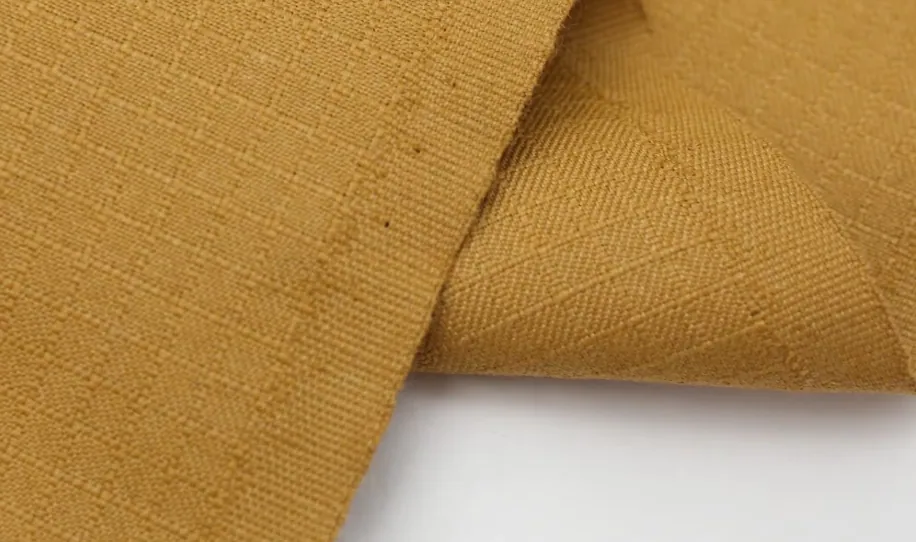
Aramid-rich woven or ripstop constructions serve premium hazard environments with high thermal load and long wear cycles, where Heavy Industry Safety specs demand durability and low shrinkage.
Sourcing is the weak point: some aramid blend fire retardant fabric suppliers substitute lower-cost fibers while keeping the aramid name, so blend ratio, lot traceability, and garment certification all need checking.
5. Viscose/Wool or FR Cellulosic Blend
These blends exist for comfort and thermal buffering in cold-climate industrial work, rail, and niche protective programs where a synthetic hand feel is a real adoption problem.
Blend names prove nothing about the garment standard: wool shrinks, and viscose FR performance can depend on additive chemistry, so the certificate scope matters more here than the fiber story.
Checking Fire Retardant Fabric Before Production
https://www.youtube.com/watch?v=J_4nJxTBT4Y
We do not trust a mill datasheet. The same discipline behind the Best Custom Workwear Manufacturers list starts before sampling: every lot runs through the 7-point incoming greige and finished fabric quality inspection SOP before production.
- Supplier document and lot traceability check. A missing roll link makes every later result unverifiable.
- Fiber composition, yarn, and construction verification. Substituted yarns pass a visual check and fail at wear.
- GSM, width, and shade consistency. Shade drift across rolls shows up as a two-tone garment.
- LOI threshold: pass only at LOI >= 29%. A marginal LOI passes the lab and fails in the field.
- Vertical flammability verification under ASTM D6413 / ISO 15025. We fail any specimen above 100 mm char length or any afterflame over 2 seconds; a passing swatch can still fail at the seam.
- Residual tear-strength retention after 50 industrial wash cycles at 75°C under ISO 15797 conditions. We pass at ≥80% warp and ≥75% fill retention; the margin, not the pass, predicts replacement timing.
- Finished-fabric review for dimensional stability, shrinkage, hand, and visual defects. A clean roll can still cut into a garment that will not hold shape.
The anonymized stress-test matrix tracks five market formulations across mechanical tear retention, thermal shrinkage, cost-per-wear, and wash life out to 100 industrial cycles.
The pattern is consistent: treated cotton wins on upfront cost and loses on wash-control risk, aramid ripstop wins on thermal stability and loses on landed cost, and modacrylic blends sit in the middle. Use it as a screening tool, and confirm the exact lot with fabric durability testing before bulk release.
Key Benefits of Choosing the Right FR Fabric
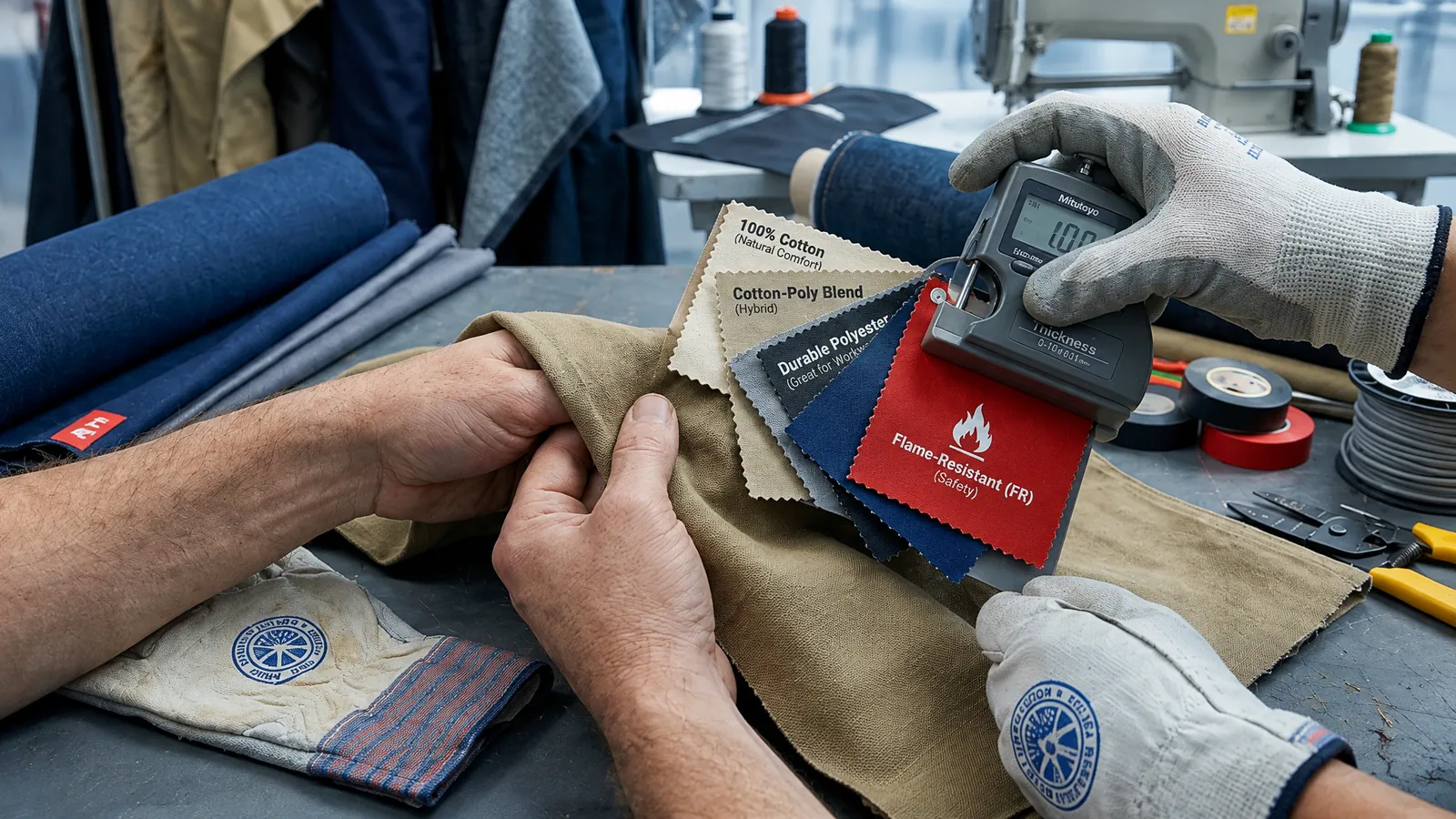
The right FR fabric changes three things at once: it aligns the garment with the hazard standard, lowers cost per wear by surviving more cycles, and stays comfortable enough that workers keep it on. That combination is what makes a program repeatable.
More Reliable Compliance Alignment
Match chemistry and construction to the hazard profile first, then verify the garment standard for flash fire, heat, or arc exposure, and confirm its laundering requirements.
A fabric-level pass with no garment certificate turns a normal PO into an audit risk, which is why a formal PPE hazard assessment belongs before spec approval (see OSHA 29 CFR 1910.132 for the US requirement).
Lower Cost per Wear, Not Just Lower PO Cost
Upfront price per meter hides replacement frequency, so the 100-wash matrix compares purchase price with usable life, scrap risk, and reorder consistency. The post-wash retention gap changes replacement timing and emergency reorder volume, and in one case a 20% lower meter price did not cover a single extra replacement cycle.
For Bulk Wholesale Workwear Pricing, calculate cost per wear and treat bulk fire retardant fabric wholesale as a lifecycle decision; verify wash resistance under ISO 15797 industrial laundering conditions. Cheap fabric gets expensive when every wash shortens service life.
Better Wearer Compliance and Program Adoption
Workers wear what fits and feels right, so comfort, hand feel, breathability, and flexibility drive correct daily use. I have watched crews leave stiff jackets open in heat because the fabric felt like a barrier, and older aramid gear earned a hot, stiff reputation that newer balanced blends only partly erase.
That does not make FR optional; it makes the garment more likely to stay on, closed, and compliant, which protects workers and cuts supervisor correction time. Measure adoption as a program metric.
Smoother OEM Development and Supply Planning
Whether you buy from a fabric mill or a garment manufacturer, the supplier should control MOQ per color, lab-dip approval, shade continuity, and repeatability. Lock Custom Workwear MOQ and Custom Workwear Production Time before bulk, because private-label brands and enterprise rollouts need reorder consistency across colors and lots.
One lab-dip miss can delay a rollout by weeks, shade drift creates returns, and weak reorder planning creates emergency buys at premium prices.
🧠 Author’s Take: Compare 3-year cost per wear, replacement rate, and audit rework, not just first-order price.
Use this buyer framework: hazard + laundering model + contract duration + budget tolerance + certification route. Match the fabric to that formula, then verify the lot.
Where Do Fire Retardant Fabric Programs Fail?
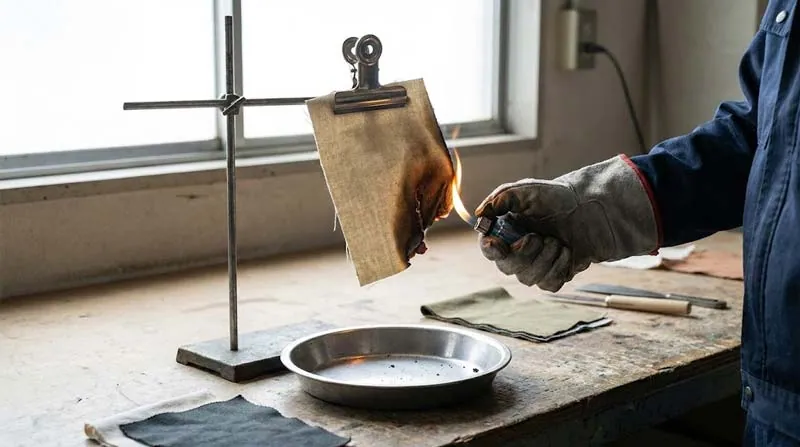
Most FR failures are not fabric failures. They come from scope gaps between a fabric report and a garment certificate, invisible finish loss during laundering, and receiving checks that never test post-wash retention. Lot-level stress tests and documentation audits run before release for exactly those reasons.
A Fabric Pass Is Not Garment Certification
A flame result from a fabric swatch covers the roll, while NFPA 2112 applies to the assembled garment, including its closures and trims. Arc rating is a separate claim.
The exact standard edition and garment assembly need checking before purchase, and the scope block is where most compliance claims fail.
Certificate and Datasheet Misuse
Buyers often accept a PDF without checking its scope, so verify the issuing lab, sample identity, standard edition, conditioning, fabric weight, color, and finish scope, then confirm the report matches the exact offered construction. Public certification directories narrow the field but do not prove the claim.
How to Verify a Fire Retardant Fabric Certificate
Certificate fraud is usually a scope problem rather than a forged PDF, so the check is about matching claims to evidence. Five steps cover most cases:
- Confirm the issuing body. Certification should come from an accredited third-party lab, not the fabric mill itself.
- Search the issuer’s public directory. A certificate number that cannot be found is a stop sign, not a paperwork delay.
- Match the standard and edition. NFPA 2112, EN ISO 11612, and ASTM F1506 do not substitute for one another.
- Match the sample identity. Composition, weight, color, and finish must match the construction you are actually ordering.
- Confirm the garment is in scope. A fabric report does not cover the finished garment, its components, or its trims.
Treated Systems Degrade Invisibly
Treated cotton relies on its finish, and alkaline detergent, chlorine, overdrying, and uncontrolled washing and drying can reduce protection while the garment still looks wearable.
The Chief Textile Chemist’s warning frames it well: “We see finish loss before the wearer sees a problem.” Treat industrial wash resistant FR fabric as a claim to validate under ISO 15797, not something to assume.
Inherent Systems Still Carry Costs and Blind Spots
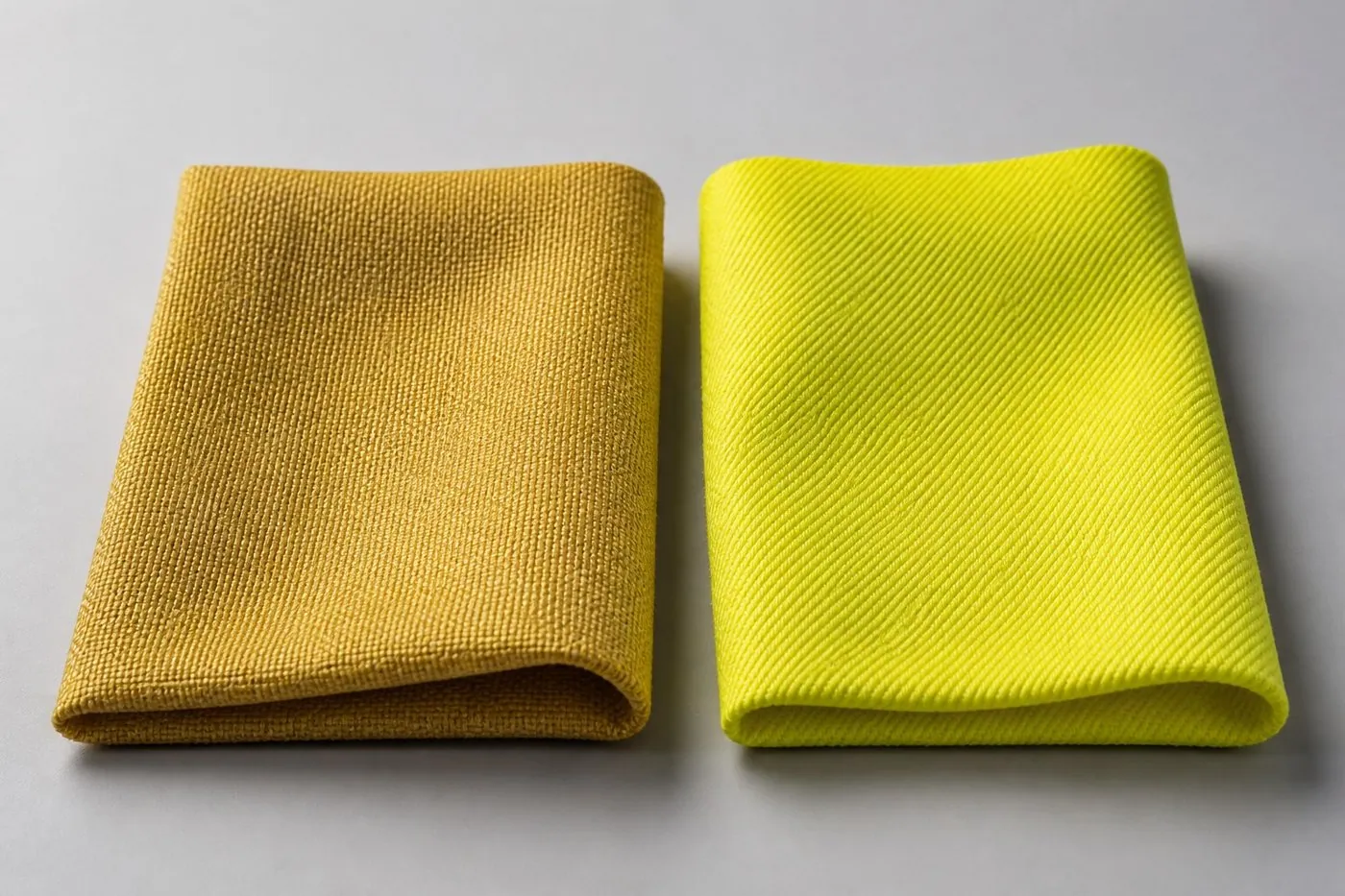
Inherent FR removes finish wash-off risk without making the problem disappear. Aramid and modacrylic systems cost more, complicate repair matching, and concentrate supply, while comfort tradeoffs still affect wearer compliance.
“Inherent” does not excuse lot testing, so seam compatibility, component substitution, and retirement criteria all stay in the inspection.
Receiving QC Often Misses Retention Failures
A lot can look acceptable on the floor and still fail retention. One case passed visual inspection, missed the tear-retention expectation after aggressive wash simulation, and was quarantined, retested, re-specced, and run back through the 7-point SOP before release.
Weak receiving QC pushes that failure downstream, where rework and audit risk cost more.
⚠️ Critical Warning: Do not release FR fabric on visual inspection alone. Require post-wash retention data and lot traceability.
Buyer red flags:
- Vague certification wording
- Missing post-wash data
- No lot traceability
- No tear-retention data
- No laundry instructions
These are stop signs, not negotiation points.
Frequently Asked Questions About Fire Retardant Fabric
1. Is fire retardant fabric the same as flame resistant fabric?
Not exactly. Both terms describe textiles that resist ignition or flame spread, but suppliers use them loosely: flame resistant often implies inherent fiber performance, while fire retardant often implies a chemical finish. Neither word carries a test result, so the specification should name the standard and the test method instead of the marketing term.
2. Does NFPA 2112 cover the fabric or the finished garment?
NFPA 2112 certifies the garment system, not the roll. A fabric can carry ASTM D6413 data and still leave the finished garment uncertified, and components such as zippers, thread, and reflective tape fall inside the scope. Ask for the garment certificate and confirm that the style being ordered appears on it.
3. How long does fire retardant fabric last after repeated industrial washing?
There is no single wash count that applies to every fabric. Treated cotton loses protection as the finish wears away, while inherent blends depend on fiber integrity and construction. Ask suppliers for post-wash tear-retention data under ISO 15797 conditions and match the number to the actual laundry model instead of a nominal cycle limit.
4. Can you wear synthetic base layers under fire retardant clothing?
Underlayers matter as much as the shell. Polyester and other thermoplastic base layers can melt and stick to skin under flash fire exposure, so a compliant FR outer garment over a melting base layer can still cause a serious burn. Specify FR or natural-fiber underlayers and treat the full ensemble, not the jacket, as the protection unit.
5. What is the difference between FR and arc-rated clothing?
FR describes resistance to ignition and flame spread, while arc rating measures how much thermal energy a fabric can block during an electrical arc. A garment can be FR without being arc-rated, and the reverse is unusual. The hazard assessment decides which claim the spec needs, and ASTM F1506 and NFPA 70E set the arc-related requirements in the US.
Conclusion: Buy the Route That Survives Your Laundry Model
Fire retardant fabric is not one material category but a set of protection routes, each carrying different wash-life, cost, comfort, and certification consequences. After the 100-wash matrix and the lot audits, the main lesson is plain: buy the route that fits the program, then prove it lot by lot.
One buying sequence prevents most of these failures: hazard → standard → fabric route → wash model → lot verification → garment execution. Skipping a step is how a fabric pass turns into an audit problem.
Each route has a clear job, and the table above already sorts them by cost and wash life. The catch stays constant: certification scope and wash control can fail even when the roll looks right.
Chase the route that survives the laundry model and the audit; that is what separates a purchase order from a repeatable PPE program.
Then Contact LantaoWork’s FR sourcing team for lab-backed fabric selection, OEM development, or bulk program review; the FR coverall range shows how each fabric route is built into a finished garment.
Transparency note: This article reflects LantaoWork’s internal process and test interpretation framework. Match every specification to your own hazard assessment and certification target.

Leave a Comment
Your email address will not be published. Required fields are marked *